
5060 Ti vs 5080 is less a fair fight than a budget question dressed up as a comparison, because these two Nvidia cards live in completely different price and performance classes. The RTX 5060 Ti is a $429 mainstream card built for efficient 1440p gaming, while the RTX 5080 is a $999 high-end monster aimed squarely at 4K and beyond. The real question is not which is faster, since the 5080 clearly is, but whether the extra performance is worth more than double the money for the way you actually game. This comparison answers exactly that, cutting through the spec-sheet noise so you can spend wisely rather than emotionally.
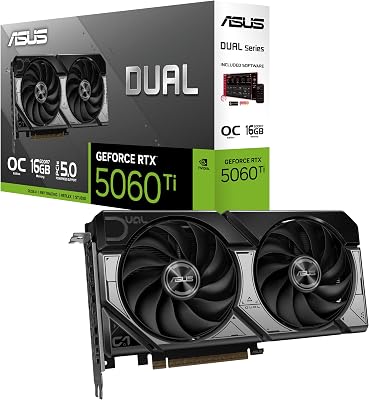


Quick answer: Our top pick in 2026 is the Architecture — our #1 rated choice. See the full ranked comparison, alternatives and buying advice below.
The Quick Verdict: 5060 Ti vs 5080
Because these cards are separated by such a large price gap, the quick verdict hinges entirely on your target resolution and how much you are prepared to spend to reach it. Here is the compressed answer for the impatient, before the detailed breakdown further down the page. In short, the 5060 Ti is the value-focused 1440p choice and the 5080 is the no-compromise 4K choice, and the monitor sitting on your desk tells you almost everything about which one is genuinely right for you.
Quick Verdict For 1440p Gamers
If you game at 1440p and want the best balance of price and performance, the RTX 5060 Ti 16GB is the sensible pick by a wide margin. It handles the resolution comfortably at high settings, carries a healthy 16GB of VRAM for modern textures, and sips power compared to its far larger sibling.
Paying nearly triple the price for a 5080 just to game at 1440p means buying a large amount of performance headroom you will rarely, if ever, actually use in practice. That money is far better spent elsewhere in your build, on a better monitor, or simply saved for a future upgrade cycle when it matters more.
For the mainstream gamer, the 5060 Ti delivers the experience that counts at a price that makes real sense. It is the card most people cross-shopping this pair should end up buying, and walking away from the 5080 here is not a compromise but a smart allocation of budget.
Quick Verdict For 4K And High-Refresh Gamers
If your target is smooth 4K gaming or very high-refresh 1440p, the RTX 5080 is the card that actually delivers it, and the 5060 Ti simply cannot keep pace at those demanding settings no matter how carefully you tune the options menu. This is the resolution the 5080 was designed to conquer.
The 5080’s much larger core, wider memory bus, and higher power budget translate into a genuine generational leap in raw frames over the 5060 Ti. Paired with DLSS 4 Multi Frame Generation, it turns 4K high-settings gaming into a comfortable, sustained reality rather than a constant balancing act of dropped settings.
Choose the 5080 if you own a 4K display, a fast high-refresh 1440p panel, or you do serious creative and AI work that benefits from its extra muscle. For those users, the price premium buys performance they will feel in almost every session, which is the entire point of a high-end card.
5060 Ti vs 5080 Specs And Price Snapshot
The fastest way to grasp just how far apart these cards sit is to place their core specifications and prices side by side in one view. Skim this table first, then read the short analysis underneath for what those raw gaps actually mean once you are playing games rather than staring at a spec sheet in a browser tab.
| Specification | RTX 5060 Ti 16GB | RTX 5080 |
|---|---|---|
| Architecture | Blackwell | Blackwell |
| CUDA cores | 4,608 | 10,752 |
| VRAM | 16GB GDDR7 | 16GB GDDR7 |
| Memory bus | 128-bit | 256-bit |
| Approx. TDP | ~180W | ~360W |
| DLSS 4 Multi Frame Gen | Yes | Yes |
| MSRP | $429 | $999 |
The numbers make the story obvious at a glance: the 5080 has more than double the CUDA cores, twice the memory bus width, and double the power draw of the 5060 Ti. Both share the same 16GB of VRAM and the same DLSS 4 feature set, so the difference between them is raw horsepower rather than capability, and that horsepower is exactly what you are paying the steep premium to obtain.
Deep Dive Face-Off: 5060 Ti vs 5080 By Criteria
With the quick answer settled, here is the detailed head-to-head across the areas that genuinely decide this purchase: the raw performance gap and the resolution each card is built for, the practical realities of power and cooling that follow from that gap, and the honest strengths and weaknesses of each option for a real buyer working with a real budget. Read the parts that match your situation most closely.
Raw Performance And Target Resolution
In raw rasterization the RTX 5080 is in a different league, often delivering somewhere close to double the frame rate of the 5060 Ti in demanding titles at matched settings. That is the direct and unavoidable result of its far larger core and much wider memory bus working in concert to push more pixels.
What matters, though, is matching that power to a resolution that can actually use it. The 5080 is a true 4K card, comfortable at high settings where the 5060 Ti would struggle badly, while the 5060 Ti is a 1440p specialist that shines at that resolution but runs out of meaningful headroom the moment you climb above it.
Both cards lean on DLSS 4 to stretch their legs even further, but the 5080 starts from a much higher baseline before any upscaling is applied. On a 4K display the gap between them is enormous; on a 1080p display it largely evaporates, because both cards are then limited by your CPU and the rest of the system rather than the GPU itself.
Power, Heat, And PSU Requirements
This is where the practical, hidden cost of the 5080 becomes clear and where many first-time high-end buyers get caught out. At roughly 360W it draws about twice the power of the 5060 Ti’s 180W, and that difference has real consequences for the rest of your build that reach well beyond the card’s own price tag.
The 5060 Ti runs happily on a quality 550W power supply and fits comfortably in compact cases, generating little heat and staying quiet under load. The 5080, by contrast, wants a 750W or larger unit, more case airflow to stay cool, and physically more room to fit, so it is a considerably bigger commitment than the card in isolation suggests.
Factor these downstream costs into your decision before you buy. A 5080 may require a power-supply upgrade and a roomier, better-ventilated case, all adding to the true total spend, whereas the efficient 5060 Ti often drops straight into an existing mainstream build with no other changes required at all.
Pros And Cons Of Each Card
Setting the trade-offs side by side makes the decision concrete rather than a vague and unhelpful sense that the more expensive card must automatically be the better buy for you.
RTX 5060 Ti 16GB — pros: excellent value, low power draw, easy PSU and case compatibility, strong 1440p gaming, and the full DLSS 4 suite. Cons: not built for 4K and clearly outmatched in raw performance by the far larger 5080.
RTX 5080 — pros: outstanding 4K and high-refresh performance, huge raw horsepower, and strong creator and AI capability. Cons: more than double the price, high power draw and heat, and steep diminishing returns if you only ever play at 1440p or below.
Read together, these two lists describe two different buyers rather than a simple better and worse card. The 5060 Ti is the right tool for the efficient, value-minded 1440p gamer who wants a quiet and easy build, while the 5080 is the right tool for the enthusiast who genuinely lives at 4K and treats their graphics card as the centrepiece of the whole system. Neither card is objectively wrong; the only real mistake is buying far more card than your monitor and your games can ever put to use, or noticeably less than they truly demand from you.
Pricing, Alternatives, And The Final Call
The final factor is real 2026 cost, where the memory market and a couple of middle-ground alternatives can meaningfully shape the decision. Treat this section as the practical counterweight to the raw performance gap described above, because what you actually pay at checkout matters just as much as what the benchmark charts promise you will get in return.
How 2026 Memory Prices Affect The Matchup
Both cards carry 16GB of fast GDDR7, which places them in the segment most exposed to the current memory market. Through late 2025, surging AI datacenter demand pushed DDR5, SSD, and high-VRAM graphics-card prices up by roughly 20%, and higher-end cards like the 5080 tend to feel that upward pressure most acutely of all.
There is cautiously positive news to hold onto. Prices have stopped climbing as steeply as they did at the very end of 2025, and some makers have reported a spell of relative stability while still warning that renewed volatility is possible. New supply is on the way from DDR5 sources such as CXMT and from two new Micron plants currently being built in Idaho.
The catch, as ever, is timing, because those plants will not ramp into full production until 2027–2028. In practice that means the 5080’s already-high price is unlikely to fall meaningfully any time soon, which further strengthens the case for the cheaper, more efficient 5060 Ti unless you genuinely need the 5080’s 4K power right now rather than a year from now.
The Alternative If The Gap Feels Wrong
If the 5060 Ti feels too slow but the 5080 feels too expensive, the Nvidia RTX 5070 sits neatly in the middle of the two, offering a real step up in performance for high-refresh 1440p gaming without the 5080’s flagship price or its demanding power draw and heat.
The RTX 5070 Ti is another strong option a notch below the 5080 that gets you close to its performance for noticeably less money. For buyers caught uncomfortably between these two extremes, one of these middle cards is very often the smartest purchase of all, so it is well worth checking their current prices before you commit either way.
See More:
- RTX 4060 vs RTX 5060
- M4 GPU benchmark
- RTX 5060 Ti benchmark
- 5060 Ti 16GB vs 9070 XT
- RTX 5050 vs RTX 5060
Final Verdict And Recommendation
Buy the RTX 5060 Ti 16GB if you game at 1440p and want the best value, the lowest power draw, and an easy, drop-in fit for a mainstream build. It is the correct and financially sensible choice for the large majority of buyers weighing this particular pair of cards.
Buy the RTX 5080 only if you game at 4K, drive a fast high-refresh display, or do demanding creative work, and your budget can comfortably absorb both the card and the supporting upgrades it quietly demands. For those specific users it is worth every dollar; for everyone else it is simply expensive overkill.
To settle the 5060 Ti vs 5080 debate for good: the 5060 Ti wins on value and efficiency for 1440p, while the 5080 wins outright on raw 4K power for those who truly need it and can pay for it. With high-VRAM cards under continued price pressure through 2026, matching the card to your resolution and buying at a fair price sooner is the smart move. Check today’s prices through the link below and pick the card that fits how you really play rather than how you imagine you might.
Frequently Asked Questions
How much faster is the RTX 5080 than the RTX 5060 Ti?
The gap is enormous, roughly two and a half times the performance at 1440p and wider at 4K. The 5080 has far more CUDA cores, a 256-bit GDDR7 bus and double the power budget. These are different classes of product, so the decision is really about resolution and budget, not close comparison.
Which resolution suits each card?
The 5060 Ti 16GB is a 1080p high refresh and 60fps 1440p card. The 5080 is a 4K card that also drives 1440p at very high refresh rates. Buying a 5080 for a 1080p monitor wastes most of its capability, while a 5060 Ti at 4K will force heavy compromises.
What are the power supply differences?
The 5060 Ti draws 180W from a single 8-pin connector and runs on 550W. The 5080 draws 360W through a 12V-2×6 connector and requires an 850W supply, ideally ATX 3.1 with a native cable. That difference alone can add a power supply purchase to the cost of stepping up.
Do both have enough VRAM for their target use?
The 5060 Ti 16GB has generous capacity for 1080p and 1440p and will be limited by GPU speed rather than memory. The 5080’s 16GB is adequate for 4K today but is the most criticised aspect of the card at its price, particularly for path tracing and local AI workloads.
Is there a sensible middle option?
Yes, and for many buyers it is the better answer. The RTX 5070 Ti or RX 9070 XT sit between these two, delivering a large share of the 5080’s performance for considerably less money while comfortably handling 1440p high refresh and 4K with upscaling. Skipping both extremes is often the value play.
Ready to decide? Our #1 pick for 2026 is the Architecture.
Live price & availability on Amazon.



Write Your Review
No reviews yet. Be the first to share your experience!