
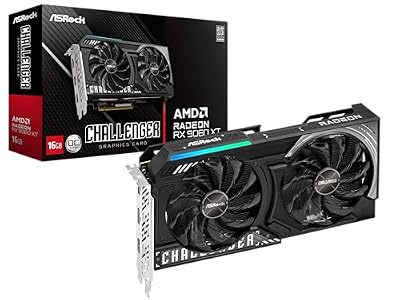
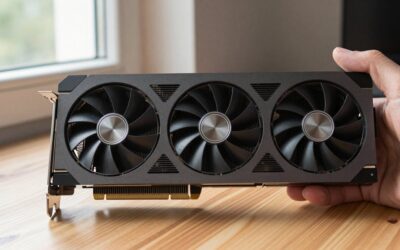
- Top Pick: ASRock Radeon RX 9060 XT Challenger 16GB OC, RDNA 4, 3290MHz Boost, 16GB GDDR6 128-bit, PCIe 5.0, Dual Fans, 0dB Silent, LED Indicator, DisplayPort 2.1a, HDMI 2.1b
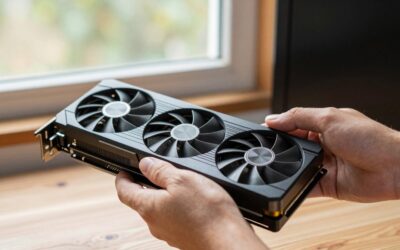
- Best Value: ASUS Prime GeForce RTX 5060 Ti 16GB GDDR7 Gaming Graphics Card
- Premium Choice: ASUS Dual GeForce RTX 5060 Ti 16GB GDDR7 OC Edition Gaming Graphics Card
5060 vs 9060 xt 16gb is the budget-buyer showdown that decides a huge number of new 1080p and entry 1440p builds, and the two cards take opposite paths to the same price bracket. The Nvidia GeForce RTX 5060 leans on efficiency, DLSS 4, and a low price, while the AMD Radeon RX 9060 XT 16GB counters with double the VRAM for a small premium. They compete for the same wallet, but the 8GB versus 16GB gap changes everything about how long each card stays comfortable. This face-off gives you the numbers, the trade-offs, and a clear buy-this-if verdict for a tight budget.


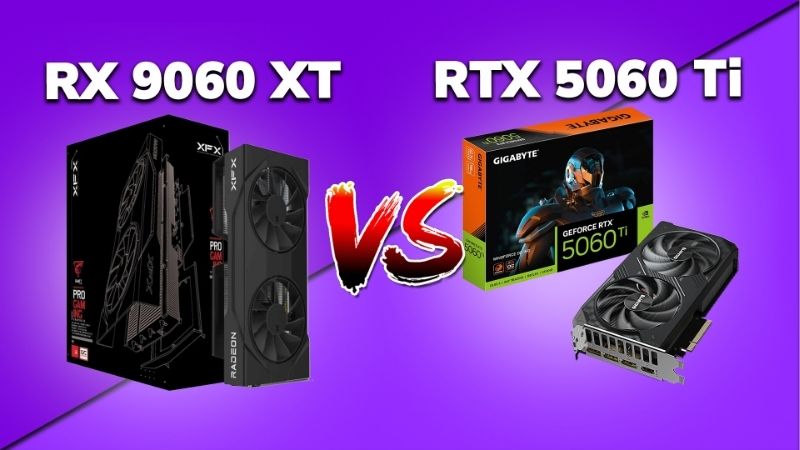
The Quick Verdict on the RTX 5060 vs 9060 XT 16GB
Here is the short answer for busy buyers. The RX 9060 XT 16GB is the smarter long-term pick for most people because its larger frame buffer protects you against the rising VRAM demands of modern games, often for only a small amount more money. The RTX 5060 is the better fit if your budget is truly tight, you play mostly at 1080p, and you value Nvidia’s DLSS 4 Multi Frame Generation and low power draw. The decision hinges on how long you want the card to last and which resolution you actually play at.
As an Amazon Associate we earn from qualifying purchases at no extra cost to you.




Who should buy the RTX 5060
The RTX 5060 suits the buyer on the tightest budget who games primarily at 1080p and wants a cool, quiet, low-power card. At roughly 299 dollars and around 145W, it is one of the easiest and cheapest modern cards to fit into any system, running happily on a modest power supply without upgrades.
Its trump card is software. DLSS 4 with Multi Frame Generation can multiply frames in supported titles, stretching the card’s effective performance well beyond its raw specification and helping it punch above its price at 1080p.
The catch is the 8GB frame buffer, which is the reason to think carefully before choosing it for anything beyond 1080p. If you play modern games at higher resolutions, that limit will eventually bite.
Who should buy the RX 9060 XT 16GB
The RX 9060 XT 16GB is for the buyer who wants their budget card to age gracefully. That doubled 16GB buffer is the headline feature, and it lets the card run high textures at 1080p and 1440p without the stutter and pop-in that plague 8GB cards in the newest titles.
For only a small premium over the RTX 5060, you get meaningfully more headroom for the future, which is why many value-focused buyers lean this way. FSR 4 gives it strong AI upscaling to keep frames high.
If you want one affordable card that stays comfortable for several years and dabbles in 1440p, this is the pick that keeps its options open.
Specs and price at a glance: 5060 vs 9060 XT 16GB
The data makes the core trade-off obvious. Treat frame figures as representative ranges at 1080p and 1440p high settings, since exact results shift by game, driver, and configuration.
| Spec | RTX 5060 | RX 9060 XT 16GB |
|---|---|---|
| Architecture | Blackwell | RDNA 4 |
| VRAM | 8GB GDDR7 | 16GB GDDR6 |
| Memory bus | 128-bit | 128-bit |
| Board power (TDP) | ~145W | ~150-160W |
| Upscaling | DLSS 4 + Multi Frame Gen | FSR 4 (AI) |
| Launch MSRP | ~299 dollars | ~349 dollars |
| Best fit | 1080p value / efficiency | 1080p and 1440p, future-proof |
The pattern: for roughly 50 dollars more, the 9060 XT doubles your VRAM while keeping similar power and bus width, whereas the 5060 answers with lower cost and DLSS 4 Multi Frame Generation. Whether the extra memory is worth the premium depends entirely on the deep dive below.
Deep Dive Face-Off: RTX 5060 vs 9060 XT 16GB
A spec sheet only hints at real behavior. This section compares the two by the criteria that decide your experience: rasterization and the 8GB versus 16GB reality, ray tracing plus upscaling, and the practical realities of power and platform for a budget build.
Raw rasterization and the VRAM reality
In raw rasterization the two trade blows, with the 9060 XT often holding a modest lead at 1080p and 1440p thanks to its architecture. Both cards deliver a strong 1080p experience at high settings in the vast majority of games, frequently landing well above 60 FPS natively.
The decisive difference appears the moment a game exceeds 8GB of VRAM. On the RTX 5060, that triggers texture pop-in, stutter, or forced setting reductions, while the 16GB 9060 XT simply keeps running smoothly.
So the honest read is nuanced: at 1080p in lighter games the two feel similar, but as titles grow hungrier and as you push toward 1440p, the 9060 XT’s buffer delivers a more consistent experience that the frame-rate average alone does not capture.
Ray tracing and upscaling: DLSS 4 vs FSR 4
Ray tracing on budget cards is always a stretch, but the software story is where the RTX 5060 fights back hardest. It runs DLSS 4 with Multi Frame Generation, a Blackwell-exclusive that can multiply frames in supported games and meaningfully lift performance at 1080p.
The RX 9060 XT counters with FSR 4, an AI-based upscaler that has closed the image-quality gap dramatically and looks excellent. Its larger buffer also helps when ray tracing pushes VRAM use higher, where the 8GB card can run short.
The takeaway: the 5060’s frame-generation edge is real and valuable at 1080p, while the 9060 XT’s memory keeps ray tracing and high textures viable a bit longer. Both approaches have merit for a budget buyer.
Power draw, platform, and real-world fit
Both cards are wonderfully efficient, drawing roughly 145W to 160W, so either one drops into a modest build on a quality 500W to 550W power supply without drama. Neither adds meaningful heat or noise to a small case.
That shared efficiency means power and compatibility do not favor one strongly, which pushes the decision back to VRAM, price, and software. It also makes both excellent choices for compact or budget systems where a big power-hungry card would not fit.
For a first gaming PC or a tidy small-form-factor build, either card is a friendly, low-fuss component, so choose based on longevity rather than system strain.
Value, Pricing Trends, and the Smart Buy in 2026
Performance tiers rarely change; prices change constantly. To make a smart call on the 5060 vs 9060 XT 16GB today, weigh the pros and cons against where GPU and memory pricing is heading, because on a tight budget, timing and street price matter as much as the silicon.
Pros and cons of each card
The RTX 5060’s strengths are its low price, excellent efficiency, and DLSS 4 Multi Frame Generation. Its weakness is the 8GB buffer, which limits its future headroom and its comfort at 1440p in demanding titles.
The RX 9060 XT 16GB’s strengths are that doubled 16GB buffer, strong rasterization, and solid FSR 4 upscaling. Its weaknesses are a modestly higher price and a younger, though rapidly improving, upscaling ecosystem than Nvidia’s.
The deciding factor is VRAM versus cost: the 5060 wins on pure upfront price, while the 9060 XT wins on longevity, and for most buyers that extra memory is worth the small premium.
What rising GPU and memory prices mean for buyers
Here is the market context that changes the math for budget shoppers. Laptop and PC component prices have been trending upward, driven heavily by memory costs, and that pressure feeds straight into card street prices. The launch MSRPs above are often a floor rather than the number you will actually pay.
The good news is real but weak and far off. Pricing has stopped climbing as steeply as it did in late 2025, and some makers report a stretch of relative stability while still warning of volatility. New supply is opening up, with OEMs able to source DDR5 from Chinese suppliers such as CXMT and Micron building two plants in Idaho, but those fabs will not run until 2027 to 2028. Prices have plateaued, not fallen, so real relief is still years away.
For a budget buyer the read is simple: waiting for a steep crash is a poor bet right now. If you find the 5060 or 9060 XT 16GB at or near MSRP, that is a good buy today rather than a reason to hold out.
The alternative if neither fits
If your budget can stretch a little further, the RTX 5060 Ti 16GB is the natural step up, pairing Nvidia’s software with a larger buffer for a better 1440p experience. On the AMD side, a well-priced RX 9070 is the next rung for those who want more raw performance.
Match the card to your monitor and your budget first. For a pure 1080p esports build, either budget card is plenty, while a 1440p buyer should prioritize the 16GB of the 9060 XT or step up to a 5060 Ti.
The smartest buy is the one that fits your resolution and your wallet, not simply the cheapest sticker in the store.
Which Card Fits Your Setup: 5060 vs 9060 XT 16GB
Specs set the ceiling, but your actual use decides the right buy. Here is how the two cards line up against three common budget-buyer profiles so you can match the hardware to your real situation.
Best for a pure 1080p esports build
If you play mostly competitive and esports titles at 1080p, the RTX 5060 is a superb fit. Those games rarely stress 8GB, so the buffer limit is a non-issue, and DLSS 4 plus low power make it a cheap, cool, high-frame-rate card.
The 9060 XT still works well here too, but you may be paying for VRAM headroom you will not use in this scenario. For strict 1080p esports on a budget, the cheaper 5060 is the efficient choice.
Best for future-proofing and 1440p dabbling
If you want your budget card to handle modern single-player games and occasionally step up to 1440p, the RX 9060 XT 16GB is the clear pick. Its buffer keeps high textures smooth where the 8GB 5060 would stutter or force compromises.
Spending the small premium now can save you from an early upgrade later, which makes the 9060 XT the better value over a multi-year horizon. For buyers who keep hardware a long time, the memory advantage is decisive.
Best for the smallest, cheapest build
For the absolute lowest-cost, most compact build, the RTX 5060’s price and 145W draw make it the easiest card to justify. It keeps the total system cost and thermals down while still delivering a great 1080p experience.
If every dollar counts and 1080p is your ceiling, the 5060 is hard to beat. Just go in clear-eyed that the 8GB buffer is a longevity trade-off you are accepting in exchange for the lower price.
See More:
Final Verdict: RTX 5060 vs 9060 XT 16GB
The 5060 vs 9060 xt 16gb decision comes down to price today versus comfort tomorrow. Buy the RX 9060 XT 16GB if you want a budget card that ages gracefully, handles modern textures, and dabbles in 1440p, all for a small premium. Buy the RTX 5060 if your budget is truly tight, you play mostly at 1080p, and you value DLSS 4 Multi Frame Generation and rock-bottom power draw. Both are efficient, affordable cards, but the 16GB buffer tips most long-term buys toward the 9060 XT, and with component prices flat-to-rising rather than falling, grabbing the right card now at a fair price beats waiting. When you have decided, check current listings and stock through the link below before pricing shifts again.
Frequently Asked Questions
Which of these two is the better value budget GPU?
The RX 9060 XT 16GB costs more but delivers noticeably more performance and double the memory, so cost per frame usually favours AMD once you look past the sticker price. The RTX 5060 makes sense only when it is substantially cheaper, when you need lower power draw, or when you specifically want multi frame generation.
Does the 8GB versus 16GB difference actually matter?
Yes, and increasingly so. At 1080p with sensible settings the RTX 5060’s 8GB copes, but in 2025-2026 releases with ultra textures, ray tracing or 1440p targets you will hit the buffer and see stutter and blurry textures. The 9060 XT’s 16GB removes that ceiling entirely and is the main reason to pay the premium.
Will the PCIe x8 interface hurt me on an older motherboard?
The RTX 5060 uses only eight PCIe lanes. On PCIe 4.0 boards that is fine, but on an older PCIe 3.0 system the effective bandwidth halves and you can lose several percent of performance, with much larger losses once VRAM overflows. The RX 9060 XT uses a full x16 link, so it is friendlier to older platforms.
What power supply does each card require?
The RTX 5060 draws around 145W from a single 8-pin connector and is happy on a good 450W to 550W supply. The RX 9060 XT 16GB sits near 180W, also on a single 8-pin, with 550W to 600W recommended. Both are compact, low-demand cards that fit comfortably in small form factor and prebuilt systems.
How do the driver and software features compare?
Nvidia offers DLSS 4 with multi frame generation, broader game support, superior NVENC encoding for streaming, and better performance in CUDA-accelerated creative apps. AMD counters with FSR 4, Fluid Motion Frames 2 that works in unsupported titles, and Adrenalin tuning tools. For pure gaming both are solid; for streaming and content work Nvidia is ahead.
Ready to decide? Our #1 pick for 2026 is the Architecture.
Live price & availability on Amazon.



Write Your Review
No reviews yet. Be the first to share your experience!