
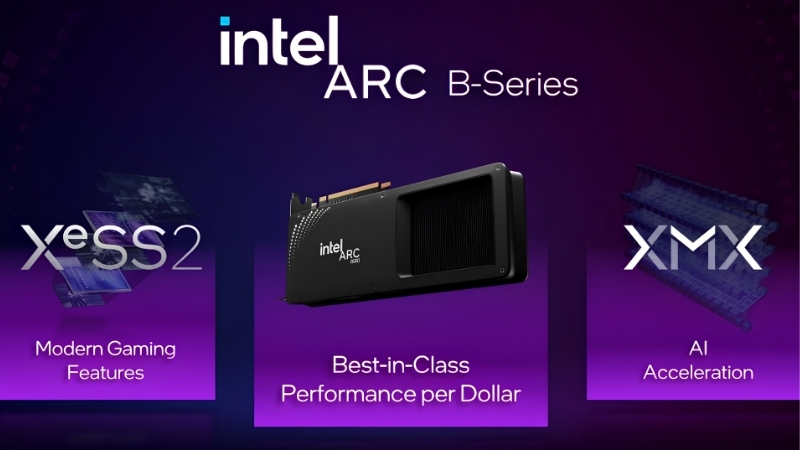
intel battlemage is the second generation of Intel’s dedicated graphics cards, and it represents the moment Intel went from an intriguing newcomer to a genuine budget contender. Built on the Xe2 architecture, Battlemage powers cards like the B580 and B570 that undercut rivals on price while offering generous memory and modern features. This review looks at what Battlemage is, how it improves on the first Arc generation, how its cards perform, and what owners praise and criticize, so you can decide whether Intel’s new generation deserves a place in your build.
What Intel Battlemage Is
Intel Battlemage is the codename for the company’s second generation of discrete gaming GPUs, built on the Xe2 graphics architecture. It succeeds the first Arc Alchemist generation and brings meaningful improvements in efficiency, ray tracing, upscaling, and driver maturity. Understanding the architecture, the cards that make up the lineup, and how far it has come since Alchemist is essential to judging whether Battlemage is worth buying in 2026.
The Xe2 Architecture Explained
Battlemage is built on Intel’s Xe2 architecture, a refinement that improves performance per watt and strengthens the areas where the first generation struggled. The result is a more efficient, more capable foundation for budget and mid-range cards.
Key to the generation is improved ray-tracing hardware and support for XeSS 2, Intel’s upgraded upscaler, which runs at its best quality on Battlemage’s dedicated engines for strong frame-rate gains.
The architecture also benefits from everything Intel learned during Alchemist’s rocky launch, arriving with far more mature drivers and a much smoother out-of-the-box experience than its predecessor offered.
That accumulated experience shows in the details that matter to real users. Where the first generation struggled with inconsistent performance and troublesome older games, Battlemage arrived with those rough edges substantially smoothed, backed by a driver team that had spent years learning from Alchemist’s problems. The result is a generation that feels like a finished product from day one rather than a promising work in progress, which is a crucial difference for buyers who were burned by Arc’s early reputation.
The Battlemage Lineup
The Battlemage generation is anchored by the Arc B580, a 12GB card around $249 that has become a budget favorite, and the more affordable Arc B570, a 10GB card near $219 aimed at pure 1080p gaming.
Both cards emphasize the same strengths: generous memory for their price, capable ray tracing, native XeSS support, and aggressive pricing that undercuts comparable offerings from AMD and Nvidia.
This focused, value-oriented lineup targets the budget and mainstream segments where most gamers shop, rather than chasing the high end, which is a deliberate and sensible strategy for Intel’s second generation.
Concentrating on these tiers also lets Intel put its engineering and driver resources where they have the greatest effect. Rather than diluting effort across a sprawling range, the company can optimize deeply for the handful of cards that most buyers will actually own, which helps explain why Battlemage feels more polished than a broader lineup might. For a second generation still building its reputation, that disciplined focus is exactly the right approach.
How It Improves on Alchemist
Compared with the first Arc generation, Battlemage is a substantial step forward. Efficiency is notably better, so the cards deliver more performance for their power draw, and ray-tracing capability has improved.
Just as importantly, Battlemage launched with far more mature drivers, sparing buyers much of the instability and compatibility trouble that damaged Alchemist’s early reputation.
The experimental promise is that Intel continues to refine XeSS and its drivers through updates, so Battlemage cards are expected to keep improving, building on a foundation that is already far stronger than the first generation’s.
This ongoing improvement is a genuine, if intangible, part of the value. Just as Alchemist cards gained significant performance through post-launch driver work, Battlemage owners can reasonably expect their cards to get faster and more polished over time as Intel optimizes for new games and refines XeSS. Buying a Battlemage card is therefore less like buying a fixed capability and more like investing in a platform that trends upward, which adds long-term confidence to the purchase.
Real-World Performance and User Impressions
Architecture matters only insofar as it produces good cards, so a fair review blends real-world performance with what owners report. Combining the enthusiastic 4-5 star feedback with the more critical 2-3 star reviews gives a balanced picture of where Battlemage delivers and where it still has room to grow. Here is the consistent pattern from both the data and the community.
Gaming Performance and Value
In real games, Battlemage cards deliver strong 1080p performance and capable 1440p gaming on the B580, punching above their price thanks to generous memory and solid architecture.
The generation’s defining strength is value: it consistently offers more memory and competitive performance per dollar than similarly priced rivals, which is the core reason it has drawn so much attention.
Analytically, Battlemage’s advantage is most pronounced in memory-hungry modern titles and at 1440p, where its generous buffers keep performance steady while cheaper 8GB rivals falter.
What makes the generation strategically clever is its focus. Rather than spreading itself thin trying to compete at every tier, Intel concentrated Battlemage on the budget and mainstream segments where the largest number of gamers actually shop. By delivering standout value precisely where the volume is, the generation maximizes its impact and gives Intel a real foothold, rather than chasing a halo product that few would buy and that would stretch its resources.
What 4-5 Star Users Praise
Positive owners celebrate the value, describing Battlemage as the generation that made Intel a legitimate choice rather than an experiment. The memory and price combination draws particular praise.
They also highlight the dramatic improvement over Alchemist, especially the more mature drivers and smoother experience, which has restored confidence in Intel’s graphics effort.
The native XeSS 2 support and capable ray tracing earn credit for making these budget cards feel genuinely modern, running current games with current effects rather than forcing compromises.
Long-time Intel skeptics feature prominently among the converts, with many reviewers admitting they expected another rough generation and were pleasantly surprised. That shift in sentiment, from cautious doubt to genuine recommendation, is perhaps the strongest signal of how far Battlemage has come, and it has done a great deal to rebuild trust in Intel’s graphics division after the difficult first-generation launch.
Common Complaints from 2-3 Star Reviews
The most common criticism is the Resizable BAR requirement shared across the generation, which can hamper performance on older platforms that do not support it well, catching out some buyers.
A second theme is that, despite big improvements, Intel’s drivers remain younger than AMD’s and Nvidia’s, so the occasional older or niche game can still misbehave until a fix arrives.
Some also note that Battlemage’s lineup is focused on the budget and mainstream tiers, so gamers seeking high-end performance must look elsewhere, since Intel does not compete at the top.
For the buyers Battlemage actually targets, though, that absence at the high end is largely irrelevant, and the remaining caveats are modest. The Resizable BAR requirement is a simple BIOS toggle on modern systems, and the driver gap continues to close with each update, so for the value-focused mainstream audience the generation is aimed at, these concerns rarely bite in practice.
The Bigger Picture, Value, and Buying Advice
A new GPU generation must be judged against the established competition and the current market, so this section compares Battlemage with AMD and Nvidia, lays out the pros and cons, and frames the decision within 2026’s pricing so your timing is sound in a market that remains unpredictable.
Battlemage vs AMD and Nvidia
Against AMD and Nvidia in the budget tier, Battlemage’s advantages are memory and price, typically offering more VRAM per dollar than comparable cards from either rival.
The competition counters with more mature drivers, wider game optimization, and, in Nvidia’s case, broader DLSS adoption and lower power draw, which remain meaningful strengths for many buyers.
The practical verdict is that Battlemage has made the budget market a genuine three-way contest, and for value-focused 1080p and 1440p buyers it is now a serious option rather than an afterthought.
This is genuinely good news for buyers regardless of which brand they ultimately choose. A credible third competitor pressures AMD and Nvidia to offer more memory and better pricing in the budget tier, so even shoppers who stick with the established brands benefit from the competition Battlemage brings. For the budget segment specifically, Intel’s arrival as a real player has reshaped expectations of what a low-cost card should deliver.
Pros and Cons of Intel Battlemage
Here is the balanced summary drawn from the evidence and owner feedback.
Pros: excellent value, generous memory for the price, improved efficiency and ray tracing over Alchemist, native XeSS 2 support, and much more mature drivers than the first generation. Cons: requires Resizable BAR, drivers still trail the competition slightly, and the lineup is limited to the budget and mainstream tiers.
Because Battlemage’s appeal is rooted in value, if a card from the generation fits your needs, checking current pricing through the link on this page is the logical next step.
Is a Battlemage GPU Worth Buying in 2026?
Battlemage’s value proposition meets 2026’s market conditions. After the steep rise at the close of 2025, graphics-card pricing has settled into a calmer phase, but calm here means flat rather than falling, and the market has not fully stabilized.
Fresh memory supply is coming, with OEMs able to source DDR5 from makers such as CXMT and Micron building two plants in Idaho, yet that capacity will not run until 2027–2028, so genuine price relief remains distant.
For a budget buyer, waiting through 2026 for a large drop is a weak strategy given that timeline. If a Battlemage card fits your budget and resolution, check its current price through the link on this page and buy while the market holds steady.
See More:
Conclusion
The verdict on intel battlemage is that it is the generation that turned Intel into a real budget contender, delivering generous memory, improved efficiency and ray tracing, native XeSS 2, and far more mature drivers than the first Arc cards, all at prices that undercut the competition. Anchored by the excellent B580 and the affordable B570, it makes the budget market a genuine three-way race, with the main caveats being the Resizable BAR requirement and drivers that still trail slightly. For value-focused gamers, Battlemage is well worth considering — and with prices only holding steady rather than dropping, there is little reason to wait. Use the link above to compare live pricing on a Battlemage GPU and secure yours today.
Top-Rated Picks


| Product | Brand | Rating | Reviews | Price |
|---|---|---|---|---|
| ARCTIC MX-4 (4 g) – Premium Performance Thermal Paste… | ARCTIC | ★ 4.8 | 104k | $4.99 |
| ARCTIC MX-4 (incl. Spatula, 4 g) – Premium Performanc… | ARCTIC | ★ 4.8 | 71.9k | $5.49 |
| Crucial 8GB DDR4 RAM 3200MHz (PC4-25600), Downclockab… | Crucial | ★ 4.8 | 62.8k | $74.99 |
| AMD Ryzen 5 5600X 6-core, 12-thread unlocked desktop … | — | ★ 4.8 | 30.2k | $177.60 |
| NVIDIA Shield Remote; Voice Search, Motion-Activated,… | — | ★ 4.7 | 10.6k | $25.99 |
Frequently Asked Questions
What actually changed between Alchemist and Battlemage?
Battlemage uses the Xe2 architecture with redesigned vector engines that run SIMD16 natively, so Intel no longer wastes throughput on shader compiler workarounds. Ray tracing units are wider, the memory subsystem is more efficient, and XeSS 2 adds frame generation and low latency. The net result is far better performance per watt than the A-series.
Do Battlemage cards still require Resizable BAR?
Intel still lists Resizable BAR as a requirement rather than a suggestion, and performance drops sharply without it. Any board with Above 4G Decoding support will work, which covers Intel 10th gen and Ryzen 3000 upward. If you are pairing a Battlemage card with an older platform, update the BIOS before buying.
How much power do Battlemage GPUs draw?
The B580 sits at 190W total board power and the B570 at 150W, both fed by a single 8-pin PCIe connector on reference designs. A quality 550W to 600W supply covers either card in a typical six or eight core build. There is no 12VHPWR connector to worry about anywhere in the lineup.
Is there a CPU overhead problem with Battlemage?
Yes, and it is worth planning around. Intel drivers push more work onto the processor than Nvidia drivers do, so pairing a B580 with an old quad core like a Ryzen 5 2600 can cost meaningful frame rate at 1080p. With a modern six core chip the overhead largely disappears.
Is Battlemage a good value against Nvidia and AMD budget cards?
On price per frame it is very strong, mostly because Intel ships 10GB and 12GB buffers at prices where competitors still sell 8GB. The tradeoff is a smaller software ecosystem, no CUDA, and occasional day-one driver gaps in smaller releases. For pure 1080p and light 1440p gaming, the value case is real.



Write Your Review
No reviews yet. Be the first to share your experience!