
- Top Pick: ZOTAC Gaming GeForce RTX 5070 AMP White Edition DLSS 4 12GB GDDR7 192-bit 28 Gbps PCIE 5.0 Gaming Graphics Card, IceStorm 2.0 Cooling, Spectra RGB Lighting, ZT-B50700FQ-10A
- Best Value: ASUS TUF Gaming GeForce RTX 5070 12GB GDDR7 OC EditionGaming Graphics Card
- Premium Choice: ZOTAC Gaming GeForce RTX 5080 Solid CORE OC DLSS 4 16GB GDDR7 256-bit 30 Gbps PCIE 5.0 Gaming Graphics Card, IceStorm 3.0 Advanced Cooling, Spectra RGB Lighting, ZT-B50800J2-10A
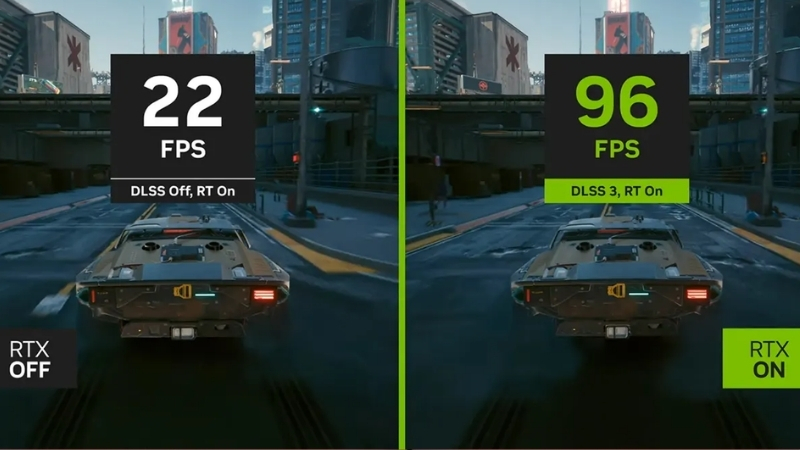
dlss 4 is the biggest overhaul of Nvidia’s upscaling technology in years, and it reshapes what a GeForce card can deliver in 2026. It replaces the long-standing convolutional model with a new transformer-based AI that improves image quality across the entire DLSS suite, and it introduces Multi Frame Generation for the RTX 50-series. This review breaks down what DLSS 4 actually changes, which GPUs get which features, how it looks and performs in real games, and what owners praise and criticize, so you can decide whether it is worth building around a GeForce card.
What DLSS 4 Is
DLSS 4 is not a single feature but a generational upgrade to Nvidia’s whole Deep Learning Super Sampling stack, spanning upscaling, ray reconstruction, anti-aliasing, and frame generation. Its headline change is a shift to a transformer-based AI model, the same class of architecture behind modern large language models, applied here to reconstruct game images with greater accuracy. Understanding the new model, which RTX cards support which pieces, and how the components fit together is essential to judging what DLSS 4 means for you.
As an Amazon Associate we earn from qualifying purchases at no extra cost to you.


The New Transformer AI Model
The centerpiece of DLSS 4 is the move from the older convolutional neural network to a transformer model for Super Resolution and Ray Reconstruction. This new architecture analyzes the scene with more context, which translates into sharper detail, more stable fine textures, and reduced ghosting compared with the model it replaces.
Because it is a software model shipped through drivers and games, the transformer upgrade reaches a broad range of existing GeForce cards, not just the newest generation. That means owners of older RTX hardware can see an image-quality improvement in DLSS titles without buying anything new.
Analytically, this is the rare upgrade that raises quality across the board rather than gating every benefit behind new silicon, which is a large part of why DLSS 4 has been received so positively by the existing install base.
The transformer approach also brings a practical bonus: because it understands the scene with more context, it holds up better in the hardest cases for upscalers, such as thin objects, dense particle effects, and rapid camera motion. These are precisely the situations where older models produced the most visible errors, so the improvement is most noticeable exactly where it matters, rather than only in easy, static scenes.
Which RTX GPUs Support DLSS 4
DLSS 4 splits its features by hardware, and understanding that split is critical before buying. The transformer-based Super Resolution and Ray Reconstruction improvements are available across RTX 20, 30, 40, and 50-series cards, giving nearly every GeForce owner access to the better image quality.
The exception is Multi Frame Generation, the feature that generates several AI frames per rendered frame, which is exclusive to the RTX 50-series and its Blackwell architecture. Single frame generation from the previous generation remains tied to RTX 40 and above.
For a buyer, the practical takeaway is that DLSS 4’s quality gains are widely available, but its most dramatic performance feature requires the latest hardware, so what you get depends heavily on which card you own or plan to purchase.
Super Resolution, Ray Reconstruction, and DLAA
DLSS 4 improves several distinct tools. Super Resolution is the core upscaler that renders at a lower resolution and reconstructs a higher-resolution image, now cleaner thanks to the transformer model. Ray Reconstruction enhances ray-traced effects, producing sharper reflections and lighting.
DLAA, or Deep Learning Anti-Aliasing, uses the same AI at native resolution purely for image quality rather than performance, and it too benefits from the new model. Together these give players a flexible toolkit for balancing sharpness and frames.
The experimental thread running through all of them is Nvidia’s use of dedicated Tensor cores to run the AI, which is what allows this level of reconstruction quality and what continues to separate the GeForce experience from software-only approaches.
Real-World Performance and User Impressions
Specifications matter less than how the technology feels in practice, so a fair review blends measured results with what owners report after living with DLSS 4. Combining the enthusiastic 4-5 star feedback with the more critical 2-3 star reviews gives a balanced picture of where the upgrade genuinely delivers and where expectations need managing. Here is what both the image-quality tests and the community consistently describe.
Image Quality and FPS Gains
The most praised aspect of DLSS 4 is image quality. The transformer model noticeably reduces the shimmering, ghosting, and instability that could appear with the older model, and many players describe the upscaled image as looking close to or even cleaner than native in certain scenes.
On performance, DLSS 4 delivers the same core benefit as before, lifting frame rates by rendering at a lower internal resolution, with the added multiplication of Multi Frame Generation on RTX 50 hardware. The result on the newest cards can be a very large jump in displayed frame rate.
The practical sweet spot is Quality mode at 1440p or 4K, where the reconstruction has enough source detail to shine while still delivering a strong frame-rate uplift, which is where most owners report the best overall experience.
There is also a quiet benefit for lower-end and older RTX cards. Because the transformer model improves the image at every quality tier, players who previously had to use a softer Performance mode to hit their target frame rate can now get a more acceptable picture at that setting. In effect, DLSS 4 slightly widens the usable range of the technology, letting more people trade resolution for frames without the image falling apart.
What 4-5 Star Users Praise
Highly positive reviewers repeatedly single out the free quality boost for existing cards, delighted that a driver and game update improved their older RTX GPU’s image without any purchase. That goodwill has driven much of the enthusiasm.
They also praise the sharper, more stable picture, particularly the reduction in ghosting and the cleaner rendering of fine detail like fences, foliage, and hair that older upscalers struggled with.
Owners of RTX 50 cards add strong praise for Multi Frame Generation’s frame-rate multiplication, describing buttery-smooth high-refresh gameplay in supported titles that would be impossible through raw rendering alone.
Common Complaints from 2-3 Star Reviews
The criticism centers on the split feature set. Some owners of older RTX cards feel disappointed that the headline Multi Frame Generation is locked to the RTX 50-series, viewing it as a reason the newest cards feel mandatory for the full experience.
A second theme is per-game support and latency. DLSS 4 must be integrated by developers, so not every game has it, and the frame-generation features do not reduce input lag, which some competitive players dislike.
A minority also report occasional artifacts in specific scenes or with aggressive settings, though the transformer model has reduced these compared with the past, and driver updates continue to refine the experience.
Comparison, Value, and Buying Advice
A technology is only worth chasing if it beats the alternatives and the hardware behind it is a smart buy, so this section compares DLSS 4 with its predecessor and rivals, lays out the pros and cons, and sets the decision against 2026’s GPU market. Because the best of DLSS 4 is tied to RTX hardware, the buying question is partly about timing your purchase well.
DLSS 4 vs DLSS 3 and Rivals
Against DLSS 3, DLSS 4 is a clear step forward, chiefly through the transformer model’s superior image quality and the addition of Multi Frame Generation on the latest cards. It is an upgrade in both fidelity and, on RTX 50, raw performance.
Against rivals, DLSS 4 extends Nvidia’s lead in upscaling quality and adoption, though AMD’s FSR 4 and Intel’s XeSS have both closed much of the gap and remain strong, more open alternatives for non-Nvidia hardware.
The competitive reality is that DLSS 4 keeps the GeForce ecosystem as the quality benchmark, but the rivals are close enough that upscaling alone is a weaker reason to choose Nvidia than it once was, especially in the budget tier.
For buyers, the sensible way to read this is that DLSS 4 is a genuine plus in the Nvidia column rather than a knockout blow. If you are already leaning toward a GeForce card for other reasons, DLSS 4 strengthens that choice considerably; if you are weighing an AMD or Intel card for its value, the gap in upscaling is no longer wide enough to override a clear price or VRAM advantage on its own.
Pros and Cons of DLSS 4
Here is the balanced summary drawn from the evidence and owner feedback.
Pros: a transformer AI model that meaningfully improves image quality, quality gains available across RTX 20 through 50 cards, powerful Multi Frame Generation on RTX 50, and continued refinement through updates.
Cons: Multi Frame Generation is locked to the RTX 50-series, features require per-game integration, frame generation does not reduce latency, and occasional artifacts can still appear in edge cases.
Is an RTX GPU Worth Buying for DLSS 4 in 2026?
Because the fullest DLSS 4 experience is tied to RTX hardware, getting it can mean buying a GeForce card, and 2026’s market shapes that choice. After the sharp increases at the end of 2025, graphics-card pricing has settled into a calmer stretch, but calm here means flat rather than falling, and some volatility persists.
New memory supply is on the way, with OEMs able to source DDR5 from makers such as CXMT and Micron building two plants in Idaho, yet that capacity will not be online until 2027–2028, so meaningful price relief remains years off.
For a buyer drawn to DLSS 4, waiting through 2026 for a dramatic price drop is therefore a weak bet. If an RTX card fits your budget, check its current price through the link on this page and secure it while the market holds steady.
See More:
Conclusion
The verdict on dlss 4 is strongly positive, with one important nuance. Its transformer AI model delivers a genuine leap in image quality that reaches nearly every RTX card, making it a rare upgrade that rewards existing owners as well as new buyers. Multi Frame Generation adds spectacular frame-rate gains, but only on the RTX 50-series, so the full experience does depend on the newest hardware. For anyone building around a GeForce card, DLSS 4 is a compelling reason to do so — and with prices only holding steady rather than dropping, there is little reason to wait. Use the link above to compare live pricing on an RTX GPU and secure yours today.
Top-Rated Picks


| Product | Brand | Rating | Reviews | Price |
|---|---|---|---|---|
| ARCTIC MX-4 (4 g) – Premium Performance Thermal Paste… | ARCTIC | ★ 4.8 | 104k | $4.99 |
| ARCTIC MX-4 (incl. Spatula, 4 g) – Premium Performanc… | ARCTIC | ★ 4.8 | 71.9k | $5.49 |
| Crucial 8GB DDR4 RAM 3200MHz (PC4-25600), Downclockab… | Crucial | ★ 4.8 | 62.8k | $74.99 |
| AMD Ryzen 5 5600X 6-core, 12-thread unlocked desktop … | — | ★ 4.8 | 30.2k | $177.60 |
| NVIDIA Shield Remote; Voice Search, Motion-Activated,… | — | ★ 4.7 | 10.6k | $25.99 |
Frequently Asked Questions
What is new in DLSS 4 compared with DLSS 3?
The big change is the move from a convolutional neural network to a transformer model for super resolution and ray reconstruction. It evaluates far more context across frames, which sharply reduces ghosting behind moving objects, shimmering on fine detail like fences and foliage, and instability in ray traced reflections during camera motion.
Which GPUs get DLSS 4?
The transformer-based super resolution and ray reconstruction run on every RTX card from the 20-series onward, which is unusually generous. Only multi frame generation is restricted to RTX 50-series, and standard single frame generation remains RTX 40-series and newer. Older cards therefore gain real image quality with no hardware upgrade required.
Can I force DLSS 4 into older games?
Yes, in most cases. The Nvidia app includes a DLSS override that swaps the newer model into titles that shipped with an older version, and you can also replace the DLL manually. It works in the large majority of DLSS games, though a few with custom integrations or strict anti-cheat refuse the swap.
Does the transformer model cost more performance?
It does run heavier than the old CNN model, typically a few percent of frame time, and the cost is proportionally larger on older RTX 20-series cards. In exchange, DLSS 4 performance mode often looks better than DLSS 3 quality mode, so you can drop a preset and end up ahead overall.
Which preset should I use at 1440p?
Quality mode renders at 960p internally and is the sweet spot for most 1440p displays. With the transformer model, balanced mode is now genuinely usable too, and performance mode is acceptable if you need the frames for ray tracing. Avoid ultra performance below 4K, where the internal resolution becomes too low.

Write Your Review
No reviews yet. Be the first to share your experience!