
- Top Pick: SAMA XP850 850W Platinum ATX 3.0 PCIe 5.0 Fully Modular Power Supply Black
- Best Value: WLGQ 12VHPWR 180 Degree Angled Adapter, 600W PCIe 5.0 Power Adapter ATX 3.0 16 Pin (12+4) Connector for GeForce RTX 3090Ti 4070Ti 4080 4090 Graphic Card(B Type)
- Premium Choice: Fasgear 16pin GPU Cable to 4×8 Pin Pcie Extension, Black
How much power supply for RTX 4080 is the first question to settle once you have chosen this card, and getting it right protects both your investment and your system’s stability. The short version is that a 750-watt unit is the sweet spot for most builds, rising to 850 watts if you pair the card with a high-end processor. This guide walks you through the exact wattage, the connector and setup you need, and how to time your purchase sensibly in the current market.
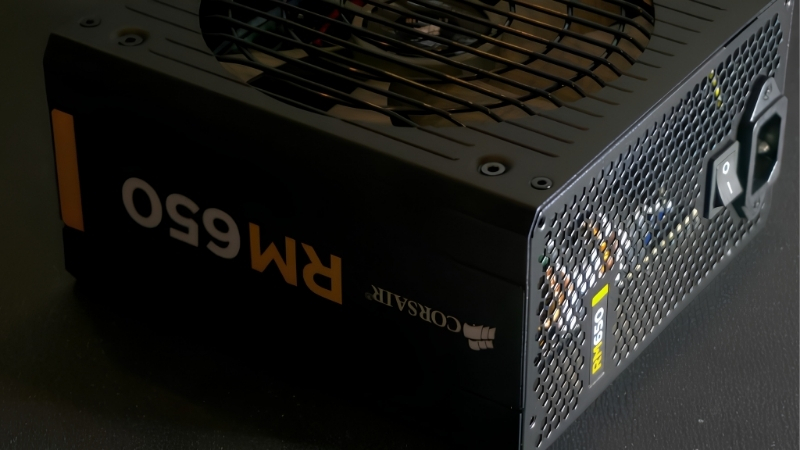
How Much Power Supply the RTX 4080 Needs
The short answer: a quality 750-watt power supply is the recommended minimum for an RTX 4080, which draws around 320 watts itself. Step up to 850 watts if you run a power-hungry high-end CPU or plan to overclock, and choose an ATX 3.0 or 3.1 unit so the card’s transient spikes are handled cleanly.
As an Amazon Associate we earn from qualifying purchases at no extra cost to you.


That one-line answer covers most builds, but the wattage, the connector, and the timing each reward a closer look. Getting all three right is what turns a 4080 into a stable, long-lived system rather than a fast card on a shaky foundation.
The Recommended 750W
The RTX 4080 has a total board power of roughly 320 watts, and the widely recommended pairing is a 750-watt power supply. That figure leaves comfortable headroom for the rest of a typical system without overspending on capacity you will never use.
This recommendation assumes a mainstream to upper-midrange processor and a normal complement of drives and fans. For the great majority of 4080 builds, 750 watts is exactly the right target.
It is a figure that balances safety and value well. Going much higher rarely improves anything for a 4080 system, while going lower removes the headroom that keeps the build stable when both the card and the processor are working hard at once.
Accounting for Spikes
The card’s 320-watt rating is its sustained draw, but like all modern GPUs it produces brief transient spikes that momentarily pull much more. A 750-watt unit absorbs these comfortably, which is part of why that headroom matters.
If you pair the 4080 with a high-end, high-draw CPU, or intend to overclock either component, stepping up to 850 watts gives extra margin for those combined spikes. It is cheap insurance against instability under heavy mixed loads.
The cost difference between a 750 and an 850-watt unit is usually modest, which is what makes the upgrade easy to justify for a heavy build. You are buying a margin of safety that you will be glad of on the most demanding days.
Step-by-Step Sizing
Start with the card’s 320 watts, then add your CPU’s draw, which ranges from around 65 watts for an efficient chip to 250 watts or more for a high-end one. Add a modest allowance for drives, fans, and memory on top.
The total typically lands well under 750 watts for a mainstream build and approaches it for a high-end one, which is why 750 watts suits most and 850 suits the heaviest setups. Sizing this way means you buy enough without paying for excess capacity.
This simple addition method beats guessing every time. It also stops you from overspending on a 1000-watt unit you will never load, money that would do far more good put toward the card, the cooler, or faster storage.
Right-sizing the unit is therefore as much about value as stability. The goal is enough headroom to be safe and no more, leaving the rest of your budget free for parts that change how the system actually performs.
The Right Connector and Setup for a 4080
Wattage is only half the decision; the connector and standard matter just as much for a clean, reliable 4080 build. This section covers the 16-pin cable, the choice between a native cable and an adapter, and the trade-offs between power supply options.
ATX 3.0 and the 16-Pin Cable
The RTX 4080 uses a 16-pin power input, and the cleanest way to feed it is a native cable from an ATX 3.0 or 3.1 power supply. These modern units are built for exactly this card’s spike behaviour and ship with the right cable.
Choosing an ATX 3.0 or 3.1 unit therefore solves the wattage and the connector questions in one purchase. It is the approach most builders should take for a new 4080 system.
Buying the standard and the connector together in one unit also removes a whole category of worry. There is no adapter to source, no compatibility to second-guess, just the right cable for the card straight out of the box.
For a first-time builder especially, that simplicity is worth a lot. One correctly specified modern unit removes most of the power-related decisions and lets you focus on the rest of the build with confidence.
Native Cable vs Adapter
If you already own a capable older power supply, the 4080’s included adapter combines several 8-pin connectors into the 16-pin plug and works safely when fully seated. This lets a strong existing unit run the card without replacement.
That said, a native cable from a modern unit is tidier and has fewer connection points. For a brand-new build, prefer a native ATX 3.0 or 3.1 cable; reserve the adapter for the case where your existing unit is already up to the job.
Either route powers the card reliably when done correctly, so the decision is really about budget and tidiness rather than safety. A capable older unit with the included adapter is not a compromise on stability, only on cable neatness.
Pros and Cons of PSU Options
Here are the practical trade-offs for a 4080 owner:
- New ATX 3.0/3.1 unit – Pros: native cable, guaranteed spike handling, clean build. Cons: an added cost if your current unit is fine.
- Capable existing unit + adapter – Pros: saves money, reuses good hardware. Cons: the adapter is a workaround and must be correctly seated.
For most new builds the modern unit is the cleaner answer, while a strong existing supply plus the included adapter is a perfectly valid way to save money.
The right choice depends entirely on what you already own. If your current unit is a recent, high-quality model with enough wattage, reusing it is sensible; if it is older or marginal, a modern unit is the safer investment.
Timing and Choosing Your 4080 PSU
With the wattage and connector settled, the last piece is buying well in a market that has shifted recently. This section covers what to look for beyond raw wattage and whether it makes sense to buy now or wait.
What to Look For Beyond Wattage
Target an 80 Plus Gold rating or better for efficiency, fully modular cabling for a clean build, and a long warranty, often seven to ten years on quality units. These markers separate a dependable unit from a merely adequate one.
It is tempting to judge a power supply on wattage alone, but build quality is what keeps your card safe over years of use. A well-made unit protects everything downstream of it, which on a 4080 build is a great deal of value.
An ATX 3.0 or 3.1 rating with a native 16-pin cable rounds out the checklist for a 4080. The recommended power supplies linked in this guide are chosen for this balance of capacity, efficiency, and the right connector.
Buying in 2026
There is modest reassurance on pricing in 2026. The steep increases seen at the end of 2025 have eased, and some makers, including Framework, have noted a stretch of relative stability, while still cautioning that further fluctuation is possible.
The practical reading is that prices have stopped climbing rather than started falling. The market has settled at a high plateau, so the discount some buyers are holding out for has not materialised and may not for some time.
Treating the current prices as the new normal, rather than a temporary peak, leads to better decisions. Planning around what the market actually is today is more useful than waiting on a drop that the supply situation does not support.
Should You Wait or Buy Now
Because prices have leveled off at a high point rather than dropping, there is little to gain by delaying a power supply you need for a card you already own. Waiting risks leaving a 4080 underpowered or unbuilt for no real saving.
There is also an opportunity cost to delay. Every week spent waiting for a discount that may not come is a week your 4080 sits unused or runs on an unsuitable unit, which is a poor trade for a saving the market is not offering.
A power supply is also the most reusable part in any build, carried across several future graphics cards. Buying a good 750 or 850-watt unit now spreads its cost over years and gets your 4080 running properly today.
Seen over the life of several builds, a quality unit is one of the best-value purchases you can make. It long outlasts the card it was bought for, quietly powering one upgrade after another, which is why it deserves to be chosen well rather than rushed or skimped on.
That long horizon is the strongest argument for buying a good unit now. A 4080 is a serious card, and pairing it with a dependable power supply protects the whole investment for as long as you own it and beyond.
Spend a little time choosing the right unit now, and it will reward you with stability and effortless reuse for years to come, which is about the best long-term return any single component in a build can offer a serious 4080 owner.
Working out how much power supply your RTX 4080 needs comes down to a simple rule: 750 watts for most builds, 850 for high-end CPUs or overclocking, on a modern ATX 3.0 or 3.1 unit. Whether you are building fresh or upgrading, take a look at the recommended power supplies linked throughout this guide and choose the one that matches your exact system.
See More:
- How to clean a GPU heatsink
- GPU vertical mount thermals
- GPU thermal throttle temp
- What PSU for RTX 4090
- What PSU for RTX 5080
Conclusion
To sum up how much power supply for RTX 4080 you need, a quality 750-watt unit is the recommended target for the card’s roughly 320-watt draw, rising to 850 watts for a high-end CPU or overclocking. Choose an ATX 3.0 or 3.1 unit with a native 16-pin cable for the cleanest setup, and with prices stable but still high, there is no advantage in waiting to buy a unit you need. Check the recommended power supplies above to give your RTX 4080 a stable, future-proof foundation.
Top-Rated Picks


Prime
Top Rated
YEZriler 8 Pin PCIe Cable for EVGA Power Supply, PCIe 8 Pin Male to (6+2) Male PCI Express Power Adapter Sleeved 25-inch (63cm)

| Product | Brand | Rating | Reviews | Price |
|---|---|---|---|---|
| Cable Matters 8 Pin GPU Power Cable – 2ft, 8Pin PSU(E… | CableMatters | ★ 4.5 | 592 | under $10 |
| Fasgear 16pin GPU Cable to 4X 8 Pin Pcie Extension – … | Fasgear | ★ 4.5 | 240 | under $30 |
| PCIE 5.0 16Pin GPU Power 12VHPWR Extension Cable, 16P… | Bangfun | ★ 4.5 | 86 | under $20 |
| YEZriler 8 Pin PCIe Cable for EVGA Power Supply, PCIe… | MoreOptionsForYou! | ★ 4.2 | 99 | under $10 |
| (2-Pack) COMeap 12 Pin GPU Cable, Dual PCIe 8 Pin Fem… | COMeap | ★ 4.6 | 39 | under $20 |
Frequently Asked Questions
What wattage does the RTX 4080 actually need?
The RTX 4080 and 4080 Super both carry a 320W total graphics power rating, and NVIDIA recommends a 750W supply for a typical build. That leaves headroom for a 105W to 125W CPU plus drives, fans and motherboard overhead. A quality 750W unit is enough; a 850W unit is the safer pick if you also run a heavily overclocked processor.
Can I run a 4080 on a good 650W power supply?
It can work with a modest CPU such as a 65W part and a clean, modern 650W unit, but you are operating near the top of its capability during transient spikes. Ada cards can briefly draw well above their rated power for microseconds, and older units without ATX 3.0 excursion handling may trip over-current protection and shut the system down.
How many power connectors does the RTX 4080 use?
Reference designs use a single 12VHPWR or 12V-2×6 16-pin connector configured for 450W. Cards ship with an adapter that combines three PCIe 8-pin cables, and each 8-pin is rated for 150W. Use three separate cables from the supply rather than daisy-chaining two connectors off one pigtail, and push the plug until it clicks fully home.
Do I need an ATX 3.0 or 3.1 unit specifically?
No, but it simplifies things. A native 16-pin cable removes the bulky adapter, improves clearance behind the side panel, and the standard guarantees the unit tolerates power excursions well above its rating. If your existing high-quality unit is only a few years old, the bundled adapter is a supported and perfectly functional solution.
What efficiency rating should I look for?
80 Plus Gold is the sensible target for a card in this class. It typically means better internal components, a single strong 12V rail and quieter operation under load. Platinum and Titanium units cost noticeably more for a few percent efficiency, so put that money into higher wattage or a longer warranty instead.
Ready to decide? Our #1 pick for 2026 is the Cable Matters 8 Pin GPU Power Cable – 2ft, 8Pin PSU(E….
Live price & availability on Amazon.




Write Your Review
No reviews yet. Be the first to share your experience!