
- Top Pick: GIGABYTE GeForce RTX 4070 WINDFORCE OC 12G Graphics Card, 3X WINDFORCE Fans, 12GB 192-bit GDDR6X, GV-N4070WF3OC-12GD Video Card
- Best Value: MXZ Intel Core i7 12700F 5.2GHz,GeForce RTX 4070, Gaming PC,16G DDR4, M.2 SSD 1T, B760, 6RGB Fans,Windows 11 Pro, Gamer Desktop Computer(I7 12700F| RTX 4070)
- Premium Choice: ASUS Dual GeForce RTX 4070 OC Edition 12GB GDDR6X, IP5X, Auto-Extreme Technology, 144-Hour Validation Program, HDMI 2.1a, DP 1.4a, 3 Year Warranty
How many watts does a RTX 4070 use is one of the first things builders ask, whether they are sizing a power supply, working out their electricity bill, or simply checking that their current system can handle the card. The good news is that the RTX 4070 is one of the most efficient mainstream cards Nvidia has made, so the answer is reassuringly modest. This guide gives you the exact figures, shows you how to size a power supply step by step, and shares simple ways to keep the card running cool and cheap.
How Many Watts the RTX 4070 Actually Uses
The quick answer: a stock RTX 4070 draws around 200 watts under a full gaming load, climbs a little higher during brief power spikes, and pushes a typical complete system to roughly 350 to 400 watts. That efficiency is the card’s headline strength, and it is why a 650-watt power supply is the standard recommendation rather than anything larger. The detail below breaks down where that power actually goes.
As an Amazon Associate we earn from qualifying purchases at no extra cost to you.



The 200W Board Power Explained
Nvidia rates the RTX 4070 at a total board power of around 200 watts, which is the figure that covers the whole card, including the GPU core, memory, fans, and lighting. This is notably lower than the previous generation’s equivalent tier, thanks to a more efficient architecture.
That 200-watt figure is the number to plan around for most purposes. It represents the sustained draw you will see during demanding games, and it is the basis for every power-supply and cost calculation in this guide.
For context, this is a card you can run comfortably in a wide range of systems without needing an oversized or premium power supply, which keeps the overall build cost down.
It also means the 4070 is friendly to small form factor builds. With only 200 watts to feed and dissipate, you have more freedom to use a compact case or a quieter cooler than you would with a 350-watt-plus card, opening up build options that bigger GPUs rule out.
That flexibility is part of why the 4070 is so popular for balanced mid-range builds. It hits a sweet spot where performance, power, heat, and cost all stay reasonable at once, which is harder to achieve at the extremes of the range.
Real Gaming Versus Peak Spikes
In everyday gaming, the 4070 often draws a little less than its full 200 watts, since not every game pushes it to the limit. Lighter titles and capped frame rates can keep it well below that ceiling.
Like all modern cards, however, it produces brief transient spikes that momentarily exceed the rated figure. These last only milliseconds and are well within the capability of a quality power supply, but they are the reason a sensible buffer matters when sizing a unit.
In practice these spikes rarely cause trouble on a correctly sized 4070 system, precisely because the recommended 650-watt unit already includes generous headroom. They are worth knowing about, but not something a sensible build needs to fear.
Idle and Everyday Power Draw
When you are not gaming, the 4070 sips power. At idle on the desktop or during light tasks like browsing and video, it typically draws only a handful of watts to a few dozen, depending on your monitor setup.
This low idle draw is part of what makes the card cheap to live with day to day. The big numbers only appear when you are actually gaming or running heavy workloads, so the average draw over a normal day is far lower than the peak figure suggests.
This matters for anyone worried about running costs. Because the card only draws heavily while you are actively gaming, the energy it uses over a full day is modest, and a machine left on for light work costs very little to keep running with a 4070 inside.
What PSU and Setup the RTX 4070 Needs
Knowing the card’s draw is only useful once you turn it into a power-supply choice and a sense of running cost. The 4070’s efficiency makes both straightforward, and this section walks through exactly how to size your system and estimate what the card adds to your bill.
The Recommended 650W Power Supply
Nvidia recommends a 650-watt power supply for the RTX 4070, and for the vast majority of builds that is exactly right. It leaves comfortable headroom above the card’s draw to power your CPU, drives, and fans, while absorbing those brief spikes.
You do not need a huge or expensive unit here, which is one of the quiet benefits of choosing an efficient card. A quality 650-watt power supply, like the well-reviewed options linked in this guide, is the sensible match and leaves a little room for future upgrades.
There is also no benefit to going far beyond 650 watts for this card. A 1000-watt unit on a 4070 simply runs lightly loaded and costs more for no gain, so matching the unit to the card keeps both your spend and your efficiency sensible.
Step-by-Step: Sizing Your System
- Start with the GPU: about 200 watts for the 4070.
- Add your CPU’s peak: roughly 65 to 150 watts for a typical mainstream chip.
- Add about 80 watts for drives, fans, RAM, and the motherboard.
- Add a 30% buffer for spikes and efficiency, which lands you comfortably at 650 watts.
This simple math confirms why 650 watts is the standard answer. If you pair the card with a particularly power-hungry CPU, stepping up to 750 watts adds extra margin without overspending.
One practical tip when sizing: count any extras that draw real power, such as several drives, bright RGB lighting, or a custom cooling loop. They are individually small but add up, and budgeting for them keeps your chosen unit comfortably within its limits.
Electricity Cost of Running a 4070
Because the card draws around 200 watts under load, the running cost is easy to estimate. As a rough guide, gaming for a few hours a day adds only a modest amount to a typical monthly bill, though the exact figure depends entirely on your local electricity rate.
To work out your own number, multiply the system’s gaming draw in kilowatts by your hours of use and your rate per kilowatt-hour. The 4070’s efficiency means this cost stays low compared with higher-tier cards that draw two or three times as much.
Getting the Most Efficiency from a 4070
The 4070 is already efficient out of the box, but a few simple choices can lower its draw and heat even further, which is useful if you want a quieter, cooler, or cheaper-to-run system. This section weighs the card’s power profile and shares practical ways to optimise it.
Pros and Cons of the 4070’s Power Profile
Here is the honest balance of what the card’s low power use means for you:
- Pros: a modest 200-watt draw, a cheap 650-watt power supply requirement, low running cost, less heat to manage, and quieter cooling.
- Cons: the efficiency comes from a mid-range performance class, so it is not aimed at maximum frame rates, and the low draw matters less if you already own a large power supply.
For most builders, the pros are exactly the point: the 4070 delivers strong performance for the power it uses, which keeps the whole system simpler and cheaper.
Tips to Lower Power Draw
A frame-rate cap is the simplest tool. By limiting your frames to your monitor’s refresh rate, the card stops working harder than it needs to, which can noticeably reduce both power draw and fan noise in many games.
Undervolting goes a step further. With a little tuning, many 4070 owners run the card at lower voltage for the same performance, trimming both power and temperature. It is a popular, reversible tweak that takes advantage of the card’s already-efficient design.
Together, a frame cap and a mild undervolt can shave a meaningful slice off the card’s draw with no real downside. For a card that is already efficient, these tweaks turn a good power profile into an excellent one.
How the 4070 Compares on Efficiency
Measured as performance per watt, the 4070 is one of the strongest cards in its range, delivering high frame rates for a relatively small power budget. This is where Nvidia’s architecture and features like its AI-based frame generation pay off, stretching performance well beyond what the raw wattage suggests.
That efficiency also future-proofs your build a little, since a card that does more with less power leaves more headroom in your system. For anyone who values a quiet, cool, and affordable setup, the 4070’s power profile is a genuine selling point.
It is also reassuring for the long term. A card that delivers strong frames for modest power tends to age gracefully, since it is not straining against its own thermal and power limits the way a maxed-out flagship can.
The RTX 4070’s low power use makes it one of the easiest high-performance cards to build around, needing only a modest, affordable power supply. If you are putting together or upgrading a system for one, take a look at the recommended 650-watt power supplies and cooling gear linked throughout this guide and pick the parts that match your build.
See More:
- How to clean a GPU heatsink
- GPU vertical mount thermals
- GPU thermal throttle temp
- What PSU for RTX 4090
- What PSU for RTX 5080
Conclusion
So, how many watts does a RTX 4070 use? Around 200 watts under load, a little more in brief spikes, and only a handful at idle, which pushes a full system to roughly 350 to 400 watts and calls for a sensible 650-watt power supply. That efficiency keeps your build cheaper, cooler, and quieter, and simple tweaks like a frame cap or an undervolt can trim the draw further. Check the recommended 650-watt power supplies above to give your RTX 4070 a clean, efficient foundation.
Top-Rated Picks


Prime
Top Rated
YEZriler 8 Pin PCIe Cable for EVGA Power Supply, PCIe 8 Pin Male to (6+2) Male PCI Express Power Adapter Sleeved 25-inch (63cm)

| Product | Brand | Rating | Reviews | Price |
|---|---|---|---|---|
| Cable Matters 8 Pin GPU Power Cable – 2ft, 8Pin PSU(E… | CableMatters | ★ 4.5 | 592 | $9.99 |
| Fasgear 16pin GPU Cable to 4X 8 Pin Pcie Extension – … | Fasgear | ★ 4.5 | 240 | $29.99 |
| PCIE 5.0 16Pin GPU Power 12VHPWR Extension Cable, 16P… | Bangfun | ★ 4.5 | 86 | $19.99 |
| YEZriler 8 Pin PCIe Cable for EVGA Power Supply, PCIe… | MoreOptionsForYou! | ★ 4.2 | 99 | $9.99 |
| (2-Pack) COMeap 12 Pin GPU Cable, Dual PCIe 8 Pin Fem… | COMeap | ★ 4.6 | 39 | $13.99 |
Frequently Asked Questions
What is the RTX 4070 rated at?
The original RTX 4070 carries a 200W total graphics power rating, while the 4070 Super sits at 220W and the 4070 Ti moves up to 285W. These are among the most efficient cards of their generation for 1440p gaming, which is why a 650W supply is the standard recommendation for the base model.
What does it draw in real games?
Typical 1440p gaming loads land between 160W and 200W, and the card frequently runs below its ceiling because it hits its clock limit before its power limit. Capping frame rate with an in-game limiter or a driver-level cap can drop draw substantially in titles that would otherwise render hundreds of unnecessary frames.
What power supply and connector does it need?
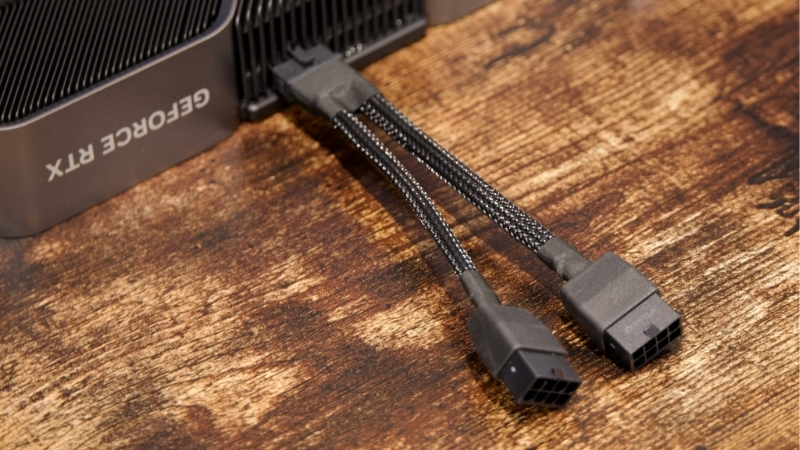
NVIDIA recommends 650W for the base 4070. Reference cards use a 16-pin connector configured for 300W with a bundled two-into-one 8-pin adapter, while many partner designs use a conventional single or dual 8-pin instead. Either arrangement is fine; just use separate cables rather than a daisy-chained pigtail for dual-connector cards.
Is 12GB of VRAM enough at this power level?
For 1440p it remains comfortable in the large majority of current titles, including with ray tracing and DLSS enabled. A handful of demanding releases with ultra texture packs will approach the limit at 4K, where this class of card is already relying on upscaling. For 1080p and 1440p it is well matched.
Can undervolting help a card that is already efficient?
It still helps. A modest undervolt often holds stock clocks at lower voltage, dropping draw by twenty to thirty watts and letting the fans spin slower or stop entirely at light load. On a compact dual-fan design in a small case, that translates directly into a quieter machine with lower memory temperatures.



Write Your Review
No reviews yet. Be the first to share your experience!