
- Top Pick: ASRock Radeon RX 9060 XT Challenger 16GB OC, RDNA 4, 3290MHz Boost, 16GB GDDR6 128-bit, PCIe 5.0, Dual Fans, 0dB Silent, LED Indicator, DisplayPort 2.1a, HDMI 2.1b
- Best Value: ASRock Radeon RX 9070 Challenger 16GB OC Graphics Card, RDNA 4, 2520MHz Boost, 16GB GDDR6 256-bit, PCIe 5.0, Triple Fans, 0dB Silent, LED Indicator
- Premium Choice: Acer Nitro 27in QHD 2560×1440 Curved 180Hz Gaming Monitor EDA270U Pbmiipx
How much VRAM for 1440p gaming is one of the most practical questions you can ask before buying a graphics card, because 1440p sits in the sweet spot where VRAM either gives you years of headroom or quietly becomes a bottleneck. Pick too little and you stutter in modern titles; pick too much and you overpay for memory you never touch. This step-by-step guide gives you a clear 1440p target, shows you how to confirm your own needs, and explains why today’s memory market makes the timing of your purchase matter as much as the number itself.
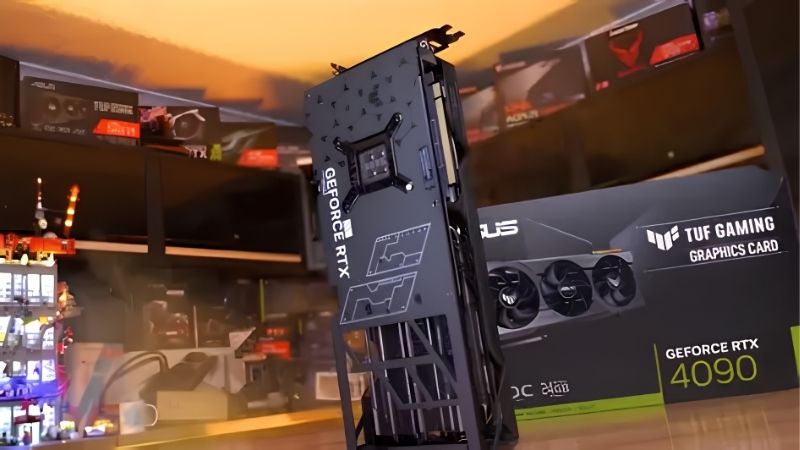
How Much VRAM for 1440p Gaming Really Takes
The short answer is that 1440p has grown more demanding, and the comfortable target has crept upward as games add richer textures and ray tracing. There is a clear figure to aim for, but it shifts with your settings, so it helps to understand the range before locking in a number.
As an Amazon Associate we earn from qualifying purchases at no extra cost to you.


The Realistic 1440p VRAM Target
For comfortable 1440p gaming in 2026, 12 GB is the realistic sweet spot. It gives you room for high textures, solid frame rates, and some ray tracing without constantly bumping the memory ceiling in modern titles.
You can still play at 1440p on 8 GB, but increasingly you will be forced to lower texture settings in the heaviest games to avoid stutter. That makes 8 GB a tight floor rather than a comfortable choice at this resolution, and one that grows more limiting with each demanding release.
If you want maximum settings, ray tracing, and genuine future-proofing at 1440p, 16 GB buys real peace of mind for years to come. The extra capacity rarely goes to waste at this resolution, since 1440p texture and ray tracing demands keep climbing with every new release.
How Settings and Ray Tracing Change It
Your settings move the target as much as the resolution does. Ultra texture packs are the biggest single driver of VRAM use, often adding several gigabytes over high settings, and they push a 1440p card toward the upper end of its needs.
Ray tracing is the next big factor, typically adding 1.5 GB to 2 GB of VRAM use when enabled. Combine ultra textures with ray tracing at 1440p and a 12 GB card can start to feel its limits in the most demanding titles.
If you plan to run everything maxed with ray tracing on, treat 12 GB as your floor and 16 GB as the comfortable choice rather than a luxury. The combination of the two is what pushes a 1440p card hardest, so plan your capacity around how you actually intend to play.
1440p vs 1080p and 4K Demands
It helps to see 1440p in context. At 1080p, 8 GB still covers most games, since the smaller frame buffer and texture footprint demand less memory overall, so 1080p buyers can spend less on capacity.
At 4K, the picture flips: 16 GB becomes the sensible floor because the larger frame buffer and higher-resolution assets devour memory. 1440p sits neatly between the two, which is exactly why 12 GB is the balanced target.
This middle position is also why 1440p is such a popular resolution: it delivers a sharp, detailed image without the steep VRAM and performance demands of 4K, making it the practical choice for most gamers who want quality without an extreme budget.
How to Check You Have Enough — Step by Step
Rather than trusting a general rule, the smartest move is to measure your own 1440p usage. A few minutes with free tools tells you exactly whether your card has enough headroom. Here is what to use and how.
What You Will Need
Everything here is free or already installed. Gather these before you begin.
- Windows Task Manager — shows your total dedicated GPU memory in the Performance tab.
- The NVIDIA app or GPU-Z — free tools that display live VRAM usage as you play.
- A demanding game set to 1440p — at the settings you actually use, to load the card realistically.
- A 12 GB or 16 GB graphics card, if you fall short — for solid 1440p headroom, a current-generation NVIDIA RTX model with at least 12 GB keeps you comfortable for years.
If you upgrade, match the card to your power supply and case length first, since capable 1440p cards often draw 250 watts or more.
Step-by-Step: Testing Your 1440p VRAM Use
Follow these steps in order to confirm whether your card has enough VRAM for 1440p.
- Note your total VRAM. Open Task Manager, go to Performance, select your GPU, and read the dedicated memory figure.
- Set the game to 1440p at your normal settings and play a demanding scene for several minutes.
- Watch live VRAM usage with the NVIDIA app overlay or GPU-Z during the busiest moments.
- Look for the ceiling. If usage pins near your maximum with stutter, you are VRAM-limited at 1440p.
- Drop textures one notch and recheck. If the stutter clears, that confirms VRAM was the bottleneck, not raw power.
If usage sits comfortably below the maximum, your card has the headroom for 1440p and no upgrade is needed yet. Your own measurements at your real settings are far more trustworthy than any blanket recommendation, since they capture exactly how you play.
Pros and Cons of 12 GB vs 16 GB for 1440p
The real 1440p decision usually comes down to 12 GB versus 16 GB, and each has clear trade-offs worth weighing for how much VRAM for 1440p gaming you truly want.
A 12 GB card hits the sweet spot for 1440p, handling high textures and moderate ray tracing comfortably while costing less than a 16 GB equivalent. The downside is that ultra textures plus heavy ray tracing in the most demanding future titles may eventually press against that ceiling, especially toward the end of the card’s life.
A 16 GB card buys genuine future-proofing and headroom for maxed settings, ray tracing, and creative workloads at 1440p. The downside is the higher price and power draw, which is only worth it if you push settings hard or plan to keep the card for many years.
Buying Smart for 1440p in 2026
Picking the right VRAM for 1440p is only part of the decision in 2026, because when you buy matters almost as much as what you buy. The memory market is in an unusual state, so here is how today’s prices should shape your timing, plus the tips that keep you from overspending.
Why Rising Memory Prices Affect Your Choice
Timing matters more than usual right now, because VRAM is built from the same memory chips facing real price pressure. Laptop and PC component prices have been trending upward, and current forecasts expect them to keep climbing, which feeds straight into graphics card prices since memory is a major part of the cost.
There is some genuinely good news, but it is mild and a little distant. The steep price climb of late 2025 has paused, and a few hardware makers, Framework among them, have reported a stretch of relative stability. The catch is that those same makers are still warning of further volatility, so this calm is best read as a breather rather than an all-clear.
New supply is slowly opening up as well. PC makers can now source DDR5 from Chinese suppliers such as CXMT, and Micron is building two new plants in Idaho to expand output. The problem is the calendar: those Idaho plants are not expected to run until 2027 or 2028, so prices have flattened rather than fallen, and real relief is still years away.
What does this mean for your 1440p card? If you already game at 1440p and your card is short on VRAM, waiting for a big price drop is a gamble that may not pay off before 2027. Buying a 12 GB or 16 GB card now, while prices are at least stable rather than spiking, protects you from the next upward swing and from the steady creep of texture budgets that hits 1440p especially hard. If you can comfortably afford the headroom today, locking it in is the lower-risk move.
Pro Tips and Mistakes to Avoid
A few habits separate 1440p buyers who get lasting value from those who overspend or fall short.
- Balance core and memory. A strong GPU core with 12 GB beats a weak chip with 16 GB for real 1440p frame rates.
- Do not under-buy at 1440p. An 8 GB card forces texture compromises in modern titles, so 12 GB is the smarter floor.
- Lean on DLSS and frame generation. These ease both VRAM and performance pressure while keeping 1440p sharp.
- Buy for the years ahead. If you keep cards a long time, 16 GB protects you as textures keep growing.
The biggest mistake at 1440p is choosing 8 GB to save a little now, then fighting stutter and texture compromises for the life of the card, which costs far more in frustration than the small upfront saving was worth.
When to Upgrade for Smooth 1440p
If your own readings show VRAM pinned at the limit with stutter at 1440p, an upgrade is the most effective fix, and a 12 GB or 16 GB card transforms the experience. Match the capacity to how hard you push settings rather than overbuying blindly.
With prices stable for now but real relief years off, securing the VRAM you need for 1440p today is a sound long-term move rather than a bet on a drop that may never arrive in time to help you.
When your measurements confirm it is time, compare current graphics cards with 12 GB or 16 GB and grab the one that fits your 1440p needs before the market shifts again.
See More:
- GPU pink screen
- Nvidia Control Panel missing
- Nvidia Control Panel not opening
- GeForce Experience won’t open
- Nvidia app won’t install
Final Word on How Much VRAM for 1440p Gaming
So how much VRAM for 1440p gaming comes down to a clear answer: 12 GB is the comfortable sweet spot, 8 GB is a tight floor that forces compromises, and 16 GB buys real future-proofing if you push settings hard or keep cards for years. Measure your own usage rather than guessing, and let your settings and ray tracing plans nudge the number.
With memory prices stable for now but lasting relief still years away, buying the VRAM you genuinely need for 1440p today is the smarter long-term play than waiting for a drop that may not come. Measure first, aim for that 12 GB sweet spot, and the question of how much VRAM for 1440p gaming becomes a confident, future-proof decision.
Top-Rated Picks


| Product | Brand | Rating | Reviews | Price |
|---|---|---|---|---|
| ARCTIC MX-4 (4 g) – Premium Performance Thermal Paste… | ARCTIC | ★ 4.8 | 104k | $4.99 |
| ARCTIC MX-4 (incl. Spatula, 4 g) – Premium Performanc… | ARCTIC | ★ 4.8 | 71.9k | $5.49 |
| Crucial 8GB DDR4 RAM 3200MHz (PC4-25600), Downclockab… | Crucial | ★ 4.8 | 62.8k | $74.99 |
| AMD Ryzen 5 5600X 6-core, 12-thread unlocked desktop … | — | ★ 4.8 | 30.2k | $177.60 |
| NVIDIA Shield Remote; Voice Search, Motion-Activated,… | — | ★ 4.7 | 10.6k | $25.99 |
Frequently Asked Questions
Is 8GB still enough for 1440p?
It is increasingly marginal. Many 2025 and 2026 releases exceed 8GB at 1440p with high textures, and enabling ray tracing or frame generation makes it worse. You can play by dropping texture quality, but textures are the setting with the biggest visual impact and the smallest performance cost when memory allows.
How much should I actually aim for at 1440p?
Twelve gigabytes is a comfortable minimum for high settings today, and 16GB gives genuine headroom for ray tracing, frame generation and the next few years of releases. If you are choosing between a slightly faster 8GB card and a slightly slower 12GB card, take the extra memory.
Does ray tracing change the VRAM requirement at 1440p?
Yes. Acceleration structures for scene geometry typically add around one gigabyte, and ray reconstruction denoising adds more. A game comfortably using 7GB with ray tracing off can reach 9 or 10GB with it enabled, which is precisely why 8GB cards struggle in ray traced titles despite adequate core performance.
How do I tell if VRAM is the bottleneck?
Watch frame times rather than average frame rate using MSI Afterburner with RivaTuner. Memory shortage shows as sudden spikes and visible texture pop-in rather than uniformly low performance. If lowering only texture quality restores smoothness while other settings barely matter, you are memory limited rather than core limited.
Does allocated VRAM mean the game needs it all?
No. Games often reserve as much as is available as a cache, so a card with 16GB may show 12GB allocated in a game that runs fine on 8GB. Compare usage across cards with different capacities, or watch for actual stutter, rather than trusting the allocation figure alone.






Write Your Review
No reviews yet. Be the first to share your experience!