
Top Rtx 4090 Founders Edition Still Picks for 2026
Here are our current top rtx 4090 founders edition still picks, compared on real Amazon owner reviews, price, and features. Live prices update below.
- Top Rtx 4090 Founders Edition Still Picks for 2026
- The Benchmark Question: 4090 FE vs the Blackwell Lineup
- The Founders Design, Revisited After Three Years
- Owner Verdicts and the 2026 Buying Decision
- Recommended Products
- Conclusion: Still the One to Beat — In Exactly One Arena
- Related Guides
- Frequently Asked Questions
- Related Articles
- Related Guides


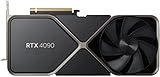
4090 Founders Edition remains the card every new GPU launch gets measured against — the benchmark line on every chart, the “but how does it compare to a 4090?” in every comments section. A full Blackwell generation has now shipped, which makes the question finally answerable with data rather than reverence: is Nvidia’s most iconic Founders card still the one to beat in 2026, or has the 50 series quietly retired the crown? This review runs that exact accounting — the FE against each Blackwell tier, the Founders design against the partner cards that copied it, and the owner verdicts that decide who should still be buying one today.
As an Amazon Associate we earn from qualifying purchases at no extra cost to you.





The Benchmark Question: 4090 FE vs the Blackwell Lineup
The card’s 16,384 CUDA cores, 24GB of GDDR6X, and 450W envelope defined the performance ceiling for two years. The honest 2026 accounting splits by opponent — and the results are less uniform than either the nostalgists or the upgrade marketers claim.
Against the RTX 5090: The Crown Has Moved
The succession is clean at the top: the RTX 5090’s 21,760 cores and 32GB of GDDR7 deliver 25-30% more raster at 4K — Cyberpunk 2077 ultra at 105 FPS versus 82 FPS — plus decisively faster ray tracing and Multi Frame Generation on top. In every category the 4090 FE once owned, the 5090 now owns it by a margin no tuning closes.
The price column keeps the comparison interesting anyway: with the 5090 at $1,999+ and frequently far above, and used 4090s at $1,300-1,600, the old champion costs meaningfully less for roughly three-quarters of the new flagship’s output — the exact value position it spent its own era denying to others.
Against the RTX 5080: The Fight Nobody Predicted
This is the matchup that defines the card’s 2026 standing. In raster, the 4090 FE still wins — roughly 5-10% ahead of the 5080 at 4K — and its 24GB doubles down on the lead for memory-bound work. The old flagship remains, by silicon, the second-fastest raster card a consumer can own.
Features invert the verdict where they apply: the 5080’s DLSS 4 Multi Frame Generation produces higher effective frame rates in its 175+ supported titles — path-traced Cyberpunk at 4K running roughly 130 FPS against the 4090’s 115 with DLSS 3 — while costing $999 new with a warranty against $1,300+ used without one. The split decision is genuine: raster purists and 24GB workloads still point old; feature-forward gamers point new and save money doing it.
Against the RTX 5070 Ti: The Value Reckoning
The $749 card delivers the harshest arithmetic: roughly 75-80% of the 4090’s raster, the full Blackwell feature set that overtakes it in DLSS 4 titles, half the power draw, half the used 4090’s price, and a warranty. For pure gaming, this comparison is where the 4090 FE’s case quietly ends — the migration reviews from owners who made exactly this lateral move read as relieved rather than regretful — lighter power bills, quieter rooms, and a warranty card in the drawer.
What survives the reckoning is the 24GB: no Blackwell card below the 5090 matches it, and for AI, rendering, and 8K timelines that buffer remains the cheapest ticket to its capacity class anywhere in the market — the single specification holding the card’s price aloft.
The Founders Design, Revisited After Three Years
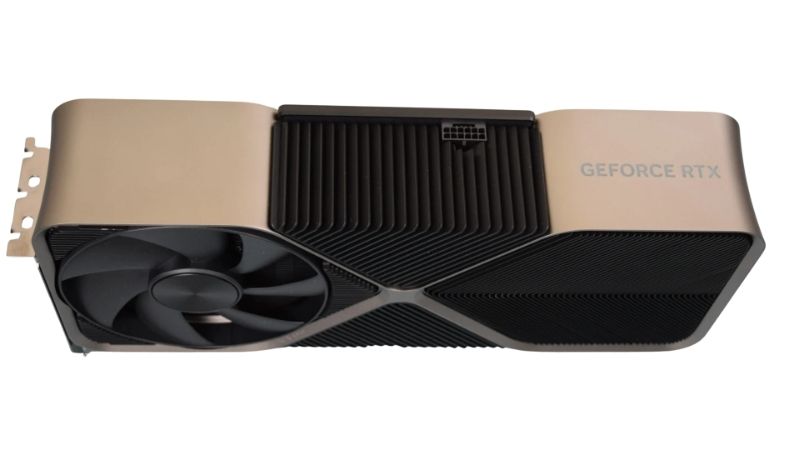
The FE’s dual flow-through cooler was the most influential industrial design of its GPU era — and three years of field data, partner imitation, and a Blackwell successor make its strengths and flaws finally measurable rather than aesthetic.
What the Design Got Right, Proven by Time
The thermal record vindicates the engineering: 65-72°C under sustained 450W load at 38-40 dBA, vapor chamber and fan bearings showing low failure rates across years of hard service, and a 304mm 3-slot footprint that partner cards needed four slots to rival. Long-term owner reviews rank the cooler among the card’s most praised attributes — durability language usually reserved for industrial equipment.
The design’s influence is its second validation: Blackwell’s Founders cards iterate directly on the flow-through concept, and the partner ecosystem’s premium tiers converged on the same airflow philosophy. The 4090 FE aged into the reference point it was built to be.
What Three Years Exposed
The 12VHPWR connector remains the asterisk history will keep: early seating failures and melted adapters affected a small percentage of units but a large percentage of the discourse, and the revised connector plus user education that closed the issue arrived after the reputation formed. Every used-FE inspection still begins at that connector, photographing seating before first power-on — the two-minute ritual the failure reports almost universally lacked.
The second exposure is contextual: 450W into a room is a permanent property, and owners in warm climates document the summer tax in otherwise glowing reviews. The efficiency frontier moved without the card — Blackwell delivers more frames per watt at every tier — and no maintenance reverses an architecture’s thermodynamics.
The community’s answer to that thermodynamics deserves its line: undervolting became the 4090’s signature owner ritual, trimming 80-100W for a 3-5% performance cost — numbers the tuning reviews replicate so consistently that “undervolt it day one” reads as standard onboarding. The practice cools rooms, quiets fans, eases connector load, and is the single best free modification a used buyer can apply.
FE vs Partner 4090s on Today’s Used Market
The used hierarchy has settled usefully: the FE commands a $50-150 premium over equivalent-condition partner cards on compactness, build cachet, and resale liquidity, while the oversized partner models counter with slightly better thermals from sheer mass and, occasionally, surviving transferable warranties.
The buying rule the marketplace reviews converge on: condition evidence outranks model choice entirely at this card’s age and price — stress-test screenshots, memory temperatures under 95°C, connector photographs, and a return window are worth more than any cooler’s reputation. At four-figure used prices, an hour of verification is the cheapest insurance in the transaction — and the lower-star reviews are, almost without exception, written by buyers who declined it.
Owner Verdicts and the 2026 Buying Decision
Three distinct owner generations have now reviewed this card — launch buyers, post-crash bargain hunters, and current AI-era purchasers — and their combined record draws the buying map with unusual precision.
The Long-Term Owner Consensus
Launch-era buyers, three years in, deliver the verdict that matters most for a used purchase: the card held up. Sustained 4K service without settings anxiety, thermal behavior unchanged from year one, and the recurring summary that the purchase “aged like the best PC component I’ve owned.” Regret appears almost exclusively about the connector discourse, not the hardware.
The current-era reviews split by purpose with total predictability: AI and creator buyers rate it a bargain at $1,300-1,600 against professional alternatives, while gaming buyers at the same prices file the comparison-shopping regrets the Blackwell math above explains.
Who Should Buy a 4090 FE Today
The rational buyer list has narrowed to two profiles: the 24GB-dependent professional or hobbyist — local AI, heavy 3D, 8K video — for whom this remains the floor price of the capacity class, and the raster-purist collector who wants the era’s defining card while it still tops the second-tier charts.
Everyone else redirects with the data’s blessing: the 5070 Ti for value, the 5080 for the modern flagship-adjacent experience, the 5090 for the actual crown. The FE’s gaming era was magnificent and is over; its workstation era is current and fully priced.
The Market Forces Setting Its Price
Two industry developments anchor this card’s strange economics. The United States has approved Nvidia selling the H200 — one of its most powerful AI accelerators — to China, reopening enormous data center demand whose overflow lands directly on high-VRAM consumer cards: buyers priced out of data center hardware purchase 4090s instead, which is precisely the bid holding a discontinued gaming card at launch pricing. The same approval tightens consumer GPU supply broadly, since H200 production competes for identical fabrication and memory capacity — a squeeze that has historically firmed prices within one to two quarters of every surge.
Simultaneously, laptop and component prices are trending upward with memory leading, as AI infrastructure absorbs DRAM production; used prices track new prices with a short lag, and with the entire 50-series holding above MSRP, the 4090’s floor is supported from below as well as bid from above. The forecast both buyer profiles need: waiting for historical flagship depreciation — the slide to $800-900 — is waiting on a mechanism the AI era has suspended indefinitely. If the workload needs the card, today’s price is the price; checking current listings on Amazon against the Blackwell alternatives settles the decision with live numbers.
Recommended Products

ASUS ROG Astral NVIDIA GeForce RTX™ 5080 16GB GDDR7 OC Edition Gaming Graphics Card (PCIe® 5.0, HDMI®/DP 2.1, 3.8-Slot, 4-Fan Design, Axial-tech Fans, Patented Vapor Chamber), 3 Year Warranty

msi
MSI Gaming GeForce RTX 4070 Ti 12GB GDRR6X 192-Bit Extreme Clock: 2760 MHz HDMI/DP Nvlink Tri-Frozr 3 Ada Lovelace Architecture Graphics Card (RTX 4070 Ti Gaming X Trio 12G)

ZOTAC
ZOTAC Gaming GeForce RTX 4070 Ti AMP AIRO Spider-Man: Across The Spider-Verse Inspired Graphics Card Bundle – ZT-D40710F-10SMP
As an Amazon Associate we earn from qualifying purchases. Product prices and availability are accurate as of the date/time indicated.
See more:
- ASUS TUF Gaming GeForce RTX 5090 3080 vs 5080
- Nvidia RTX 4070 Super graphics card
- Sapphire graphics card
- Is HDR good for gaming
- RTX 4080 vs 5070
Conclusion: Still the One to Beat — In Exactly One Arena
The 4090 Founders Edition answers its own 2026 question with a precision worthy of its engineering: as a gaming benchmark, it has been beaten — the 5090 outruns it, the 5080 out-features it, and the 5070 Ti out-values it — but as a 24GB workstation card at consumer pricing, it remains undefeated and the market’s pricing proves it daily. The Founders design itself passed the only review that matters, three years of hard service, and stands as the template its successors still iterate on. Buy one today for the buffer and the build, with connector diligence and condition evidence non-negotiable; buy Blackwell for everything else, and spend the difference on the rest of the machine. Either way, the live numbers decide better than the legend does — compare the current 4090 Founders Edition listings and their 50-series alternatives on Amazon today, and let your workload cast the final vote.
Frequently Asked Questions
What is the best 4090 founders edition in 2026?
The best 4090 founders edition depends on your budget and how you plan to use it. The options compared above are our top-rated picks based on real customer ratings, build quality, and overall value — start with the highest-rated model that fits your budget.
How much should I expect to spend on a 4090 founders edition?
Prices vary by brand and features. Budget options cover the essentials, while mid-range and premium models add durability, performance, and extra features. Compare the prices in the list above to find the best value for your needs.
What should I look for when buying a 4090 founders edition?
Focus on what matters most for your use case — build quality, compatibility, performance, warranty, and verified customer reviews. Every pick above is selected to balance these factors.
Are budget 4090 founders edition options worth it?
Yes. For most people a well-reviewed budget or mid-range 4090 founders edition delivers excellent value. You only need to spend more if you specifically require premium materials or top-tier performance.
How did we choose these 4090 founders edition picks?
We compare current Amazon ratings, review counts, key features, and price to surface the options with the best real-world value. The list is refreshed as ratings and availability change.

Write Your Review
No reviews yet. Be the first to share your experience!