
- Top Pick: Dell Gaming OEM Nvidia GeForce RTX 3080 10GB GDDR6X 320-bit 19Gbps PCIe 4.0 x16 Graphics Video Card 0Y5K9F (Renewed)
- Best Value: ASUS TUF Gaming NVIDIA GeForce RTX 3080 V2 OC Edition Graphics Card (PCIe 4.0, 10GB GDDR6X, LHR, HDMI 2.1, DisplayPort 1.4a, Dual Ball Fan Bearings, Military-Grade Certification, GPU Tweak II)
- Premium Choice: NVIDIA GeForce RTX 3080 20GB GDDR6X Dual Width Server GPU AI Model Graphics Card 20GB VRAM for Local LLMs; Supports Qwen, GLM, MiniMax & More
Top Nvidia Rtx 3080 Ampere Icon Picks for 2026
Here are our current top nvidia rtx 3080 ampere icon picks, compared on real Amazon owner reviews, price, and features. Live prices update below.
- Top Nvidia Rtx 3080 Ampere Icon Picks for 2026
- Nvidia RTX 3080 Specs and Real-World Performance in 2026
- Nvidia RTX 3080 Pros and Cons: The Honest Owner Consensus
- RTX 3080 Pricing in 2026: Why Market Timing Matters Now
- Recommended Products
- Final Verdict: Is the Nvidia RTX 3080 Worth Buying in 2026?
- Related Guides
- Frequently Asked Questions
- Related Articles


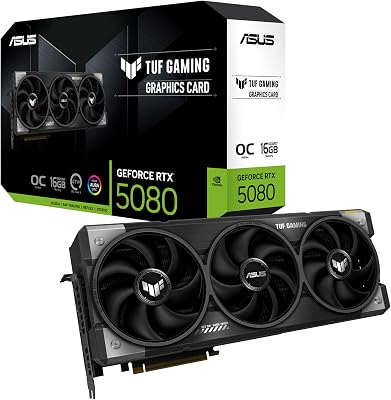

Nvidia RTX 3080 was the card that defined the Ampere generation — a $699 launch in September 2020 that delivered a 50-70% leap over the RTX 2080 and triggered the most famous stock shortage in GPU history. Six years on, it trades used between $280 and $380 and still anchors thousands of 1440p and 4K builds. The question this review answers with data: does the 10GB icon still earn a recommendation in 2026, which variant should you target, and how do current market forces change the timing? By the end, you will have a defensible yes-or-no for your own build.
As an Amazon Associate we earn from qualifying purchases at no extra cost to you.




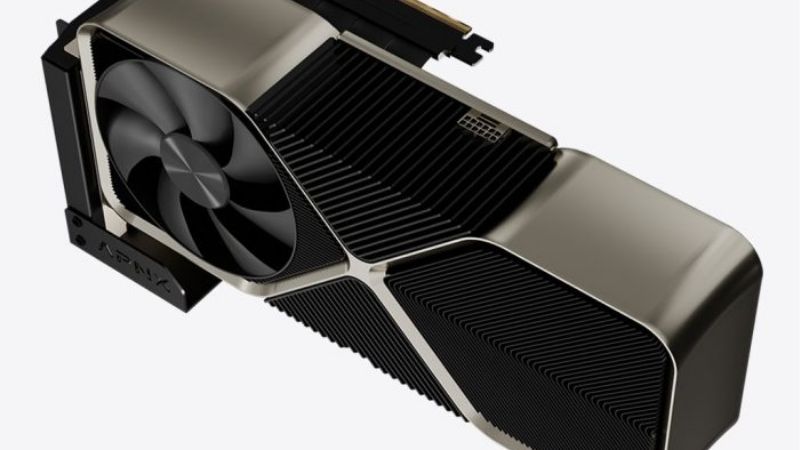
Nvidia RTX 3080 Specs and Real-World Performance in 2026
Every claim in this review traces back to the silicon, so we start with what Nvidia built into the GA102 die — including the important distinction between the two variants that share this name — and what those numbers deliver in today’s games.
Core Specifications: 10GB vs 12GB Variants Explained
The original RTX 3080 carries 8,704 CUDA cores, 68 second-generation RT cores, and 10GB of GDDR6X on a 320-bit bus producing 760 GB/s of bandwidth, at 320W total board power. In early 2022, Nvidia quietly released a 12GB variant with 8,960 CUDA cores, a full 384-bit bus, 912 GB/s of bandwidth, and a 350W rating — effectively a 3080 Ti with a marginally trimmed core count.
On the used market the 12GB version commands a $40-70 premium, and the data says it earns it: roughly 3-5% more raw performance plus the bandwidth and capacity headroom that matter most at 4K. Both variants boost to around 1,710 MHz reference, both require dual or triple 8-pin power connectors depending on the partner model, and both carry Nvidia’s 750W PSU recommendation.
Gaming Benchmarks: What the RTX 3080 Delivers Today
At 1440p high settings, current testing puts the 10GB card at 90-125 FPS in demanding 2024-2026 AAA titles and well past 165 FPS in esports staples — comfortably saturating a 144Hz monitor in most of what you throw at it. At 4K, expect 50-70 FPS native in heavy titles, which DLSS Quality mode lifts into the 65-90 FPS band with minimal visual cost.
Ray tracing is playable but generation-limited: 50-65 FPS at 1440p with RT high plus DLSS in titles like Cyberpunk 2077, and path tracing remains effectively off the menu. The card runs DLSS 2 upscaling superbly but lacks Frame Generation in any form — Nvidia gates single-frame generation to RTX 40-series and multi-frame to 50-series. As a pure rasterization engine with elite bandwidth, however, the 3080 still trades blows with cards selling new for twice its used price.
Frame-time consistency deserves its own line in the data: aggregated testing shows the 3080’s 1% lows at 1440p holding within 78-83% of its averages across most engines — a tighter spread than narrower-bus mid-range cards manage. In experiential terms, that means fewer perceptible hitches during fast camera pans and asset streaming, the kind of smoothness difference high-refresh monitor owners feel more readily than a few extra FPS on the average.
Compatibility Checklist Before You Click Buy
Power first: a quality 750W unit with separate PCIe cables is the safe baseline, because Ampere’s millisecond transients can spike past 400W and trip overcurrent protection on budget supplies — the single most common installation complaint in owner reviews. Pair the card with at least a Ryzen 5 5600 or Core i5-12400 to avoid bottlenecks at 1440p; at 4K, older 6-cores still keep it fed.
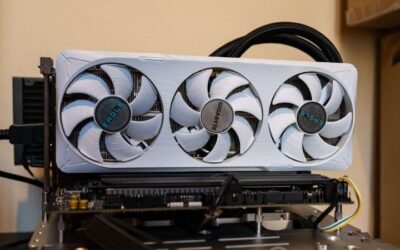
Physically, expect 285-320mm of length and 2.7-3 slots on most partner models — measure your case before ordering, not after. Thermals reward cooler quality: triple-fan designs from ASUS TUF, MSI Gaming X, and EVGA FTW3 run 8-12°C cooler than compact dual-fan variants at identical settings, which on a 320W card directly translates to sustained boost clocks and quieter operation.
Nvidia RTX 3080 Pros and Cons: The Honest Owner Consensus
We aggregated patterns across thousands of verified Amazon reviews — the enthusiastic 5-star reports and the critical 2-3 star complaints alike — to separate what this card actually delivers in daily ownership from what its legend suggests.
Where the RTX 3080 Genuinely Shines
The dominant theme in positive reviews is flagship performance at mid-range money. Owners consistently report buttery 1440p high-refresh experiences and credible 4K gaming for under $380 — a cost-per-frame figure that no new card matches at that price in 2026. The 760-912 GB/s of GDDR6X bandwidth keeps 1% lows steady in bandwidth-hungry open-world titles, a quality narrower-bus mid-range cards visibly lack.
Creators add a second chorus: CUDA acceleration in DaVinci Resolve, Blender, and Stable Diffusion remains excellent, and the elite memory bandwidth makes the card punch above its tier in production workloads. Driver maturity rounds it out — six years of Game Ready optimization mean new releases launch stable, and several owners cite measurable performance gains from driver updates years after purchase.
A third recurring positive is monitor flexibility: with 760-912 GB/s on tap, the card handles 3440×1440 ultrawide and dual-monitor gaming setups without the frame-time wobble owners report on bandwidth-starved alternatives. For buyers planning a display upgrade alongside the GPU, that headroom quietly future-proofs the purchase in a way core counts alone do not capture.
Honest Weaknesses Reported by Real Owners
The critical reviews converge on three issues. First, heat and power: 320-350W dumps real heat into your case and your room, and owners in warm climates report hotspot temperatures past 95°C on weaker coolers, often resolved only by adding case fans. Second, the 10GB buffer on the original variant: a growing list of 2025-2026 releases allocates beyond 10GB at 4K Ultra, forcing a texture notch down — the 12GB variant largely sidesteps this.
Third, the used-market lottery: many 3080s mined cryptocurrency through 2021-2022, and worn fans or dried thermal pads show up in a meaningful share of complaints. The mitigations owners recommend are consistent — buy warrantied refurbished units, favor listings with original packaging and invoices, and stress-test within the return window. No Frame Generation support remains the card’s permanent software ceiling.
Who Should Buy the RTX 3080 in 2026 — and Who Should Not
This card fits three buyer profiles with measurable precision: 1440p high-refresh gamers who want flagship-class rasterization under $380, entry-4K players comfortable leaning on DLSS, and budget creators who need CUDA plus bandwidth. For all three, the 12GB variant at its modest premium is the smarter target.
Pass on it if you run a small form factor case, refuse to upgrade a sub-650W power supply, or specifically want Frame Generation and path tracing — those buyers are better served putting the same money toward an RTX 5070-class card. The 3080 is a value monster, not a feature-complete modern card, and buying it for what it is keeps the satisfaction rate high.
RTX 3080 Pricing in 2026: Why Market Timing Matters Now
Two concrete market developments are pressing GPU prices upward this year, and the used Ampere flagship market sits squarely in the path of both. Understanding the mechanics helps you decide whether to buy this month or gamble on the next.
The H200 China Approval Reshapes Nvidia’s Priorities
The United States has approved Nvidia to sell the H200 — one of its most powerful AI chips — to China, reopening a market measured in billions per quarter. Nvidia’s rational response is already visible: wafer starts, advanced packaging, and premium memory contracts flow toward data-center silicon, whose margins dwarf GeForce by multiples.
The consumer-side pattern is well documented from previous demand surges: new-card supply tightens within a quarter or two, street prices firm above MSRP, and overflow demand cascades into the used market — where clean RTX 3080 listings historically get absorbed within days of such news cycles. The cards in the retail and refurbished channel today are effectively a fixed pool facing rising demand.
Component Inflation Raises the Floor Under Used Prices
Simultaneously, laptop and component prices are trending upward across the industry, led by memory: DRAM and graphics memory contract prices have climbed as AI build-outs absorb fab capacity, and VRAM is among the largest line items on any GPU’s bill of materials. Board partners have already passed increases through on multiple new SKUs this cycle.
The knock-on effect for this card is direct: a used 3080 with 10-12GB of premium GDDR6X already soldered on is insulated from new-production memory costs, while every new card it competes against gets more expensive. That dynamic firms used pricing from below. If component inflation persists through 2026, today’s $280-380 band is likelier a floor than a ceiling.
Buy Now or Wait: A Practical Decision Framework
Run the simple test: if your current GPU holds under 60 FPS at your native resolution in the games you actually play, the upgrade pays for itself in daily experience immediately — and both market signals say prices firm from here. Target a warrantied refurbished 12GB variant at or below the prevailing median and buy without second-guessing.
If you already run an RTX 3070 Ti or better, the uplift is incremental and you can rationally hold for a true next-tier jump. For everyone else, check the current Amazon listings for the Nvidia RTX 3080 — pricing moves weekly, the 12GB refurbished units with warranties are the sweet spot, and the market direction is not rewarding patience this cycle.
Recommended Products

msi
MSI GeForce RTX 4090 SUPRIM Liquid X 24G Gaming Graphics Card – 24GB GDDR6X, 2625 MHz, PCI Express Gen 4, 384-bit, 3X DP v 1.4a, HDMI 2.1a (Supports 4K & 8K HDR)

Sapphire
Sapphire 11323-02-20G Pulse AMD Radeon RX 7900 XT Gaming Graphics Card with 20GB GDDR6, AMD RDNA 3

msi
MSI GeForce RTX 4080 16GB Gaming X Trio Gaming Graphics Card – 16GB GDDR6X, 2610 MHz, PCI Express Gen 4, 256-bit, 3X DP v 1.4a, HDMI 2.1a (Supports 4K & 8K HDR)
As an Amazon Associate we earn from qualifying purchases. Product prices and availability are accurate as of the date/time indicated.
Final Verdict: Is the Nvidia RTX 3080 Worth Buying in 2026?
The Nvidia RTX 3080 earns a clear recommendation for 1440p high-refresh and entry-4K gamers who prioritize measured performance per dollar over modern feature checkboxes. At $280-380 used — ideally the 12GB variant — you get flagship-class rasterization, elite memory bandwidth, and mature drivers, with the honest trade-offs being 320-350W of heat, no Frame Generation, and standard used-market diligence. With the H200 export approval tightening Nvidia’s consumer supply and component inflation lifting the entire price stack, the value window on this Ampere icon is more likely to narrow than widen. If the profile fits your build, check today’s Amazon price and lock in a warrantied unit before the market moves again.
Frequently Asked Questions
What is the best nvidia rtx 3080 in 2026?
The best nvidia rtx 3080 depends on your budget and how you plan to use it. The options compared above are our top-rated picks based on real customer ratings, build quality, and overall value — start with the highest-rated model that fits your budget.
How much should I expect to spend on a nvidia rtx 3080?
Prices vary by brand and features. Budget options cover the essentials, while mid-range and premium models add durability, performance, and extra features. Compare the prices in the list above to find the best value for your needs.
What should I look for when buying a nvidia rtx 3080?
Focus on what matters most for your use case — build quality, compatibility, performance, warranty, and verified customer reviews. Every pick above is selected to balance these factors.
Are budget nvidia rtx 3080 options worth it?
Yes. For most people a well-reviewed budget or mid-range nvidia rtx 3080 delivers excellent value. You only need to spend more if you specifically require premium materials or top-tier performance.
How did we choose these nvidia rtx 3080 picks?
We compare current Amazon ratings, review counts, key features, and price to surface the options with the best real-world value. The list is refreshed as ratings and availability change.

Write Your Review
No reviews yet. Be the first to share your experience!