
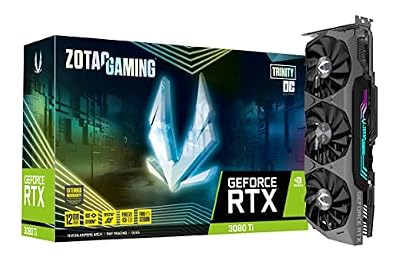
- Top Pick: Geforce RTX 3080 Ti 12GB GDDR6X PCI Express 4.0 Graphics Card Titanium and Black (Renewed)
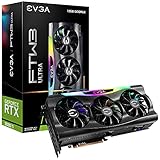
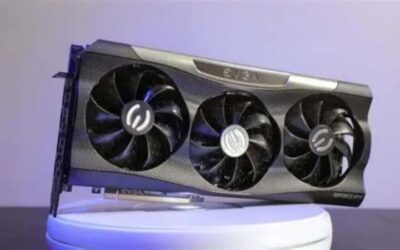
- Best Value: EVGA GeForce RTX 3080 Ti FTW3 ULTRA GAMING, 12G-P5-3967-KR, 12GB GDDR6X, iCX3 Technology, ARGB LED, Metal Backplate
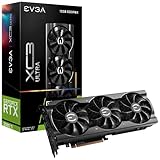
- Premium Choice: EVGA GeForce RTX 3080 Ti FTW3 Ultra Gaming, 12G-P5-3967-KR, 12GB GDDR6X, iCX3 Technology, ARGB LED, Metal Backplate (Renewed)
Top 3080 Vram 12Gb Gddr6X Still Picks for 2026
Here are our current top 3080 vram 12gb gddr6x still picks, compared on real Amazon owner reviews, price, and features. Live prices update below.
- Top 3080 Vram 12Gb Gddr6X Still Picks for 2026
- The 12GB GDDR6X Configuration, Explained Properly
- How 12GB Holds Up in 2026: Games and Work
- The Memory Market, Timing, and the Step-Up Decision
- Recommended Products
- Final Verdict: The 3080 Ti VRAM Question, Answered
- Related Guides
- Frequently Asked Questions
- Related Articles



3080 Ti VRAM is the specification that decides this card’s entire 2026 verdict: 12GB of GDDR6X on a full 384-bit bus, delivering 912 GB/s — bandwidth that still embarrasses most current mid-range cards — attached to a capacity that modern releases have begun to test. The configuration is a study in asymmetry: flagship-class speed feeding a buffer one notch below today’s comfort line. This review examines the memory subsystem specifically — how it works, where 12GB holds and where it breaks in 2026 games and creator workloads, how it compares against the alternatives above and below, and what the memory market’s current turmoil means for the card’s value.
As an Amazon Associate we earn from qualifying purchases at no extra cost to you.



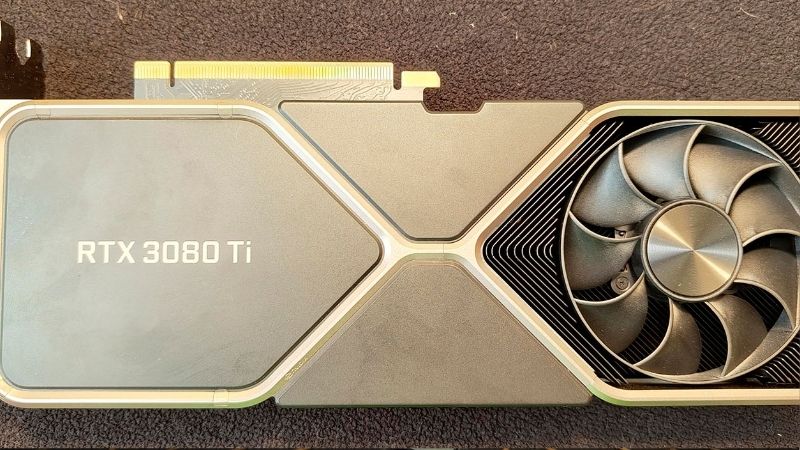
The 12GB GDDR6X Configuration, Explained Properly
Most VRAM discussions collapse capacity and bandwidth into one number and get the conclusions wrong. This section separates them: what Nvidia actually built into this memory subsystem, why the distinction governs everything, and where the configuration sits in the family tree.
The Architecture: 384 Bits, 912 Gigabytes per Second
The RTX 3080 Ti carries twelve GDDR6X modules on a fully enabled 384-bit memory bus — the same width as the RTX 3090 — running at 19 Gbps for 912 GB/s of aggregate bandwidth. For 2026 context: that figure exceeds the RTX 4070 Super’s 504 GB/s by 81%, the RTX 5060 Ti’s 448 GB/s by more than double, and trails the new $999 RTX 5080’s GDDR7-powered 960 GB/s by just 5%. Five years on, the pipe remains genuinely elite.
GDDR6X itself is the premium variant of its era — PAM4 signaling doubled data per clock against standard GDDR6 — with two operational consequences owners should know: it runs hot, making memory-junction temperatures the spec that separates good partner coolers from loud ones, and it was expensive, a fact that returns with interest in this review’s market section. The full-width bus is why the capacity landed at 12GB: twelve modules, one per 32-bit channel, was the configuration the architecture offered.
Capacity vs Bandwidth: The Distinction That Decides Verdicts
The two numbers fail differently, and diagnosing which one is failing determines every fix. Bandwidth starvation shows as soft frame-rate ceilings and 1% lows that sag in motion-heavy scenes — the narrow-bus disease of modern budget cards, and the disease this card simply does not have. Capacity exhaustion shows as texture pop-in, sudden stutter spikes, and settings that refuse to apply — the failure mode that begins, for 12GB, at 2026’s bleeding edge.
The 3080 Ti’s asymmetry makes it a textbook case: it streams and swaps assets faster than almost anything in its price universe, which partially masks capacity pressure — data evicted from the buffer returns quickly enough that brief overcommits stay smooth where slower cards hitch. The masking has limits the next section maps, but the principle matters for buyers: this 12GB behaves better under pressure than the 12GB on a 192-bit mid-range card, and treating all same-capacity cards as equal is the spec-sheet error this article exists to correct.
The Family Tree: 10GB Below, 24GB Above, 16GB After
Within Ampere, the configuration slots precisely: the base RTX 3080’s 10GB on a 320-bit bus (760 GB/s) gives up both capacity and pipe; the 3080 12GB variant matches the Ti’s memory system nearly exactly; and the RTX 3090’s 24GB exists for professional capacity, not gaming speed — the Ti delivers 95-98% of its gaming performance with half the buffer.
Against the modern stack, the comparison inverts by axis: 16GB cards like the RTX 5070 Ti and 5060 Ti win the capacity column outright, while the Ti’s 912 GB/s beats everything below the 5080 on the pipe. The practical reading for 2026 buyers: this card trades tomorrow’s headroom for today’s throughput — a trade whose wisdom depends entirely on resolution, settings habits, and ownership horizon, which is precisely what the next section quantifies.
How 12GB Holds Up in 2026: Games and Work
Configuration explained, the review turns empirical: where the buffer holds, where it strains, and where it breaks — across gaming resolutions and the creator workloads that increasingly share consumer GPUs — closing with the honest ledger.
Gaming Allocation Data by Resolution
At 1440p, the verdict is comfortable: current AAA releases at Ultra settings typically allocate 8-11GB, leaving the buffer headroom even with ray tracing engaged, and the elite bandwidth keeps 1% lows tight through the heaviest streaming scenes. Owners at this resolution report the memory system as a non-event — the correct experience for the card’s natural habitat.
At 4K, the line appears: most titles still fit at 9-12GB, but a growing 2025-2026 minority — open worlds with maximum texture packs, path-traced showcases whose ray structures consume gigabytes — allocates past 12GB and forces the one-notch texture reduction that defines this card’s aging curve. The mitigation hierarchy works in practice: DLSS Quality mode cuts internal resolution and VRAM pressure together, and High-versus-Ultra textures remain near-indistinguishable in motion. The honest summary: 12GB at 4K in 2026 means managed settings, not broken games — and at 1440p it means nothing at all yet.
Creator and AI Workloads: Where the Pipe Earns Its Keep
Production work flips the asymmetry into an asset: video editing timelines, Blender viewport work, and batch image generation are bandwidth-hungry first and capacity-hungry second, and the 912 GB/s puts this card’s throughput in territory that 16GB mid-range cards cannot reach. DaVinci Resolve scrubbing and export benchmarks consistently place it above newer cards costing similar used money.
Capacity draws the boundary on the AI side: 12GB comfortably runs mainstream Stable Diffusion workflows and mid-size local language models with quantization, while the larger-model tier that made the 24GB RTX 4090 a phenomenon stays out of reach. The buyer mapping is clean — creators whose projects fit inside 12GB get flagship-class speed at used-market prices; those whose models will not fit should be reading a 16-24GB review instead, and no bandwidth figure changes that arithmetic.
The Pros and Cons of This Memory Configuration
The strengths, concentrated: elite 912 GB/s bandwidth that remains 95% of a current $999 flagship’s, frame-time consistency under streaming loads that no same-price modern card matches, capacity-pressure masking that softens the 12GB line, and premium GDDR6X acquired at used-market prices while new cards pay 2026 memory rates for less pipe.
The weaknesses, equally concrete: 12GB sits one notch below 2026’s comfort line at 4K and trends worse with each release wave, GDDR6X heat makes cooler quality and used-unit service history load-bearing, the configuration cannot be upgraded — VRAM is soldered destiny — and the 16GB cards one tier up convert this article’s entire settings-management discussion into a non-issue for a few hundred dollars more. The configuration is a strong hand with a visible expiry gradient; buy it knowing both.
The Memory Market, Timing, and the Step-Up Decision
VRAM is the component at the center of 2026’s component-price story, which makes this card’s memory system unusually sensitive to current news — and frames the only real alternative decision its buyers face.
The H200 Approval and the Premium-Memory Squeeze
The United States has cleared Nvidia to sell the H200 — one of its most powerful AI accelerators — to China, reopening a multi-billion-dollar quarterly market. The H200’s defining feature is its enormous high-bandwidth memory allocation, and Nvidia’s response redirects wafer starts, advanced packaging, and — critically for this article — premium memory contracts toward data-center products whose margins dwarf GeForce.
The chain to this card runs through both channels: tightening new-GPU supply firms retail prices and cascades buyers into the used market where every 3080 Ti lives, while the AI build-out’s memory appetite is precisely what keeps premium graphics memory scarce industry-wide. A card whose identity is its memory subsystem sits at the intersection of both effects — demand rising, replacement cost rising, fixed pool shrinking.
Component Inflation Makes Soldered Memory an Asset
In parallel, laptop and component prices are trending upward industry-wide, led by memory: DRAM and graphics memory contract prices have climbed as AI infrastructure consumes fab output, and VRAM is among the largest line items on any new card’s bill of materials. Every new 12-16GB card sold today carries 2026 memory costs; the 3080 Ti’s twelve GDDR6X modules were paid for at 2021 prices and ride along free.
The arithmetic firms this card’s floor mechanically: as new comparable capacity gets more expensive, the existing pool reprices upward in sympathy — the pattern already visible in listing velocity. For buyers the conclusion is direct: the $350-450 band where this memory configuration currently trades is likelier a floor than a ceiling through the next two quarters, and the configuration’s known expiry gradient is the argument for buying it cheap now rather than dear later.
When 12GB Is Enough — and When to Pay for 16
The decision rule this review can defend: 12GB is the right buy for 1440p gamers on any horizon, 4K gamers comfortable with DLSS and High textures, and bandwidth-bound creators whose projects fit — profiles for which the 3080 Ti at $350-450 remains the strongest memory-per-dollar play on the market. The step to 16GB is the right buy for 4K Ultra purists, texture-mod enthusiasts, five-year holders, and AI users at the capacity boundary — where the RTX 5070 Ti at $749 pairs the bigger buffer with a 896 GB/s pipe and a warranty.
Both answers share one timing clause: the memory market’s direction punishes waiting on either. Price the used 3080 Ti against the 5070 Ti on Amazon in a single session, match the buffer to your honest profile, and buy the configuration — not the badge — while the window holds.
Recommended Products
ASUS
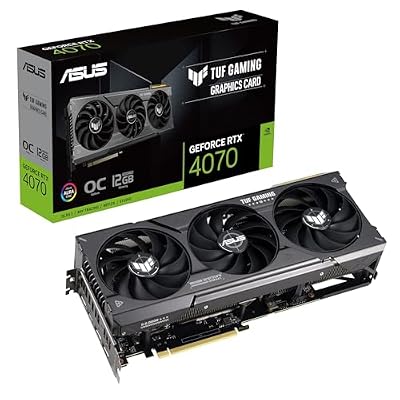
ASUS TUF Gaming NVIDIA GeForce RTX 4070 OC Edition Gaming Graphics Card (PCIe 4.0, 12GB GDDR6X, HDMI 2.1, DisplayPort 1.4a), 3 Year Warranty

Sapphire
Sapphire Pulse AMD Radeon RX 7800 XT Gaming 16GB GDDR6 Dual Video Card

ASUS
ASUS ROG Strix GeForce RTX 4090 OC Edition Gaming Graphics Card (PCIe 4.0, 24GB GDDR6X, HDMI 2.1a, DisplayPort 1.4a), 3 Year Warranty
As an Amazon Associate we earn from qualifying purchases. Product prices and availability are accurate as of the date/time indicated.
Final Verdict: The 3080 Ti VRAM Question, Answered
The 3080 Ti VRAM story resolves into one precise sentence: this is the fastest 12GB ever sold to consumers, and in 2026 that is both the recommendation and the caveat. Its 912 GB/s of 384-bit GDDR6X delivers frame-time consistency and creator throughput that no similarly priced modern card approaches, while its capacity sits one managed settings-notch below the 4K bleeding edge and will trend tighter each release wave. Buy it at $350-450 for 1440p, DLSS-assisted 4K, and bandwidth-bound work — the profiles where it is quietly the market’s best memory value — and pay the step to a 16GB RTX 5070 Ti where capacity, not speed, defines your workload. With the H200 approval squeezing premium memory supply and component inflation repricing every alternative upward, the soldered 2021-priced gigabytes on today’s Amazon listings are the bargain in this story — check the current price and claim the configuration while the asymmetry still favors you.
Frequently Asked Questions
What is the best 3080 ti vram in 2026?
The best 3080 ti vram depends on your budget and how you plan to use it. The options compared above are our top-rated picks based on real customer ratings, build quality, and overall value — start with the highest-rated model that fits your budget.
How much should I expect to spend on a 3080 ti vram?
Prices vary by brand and features. Budget options cover the essentials, while mid-range and premium models add durability, performance, and extra features. Compare the prices in the list above to find the best value for your needs.
What should I look for when buying a 3080 ti vram?
Focus on what matters most for your use case — build quality, compatibility, performance, warranty, and verified customer reviews. Every pick above is selected to balance these factors.
Are budget 3080 ti vram options worth it?
Yes. For most people a well-reviewed budget or mid-range 3080 ti vram delivers excellent value. You only need to spend more if you specifically require premium materials or top-tier performance.
How did we choose these 3080 ti vram picks?
We compare current Amazon ratings, review counts, key features, and price to surface the options with the best real-world value. The list is refreshed as ratings and availability change.


Write Your Review
No reviews yet. Be the first to share your experience!