
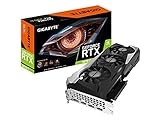
- Top Pick: ASUS TUF Gaming NVIDIA GeForce RTX 3070 Ti OC Edition Graphics Card (PCIe 4.0, 8GB GDDR6X, HDMI 2.1, DisplayPort 1.4a, Dual Ball Fan Bearings, Military-Grade Certification, GPU Tweak II) (Renewed)
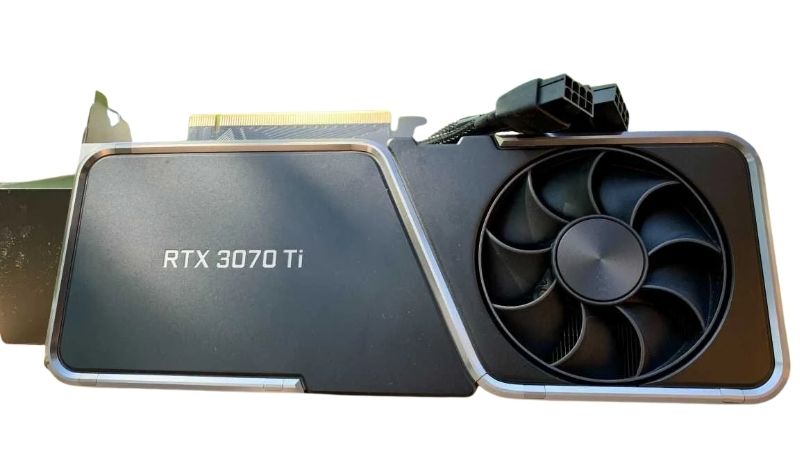
- Best Value: NVIDIA – GeForce RTX 3070 Ti 8GB GDDR6X PCI Express 4.0 Graphics Card – Dark Platinum and Black (Renewed)
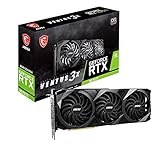
- Premium Choice: NVIDIA GeForce RTX 3070 8GB GDDR6 PCI Express 4.0 Graphics Card – Dark Platinum and Black
Top Nvidia 3070 Ampere Middle Child Picks for 2026
Here are our current top nvidia 3070 ampere middle child picks, compared on real Amazon owner reviews, price, and features. Live prices update below.
- Top Nvidia 3070 Ampere Middle Child Picks for 2026
- RTX 3070 Ti Specs and Real Performance in 2026
- RTX 3070 Ti Pros and Cons: The Owner Consensus
- Pricing in 2026: Why Market Timing Matters Now
- Recommended Products
- Final Verdict: Is the Nvidia 3070 Ti Worth Buying in 2026?
- Related Guides
- Frequently Asked Questions
- Related Articles


Editor's Pick
NVIDIA – GeForce RTX 3070 Ti 8GB GDDR6X PCI Express 4.0 Graphics Card – Dark Platinum and Black (Renewed)

Limited Time
NVIDIA GeForce RTX 3070 8GB GDDR6 PCI Express 4.0 Graphics Card – Dark Platinum and Black

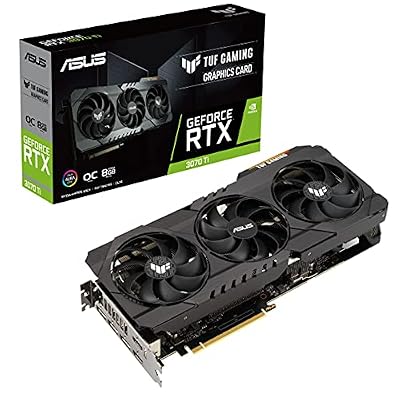

Nvidia 3070 Ti has always been Ampere’s awkward middle child: launched at $599 in June 2021 as a 3070 with faster GDDR6X memory and a 70-watt appetite increase, it bought roughly 5-8% more performance at 32% more power — the worst efficiency trade in its generation. But 2026’s used market rewrites old verdicts, and at $230-300 the question is no longer whether the card was well-designed; it is whether today’s price forgives yesterday’s compromises. This review runs the numbers honestly — against its own siblings above and below, against modern budget cards, and against the market forces deciding whether this quarter is the time to buy.
As an Amazon Associate we earn from qualifying purchases at no extra cost to you.



RTX 3070 Ti Specs and Real Performance in 2026
Every judgment in this review traces to the silicon and its peculiar design brief, so we start there: what Nvidia built, what it measures in today’s games, and what it demands from the system around it — the section where the middle child’s character becomes legible.
Core Specifications and the Design Trade Inside Them
The RTX 3070 Ti carries 6,144 CUDA cores — 4% more than the 3070’s 5,888 — with 48 second-generation RT cores and 8GB of memory on a 256-bit bus. The headline change is the memory type: GDDR6X in place of the 3070’s GDDR6, lifting bandwidth from 448 to 608 GB/s, a substantial 36% jump. The cost arrives on the power line: 290W total board power against the 3070’s 220W, with Nvidia recommending a 750W supply where the 3070 asks 650W.
That asymmetry — 36% more bandwidth, 4% more cores, 32% more power, for 5-8% more frames — is the entire design story, and it explains the card’s launch-era reputation. Boost clocks sit at 1,770 MHz reference; partner cards span 267-318mm at 2.5-3 slots with dual or triple 8-pin connectors. GDDR6X’s thermal appetite also makes cooler quality matter more here than on the vanilla 3070: memory-junction temperatures separate the good partner models from the loud ones.
Gaming Benchmarks: What the Middle Child Delivers Today
At 1440p high settings, current testing places the 3070 Ti at 75-100 FPS in demanding 2024-2026 AAA titles — a consistent 5-8% over the 3070 and roughly 10-15% behind the 3080 — with esports titles far beyond 165 FPS at either resolution. At 1080p it is comfortably overqualified; at 4K it is honest only with DLSS Quality engaged, where the GDDR6X bandwidth finally earns its wattage in texture-heavy scenes.
The software ceiling matches its Ampere siblings: excellent DLSS 2 upscaling, no frame generation of any kind, and ray tracing best treated as a medium-settings garnish at 1440p rather than a headline feature. The bandwidth advantage shows where averages hide it — 1% lows in streaming-heavy open worlds run measurably tighter than the 3070’s, the one benchmark category where the middle child’s design brief actually cashes.
Compatibility: The 290W Reality Check
The power line is this card’s practical filter: a quality 750W supply with separate PCIe cables is the safe baseline, because Ampere’s transient spikes scale with board power and 290W units trip marginal PSUs that the 220W vanilla card tolerates. Budget the upgrade honestly if your supply predates the requirement — it is the line item that erodes this card’s price advantage over newer alternatives fastest.
Thermals follow the same logic: GDDR6X runs hot, and used-market listings of compact dual-fan models deserve skepticism that triple-fan TUF, Gaming X, and FTW3 designs do not. Pair the card with at least a Ryzen 5 3600 or Core i5-10400 to keep it fed at 1440p, verify 280-320mm of case clearance against the specific model, and apply the standard used-Ampere diligence — photos, service history, return window — at full strength on a card whose memory ran warmer than its siblings’ by design.
RTX 3070 Ti Pros and Cons: The Owner Consensus
Aggregating verified Amazon feedback across the card’s life — launch-era buyers who paid $599-800 and used-market buyers who paid $250 — produces two distinct satisfaction curves, and the difference between them is the entire 2026 verdict.
Where the 3070 Ti Genuinely Shines
The recurring positive theme at used prices is bandwidth-backed consistency: owners describe 1440p experiences that hold smooth in exactly the open-world, texture-streaming titles where narrower-bus budget cards stutter, and ultrawide users specifically credit the 608 GB/s for frame-time stability their previous cards lacked. At $250, that is flagship-adjacent memory architecture at budget-adjacent money.
The second strength is position scarcity: the card occupies a genuine gap — meaningfully faster than the $200 used 3060 class, meaningfully cheaper than the $280-380 used 3080 class — and buyers whose budgets land precisely in the $230-300 slot report it as simply the most performance their number bought. Driver maturity and Ampere’s reliability record round out the column: five years of optimization, failure rates owner communities rank as unremarkable, and NVENC for the streaming crowd.
Honest Weaknesses Reported by Real Owners
The complaint ledger leads with the design trade made flesh: heat and noise. The 290W board with hot GDDR6X turns mediocre coolers loud, and warm-climate owners report memory-junction temperatures that demanded fan-curve surgery or repastes on neglected used units — the card punishes cooler-blind buying harder than any Ampere sibling below the 3080.
The second cluster is the 8GB buffer, sharpened by irony: the card has bandwidth to feed textures its capacity cannot hold, and 2025-2026 releases at 1440p Ultra force the same one-notch texture compromise the cheaper 3070 makes — the premium bought speed, not headroom. The third is comparative rather than absolute: at $230-300, buyers cross-shopping honestly note the used 3080’s proximity, and launch-era reviewers’ original complaint — the vanilla 3070 does 93% of this for less power and money — survives intact at every price the two cards share.
Who Should Buy the 3070 Ti in 2026 — and Who Should Not
The right buyer is narrow but real: the $250-280 shopper with a 750W supply already installed, a 1440p monitor, a raster-and-esports library, and a found listing on a premium triple-fan model below the local 3080 floor. For that buyer, the middle child is a legitimately strong purchase — bandwidth-rich, mature, and priced where its launch sins stop mattering.
Everyone else has a better branch: 3070s at $200-230 deliver nearly identical experiences on gentler power for less money; used 3080s at $280-330 deliver a real tier jump for a modest stretch; and the new RTX 5060 at $299 trades raw raster for DLSS 4 frame generation, 145W simplicity, and a warranty — the modern feature column this entire generation lacks. The 3070 Ti wins only when its price gap to both neighbors is wide enough to matter; check all three numbers before buying any of them.
Pricing in 2026: Why Market Timing Matters Now
Two industry developments are lifting the entire GPU price stack, and the used Ampere mid-tier — where every 3070 Ti now lives — sits squarely in the spillover path. The mechanics decide whether waiting saves or costs.
The H200 Approval and the Used-Market Cascade
The United States has cleared Nvidia to sell the H200 — one of its most powerful AI accelerators — to China, reopening a multi-billion-dollar quarterly market. Nvidia’s wafer, packaging, and premium memory allocation follows margin toward data-center silicon, and the documented consumer pattern lands within a quarter or two: new-card supply tightens, retail prices firm, and priced-out buyers cascade into the used tiers.
The $230-300 band is a primary landing zone for that cascade — it catches both budget buyers stretching up and mid-range buyers pushed down — and prior demand surges absorbed clean listings in this exact range within days while compressing the careful-buyer discount. The middle child’s scarcity-of-position advantage strengthens precisely when the market tightens, which is what the news says it is doing.
Component Inflation Raises the Floor Beneath It
In parallel, laptop and component prices are trending upward industry-wide, led by memory: DRAM and graphics memory contract prices have climbed as AI build-outs consume fab output, and GDDR6X — this card’s defining component, soldered at 2021 prices — is exactly the premium memory class new cards now pay 2026 rates for. Every retail increase mechanically lifts the umbrella under which used cards trade.
The arithmetic for this band is direct: when the cheapest comparable new card creeps from $300 toward $340, a $260 3070 Ti reprices upward in sympathy, and the decade-old assumption that used Ampere drifts endlessly cheaper has paused for this cycle. Betting on lower prices next quarter means betting against both the supply news and the inflation data simultaneously — unfavorable odds for a $30 hoped-for saving.
The Buying Sequence That Wins This Band
Three checks in order: price the trio — used 3070, 3070 Ti, and 3080 — in one Amazon session, because this card’s verdict is entirely relative and the gaps move weekly; confirm your PSU clears 750W before the Ti enters the cart at all; and on the listing itself, demand the premium-cooler models and the standard used-market documentation, weighted extra for GDDR6X’s thermal history.
If the Ti’s gap to the 3080 is under $40, take the tier jump; if its gap to the vanilla 3070 is under $30, take the efficiency and keep the cash; if it sits in its pocket — roughly $250-280 with both gaps wide — take the middle child and enjoy the bandwidth. Whichever branch wins, current pricing is the favorable side of the window the news above is closing.
Recommended Products

msi Gaming GeForce RTX 4060 8GB GDRR6 Extreme Clock: 2505 MHz 128-Bit HDMI/DP Nvlink TORX Fan 4.0 Ada Lovelace Architecture Graphics Card (RTX 4060 Ventus 2X Black 8G OC)

PowerColor
PowerColor Red Devil AMD Radeon RX 7900 XTX Graphics Card

Sapphire
Sapphire 11330-01-20G Nitro+ AMD Radeon RX 7800 XT Gaming Graphics Card with 16GB GDDR6, AMD RDNA 3
As an Amazon Associate we earn from qualifying purchases. Product prices and availability are accurate as of the date/time indicated.
Final Verdict: Is the Nvidia 3070 Ti Worth Buying in 2026?
The Nvidia 3070 Ti closes 2026 as a redeemed-by-price middle child: the launch-era efficiency criticism was deserved and remains true, but at $230-300 used, the card’s 608 GB/s of GDDR6X delivers frame-time consistency its budget rivals cannot match, in a market position neither sibling occupies. Buy it when its price pocket is real — both gaps wide, PSU already sufficient, premium cooler on the listing — and skip it the moment a used 3080 drifts within $40 or your supply needs upgrading to host it. Its 8GB ceiling and missing frame generation are the honest taxes either way. With the H200 approval cascading demand into exactly this band and component inflation lifting the floor beneath it, the favorable window is the current one: run the three-card price check on today’s Amazon listings, and let the gaps — not the nostalgia or the old reviews — make the call.
Frequently Asked Questions
What is the best nvidia 3070 ti in 2026?
The best nvidia 3070 ti depends on your budget and how you plan to use it. The options compared above are our top-rated picks based on real customer ratings, build quality, and overall value — start with the highest-rated model that fits your budget.
How much should I expect to spend on a nvidia 3070 ti?
Prices vary by brand and features. Budget options cover the essentials, while mid-range and premium models add durability, performance, and extra features. Compare the prices in the list above to find the best value for your needs.
What should I look for when buying a nvidia 3070 ti?
Focus on what matters most for your use case — build quality, compatibility, performance, warranty, and verified customer reviews. Every pick above is selected to balance these factors.
Are budget nvidia 3070 ti options worth it?
Yes. For most people a well-reviewed budget or mid-range nvidia 3070 ti delivers excellent value. You only need to spend more if you specifically require premium materials or top-tier performance.
How did we choose these nvidia 3070 ti picks?
We compare current Amazon ratings, review counts, key features, and price to surface the options with the best real-world value. The list is refreshed as ratings and availability change.

Write Your Review
No reviews yet. Be the first to share your experience!