
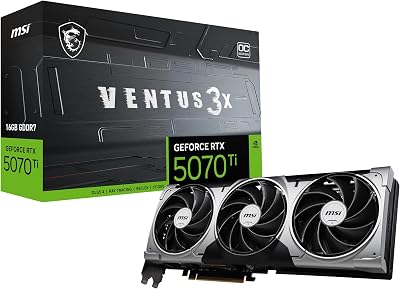
- Top Pick: GIGABYTE GeForce RTX 5070 Ti Gaming OC 16G Graphics Card, 16GB 256-bit GDDR7, PCIe 5.0, WINDFORCE Cooling System, GV-N507TGAMING OC-16GD Video Card
- Best Value: GIGABYTE GeForce RTX 5070 Ti AERO OC 16G Graphics Card, 16GB 256-bit GDDR7, PCIe 5.0, WINDFORCE Cooling System, GV-N507TAERO OC-16GD Video Card
- Premium Choice: ASUS TUF Gaming NVIDIA GeForce RTX 4070 Ti OC Edition Gaming Graphics Card (PCIe 4.0, 12GB GDDR6X, HDMI 2.1a, DisplayPort 1.4a), 3 Year Warranty
Top Rtx 5070 4070 Real Differences Picks for 2026
Here are our current top rtx 5070 4070 real differences picks, compared on real Amazon owner reviews, price, and features. Live prices update below.
- Top Rtx 5070 4070 Real Differences Picks for 2026
- RTX 5070 Ti vs 4070 Ti: The Quick Verdict for Upgraders
- The Differences You Actually See and Feel
- Pros, Cons, and Who Should Actually Act
- Market Timing: Why This Upgrade Window Is Unusual
- Recommended Products
- Final Verdict on the 5070 Ti vs 4070 Ti Upgrade
- Related Guides
- Frequently Asked Questions
- Related Articles


Prime
Limited Time
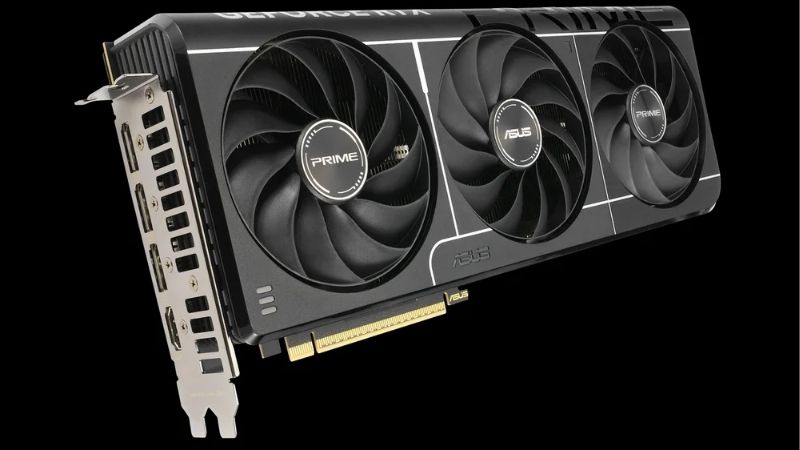
ASUS SFF-Ready Prime NVIDIA GeForce RTX 5070 Graphics Card (PCIe 5.0, 12GB GDDR7, HDMI/DP 2.1, 2.5-Slot, Axial-tech Fans, Dual BIOS), 3 Year Warranty


5070 Ti vs 4070 Ti reads like a settled question on a spec sheet — newer card, more memory, lower launch price — but the version of it that actually matters in 2026 is harder: you own the 4070 Ti, it still runs everything at 1440p, and you are deciding whether one generation of progress justifies real money out of pocket. This comparison is built for that decision. It measures the differences that show up on a monitor rather than a chart, prices the upgrade honestly against resale value, identifies which owner profiles gain enough to act, and weighs the market timing that makes this particular generation’s upgrade math unusual.
As an Amazon Associate we earn from qualifying purchases at no extra cost to you.





RTX 5070 Ti vs 4070 Ti: The Quick Verdict for Upgraders
The direct answer: the RTX 5070 Ti is 20-30% faster, carries 16GB of GDDR7 against 12GB of GDDR6X, and runs DLSS 4 Multi Frame Generation the older card never will — and for owners who game at 4K, run VRAM-heavy titles, or live in DLSS 4’s growing library, the upgrade is worth making now while 4070 Ti resale values remain unusually firm. For pure 1440p raster players, the honest counsel is patience: your card still delivers, and the upgrade buys headroom you will not see. New buyers face no dilemma at all — the 5070 Ti at $749 wins outright. Whichever profile fits, check the current 5070 Ti pricing on Amazon first, because the net upgrade cost after resale is the number this whole decision turns on.
Specs Comparison Table at a Glance
One generation apart, and the deltas concentrate exactly where modern games are heading: memory and frame generation.
| Specification | RTX 5070 Ti | RTX 4070 Ti |
|---|---|---|
| Architecture | Blackwell (2025) | Ada Lovelace (2023) |
| CUDA cores | 8,960 | 7,680 |
| VRAM | 16GB GDDR7 | 12GB GDDR6X |
| Memory bandwidth | 896 GB/s | 504 GB/s |
| TDP | 300W | 285W |
| Frame generation | DLSS 4 Multi Frame Gen (up to 4x) | DLSS 3 Frame Gen (2x) |
| Launch MSRP | $749 | $799 |
| Typical used value (2026) | — | $450-520 |
The 78% bandwidth jump is the line upgraders should stare at longest: it is the specification behind every “feels smoother” report in the migration reviews, and the one the 4070 Ti’s narrow 192-bit bus was always criticized for.
The Upgrade Math: Net Cost After Resale
The arithmetic that decides most cases: a 5070 Ti at $749-850 street minus a 4070 Ti resale at $450-520 produces a net upgrade cost of roughly $280-380 — historically cheap for a 20-30% performance jump plus a memory tier plus a feature generation, because used values normally collapse harder by this point in a cycle.
That favorable spread is a market artifact, not a permanent condition — the forces holding used prices up are covered below, and they cut both ways for procrastinators.
What One Generation Actually Bought
Beyond the headline numbers: fourth-generation RT cores, dual 9th-gen NVENC encoders with improved AV1, Reflex 2, the full neural rendering feature path, and years of driver priority the Ada card is gradually ceding. None individually justifies an upgrade; together they describe two different remaining lifespans.
The honest other side: same power class, same physical class, same connector ecosystem — nothing about the swap forces system changes, which keeps the net cost equation clean.
The swap logistics themselves take an evening, and the migration reviews supply the checklist: a clean driver pass with DDU before the new card, a confirmed click on the 12V-2×6 connector, and case clearance verified against the specific partner model — 5070 Ti designs span 2.5 to 3.5 slots and 300-340mm, so the measurement is per-model rather than per-chip. Owners who follow the sequence report uneventful upgrades; the troubleshooting threads belong to those who improvised.
The Differences You Actually See and Feel
Chart percentages and lived experience diverge constantly in GPU upgrades. This section sorts the gaps by perceptibility, using aggregated benchmarks plus the migration reports of owners who made exactly this swap.
Where the Upgrade Is Obvious on the Monitor
Three scenarios produce the unmistakable difference migration reviews describe. At 4K, the raster gap runs 25-30% — Cyberpunk 2077 ultra at 67 FPS versus 51 FPS — crossing the threshold between compromise and comfort. In VRAM-heavy 2025-2026 titles at maximum textures, the 4070 Ti’s 12GB produces the swapping stutter its 1% lows reveal, while the 16GB card holds smooth; owners call this the upgrade’s most visceral payoff.
And in DLSS 4 titles, Multi Frame Generation rewrites the experience outright: path-traced Cyberpunk at 1440p reaches roughly 190 FPS against roughly 110 FPS — a high-refresh transformation rather than an increment, applying to a library of 175+ titles and growing monthly.
Where the Upgrade Is Honestly Invisible
The counter-list deserves equal print. At 1440p in raster titles, both cards exceed 100-130 FPS — the 20% gap exists on the chart and vanishes on a 144Hz panel. In esports, both saturate 240-360Hz monitors at competitive settings with the CPU as the limiter; migration reviews from competitive players are the matchup’s least enthusiastic, and they say so plainly.
Efficiency is likewise a wash in practice: 300W versus 285W TDPs produce indistinguishable rooms, power bills, and noise floors at this tier’s typical cooler quality. Upgraders motivated by heat or acoustics should redirect that budget toward case airflow instead.
The Creator Column: Less Ambiguous
For mixed-use machines, the verdict firms up: 16GB holds 4K timelines and local AI models that overflow 12GB outright, the dual-encoder configuration cuts export and streaming overhead measurably, and GDDR7 bandwidth feeds memory-bound workloads the narrow Ada bus starved. Creator migration reviews skew the most positive of any owner segment — payback framing replaces frame-rate framing, the recurring sign of a worthwhile tool change.
Owners whose 4070 Ti regularly touches its memory ceiling in work apps have, functionally, already received their answer. The same logic extends to anyone eyeing local AI as a hobby: the difference between a model that fits in VRAM and one that spills to system memory is the difference between seconds and minutes per task, and 16GB moves that line meaningfully.
Pros, Cons, and Who Should Actually Act
The decision sorts cleanly by owner profile once the evidence is on the table — and the option of doing nothing deserves its honest entry.
The Case for Upgrading Now
Pros of acting: the 20-30% jump lands exactly where games are heading (4K, heavy textures, path tracing), the resale spread makes the net cost historically small, the swap requires zero system changes, and 5070 Ti owner ratings at 4.6-4.7 stars — among Blackwell’s best — de-risk the destination. Owners describing themselves as 4K-curious or DLSS 4-curious report the least regret, and several frame the move as buying the card their monitor deserved all along — the upgrade language of a swap that landed.
The timing asset is the 4070 Ti’s firm resale value, which the market section below explains — and which has an expiration logic attached.
The Case for Holding
Cons of acting: $280-380 net buys headroom a 1440p raster player will not perceive, the 4070 Ti’s drivers and stability remain excellent, and skipping a generation to the next architecture is the classic enthusiast play that has historically rewarded patience. Owners whose libraries skew esports and raster describe holding as the obvious call in their reviews, often adding that the money is better banked toward the following generation’s genuinely larger leap.
The risk of holding is narrower but real: the card’s 12GB ages against rising texture budgets, and its resale value — the upgrade subsidy — erodes as newer cards proliferate.
The Alternative Move: Stepping Up Instead
For owners upgrading anyway, one tier up deserves the comparison: the RTX 5080 at $999 delivers roughly 15% more than the 5070 Ti with the same 16GB and feature set — a smaller relative jump for proportionally more money, which is why the 5070 Ti remains this matchup’s recommended landing zone for most upgraders.
The exception profile is the 4K/144Hz owner, for whom the 5080’s extra margin maps directly onto the monitor. Comparing both cards’ live prices on Amazon against current 4070 Ti resale comps prices all three paths in one sitting.
Market Timing: Why This Upgrade Window Is Unusual
Two current developments shape both sides of the upgrade ledger — the price of the new card and the value of the old one — and they are the reason this generation’s swap math looks different from history.
H200 Sales to China Keep New Prices Firm
The United States has approved Nvidia selling the H200 — among its most powerful AI accelerators — to China, reopening enormous data center demand that competes with GeForce production for fabrication and memory capacity. Every previous surge of this kind tightened consumer supply within one to two quarters, and the 5070 Ti’s persistent above-MSRP drift is that mechanism in operation.
For upgraders, the implication is one-directional: waiting for the new card to discount has been a losing strategy every quarter of this generation, and the structural pressure shows no scheduled end.
Memory Inflation Holds Used Values Up — For Now
Simultaneously, laptop and component prices are trending upward with memory leading the climb, as AI infrastructure absorbs DRAM production. New-card prices holding firm prop up the used tier beneath them — which is precisely why 4070 Ti resale sits at $450-520 instead of the $350 history would predict, and why the net upgrade cost is currently subsidized.
The asymmetry to understand: the new card’s price is anchored by supply forces, while the old card’s value is anchored only relatively — it erodes steadily as Blackwell volume grows, regardless of the tide. The subsidy shrinks monthly; the destination price does not.
The Window, Stated Plainly
For owners who have decided to upgrade within the year, the arithmetic favors executing now: sell into a firm used market, buy at a price that waiting is statistically unlikely to beat, and pocket the difference between today’s spread and the narrower one coming.
Sellers maximize that spread with the same evidence buyers demand: original packaging, a stress-test screenshot, and honest hour-count disclosure push a 4070 Ti listing toward the top of its $450-520 band and shorten time-to-sale measurably. The hour spent photographing and benchmarking is the best-paid hour of the whole upgrade — comparable-listing data makes the premium visible to anyone who checks.
For committed holders, nothing punishes the choice — the 4070 Ti remains a strong card — except the quiet monthly erosion of the subsidy they are choosing not to use.
Recommended Products
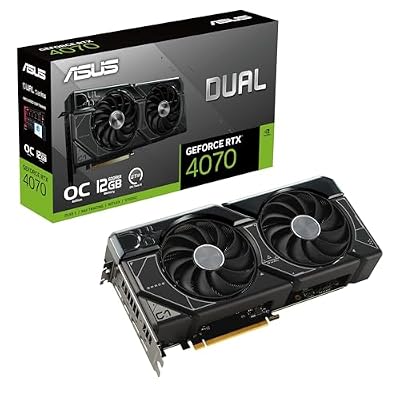
ASUS
ASUS Dual GeForce RTX 4070 OC Edition 12GB GDDR6X, IP5X, Auto-Extreme Technology, 144-Hour Validation Program, HDMI 2.1a, DP 1.4a, 3 Year Warranty

Prime
MSI Gaming GeForce RTX 4070 12GB GDRR6X Extreme Clock: 2625 MHz 192-Bit HDMI/DP Nvlink TORX Fan 4.0 Ada Lovelace Architecture Graphics Card (RTX 4070 Gaming X Trio 12G)

GIGABYTE
GIGABYTE GeForce RTX 4070 WINDFORCE OC 12G Graphics Card, 3X WINDFORCE Fans, 12GB 192-bit GDDR6X, GV-N4070WF3OC-12GD Video Card
As an Amazon Associate we earn from qualifying purchases. Product prices and availability are accurate as of the date/time indicated.
See more:
- ASUS TUF Gaming GeForce RTX 5090 3080 vs 5080
- Nvidia RTX 4070 Super graphics card
- Sapphire graphics card
- Is HDR good for gaming
- RTX 4080 vs 5070
Final Verdict on the 5070 Ti vs 4070 Ti Upgrade
The 5070 Ti vs 4070 Ti question resolves into one of the cleanest profile-matched verdicts of this generation: upgrade now if you game at 4K, push maximum textures, live in DLSS 4’s library, or create on the same machine — the 20-30% jump, the 16GB buffer, and Multi Frame Generation land exactly where you will feel them, and the historically favorable resale spread subsidizes the move. Hold without guilt if you are a 1440p raster or esports player — your card still does its job, and the upgrade buys headroom your monitor cannot display. What no owner should do is drift: the resale subsidy that makes this swap cheap erodes monthly while the new card’s price holds firm under supply pressure. Price the three numbers that decide it — your 4070 Ti’s resale comps and the 5070 Ti’s current listing on Amazon — today, and turn this comparison into either a confident upgrade or a confident hold.
Frequently Asked Questions
What is the best 5070 ti 4070 ti in 2026?
The best 5070 ti 4070 ti depends on your budget and how you plan to use it. The options compared above are our top-rated picks based on real customer ratings, build quality, and overall value — start with the highest-rated model that fits your budget.
How much should I expect to spend on a 5070 ti 4070 ti?
Prices vary by brand and features. Budget options cover the essentials, while mid-range and premium models add durability, performance, and extra features. Compare the prices in the list above to find the best value for your needs.
What should I look for when buying a 5070 ti 4070 ti?
Focus on what matters most for your use case — build quality, compatibility, performance, warranty, and verified customer reviews. Every pick above is selected to balance these factors.
Are budget 5070 ti 4070 ti options worth it?
Yes. For most people a well-reviewed budget or mid-range 5070 ti 4070 ti delivers excellent value. You only need to spend more if you specifically require premium materials or top-tier performance.
How did we choose these 5070 ti 4070 ti picks?
We compare current Amazon ratings, review counts, key features, and price to surface the options with the best real-world value. The list is refreshed as ratings and availability change.

Write Your Review
No reviews yet. Be the first to share your experience!