
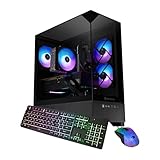
- Top Pick: YAWYORE Gaming PC, AMD Ryzen 7 5700X, GeForce RTX 5060 Desktop Computer
- Best Value: KOTIN Prebuilt Gaming PC Ryzen 5 9600X, 16GB DDR5, RTX 5060 Ti 8GB, 1TB SSD
- Premium Choice: iBUYPOWER Element SE Gaming PC Desktop Computer AMD Ryzen 5 5500 CPU, AMD Radeon RX 6500XT 4GB, 16GB DDR4 Non-RGB 3200MHz RAM, 512GB NVMe SSD, Windows 11 Home, Gamer Keyboard and Mouse – ESA5R65XT04
Best budget AMD CPU for gaming is really a question about which socket you land on, because AM4 and AM5 lead to completely different total costs. One reuses cheap DDR4 memory, the other buys a decade of upgrades. This guide ranks six chips across both and explains which fork suits you.
As an Amazon Associate we earn from qualifying purchases at no extra cost to you. Product prices and availability are accurate as of the date shown and are subject to change.







As an Amazon Associate we earn from qualifying purchases at no extra cost to you. Product prices and availability are accurate as of the date shown and are subject to change.
By Ryan Cole
How to Pick the Best Budget AMD CPU for Gaming
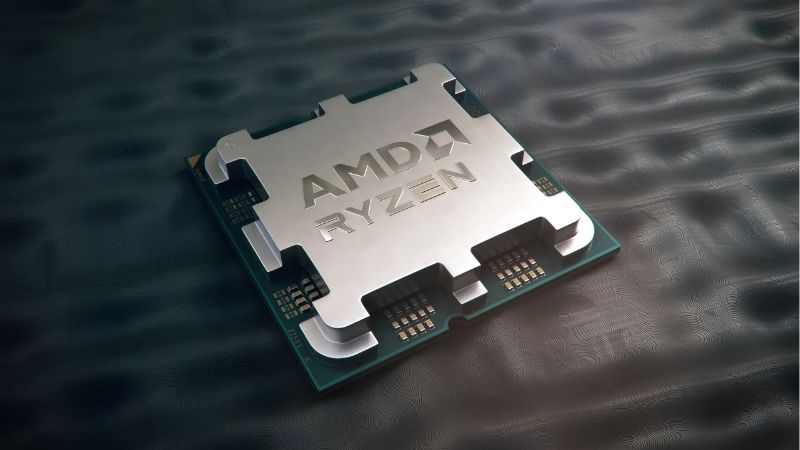
AMD sells budget processors on two live sockets, and they behave like different products. AM4 is a finished platform with cheap parts, AM5 an ongoing one with a higher floor. Four factors decide where the best budget AMD CPU for gaming sits for you.
The DDR4 Versus DDR5 Question Decides Everything
AM4 runs DDR4, which is abundant and comparatively inexpensive. AM5 requires DDR5, and memory pricing has risen sharply through 2026. On a genuinely tight budget, that gap is frequently larger than the difference between the two processors themselves.
If you already own a working DDR4 kit, AM4 lets you carry it forward and put the saving into a graphics card. If you are buying memory from scratch anyway, the argument weakens considerably and AM5 becomes the better long-term purchase.
Upgrade Path Versus Immediate Value
AM4 receives no new processors. Whatever you install is the ceiling, and the fastest gaming chip available on the socket is the Ryzen 7 5700X3D. That is a real limit, but it is also a limit most 1080p builds never reach.
AM5 accepts new CPUs through 2029, so a cheap six-core chip today can become a much faster part later without touching the board or memory. You pay more up front to keep that option open, and whether it is worth it depends on how long you keep machines.
Cache Matters More Than Clock Speed in Games
AMD’s X3D parts stack extra L3 cache onto the die, and in games that produces a larger gain than any clock speed increase. A Ryzen 7 5700X3D with 96MB of L3 outperforms faster-clocked non-cache chips on the same socket in most titles.
Outside games the picture reverses. Cache does little for rendering, compilation or compression, where core count and frequency dominate. Buy the cache if the machine mainly plays games, and buy cores if it also does work.
Check Whether a Cooler Is Included
Most 65W non-X Ryzen chips ship with a Wraith cooler that is adequate at stock settings. X-suffix parts at 105W and above generally do not, and budgeting an extra $30 to $40 for a tower cooler can change which processor you can afford.
The bundled coolers are noisier than aftermarket alternatives and leave no overclocking headroom. They are perfectly usable for a first build, but plan to replace them if noise matters or if the case has limited airflow.
What the 2026 Market Means for Budget AMD Builds
Three market conditions have shifted the AM4 versus AM5 balance this year, and they do not all point the same way. Weigh them against how long you keep machines before naming a best budget AMD CPU for gaming.
Memory Pricing Has Made AM4 Attractive Again
TrendForce raised its DRAM forecast for the second half of 2026, with no new fab capacity due before late 2027. DDR5 has absorbed the sharpest increases, which widens the entry-cost gap between the two AMD sockets more than it has been in years.
The practical effect is that a complete AM4 build can undercut an equivalent AM5 one by a meaningful margin. On a fixed budget, that difference is often enough to move up a full graphics card tier, which is where the frames actually come from.
AM5 Now Carries a Guaranteed Runway to 2029
AMD committed at Computex 2026 to supporting AM5 with new processors through the end of 2029. That is the strongest argument against AM4, because it turns the higher entry price into a staged upgrade plan rather than a sunk cost.
Anyone planning to keep the machine five years or more should take AM5 despite the memory premium. Anyone building a cheap 1080p system they expect to replace wholesale in three years has a legitimate case for AM4.
Waiting for Black Friday Will Not Help
The usual advice to hold out until late November does not apply to memory this year. Stock sold in November was built from contract memory purchased at this year’s elevated rates, so DDR5 kits and pre-built systems will not see genuine reductions.
Processors, coolers and motherboards are different, and real discounts still appear there. If a budget AMD chip drops during a seasonal sale, take it, but do not delay an entire build in the hope of cheaper memory.
Top Picks: Six Best Budget AMD CPU for Gaming Options
The first three sit on AM4 and reuse DDR4; the last three need AM5 and DDR5, so the best budget AMD CPU for gaming depends on which half you shop. Street pricing moves constantly, so verify cost and stock first.
| Processor | Socket | Cores / Threads | Boost Clock | TDP | L3 Cache |
|---|---|---|---|---|---|
| Ryzen 5 5500 | AM4 | 6 / 12 | 4.2 GHz | 65W | 16MB |
| Ryzen 5 5600 | AM4 | 6 / 12 | 4.4 GHz | 65W | 32MB |
| Ryzen 7 5700X3D | AM4 | 8 / 16 | 4.1 GHz | 105W | 96MB |
| Ryzen 5 7500F | AM5 | 6 / 12 | 5.0 GHz | 65W | 32MB |
| Ryzen 5 7600 | AM5 | 6 / 12 | 5.1 GHz | 65W | 32MB |
| Ryzen 7 9700X | AM5 | 8 / 16 | 5.5 GHz | 65W | 32MB |
Ryzen 5 5500
The 5500 is the absolute floor of the AMD range, pairing six cores and twelve threads with a 65W envelope and a bundled cooler. On a cheap B450 or A520 board with reused DDR4, it produces a working gaming machine for very little money.
Its 16MB of L3 cache is half what the 5600 carries, and it runs its PCIe link at 3.0 rather than 4.0. Both limitations show up with faster graphics cards, so treat it as an entry-tier chip for modest GPUs only.
Ryzen 5 5600
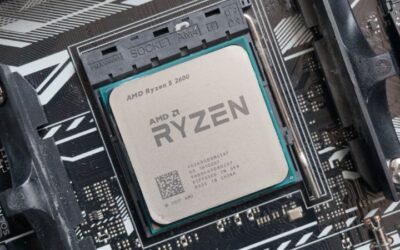
The 5600 remains one of the best value processors AMD has ever shipped. Full 32MB of L3 cache, PCIe 4.0 support, a 4.4 GHz boost and a bundled cooler make it a complete 1080p gaming solution on inexpensive DDR4.
The catch is that AM4 is finished, so this is the platform’s mid-point rather than a starting position. It also trails current Zen 4 and Zen 5 parts by a wide margin in CPU-limited titles, which matters if you later fit a strong GPU.
Ryzen 7 5700X3D
This is the fastest gaming chip AM4 will ever receive. Eight cores with 96MB of L3 cache deliver frame rates close to much newer processors in cache-sensitive games, and it drops into most existing B450 and B550 boards after a BIOS update.
Its 4.1 GHz boost is low, so productivity work and lightly threaded applications lag behind modern chips noticeably. It also ships without a cooler despite a 105W TDP, and it is the end of the road for the socket.
Ryzen 5 7500F
Crossing to AM5, the 7500F is the cheapest sensible entry. Six Zen 4 cores boosting to 5.0 GHz at 65W comfortably outpace anything on AM4 outside the X3D parts, and the missing integrated GPU costs nothing in a build with a discrete card.
You are committing to DDR5 and a current-generation board, which raises the total noticeably. Without an iGPU you also lose the fallback display output that makes diagnosing a failed graphics card straightforward.
Ryzen 5 7600
The 7600 is the most balanced budget AMD chip on sale. A 5.1 GHz boost, 32MB of L3, a 65W envelope, a bundled cooler and a basic integrated GPU cover every ordinary requirement, and the AM5 socket keeps the upgrade door open to 2029.
It costs clearly more than a 5600 once DDR5 and the board are counted, and it sits a few percent behind the Zen 5 9600X. Neither matters much next to the platform longevity you are buying.
Ryzen 7 9700X
The 9700X marks where budget ends and mid-range begins. Eight Zen 5 cores at up to 5.5 GHz within 65W make it the most efficient chip here, and it handles 1440p gaming alongside streaming or editing without complaint.
For pure gaming it is poor value, because it lacks the 3D V-Cache that makes the X3D parts faster in games for similar money. Buy it only if the multithreaded headroom is doing genuine work.
Frequently Asked Questions
These are the questions builders ask once they realise the socket matters more than the chip when picking a best budget AMD CPU for gaming.
Is AM4 still worth buying in 2026?
Only if you already own DDR4 memory or a compatible board. In that situation a 5600 or 5700X3D delivers strong value with no rebuild. Starting from nothing, the memory saving rarely offsets the fact that the socket receives no further processors.
Which budget AMD chip is fastest in games?
The Ryzen 7 5700X3D leads on AM4 thanks to its 96MB of L3 cache, and the Ryzen 7 9700X leads on AM5 on raw clocks. If gaming is the priority and the budget stretches, a 3D V-Cache part beats a higher-clocked chip almost every time.
Do I need an X3D processor for 1080p gaming?
Not on a budget build. X3D cache pays off most when a strong graphics card removes the GPU bottleneck. With a mid-range card at 1080p, a 5600 or 7600 reaches the same frame rates, and the money is better spent on the GPU.
Can I upgrade an AM4 board to a newer Ryzen chip?
Within AM4 only. Most B450 and B550 boards accept Ryzen 5000 series parts including the 5700X3D after a BIOS update, but no Zen 4 or Zen 5 processor will ever fit the socket. Check your board maker’s support list before buying.
See More:
- Who makes the best motherboard
- Best budget AM5 CPU for gaming
- What is the best thermal paste pattern
- Best mini ITX computer case
- Best desktop RAM for gaming
Final Thoughts
The best budget AMD CPU for gaming depends on which socket your existing parts push you toward. With DDR4 memory already in hand, the 5600 and 5700X3D remain excellent value on AM4. Starting fresh, the 7600 on AM5 is the better purchase despite the DDR5 premium, because the socket keeps accepting new processors until 2029. Price memory and board alongside the chip before deciding. Figures reflect August 2026 and should be verified before purchase.

Write Your Review
No reviews yet. Be the first to share your experience!