
Best Thermal Conductive Paste searches mix up two very different properties: how well a compound moves heat, and whether it carries electricity. Getting that distinction right decides whether a high-rated compound is a smart upgrade or an expensive way to kill a motherboard.
As an Amazon Associate we earn from qualifying purchases at no extra cost to you. Product prices and availability are accurate as of the date shown and are subject to change.




As an Amazon Associate we earn from qualifying purchases at no extra cost to you. Product prices and availability are accurate as of the date shown and are subject to change.
By Ryan Cole, hardware writer at NVIDIAReview.
How to Choose the Best Thermal Conductive Paste Safely
The best thermal conductive paste is only useful if the compound stays where you put it and bridges nothing it should not. These four checks separate a genuine upgrade from an expensive risk.
Thermally Conductive Is Not the Same as Electrically Conductive
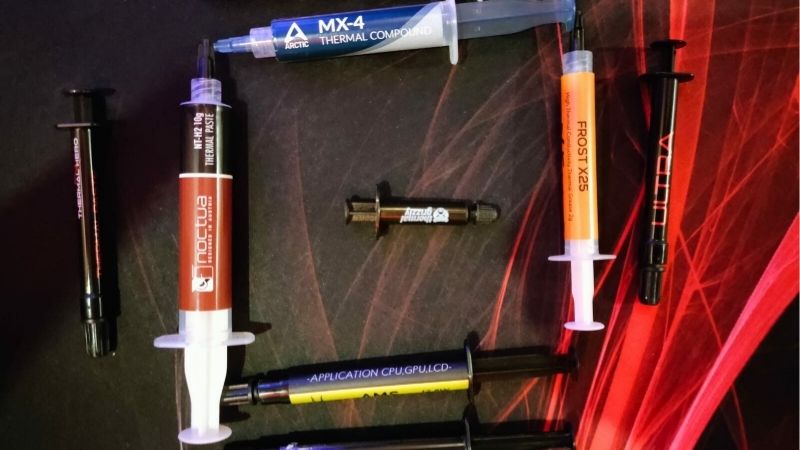
Nearly every ceramic and carbon-based compound moves heat well while remaining an electrical insulator. That is the combination you want, and it means a small amount squeezed onto the substrate is a cleanup rather than a disaster.
Silver-loaded pastes complicate this. Most are described as non-conductive but remain capacitive, so a bridge across nearby contacts can cause instability even when nothing is technically shorted.
Liquid metal sits at the far end. It conducts electricity freely, corrodes aluminium on contact and needs the area around the die masked before application. The performance is real, and so is the risk.
A Higher W/mK Figure Does Not Guarantee Lower Temperatures
Each company measures conductivity under its own test standard, at its own bond line thickness and pressure. That makes a 14 W/mK claim from one brand and an 8.5 claim from another effectively incomparable figures.
Bond line thickness matters more than the rating in practice. A thin, even layer of a mid-rated compound under proper mounting pressure routinely beats a thick layer of something rated far higher.
Noctua makes the point directly by publishing no figure at all, arguing the number misleads buyers, and its compounds still finish near the top of independent comparisons.
Where High Conductivity Genuinely Pays Off
On a standard processor with an integrated heat spreader and a decent cooler, the gap between good compounds is one to three degrees. On a bare die, a delidded chip or a graphics processor, the gap widens because the heat density is higher.
Hot laptops are the other case, though there the enemy is pump-out rather than raw conductivity. A phase-change material that reflows instead of migrating outward usually beats a high-rated paste over a year of use.
Sustained workloads shift the calculation too. A compound that tests brilliantly for ten minutes but dries out over a year is the wrong choice for a machine that renders overnight, no matter how good the rating looks.
Application Risk and How Reversible It Is
Standard compounds clean off with isopropyl alcohol and a lint-free cloth in a couple of minutes. Liquid metal can stain a copper cold plate permanently and must never touch an aluminium heatsink.
Consider what happens if you get it wrong. A ceramic compound has no failure mode worse than a messy cleanup, which is why it remains the right default for anything you rely on daily.
Mounting pressure is the other half of a safe application. Firm, even pressure from a backplate spreads the best thermal conductive paste into a thin bond line without squeezing excess out onto the surrounding substrate.
Top Picks for the Best Thermal Conductive Paste
Five of these are electrically safe compounds; the last is liquid metal and carries real risk. Ratings are manufacturer figures measured under differing standards, and retail pricing at the time of writing in August 2026 shifts weekly.
| Product | Rated conductivity | Electrically conductive | Type | Best for |
|---|---|---|---|---|
| Thermalright TFX | 14.3 W/mK | No | Ceramic-loaded | High rating, low price |
| Thermal Grizzly Kryonaut Extreme | 14.2 W/mK | No | Ceramic-loaded | Benching and extreme cooling |
| Kingpin KPx | 12.5 W/mK | No | Ceramic-loaded | Sustained heavy loads |
| Cooler Master MasterGel Maker | 11 W/mK | No | Nano-diamond | Easy high-tier application |
| Honeywell PTM7950 | Around 8.5 W/mK | No | Phase change pad | Laptops and small dies |
| Thermal Grizzly Conductonaut | 73 W/mK | Yes | Liquid metal | Delidded and bare dies only |
Thermalright TFX
TFX is arguably the best thermal conductive paste on value terms, carrying one of the highest ratings available at 14.3 W/mK while costing a fraction of the premium tubes. It is electrically non-conductive and performs strongly on processors and bare graphics dies alike.
The consistency is stiff, which makes a clean application harder than it should be, particularly in a cold room. Warming the tube first solves most of that, and the packaging is basic in typical Thermalright fashion.
Thermal Grizzly Kryonaut Extreme
Rated at 14.2 W/mK, Kryonaut Extreme is built for sub-ambient and heavily overclocked systems where a degree decides whether a clock speed holds. Fresh-mount performance is at the very top of the ceramic group.
Service life on a hot chip is short compared with thicker compounds, and price per gram is the highest here. It is a tool for a rig you re-paste often, not for a machine you close and forget.
Kingpin KPx
KPx is rated at 12.5 W/mK and was developed around extreme overclocking, but its real strength is that it holds up under sustained heat rather than drying out quickly. It is non-conductive and safe around the socket.
Availability is patchy outside specialist retailers, and the price sits in the premium tier. The consistency is thick, so firm mounting pressure is needed to reach a thin bond line.
Cooler Master MasterGel Maker
With an 11 W/mK rating and a nano-diamond filler, this sits in the high-conductivity group while remaining one of the easier compounds to apply thanks to a flat-tip syringe that suits a controlled dot or line.
Tube sizes are small, so cost per application climbs if you re-paste regularly. It is also on the thinner side, which puts it among the compounds more prone to migrating over repeated heat cycles.
Honeywell PTM7950
PTM7950 is a phase-change pad rather than a paste. It softens at operating temperature and reflows in place instead of pumping outward, which makes it the strongest long-term answer for laptops and small, hot dies.
Initial temperatures are slightly worse until the first heat cycles settle it, and application means placing a cut sheet rather than squeezing a syringe. Counterfeits are widespread, so buy from a verifiable seller.
Thermal Grizzly Conductonaut
At a rated 73 W/mK, liquid metal is in a different class for heat transfer and is the reason delidded processors post the numbers they do. On a bare die with a copper cold plate it delivers results no paste can match.
It conducts electricity, corrodes aluminium, stains copper permanently and requires masking around the socket. Unless you are working on a delidded chip or a bare die and accept the risk, choose one of the compounds above.
What 2026 Conditions Mean for High-Conductivity Buyers
The market backdrop changes how much the best thermal conductive paste is worth relative to other spending this year. Three points are relevant.
Cheap Thermal Upgrades Are the Ones Still Available
Graphics card pricing remains elevated and no new processor or GPU generation arrives before CES in January 2027. Against that backdrop, a better compound and a clean remount are among the few upgrades that still change anything.
Expect a few degrees rather than a transformation. That translates into higher held boost clocks and quieter fans, which is a reasonable return for a small outlay.
Premium Tubes Have Poor Value at Current Pricing
Component pricing has drifted up roughly six to eight percent across coolers and power supplies as manufacturers concentrated on higher tiers, and entry-level promotional pricing ended in early 2026.
High-rated compounds from the value brands now sit close to premium tubes in independent testing while costing far less per gram. Unless you are benching, the expensive syringe is hard to justify.
November Discounts Are Real in Cooling
Memory, drives and prebuilt machines are unlikely to see genuine Black Friday reductions this year because stock was built against high contract pricing. Paste, coolers, fans and cases still see honest markdowns.
If this is planned maintenance, that window is a sensible time to buy. If your chip is throttling now, the delay costs you more than the discount saves.
Frequently Asked Questions
These come up most often from people weighing a high-rated compound against the risk of something more aggressive, once the shortlist is down to two tubes.
Read them before buying rather than after, since the difference between compounds is small and the difference between a safe and an unsafe application is not.
Is thermal paste electrically conductive?
Most ceramic and carbon compounds are not, which is why they are safe around the socket. Silver-loaded pastes can be capacitive, and liquid metal is fully conductive and needs the surrounding area masked.
What conductivity rating do I actually need?
For a standard processor with a heat spreader, anything from about 8 W/mK upward performs within a couple of degrees of the best. Higher ratings pay off mainly on bare dies, delidded chips and graphics processors.
Can liquid metal be used on any cooler?
No. It reacts with aluminium and will damage an aluminium cold plate or heatsink. Copper and nickel-plated surfaces are the only safe targets, and even then it can stain the plate permanently.
Does a higher rated compound extend re-paste intervals?
Not usually. Some of the highest-rated pastes dry out faster on hot chips. If longevity is your goal, a stable mid-rated compound or a phase-change material is the better choice.
See More:
- What Is the Best Thermal Paste
- Best PC Case Fans 120mm
- Thermal Paste Best Brand
- Best Thermal Paste Brands
- Best CPU Cooler Reddit
Final Thoughts
The best thermal conductive paste for a normal build is a high-rated compound that carries no electrical risk, applied thinly under firm mounting pressure. Thermalright and Kingpin cover that ground well, phase-change material answers pump-out on laptops, and liquid metal belongs only on bare or delidded dies where you accept the consequences.






Write Your Review
No reviews yet. Be the first to share your experience!