
- Top Pick: GIGABYTE GeForce RTX 5070 Ti Gaming OC 16G Graphics Card, 16GB 256-bit GDDR7, PCIe 5.0, WINDFORCE Cooling System, GV-N507TGAMING OC-16GD Video Card
- Best Value: ASUS TUF Gaming NVIDIA GeForce RTX 4080 Super OC Edition Gaming Graphics Card (PCIe 4.0, 16GB GDDR6X, HDMI 2.1a, DisplayPort 1.4a), 3 Year Warranty
- Premium Choice: GIGABYTE GeForce RTX 4080 Super AERO OC 16G Graphics Card, 3X WINDFORCE Fans, 16GB 256-bit GDDR6X, GV-N408SAERO OC-16GD Video Card
Top Rtx 4080 Super 5070 Which Picks for 2026
Here are our current top rtx 4080 super 5070 which picks, compared on real Amazon owner reviews, price, and features. Live prices update below.
- Top Rtx 4080 Super 5070 Which Picks for 2026
- RTX 4080 Super vs 5070: The Quick Verdict
- Deep Dive Face-Off: Benchmarks, Features, and Efficiency
- Pros, Cons, and the Smart Third Option
- Market Conditions in 2026: The Forces Moving These Prices
- Final Verdict on the 4080 Super vs 5070 Question
- Related Guides
- Frequently Asked Questions
- Related Articles


Dropped $48.06


4080 Super vs 5070 pits Ada Lovelace’s refined near-flagship against Blackwell’s $549 volume seller, and the matchup is far closer than the price gap suggests. One card carries 67% more CUDA cores and 16GB of VRAM; the other answers with GDDR7, exclusive DLSS 4 Multi Frame Generation, and dramatically better efficiency. With the 4080 Super now discontinued and circulating at unpredictable prices, this comparison measures exactly what each dollar buys in 2026 — and which buyer profile each card genuinely serves.
As an Amazon Associate we earn from qualifying purchases at no extra cost to you. Product prices and availability are accurate as of the date shown and are subject to change.


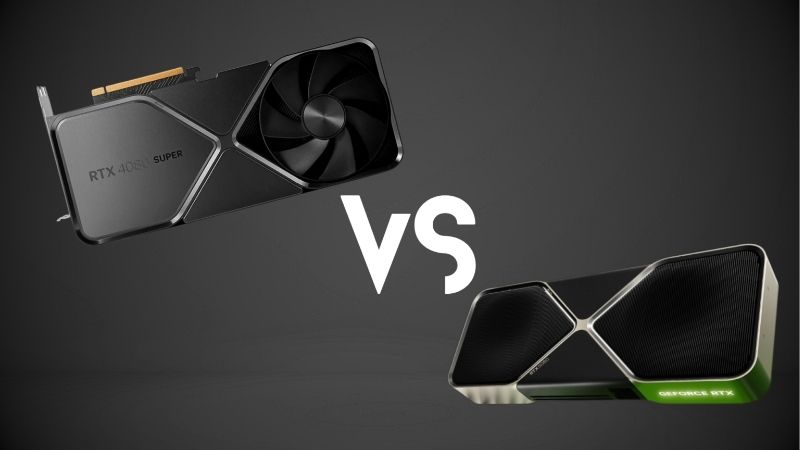
RTX 4080 Super vs 5070: The Quick Verdict
The direct answer first: the RTX 4080 Super is the faster card by a substantial 25-30% in raw performance and carries 4GB more VRAM, making it the better pure 4K performer. The RTX 5070 is the better purchase for most people, costing roughly $300-450 less while running Multi Frame Generation that closes or reverses the gap in supported titles, and drawing 70W less power. At 1440p, the 5070 wins the value verdict decisively; at native 4K or for VRAM-heavy creative work, the 4080 Super earns its premium — if you can find one sensibly priced. Compare both cards’ live listings on Amazon before deciding, because the 4080 Super’s street price swings weekly and frequently settles this debate by itself.
Specs Comparison Table at a Glance
The specification sheet explains every benchmark that follows, so the key numbers come first.
| Specification | RTX 4080 Super | RTX 5070 |
|---|---|---|
| Architecture | Ada Lovelace (2024) | Blackwell (2025) |
| CUDA cores | 10,240 | 6,144 |
| Boost clock | 2.55 GHz | 2.51 GHz |
| VRAM | 16GB GDDR6X | 12GB GDDR7 |
| Memory bandwidth | 736 GB/s | 672 GB/s |
| TDP | 320W | 250W |
| Frame generation | DLSS 3 Frame Gen (2x) | DLSS 4 Multi Frame Gen (up to 4x) |
| Launch MSRP | $999 | $549 |
A 67% core advantage and 4GB more memory versus a $450 MSRP gap and a generation of features — that tension defines every section below.
Who the RTX 4080 Super Still Serves Best
Native 4K gamers and creators are its remaining constituency: the silicon delivers 60+ FPS at 4K ultra in nearly everything without upscaling, and the 16GB buffer comfortably holds 4K video timelines and mid-size AI models that overflow 12GB cards.
Owners who bought at launch also hold a card with years of strong service left — this comparison argues against selling it far more than against having bought it.
Who the RTX 5070 Is Built For
High-refresh 1440p gamers get the strongest value in this matchup: the 5070 sustains 100-150+ FPS at that resolution, and Multi Frame Generation pushes supported titles past 200 FPS on the monitors that tier of player actually owns.
It also fits real-world systems gracefully — 250W means a 650W power supply suffices, compact 2-2.5 slot designs fit ordinary cases, and the new warranty removes the used-market anxiety hovering over discontinued Ada stock.
Deep Dive Face-Off: Benchmarks, Features, and Efficiency
Criterion-by-criterion comparison mirrors the actual buying decision. All figures aggregate results from GPU-limited test systems with modern X3D-class processors.
Raster Benchmarks at 1440p and 4K
At 1440p ultra, the 4080 Super leads by roughly 25%: Cyberpunk 2077 runs at 110 FPS versus 87 FPS, Horizon Forbidden West at 135 FPS versus 108 FPS, and Black Ops 6 at 188 FPS versus 152 FPS. Both clear high-refresh thresholds comfortably; the Ada card simply does it with more margin.
At 4K the gap holds near 25-30% and the VRAM difference starts compounding it: the 4080 Super averages 66 FPS in Cyberpunk 2077 ultra against 53 FPS, and in texture-heavy 2025-2026 releases the 5070’s 12GB buffer forces texture-pool reductions the 16GB card never considers. Frame-time logs show the same pattern — 1% lows spread further apart than averages once memory pressure appears. For native 4K, the silicon hierarchy is honest and unchanged.
Competitive titles compress the story: at 1440p esports settings, both cards push past the 280 FPS mark in Valorant and Counter-Strike 2, with the 4080 Super’s lead shrinking toward CPU limits. Players targeting 240Hz monitors get a saturated experience from either card, which quietly removes raw raster from the decision for the esports-focused buyer and leaves price and features to settle it.
DLSS 4 Multi Frame Generation Rewrites the Charts
The experimental column belongs to Blackwell. The 4080 Super is permanently capped at DLSS 3’s single generated frame; the 5070 produces up to three AI frames per rendered frame through DLSS 4’s transformer model, with visibly reduced ghosting around fast motion compared to the older convolutional approach.
The measured consequence inverts the price hierarchy in supported titles: path-traced Cyberpunk 2077 at 1440p reaches roughly 165 FPS on the 5070 with MFG 4x versus roughly 130 FPS on the 4080 Super with DLSS 3. A $549-class card outdelivering a $999-class card in Nvidia’s own showcase title is the single most consequential fact in this comparison — and with 175+ DLSS 4 games growing monthly, it applies to an expanding share of new releases.
Fairness requires noting what both share: the improved transformer upscaler benefits Ada too, Reflex keeps latency in check on both, and in unsupported titles the 4080 Super’s raw silicon advantage stands untouched.
Power Draw, Size, and System Requirements
The efficiency ledger favors the 5070 heavily: 230W typical gaming draw against 300W means roughly 25% less energy per session for 75-80% of the raster performance — and better performance per watt than anything in the Ada stack. Heat output and fan noise follow the same curve downward.
Practical fit diverges similarly. Most 5070 partner cards occupy 2-2.5 slots around 240-300mm and pair with 650W power supplies; 4080 Super designs commonly span 3-3.5 slots past 320mm and want 750-850W units. Both use the 12V-2×6/12VHPWR connector with adapters included. For small-form-factor builders, this section alone often decides the matchup.
Running costs compound quietly over ownership: a 20-hour-per-week gamer saves roughly 70 watt-hours per gaming hour with the 5070, which totals meaningful electricity money across a three-year window — and the cooler exhaust keeps a small room comfortable in summer in a way 320W cards simply do not. Owners downsizing from Ada hardware mention this in reviews more often than any spec sheet would predict.
Pros, Cons, and the Smart Third Option
Thousands of owner reviews give each card a consistent scorecard — the 4-5 star praise and the 2-3 star complaints cluster predictably — and one alternative card resolves the comparison’s central tension.
RTX 4080 Super Strengths and Weaknesses
Pros: genuine no-compromise 4K raster performance, a 16GB buffer creators repeatedly call the practical minimum for serious work, mature stable drivers, and build quality that long-term owners praise. At its original $999 it was rated among Ada’s best values, with review averages near 4.7 stars.
Cons: discontinuation is the core problem — remaining new stock prices erratically, often well above MSRP, while used units carry the standard second-hand risks that lower-star reviews document: unknown histories, tired thermal pads, expired warranties. It also permanently lacks Multi Frame Generation and draws Ada-era power for every frame.
The satisfied used-market buyers in the 4-5 star reviews share a repeatable method worth copying: original packaging, stress-test screenshots from the seller, and a memory-temperature check under load inside the return window. The lower-star experiences cluster around skipped diligence — GDDR6X junction temperatures past 100°C on degraded pads being the most common discovery, a cheap fix but an avoidable one.
RTX 5070 Strengths and Weaknesses
Pros: standout value at $549 MSRP, exclusive DLSS 4 Multi Frame Generation, class-leading 250W efficiency, compact quiet designs, full warranty, and years of driver priority ahead. Ratings cluster at 4.5-4.6 stars, with 1440p buyers the most satisfied cohort.
Cons: the 12GB buffer is the recurring 2-3 star complaint — adequate today, tight for 4K ambitions tomorrow — and street prices above MSRP during stock crunches erode the headline value. Spec-focused reviewers also note the modest raster step over the prior 4070 Super when DLSS 4 is excluded from the equation.
The Alternative: RTX 5070 Ti Resolves the Tension
The card this comparison keeps gesturing toward exists: the RTX 5070 Ti matches the 4080 Super’s raster performance within a few percent, carries the same 16GB capacity on faster GDDR7, runs full Multi Frame Generation, and lists at $749 — typically below real-world 4080 Super pricing.
It is, functionally, a 4080 Super with Blackwell features and a warranty for less money. If your budget reaches past the 5070, compare the 5070 Ti’s current price on Amazon against both cards here; most days, it simply wins the three-way comparison outright.
Market Conditions in 2026: The Forces Moving These Prices
Two industry developments currently push GPU pricing upward in tandem, and they affect a discontinued card and a current one through different mechanisms worth understanding before purchase.
H200 Sales to China Tighten the Supply Chain
The United States has approved Nvidia selling the H200 — among its most powerful AI accelerators — to China, unlocking enormous data center demand. Every H200 competes for the same advanced fabrication and memory capacity that produces GeForce silicon, and data center margins dominate Nvidia’s allocation incentives.
The historical pattern after each AI demand surge is consistent: consumer GPU supply thins within one to two quarters and street prices firm. Current-generation volume cards like the 5070 feel that squeeze first; discontinued cards like the 4080 Super simply stop being restocked, making every remaining unit scarcer.
Memory Inflation Lifts Both New and Used Prices
Simultaneously, laptop and component prices are trending upward with memory leading the climb, as AI infrastructure absorbs DRAM and advanced-node production. GDDR7 carries direct cost pressure into 5070 pricing, while the used and remaining-stock 4080 Super market floats upward on general scarcity — used prices historically track new prices with a short lag.
Memory contracts negotiate quarters ahead, so today’s increases are already baked into card prices through 2026. Price tracking confirms the traditional mid-generation discount window has not materialized this cycle.
What Timing Means for This Specific Choice
For 5070 buyers, a listing at or near $549-600 today is statistically unlikely to be beaten by waiting. For 4080 Super hunters, the calculus is sharper: remaining inventory only shrinks, and the moment new stock disappears entirely, the choice becomes a used-market lottery against a rising price floor.
Only buyers satisfied with their current card lose nothing by waiting — for everyone actively shopping this matchup, hesitation carries a measurable expected cost.
A closing cost-per-frame anchor for fence-sitters: at typical street prices, the 4080 Super costs 60-80% more than the 5070 while delivering 25-30% more raster — and less effective performance in DLSS 4 titles. Framed per frame over a realistic ownership span, the cheaper card is not the compromise; it is the arithmetic favorite.
See more:
- ASUS TUF Gaming GeForce RTX 5090 3080 vs 5080
- Nvidia RTX 4070 Super graphics card
- Sapphire graphics card
- Is HDR good for gaming
- RTX 4080 vs 5070
Final Verdict on the 4080 Super vs 5070 Question
The 4080 Super vs 5070 comparison lands on a value verdict with a clear conditional: the RTX 5070 is the smarter buy for most gamers — especially at 1440p — delivering 75-80% of the raster performance for roughly 55-60% of the real-world price, plus Multi Frame Generation that flips the leaderboard in a growing library of supported titles. The RTX 4080 Super remains the stronger card for native 4K and 16GB-dependent creative work, but discontinuation has made finding one at a rational price the hard part, and the RTX 5070 Ti increasingly renders the search unnecessary. With AI demand tightening supply and memory inflation lifting prices across the board, this is a market that rewards deciding rather than deliberating. Check the live prices for the 5070 and its alternatives on Amazon today, and convert this comparison into frames on your own monitor.
Frequently Asked Questions
What is the best 4080 super 5070 in 2026?
The best 4080 super 5070 depends on your budget and how you plan to use it. The options compared above are our top-rated picks based on real customer ratings, build quality, and overall value — start with the highest-rated model that fits your budget.
How much should I expect to spend on a 4080 super 5070?
Prices vary by brand and features. Budget options cover the essentials, while mid-range and premium models add durability, performance, and extra features. Compare the prices in the list above to find the best value for your needs.
What should I look for when buying a 4080 super 5070?
Focus on what matters most for your use case — build quality, compatibility, performance, warranty, and verified customer reviews. Every pick above is selected to balance these factors.
Are budget 4080 super 5070 options worth it?
Yes. For most people a well-reviewed budget or mid-range 4080 super 5070 delivers excellent value. You only need to spend more if you specifically require premium materials or top-tier performance.
How did we choose these 4080 super 5070 picks?
We compare current Amazon ratings, review counts, key features, and price to surface the options with the best real-world value. The list is refreshed as ratings and availability change.










Write Your Review
No reviews yet. Be the first to share your experience!