
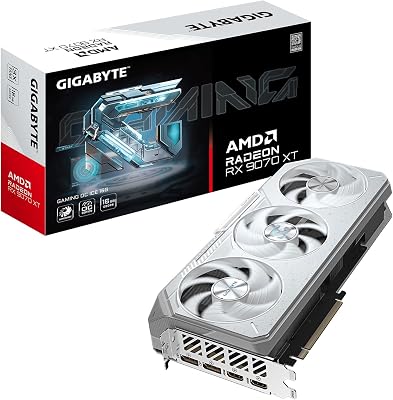
- Top Pick: GIGABYTE Radeon RX 9070 XT Gaming OC 16G Graphics Card, PCIe 5.0, 16GB GDDR6, GV-R9070XTGAMING OC-16GD Video Card
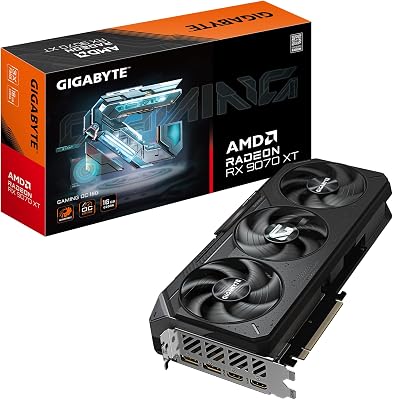
- Best Value: GIGABYTE Radeon™ RX 9070 XT Gaming OC ICE 16G Graphics Card (16GB GDDR6, 256-bit, PCIe 5.0, HDMI/DP 2.1, 2.7 Slot, Hawk Fan, Server-Grade Thermal Gel, Reinforced Structure)
- Premium Choice: Sapphire 11348-03-20G Pulse AMD Radeon™ RX 9070 XT Gaming Graphics Card with 16GB GDDR6, AMD RDNA 4
- The Quick Verdict: Radeon 9070 XT vs 5080 at a Glance
- Deep Dive Face-Off: Where the Radeon 9070 XT vs 5080 Gap Actually Shows
- Pros, Cons and the Price Reality Check
- What the 2026 Market Actually Means for Your Purchase Timing
- Final Verdict and Recommendation
- Related Guides
- Frequently Asked Questions
- Related Articles


Best Seller
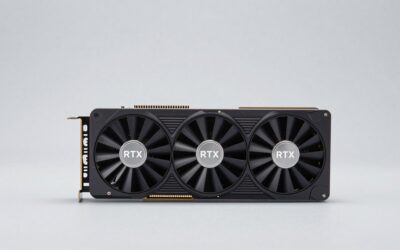
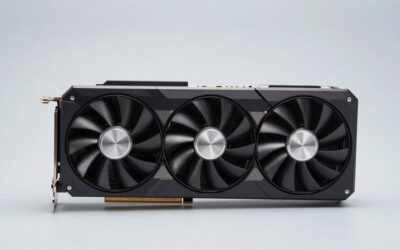
XFX Swift AMD Radeon RX 9070XT Triple Fan Gaming Edition with 16GB GDDR6 HDMI 3xDP, AMD RDNA 4 RX-97TSWF3BA
radeon 9070 xt vs 5080 is the decision that stalls more high-end builds than any other matchup right now, and for a rational reason: both cards carry 16 GB of VRAM on a 256-bit bus, yet they sit roughly $400 to $500 apart at street prices. On a spec sheet that gap looks indefensible. In practice it buys ray tracing headroom, DLSS 4 Multi Frame Generation, and an encoder that pays for itself the moment you stream or edit. Below is the spec table, the aggregated frame-rate ranges, the power and clearance realities your case actually has to survive, and a direct answer on which card belongs in your build.
The Quick Verdict: Radeon 9070 XT vs 5080 at a Glance
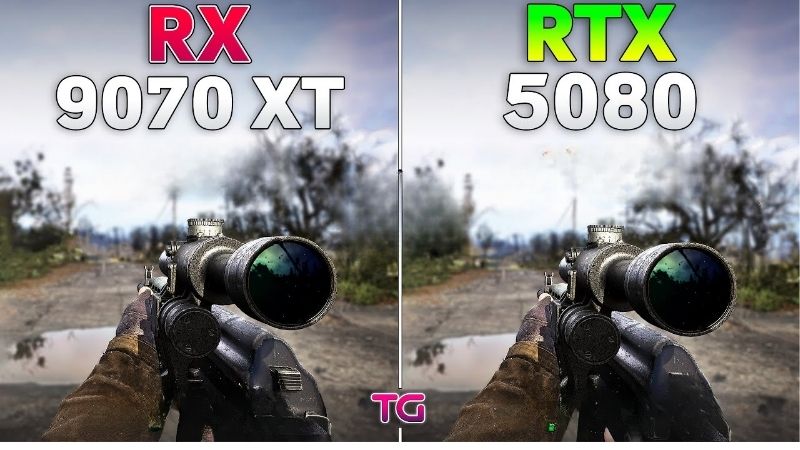
If you want the answer without the 3,000-word tour: the RX 9070 XT wins on dollars-per-frame in raster by a margin that is not close, and the RTX 5080 wins on ray tracing, upscaling maturity, encoding, and anything touching AI workloads. Neither card is bad. The question is whether the features you will actually use are worth roughly 60% more money.
As an Amazon Associate we earn from qualifying purchases at no extra cost to you.


Who Should Buy the Radeon RX 9070 XT
You should buy the 9070 XT if you play at 1440p or 1440p ultrawide, you run mostly raster titles (competitive shooters, sims, open-world games with RT off), and your budget for the GPU alone tops out around $650 to $750. In that lane the card delivers roughly 90% to 95% of the 5080’s rasterised throughput at 1440p for a fraction of the outlay.
It also suits builders who are upgrading a mid-tier system rather than starting fresh. The 9070 XT’s lower board power means your existing 750W PSU is very likely fine, and you are not forced into buying a new unit — a hidden cost that quietly erases part of the 5080’s supposed premium justification.
The honest caveat: if you have already decided you want path tracing in Cyberpunk 2077 or Alan Wake 2 at playable frame rates, stop reading this section. FSR 4 has closed a lot of ground, but heavy RT is still Nvidia’s home turf.
Who Should Buy the RTX 5080
The 5080 makes sense at 4K, at high-refresh 1440p where you want RT enabled and still want 100+ fps, or when the GPU is doing work that is not gaming. If you stream to Twitch or YouTube, the ninth-generation NVENC encoder means you can run AV1 at quality settings that AMD’s encoder still trails. If you touch Blender, DaVinci Resolve, or any local LLM, CUDA is not a preference — it is a dependency.
DLSS 4 Multi Frame Generation is the other pillar. It is a transformer-model upscaler paired with the ability to generate up to three additional frames per rendered frame. Whether you like frame generation is a matter of taste and latency tolerance, but the technology exists on one side of this comparison and not the other.
There is a forward-looking argument too. Nvidia has a long track record of shipping driver-side features to existing hardware — RTX HDR, DLSS model updates, RTX Video Super Resolution. Buying into the 5080 is partly a bet that this cadence continues.
Radeon 9070 XT vs 5080 Spec Comparison Table
Specifications do not decide the argument, but they frame it. Note how close the memory subsystems are and how far apart the compute and RT hardware sit.
| Specification | Radeon RX 9070 XT | GeForce RTX 5080 |
|---|---|---|
| Architecture | RDNA 4 | Blackwell |
| Compute Units / SMs | 64 CUs (4,096 SPs) | 84 SMs (10,752 CUDA cores) |
| Ray Accelerators / RT Cores | 64 (2nd gen RDNA 4) | 84 (4th gen) |
| AI Cores | 128 AI Accelerators | 336 Tensor Cores (5th gen) |
| VRAM | 16 GB GDDR6 | 16 GB GDDR7 |
| Memory Bus | 256-bit | 256-bit |
| Memory Bandwidth | ~645 GB/s | ~960 GB/s |
| Board Power | ~304W | ~360W |
| Power Connector | 2x or 3x 8-pin | 1x 16-pin (12V-2×6) |
| Recommended PSU | 750W | 850W |
| Upscaling | FSR 4 (ML-based) | DLSS 4 + Multi Frame Gen |
| Encoder | AMD VCN, AV1 | NVENC 9th gen, dual AV1 |
| Launch MSRP | $599 | $999 |
The bandwidth line is the one to underline. GDDR7 gives the 5080 roughly 49% more memory throughput from an identical bus width, and that advantage compounds at 4K where the frame buffer is under the most pressure.
Deep Dive Face-Off: Where the Radeon 9070 XT vs 5080 Gap Actually Shows
Aggregating published review data across a broad game suite produces a consistent shape: the two cards converge as resolution drops and diverge as ray tracing load rises. Here is where the numbers land, criterion by criterion.
Raster Performance at 1440p and 4K
At 1440p with ray tracing off, the 5080 typically leads the 9070 XT by roughly 20% to 28% on average across a mixed suite. That is a real margin, but at that resolution both cards are frequently pushing past 120 fps in anything that is not a poorly optimised UE5 title, which means a chunk of the 5080’s lead is spent on frames your monitor may not display.
At 4K the gap widens to roughly 30% to 38%. This is the bandwidth advantage asserting itself. The 9070 XT remains a competent 4K card in raster — 60 to 90 fps in most modern titles at high settings — but it is working near its ceiling while the 5080 still has room.
Translate this to cost. At a hypothetical $680 for the 9070 XT and $1,050 for the 5080, you are paying roughly 54% more for roughly 25% more 1440p performance. The dollars-per-frame maths does not flatter Nvidia here, and no amount of marketing changes arithmetic.
Ray Tracing, DLSS 4 and FSR 4
RDNA 4 was a genuine step change for AMD in ray tracing — roughly double the RT throughput per compute unit versus RDNA 3. In light-to-moderate RT titles the 9070 XT is now competitive rather than embarrassed. Enable RT reflections and shadows in something like Resident Evil 4 and the gap stays broadly in line with raster.
Push into heavy RT or path tracing and the picture changes hard. In Cyberpunk 2077 with path tracing, the 5080’s lead can stretch beyond 60%, and with Multi Frame Generation layered on top the practical difference is the difference between playable and not. If that specific workload is your reason for buying, this section is the whole comparison.
On upscaling: FSR 4 moved to a machine-learning model and the image quality gap versus DLSS 4 narrowed substantially — but DLSS retains wider game support and a longer track record of per-title model updates. Nvidia’s DLSS Override system, which lets you force newer models into older titles at the driver level, is the kind of ongoing optimisation that has no AMD equivalent yet.
Power, Heat and PSU Requirements
This is where a lot of first-time high-end builders get caught. The 5080 uses the 16-pin 12V-2×6 connector. If your PSU is an older ATX 2.x unit you will be running the bundled adapter off three or four 8-pin cables, and you need to physically confirm the connector clicks fully home — partial seating is the documented cause of the melting incidents that made headlines.
Length and slot clearance matter too. Partner 5080 cards commonly run 320 to 360 mm long and occupy three slots or more. Many 9070 XT models land in the 280 to 330 mm range with dual or triple-slot coolers. Measure your case before you order, not after.
On the wall: expect roughly 300W to 320W sustained gaming draw from the 9070 XT and 340W to 370W from the 5080. A quality 750W unit handles the AMD card with a mid-range CPU. For the 5080, 850W is the sensible floor, and if you are pairing it with a 14900K or a 9950X, do not shop below that.
Pros, Cons and the Price Reality Check
Every comparison eventually has to stop measuring and start judging. Here is the honest ledger for both cards, followed by what to do if the answer is “neither, they are both too expensive.”
Radeon RX 9070 XT: Pros and Cons
Pros: Best raster dollars-per-frame in its class. 16 GB of VRAM with no asterisk. Standard 8-pin power connectors — no adapter anxiety, no 12V-2×6 seating ritual. Lower board power means fewer forced upgrades elsewhere in the build. FSR 4 is genuinely close to DLSS in most scenarios now. Broadly better availability than the 5080 through most of 2025 and into 2026.
Cons: Heavy ray tracing and path tracing remain a clear loss. No answer to Multi Frame Generation. The encoder is fine but not NVENC. Productivity software support outside gaming is meaningfully thinner — if a tool says “CUDA required,” that is a wall, not an inconvenience. Driver-side feature cadence historically lags Nvidia’s.
GeForce RTX 5080: Pros and Cons
Pros: Fastest of the two in every scenario, decisively so at 4K and under RT load. GDDR7 bandwidth advantage of roughly 49%. DLSS 4 with Multi Frame Generation and driver-level DLSS Override. Ninth-generation NVENC with dual AV1 encoders. CUDA ecosystem access for Blender, Resolve, Stable Diffusion, and local LLM work. Strong resale value historically.
Cons: The price. 16 GB of VRAM at this tier draws legitimate criticism when you are spending four figures. 12V-2×6 connector requires care and possibly a new PSU. Large physical footprint. Availability has been inconsistent, and street prices above MSRP have been common rather than exceptional.
The Alternative: What If Both Are Out of Reach?
If the 5080 is unaffordable and the 9070 XT still feels steep, the RTX 5070 Ti is the most defensible middle path. It carries 16 GB of GDDR7, DLSS 4 with Multi Frame Generation, the full NVENC block, and lands roughly 15% to 20% behind the 5080 in raster — for meaningfully less money. You keep the entire Nvidia feature stack and give up top-end headroom.
On the AMD side, the plain RX 9070 (non-XT) sits roughly 8% to 12% behind the XT while drawing about 220W. For a small-form-factor or quiet-focused 1440p build it is arguably the smarter buy.
Whichever direction you lean, check current listings before committing — this segment moves weekly, and a card that was poor value last month can flip on a single price cut. If one of these lands in your target window today, that is your signal to act.
What the 2026 Market Actually Means for Your Purchase Timing
Spec comparisons assume prices hold still. They have not. Three developments are shaping what you will actually pay this quarter, and they push in different directions.
The H200 Export Decision and What It Does to GeForce Supply
The United States has cleared Nvidia to sell the H200 — one of its most capable AI accelerators — into China. For a gamer this sounds like distant geopolitics. It is not. Nvidia allocates finite wafer capacity at TSMC and finite HBM and GDDR supply across its product lines, and data centre margins dwarf GeForce margins by a wide multiple.
A newly reopened market of that size gives Nvidia a rational commercial reason to weight production toward accelerators. Historically, every time data centre demand has surged, consumer GPU supply has tightened and street prices have drifted above MSRP. That is not a prediction of doom — it is a pattern with a decade of precedent.
The practical read for the radeon 9070 xt vs 5080 decision: the 5080 is the card in this pairing more exposed to that dynamic. If you are leaning Nvidia and you see one at or near MSRP, the case for waiting is weaker than it looks.
Component Prices Have Stopped Spiking — But Have Not Fallen
The genuinely good news is that the steep climb of late 2025 has flattened. Framework, which publishes unusually candid supply commentary, has reported a period of relative stability — while still warning that volatility has not ended. Prices stopped running. They did not reverse.
Memory is the pressure point. GPU board partners buy GDDR in a market that AI infrastructure is simultaneously draining, and that cost lands in the sticker price of every card in this comparison. It is a large part of why 16 GB on a $999 card was a decision rather than an oversight.
For your build, the implication is simple: assume today’s price is roughly the price. Do not build a plan around a discount that the underlying supply picture does not support.
New Supply Is Coming — In 2027 or 2028
Fresh capacity is genuinely opening up. OEMs are increasingly able to source DDR5 from Chinese suppliers such as CXMT, and Micron is building two new fabs in Idaho. Both are real, both are large, and neither helps you now — those plants are not scheduled to run until 2027 or 2028.
So the honest summary is: relief exists, but it is weak, and it is years out. Waiting for the memory market to fix GPU pricing means waiting through two more product generations.
Which reframes the whole exercise. The question is not “will this get cheaper if I wait?” It is “which of these two cards do I want to own for the next three years?” That is a far more answerable question, and the tables above answer it.
See More:
Final Verdict and Recommendation
The radeon 9070 xt vs 5080 comparison resolves cleanly once you stop treating it as a contest and start treating it as a budget allocation. Buy the RX 9070 XT if you game at 1440p, mostly in raster, and want the best frame rate your money can buy — you will surrender heavy ray tracing and CUDA, and for a large majority of players that costs nothing they will notice. Buy the RTX 5080 if you game at 4K, want path tracing to be viable, stream, or run creative and AI workloads where CUDA is non-negotiable — you are paying roughly 55% more for roughly 25% to 35% more performance plus a feature stack with no AMD equivalent.
What you should not do is wait. Component pricing has plateaued rather than fallen, meaningful new memory supply is a 2027 story at the earliest, and Nvidia now has an additional reason to prioritise data centre silicon. If the card that fits your use case is available at a price you can live with, that is the buying signal. Check the current listing for the model you have settled on, confirm your case clearance and PSU headroom against the numbers above, and pull the trigger while it is in stock.
Frequently Asked Questions
How large is the performance gap?
The RTX 5080 is generally 25 to 35 percent faster in rasterised games and further ahead in heavy ray tracing, helped by GDDR7 delivering close to 960 GB/s against roughly 640 GB/s on the RX 9070 XT. Both cards carry 16GB, so the difference is speed rather than capacity.
Is the RTX 5080 worth almost double the price?
For 1440p gaming, generally not. The RX 9070 XT already exceeds 100fps in most titles at that resolution, so the premium buys headroom you may not use. At 4K with path tracing and high refresh targets, the RTX 5080 advantage becomes visible enough to justify the outlay for some buyers.
What power supplies do they need?
The RTX 5080 is rated at 360W and requires a 12V-2×6 connector, so an 850W ATX 3.1 supply with a native cable is the sensible baseline. The RX 9070 XT sits near 304W with conventional 8-pin connectors and runs comfortably on a quality 750W unit.
Which handles 4K better?
The RTX 5080, and the gap widens as settings rise. Its far greater bandwidth and stronger ray-tracing hardware keep frame times consistent at 4K ultra, and DLSS 4 multi frame generation is exclusive to the RTX 50 series. The RX 9070 XT is very capable at 4K with FSR 4 quality upscaling.
Do both fit standard cases?
Most partner models of either card run 300 to 340mm long and 2.5 to 3.5 slots thick, so measure your case GPU clearance first. RTX 5080 buyers additionally need around 60mm of side clearance so the 12V-2×6 cable is not bent sharply near the connector.
Ready to decide? Our #1 pick for 2026 is the Architecture.
Live price & availability on Amazon.

Write Your Review
No reviews yet. Be the first to share your experience!