
- Top Pick: GIGABYTE GeForce RTX 5070 Ti Gaming OC 16G Graphics Card, 16GB 256-bit GDDR7, PCIe 5.0, WINDFORCE Cooling System, GV-N507TGAMING OC-16GD Video Card
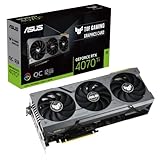
- Best Value: ASUS TUF Gaming NVIDIA GeForce RTX 4070 Ti OC Edition Gaming Graphics Card (PCIe 4.0, 12GB GDDR6X, HDMI 2.1a, DisplayPort 1.4a), 3 Year Warranty
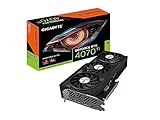
- Premium Choice: GIGABYTE GeForce RTX 4070 Ti Super Eagle OC 16G Graphics Card, 3X WINDFORCE Fans, 16GB 256-bit GDDR6X, GV-N407TSEAGLE OC-16GD Video Card
Top Rtx 5070 4070 Which Mid Picks for 2026
Here are our current top rtx 5070 4070 which mid picks, compared on real Amazon owner reviews, price, and features. Live prices update below.
- Top Rtx 5070 4070 Which Mid Picks for 2026
- RTX 5070 vs 4070 Ti: Quick Verdict and Core Specifications
- Deep Dive Face-Off: Performance, Power, and Features
- GPU Market Trends in 2026: Why Timing This Purchase Matters
- Final Verdict: Who Should Buy Which Card?
- Conclusion
- Related Guides
- Frequently Asked Questions
- Related Articles


Prime
Editor's Pick
ASUS SFF-Ready Prime NVIDIA GeForce RTX 5070 Graphics Card (PCIe 5.0, 12GB GDDR7, HDMI/DP 2.1, 2.5-Slot, Axial-tech Fans, Dual BIOS), 3 Year Warranty
Dropped $2.52

Dropped $19.61


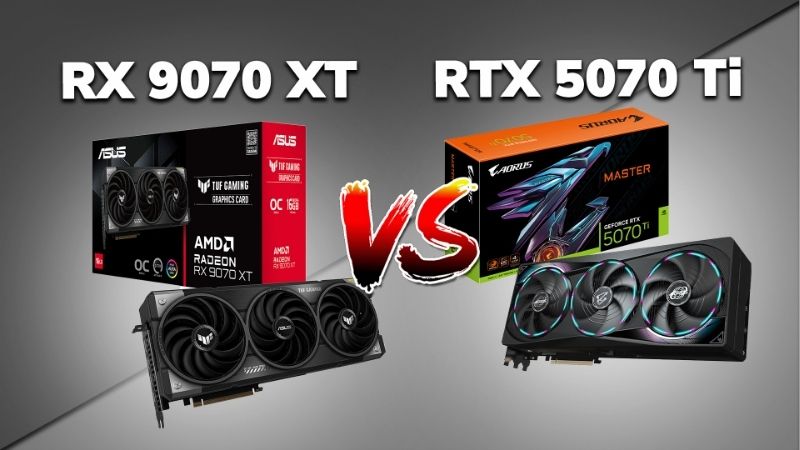
RTX 5070 vs 4070 Ti is one of the closest GPU matchups Nvidia has ever produced, and that makes it one of the easiest to get wrong. The 4070 Ti launched in January 2023 at $799 as Ada Lovelace’s upper-midrange card; the RTX 5070 arrived in 2025 at just $549 with GDDR7 memory and DLSS 4. In pure raster performance they trade blows within a few percentage points — yet the buying decision is anything but a coin flip once you factor in price, power draw, features, and where the market is heading. This comparison runs through the specs, benchmarks, and 2026 market conditions so you can pick the smarter card.
As an Amazon Associate we earn from qualifying purchases at no extra cost to you. Product prices and availability are accurate as of the date shown and are subject to change.





RTX 5070 vs 4070 Ti: Quick Verdict and Core Specifications
Two cards from adjacent generations landing on nearly identical raster performance is unusual, and it means the verdict hinges on everything around the frame rate: price, memory technology, feature support, and efficiency. Here is the short answer, the numbers, and the trade-offs.
The Quick Verdict for Busy Buyers
The RTX 5070 wins this comparison for most buyers. It matches or slightly trails the 4070 Ti in pure rasterization — typically within 0 to 5 percent — while costing $250 less at MSRP, drawing 35W less power, and supporting DLSS 4 Multi Frame Generation, which the 4070 Ti will never receive.
The 4070 Ti only makes sense as a used purchase at $450 or below. At that price its slight raster edge and identical 12GB buffer make it a defensible value play. Buying new, however, there is no contest: check the RTX 5070’s current price on Amazon, because at or near $549 it is the obvious pick.
Specification Comparison Table
The spec sheet explains how a card with fewer CUDA cores keeps pace with its predecessor: higher clocks, newer memory, and architectural efficiency close the gap that raw core counts suggest.
| Specification | RTX 4070 Ti | RTX 5070 |
|---|---|---|
| Architecture | Ada Lovelace (2023) | Blackwell (2025) |
| CUDA Cores | 7,680 | 6,144 |
| VRAM | 12GB GDDR6X | 12GB GDDR7 |
| Memory Bandwidth | 504 GB/s | 672 GB/s |
| Board Power | 285W | 250W |
| DLSS Support | DLSS 3 (Frame Generation) | DLSS 4 (Multi Frame Generation) |
| Launch Price | $799 | $549 |
Note the bandwidth line: GDDR7 gives the 5070 a 33 percent advantage that pays off most at 1440p with heavy textures and in memory-bound ray-traced scenes.
Pros and Cons of Each Card
An honest RTX 5070 vs 4070 Ti breakdown has to weigh trade-offs on both sides, because neither card is flawless at its current market price.
RTX 4070 Ti pros: slight raster lead in some titles; abundant used supply as owners upgrade; proven, mature drivers; standard performance-per-watt was excellent for its era. Cons: locked out of DLSS 4 Multi Frame Generation; 504 GB/s of bandwidth is the weakest link; used pricing is often too close to a new 5070 to justify; no warranty on secondhand units.
RTX 5070 pros: $549 MSRP undercuts everything near its performance class; DLSS 4 and the full Blackwell feature set; 250W draw suits smaller power supplies; new-card warranty and resale value. Cons: 12GB of VRAM is adequate rather than generous for a 2025 card; stock at MSRP fluctuates; raster gains over the previous generation are minimal, so upgrading from a 4070 Ti itself makes little sense.
Deep Dive Face-Off: Performance, Power, and Features
With raster performance nearly tied, the meaningful differences live in the details: frame generation behavior, system requirements, and long-term cost. These four areas decide which card you should actually order.
1440p and 4K Gaming Performance
At 1440p high settings, both cards average roughly 100 to 130 fps in demanding AAA titles, with the 4070 Ti ahead by 2 to 5 percent in older raster-heavy engines and the 5070 pulling level or slightly ahead in newer, bandwidth-sensitive games. In practice you could not identify which card was installed without an fps counter.
At 4K, both manage 55 to 70 fps in most titles at high settings, and both lean on upscaling for comfortable headroom. Here the 5070’s extra bandwidth shows: its one-percent lows are measurably steadier in open-world games, where the 4070 Ti’s narrower bus occasionally produces frame-time spikes. Across a typical twelve-game test suite, the geometric mean difference between the two cards at 4K is under 3 percent — statistically real, perceptually invisible.
Enable frame generation and the cards separate decisively. The 4070 Ti’s DLSS 3 doubles presented frames; the 5070’s DLSS 4 can quadruple them. In supported titles, the 5070 delivers 50 to 80 percent higher presented frame rates — a difference you can see on any high-refresh monitor.
Power Draw, Connectors, and System Fit
The practical install story favors the newer card. The RTX 5070’s 250W rating runs comfortably on a quality 650W power supply, while the 4070 Ti’s 285W and sharper transients make 700W to 750W the safer recommendation. For anyone upgrading an older prebuilt, that 35W difference can be the line between reusing a PSU and buying a new one.
Both cards use the 16-pin power connector on most models, with adapters included for PSUs that lack a native cable. Seat the connector fully and avoid tight bends near the plug — the guidance applies equally to both generations.
Physically, many 5070 models are compact two-slot designs around 240 to 280mm, while 4070 Ti partner cards trend larger at 300mm and up. Small-form-factor builders will find far more options on the Blackwell side. Noise levels follow the same pattern: the lower 250W heat load lets even budget 5070 coolers stay quiet under sustained gaming loads, while compact 4070 Ti models tend to run their fans noticeably harder to manage the extra 35W.
DLSS 4, AI Workloads, and Future-Proofing
The experimental gap is the widest part of this comparison. DLSS 4’s transformer-based Super Resolution produces cleaner detail and less ghosting than the convolutional model, and Multi Frame Generation generates up to three AI frames per rendered frame with Reflex managing latency. The 4070 Ti receives the improved upscaler through driver updates but is permanently excluded from Multi Frame Generation.
For AI tinkerers, both cards carry 12GB — enough for mainstream local image generation and small language models — but the 5070’s fifth-generation Tensor Cores with FP4 support deliver meaningfully higher inference throughput. Combined with newer media engines and better AV1 encoding, the Blackwell card is simply aligned with where Nvidia’s software investment is going through the rest of the decade. Streamers get a concrete benefit too: the 5070’s encoder produces visibly cleaner 1080p60 streams at the same bitrate, with negligible performance cost while gaming.
Value per Frame: The Cost Math
Run the numbers and the verdict gets sharper. A new RTX 5070 at $549 averaging 115 fps in a 1440p test suite costs about $4.77 per frame. A used 4070 Ti at $480 averaging 118 fps costs roughly $4.07 per frame — cheaper on paper, but without warranty, without DLSS 4, and with an unknown usage history.
Amortize over expected service life and the order flips. The 5070’s feature set and warranty give it a realistic four-to-five-year window; a used 4070 Ti bought in 2026 is already a three-year-old card whose lack of frame generation headroom will push an earlier upgrade. Per year of comfortable use, the new card works out cheaper for most owners.
The exception is a deep discount: a 4070 Ti at $420 or less from a seller with a return window genuinely beats the math. Those listings exist but move fast — which is itself a signal of how the market values this silicon.
GPU Market Trends in 2026: Why Timing This Purchase Matters
Mid-range cards are not insulated from macro forces. Two current developments are pushing GPU prices upward, and both bear directly on when you should buy either of these cards.
The H200 China Approval Squeezes GeForce Supply
Washington has cleared Nvidia to ship the H200, one of its most powerful AI accelerators, to China — reopening a massive data-center market overnight. Every accelerator order pulls from the same memory supply, packaging capacity, and wafer allocation that GeForce cards depend on.
History is consistent on what happens next: when data-center demand spikes, consumer cards become harder to find at MSRP. The 5070, as a volume Blackwell part, is exactly the kind of card whose street price drifts upward when allocation tightens. Buyers waiting for a discount may instead watch the $549 price point disappear.
Component and Laptop Prices Keep Climbing
At the same time, laptop and PC component prices are on a sustained upward trend, led by memory costs. GDDR7 modules compete directly with server and laptop DRAM for fab output, and that competition is raising the bill of materials for every new graphics card.
The used market follows: as new cards get pricier, secondhand 4070 Ti values firm up rather than fall. Price trackers already show used Ada cards holding flat year over year — the steady depreciation buyers used to count on has stalled.
Buy Now or Wait?
If you need a GPU this year, the asymmetry favors buying now. The realistic downside of acting today is missing a modest future discount; the downside of waiting is paying $50 to $100 over MSRP during a supply squeeze.
Set a simple trigger: a 5070 at $549 to $579 on Amazon is a buy. Below $430 for a clean used 4070 Ti with returns, that is a buy too. Anything between those bands, take the new card.
Final Verdict: Who Should Buy Which Card?
This matchup has a default winner and a narrow exception. Here is the recommendation by buyer profile, plus a third option if you can stretch the budget slightly.
Who Should Buy the RTX 4070 Ti
Buy a used 4070 Ti only if you find one at $450 or below with a return window, you primarily play raster-heavy or competitive titles, and frame generation does not matter to you. In that slice of the market it remains a strong card.
Test it promptly on arrival: stress the GPU, watch memory temperatures, and verify all display outputs before the return clock runs out.
Who Should Buy the RTX 5070
Everyone else should buy the RTX 5070. Equal real-world performance, $250 less at list price, lower power draw, DLSS 4, and a warranty make it the rational default for 1440p gamers and entry 4K builds alike.
It is the card this comparison recommends for roughly 85 percent of readers — check today’s Amazon listings and grab one when it is at or near $549.
The Alternative: RTX 5070 Ti
If your budget can reach $749, the RTX 5070 Ti changes the conversation: 16GB of GDDR7, roughly 25 to 30 percent more performance than either card here, and genuine 4K-class capability.
For buyers planning to keep one GPU for five years, that extra VRAM is the single best insurance policy in the current lineup — compare its Amazon price against the 5070 before you commit.
See More:
- Nvidia Reflex low latency
- RTX 4070 vs 5060 Ti
- Zephyr RTX 4070
- RTX 3080 Ti price
- Nvidia RTX 2060 Super
Conclusion
The RTX 5070 vs 4070 Ti comparison ends with a clear call: identical raster performance makes price and features the tiebreakers, and the 5070 wins both decisively with its $549 MSRP, 250W efficiency, GDDR7 bandwidth, and DLSS 4 support. The 4070 Ti earns a recommendation only as a sharply discounted used card. With the H200 export approval tightening supply chains and component prices rising, neither card is getting cheaper soon. Whichever side of the RTX 5070 vs 4070 Ti decision fits your build, compare live prices on Amazon now and lock in your card before the market moves.
Frequently Asked Questions
What is the best rtx 5070 4070 ti in 2026?
The best rtx 5070 4070 ti depends on your budget and how you plan to use it. The options compared above are our top-rated picks based on real customer ratings, build quality, and overall value — start with the highest-rated model that fits your budget.
How much should I expect to spend on a rtx 5070 4070 ti?
Prices vary by brand and features. Budget options cover the essentials, while mid-range and premium models add durability, performance, and extra features. Compare the prices in the list above to find the best value for your needs.
What should I look for when buying a rtx 5070 4070 ti?
Focus on what matters most for your use case — build quality, compatibility, performance, warranty, and verified customer reviews. Every pick above is selected to balance these factors.
Are budget rtx 5070 4070 ti options worth it?
Yes. For most people a well-reviewed budget or mid-range rtx 5070 4070 ti delivers excellent value. You only need to spend more if you specifically require premium materials or top-tier performance.
How did we choose these rtx 5070 4070 ti picks?
We compare current Amazon ratings, review counts, key features, and price to surface the options with the best real-world value. The list is refreshed as ratings and availability change.






Write Your Review
No reviews yet. Be the first to share your experience!