
- Top Pick: GIGABYTE AERO X16; Copilot+ PC – 165Hz 2560×1600 WQXGA – NVIDIA GeForce RTX 5050 – AMD Ryzen AI 7 350-1TB SSD with 16GB DDR5 RAM – Windows 11 Home – Space Gray AERO X16 1TH93USC94AH
- Best Value: NVIDIA GeForce RTX 3090 Founders Edition Graphics Card (Renewed)
- Premium Choice: NVIDIA RTX 4000 SFF Ada Generation Workstation Ada Lovelace Architecture Dual Slot Low Profile Professional Graphics Board 900-5G192-2571-000 VD8465
Top Nvidia Amd Gpu Which Graphics Picks for 2026
Here are our current top nvidia amd gpu which graphics picks, compared on real Amazon owner reviews, price, and features. Live prices update below.
- Top Nvidia Amd Gpu Which Graphics Picks for 2026
- Nvidia vs AMD GPU: Quick Verdict and the 2026 Lineups
- Nvidia vs AMD Deep Dive: Features, Drivers, and Power
- Pricing Forces, Market News, and the Third Option
- Recommended Products
- Final Verdict: Choosing Your Side in Nvidia vs AMD GPU
- Related Guides
- Frequently Asked Questions
- Related Articles
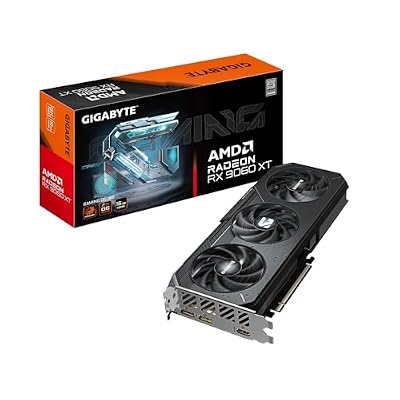


Save $350.00

Nvidia vs AMD GPU is the oldest rivalry in PC building, and in 2026 it is genuinely competitive again: Nvidia’s RTX 50-series faces AMD’s RX 9000 generation across most of the price stack, with both camps shipping mature machine-learning upscalers and credible ray tracing for the first time simultaneously. The lazy answer — “Nvidia for features, AMD for value” — is directionally true and practically useless. This comparison replaces it with numbers: performance per dollar by tier, the real state of DLSS 4 versus FSR 4, drivers, power, VRAM economics, and the market forces currently moving both brands’ prices in the same direction.
As an Amazon Associate we earn from qualifying purchases at no extra cost to you. Product prices and availability are accurate as of the date shown and are subject to change.


![GPU Showdown Nvidia v.s. AMD [Explicit]](https://m.media-amazon.com/images/I/41qbvfKxM5L._SL160_.jpg)

Nvidia vs AMD GPU: Quick Verdict and the 2026 Lineups
For readers who want the conclusion before the evidence, this section delivers the verdict in two paragraphs, then maps both product stacks so every claim that follows attaches to actual cards and prices.
The Quick Verdict for Busy Buyers
Nvidia wins the feature war and the high end: DLSS 4 Multi Frame Generation remains a generation ahead of AMD’s answer, ray tracing performance leads at every matched tier, the AI and creator software ecosystem is effectively unrivaled, and above $999 AMD simply does not field a competitor. If your priorities include path tracing, local AI workloads, or the absolute performance ceiling, the green column wins before the benchmarks start.
AMD wins the rasterization-value middle: the RX 9070 XT at $599 trades blows with cards costing $100-150 more in pure raster, AMD ships more VRAM per dollar at most tiers, and FSR 4 closed most of the upscaling image-quality gap. If your gaming is DLSS-agnostic raster at 1440p, the red column frequently buys more frames per dollar. Already know your profile? Check current Amazon pricing on the matching tier — both stacks move weekly.
One framing rule keeps the rest of this comparison honest: brand loyalty is the most expensive component in any build. Every verdict below attaches to specific cards at specific prices, and when those prices shift — as both columns are currently shifting — the verdicts shift with them. Audit the numbers, not the logo.
The 2026 Product Stacks Side by Side
The table below pairs the closest competitors at each price point, using MSRPs with the caveat that street prices currently run at or above them on both sides.
| Tier | Nvidia | AMD | Key Difference |
|---|---|---|---|
| Flagship | RTX 5090 — $1,999, 32GB | No competitor | Nvidia unopposed |
| High-end | RTX 5080 — $999, 16GB | No direct competitor | Nvidia unopposed |
| Upper mid | RTX 5070 Ti — $749, 16GB | RX 9070 XT — $599, 16GB | AMD undercuts by $150 |
| Mid-range | RTX 5070 — $549, 12GB | RX 9070 — $549, 16GB | AMD +4GB VRAM |
| Value | RTX 5060 Ti — $429, 16GB | RX 9060 XT — $349, 16GB | AMD undercuts by $80 |
Read vertically, the structure is the verdict: Nvidia owns everything above $750 by default, while AMD attacks the $349-599 band with aggressive VRAM and pricing. The contested middle is where this comparison earns its word count.
Performance per Dollar: The Contested Middle
At the $549-749 battleground, current aggregate benchmarks put the RX 9070 XT within 3-7% of the RTX 5070 Ti in pure rasterization at 1440p and 4K — while costing $150 less at MSRP. On raster frames per dollar, AMD wins that bracket by roughly 15-20%, the largest value gap in either direction anywhere in the stack.
Enable ray tracing and the picture inverts: RDNA 4 improved AMD’s RT performance substantially, but Blackwell still leads matched tiers by 15-30% in heavy RT titles and pulls further ahead in path tracing. Stack DLSS 4 Multi Frame Generation on top in supported games and the displayed-frame advantage becomes generational. The middle tier’s verdict therefore splits by workload: raster-first buyers bank AMD’s discount; RT-and-features buyers earn Nvidia’s premium back in the games they actually play.
One tier down, the $349-549 band repeats the pattern with smaller dollar amounts: the RX 9060 XT undercuts the RTX 5060 Ti by $80 while matching its 16GB, and pure raster benchmarks land within single digits of each other. The Nvidia card’s counterargument is identical to its bigger sibling’s — DLSS 4’s multiplied frames in supported titles and the deeper software stack — which means the entire contested zone resolves by one honest audit of your own game library rather than by any universal answer.
Nvidia vs AMD Deep Dive: Features, Drivers, and Power
Specifications predict performance; ecosystems decide daily experience. This section compares the two platforms criterion by criterion — the upscaler war, software and drivers, and the power and efficiency realities of living with each brand.
DLSS 4 vs FSR 4: The Upscaler War in 2026
Nvidia’s DLSS 4 pairs a transformer-based upscaler — sharper distant detail, less ghosting than anything before it — with Multi Frame Generation that inserts up to three AI frames per rendered one on 50-series hardware. AMD’s FSR 4 finally went machine-learning-based with RDNA 4, and independent image-quality testing places it genuinely close to DLSS upscaling in supported titles — the historic quality gap has narrowed to inspection-level differences in most scenes.
The remaining gaps are adoption and frame generation: DLSS support ships in several times more titles, day-one integration in major releases skews heavily green, and AMD’s frame generation remains single-frame against Nvidia’s multi-frame. Verdict: FSR 4 ended the era when upscaling alone justified Nvidia’s premium, but Nvidia still owns the feature’s ceiling and its catalog.
Drivers, Software, and the Creator Ecosystem
The driver-stability narrative has largely converged — both camps ship mature day-one drivers, and AMD’s Adrenalin suite is arguably the cleaner control panel — but the surrounding software has not. Nvidia’s stack runs deeper at every layer: the unified Nvidia App with its overlay and per-game profiles, Smooth Motion driver-level frame generation for the back catalog, Broadcast’s AI audio and camera tools, and Reflex latency reduction with wide esports adoption.
For creators and AI users the gap becomes structural: CUDA remains the default acceleration target for Resolve, Blender, Stable Diffusion, and virtually every local LLM toolchain. AMD’s ROCm support improves yearly but still requires tinkering where CUDA simply works. Owner guidance is blunt — if the GPU earns money or runs models, the green premium pays for itself in saved configuration hours.
AMD’s software column deserves its genuine credits before the verdict: Adrenalin’s per-game tuning, integrated metrics overlay, and one-click undervolting are features Nvidia users replicate with third-party tools, and Radeon Chill’s power-capping remains quietly excellent for efficiency-minded players. The honest summary is asymmetric rather than one-sided — AMD ships the better single control panel; Nvidia ships the deeper total stack — and which asymmetry matters depends on whether your GPU’s job description ends at gaming.
Power, Thermals, and Living With Each Brand
Efficiency at matched tiers currently favors Nvidia modestly: the RTX 5070 Ti’s 300W versus the RX 9070 XT’s 304W reads as parity on paper, but under frame-capped real-world loads Blackwell draws measurably less, and its idle and video-playback power remains the better-behaved of the two. Neither brand’s mid-range demands exotic PSUs — quality 700-750W units cover both columns of the contested middle.
The practical compatibility notes split evenly: AMD partner cards skew slightly larger at matched tiers but avoid the 12V-2×6 connector conversation entirely, sticking with familiar 8-pin cables that older quality PSUs already have. Thermals and acoustics depend more on the partner cooler than the silicon on both sides — the perennial advice to buy the better cooler, not the cheaper SKU, applies brand-agnostically.
Resale economics close the ownership-cost picture: matched-tier GeForce cards historically retain 10-15% more value at the two-to-three-year mark, courtesy of the larger buyer pool and the CUDA-dependent secondary demand from creators and AI hobbyists. Buyers who upgrade every other generation should fold that spread into the sticker comparison — it quietly refunds a portion of Nvidia’s premium, while AMD’s lower entry price keeps the total-cost race closer than either fanbase admits.
Pricing Forces, Market News, and the Third Option
A brand comparison frozen at MSRP misses what 2026 is actually doing to GPU prices. Two concrete developments are pressing both stacks upward — unequally — and a third manufacturer deserves mention for budget buyers whom neither giant serves well.
The H200 China Approval Tightens Both Supply Chains
The United States has cleared Nvidia to sell the H200 — one of its most powerful AI accelerators — to China, reopening a multi-billion-dollar quarterly market. The first-order effect is Nvidia-internal: wafer starts, advanced packaging, and premium memory allocation flow toward data-center margins, tightening GeForce supply within the documented one-to-two-quarter lag.
The second-order effect catches AMD too: both companies fabricate at TSMC and compete for overlapping GDDR memory supply, so capacity redirected toward AI silicon raises input costs and constrains output across the industry. History adds the demand side — when GeForce prices firm, value-seeking buyers flow toward Radeon, lifting AMD street prices in sympathy. Neither column offers shelter from this news; it simply arrives green-first.
Component Inflation Lifts Both Price Stacks
In parallel, laptop and component prices are trending upward industry-wide, led by memory: DRAM and graphics memory contract prices have climbed as AI build-outs consume fab output, and VRAM is among the largest line items on any GPU’s bill of materials — a cost AMD’s generous-VRAM strategy actually feels more acutely per card.
Board partners on both sides have already passed increases through on multiple SKUs this cycle. For buyers, the conclusion is brand-agnostic: whichever column wins your comparison, today’s street price is likelier a floor than a ceiling for the next two quarters, and the patient-buyer discount of past cycles has inverted into a patient-buyer penalty.
The Alternative: Intel Arc for the Strict Budget
Below both giants’ comfortable territory sits Intel’s Arc line, and in 2026 it has earned the mention: the Battlemage-generation B580 at $249 with 12GB of VRAM delivers 1440p-capable performance that embarrasses both incumbents’ sub-$300 offerings, with XeSS upscaling that has matured into genuine competence.
The caveats remain real — driver consistency in older titles trails both rivals, and the resale market is thin — but for a strict-budget 1080p/1440p build where every dollar counts, the third column deserves a price check alongside the headline rivalry. Competition arriving from below is also, quietly, the best long-term news for buyers in either camp.
The practical Arc fit, per owner feedback: builders of new systems on modern platforms report the smoothest experience, since Battlemage’s performance depends meaningfully on Resizable BAR support that decade-old motherboards lack. Pair that check with a glance at your library’s age profile — recent APIs run beautifully, vintage DirectX 9 titles less predictably — and the $249 question answers itself within minutes.
Recommended Products
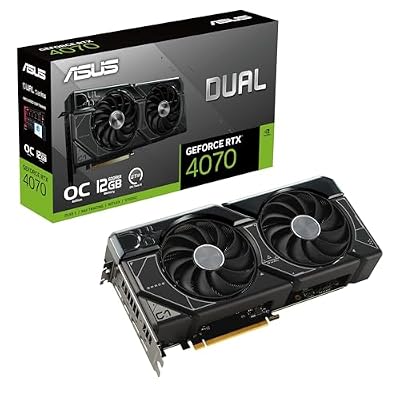
ASUS
ASUS Dual GeForce RTX 4070 OC Edition 12GB GDDR6X, IP5X, Auto-Extreme Technology, 144-Hour Validation Program, HDMI 2.1a, DP 1.4a, 3 Year Warranty
View on Amazon
1 day ago

Prime
MSI Gaming GeForce RTX 4070 12GB GDRR6X Extreme Clock: 2625 MHz 192-Bit HDMI/DP Nvlink TORX Fan 4.0 Ada Lovelace Architecture Graphics Card (RTX 4070 Gaming X Trio 12G)
View on Amazon
July 18, 2026

GIGABYTE
GIGABYTE GeForce RTX 4070 WINDFORCE OC 12G Graphics Card, 3X WINDFORCE Fans, 12GB 192-bit GDDR6X, GV-N4070WF3OC-12GD Video Card
View on Amazon
5 hours ago
As an Amazon Associate we earn from qualifying purchases. Product prices and availability are accurate as of the date/time indicated.
Final Verdict: Choosing Your Side in Nvidia vs AMD GPU
The Nvidia vs AMD GPU decision in 2026 resolves by profile, not by tribe. Buy Nvidia if you play ray-traced showcases, run AI or creator workloads, want DLSS 4’s multiplied frames and the deepest software stack, or shop above $750 where AMD fields no answer. Buy AMD if your gaming is rasterization-first at 1440p, you want maximum VRAM and frames per dollar in the $349-599 band, and FSR 4 covers your upscaling needs — the RX 9070 XT is the single best value argument either brand currently ships. Strict budgets should price-check Intel’s B580 before settling. With the H200 export approval tightening both supply chains and component inflation lifting every tier, the cross-brand advice converges: pick your column, check today’s Amazon listings on the matching card, and buy inside the current window rather than betting against the direction both prices are moving.
Frequently Asked Questions
What is the best nvidia amd gpu in 2026?
The best nvidia amd gpu depends on your budget and how you plan to use it. The options compared above are our top-rated picks based on real customer ratings, build quality, and overall value — start with the highest-rated model that fits your budget.
How much should I expect to spend on a nvidia amd gpu?
Prices vary by brand and features. Budget options cover the essentials, while mid-range and premium models add durability, performance, and extra features. Compare the prices in the list above to find the best value for your needs.
What should I look for when buying a nvidia amd gpu?
Focus on what matters most for your use case — build quality, compatibility, performance, warranty, and verified customer reviews. Every pick above is selected to balance these factors.
Are budget nvidia amd gpu options worth it?
Yes. For most people a well-reviewed budget or mid-range nvidia amd gpu delivers excellent value. You only need to spend more if you specifically require premium materials or top-tier performance.
How did we choose these nvidia amd gpu picks?
We compare current Amazon ratings, review counts, key features, and price to surface the options with the best real-world value. The list is refreshed as ratings and availability change.










Write Your Review
No reviews yet. Be the first to share your experience!