
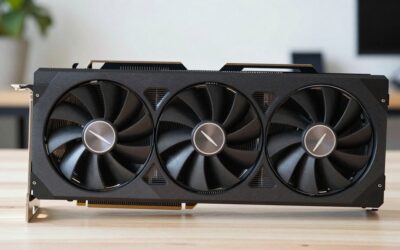
- Top Pick: ASUS Dual GeForce RTX 3050 6GB GDDR6 OC Edition Gaming Graphics Card
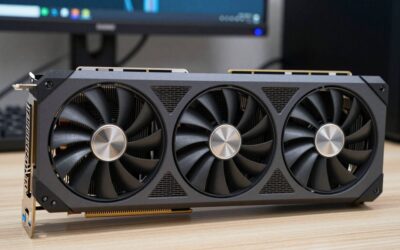
- Best Value: msi Gaming RTX 3050 Ventus 2X 6G OC Graphics Card (NVIDIA RTX 3050, 96-Bit, Boost Clock: 1492 MHz, 6GB GDDR6 14 Gbps, HDMI/DP, Ampere Architecture)
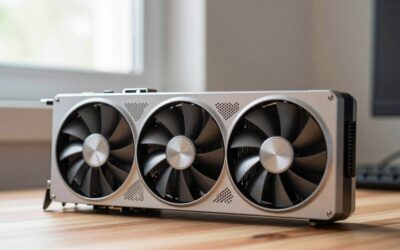
- Premium Choice: maxsun GeForce RTX 3050 6GB Graphics Cards GDDR6 Video Graphics Card GPU for Gaming PC Mini Small Form Factor SSF Slim Low Profile Design PCI Express 4.0, HDMI 2.1, DisplayPort 1.4a


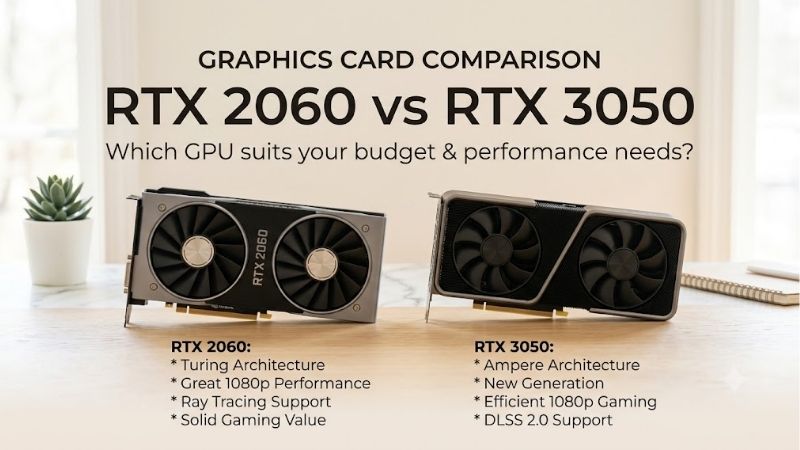
Rtx 2060 Vs Rtx 3050 is a classic battle of entry-level NVIDIA graphics cards that remains highly relevant for budget PC builders in 2026. If you want to achieve smooth 1080p gaming performance without breaking the bank, selecting the right option is crucial.
Architectural Foundations and Core Specifications
Before benchmarking these cards in demanding games, we must evaluate the technological architectures that define their capabilities. Both options represent different eras of NVIDIA engineering, bridging the gap between legacy innovation and generational optimization. Understanding these specifications helps us predict how each hardware design processes modern workloads.
As an Amazon Associate we earn from qualifying purchases at no extra cost to you.


Selecting the right silicon is not just about comparing clock speeds; it requires analyzing how the memory bus, core architecture, and modern driver pipelines interact. Let us look at how these fundamental designs translate into real-world performance for everyday PC gamers.
The Quick Verdict for Budget Gamers
For gamers looking for a rapid recommendation to guide their immediate purchase, the decision rests on whether you prioritize raw rendering power or modern feature sets. If your focus is securing the highest possible frame rates in traditional rasterized gaming, the older Turing-based RTX 2060 remains a surprisingly dominant force.
Conversely, if you prioritize system longevity, lower power draw, and access to newer video encoding formats, the RTX 3050 is a compelling choice. While it trails in pure speed, its efficiency makes it highly attractive for compact PC builds and budget-conscious content creators.
[Check the latest price on Amazon]
Raw Hardware Specifications Compared
To understand the core performance differences, we must analyze the hardware specifications of each graphics processor side-by-side. While both models feature standard layouts tailored for mainstream desktop configurations, their internal execution resources differ significantly.
| Specification | GeForce RTX 2060 | GeForce RTX 3050 |
|---|---|---|
| Architecture | Turing (TU106) | Ampere (GA106) |
| Lithography | TSMC 12nm FFN | Samsung 8nm |
| CUDA Cores | 1920 | 2560 |
| Base / Boost Clock | 1.36 GHz / 1.68 GHz | 1.55 GHz / 1.78 GHz |
| VRAM Capacity / Type | 6GB GDDR6 | 8GB GDDR6 |
| Memory Bus Width | 192-bit | 128-bit |
| Memory Bandwidth | 336 GB/s | 224 GB/s |
| Total Board Power (TDP) | 160W | 130W |
These values reveal a major architectural trade-off: the older card features a wider memory bus and superior raw bandwidth, while the newer Ampere card counters with a larger memory buffer and higher boost clocks. This dynamic sets up an intriguing performance battle across various resolutions.
Architectural Differences: Turing vs Ampere
NVIDIA’s Turing architecture introduced the world to real-time hardware-accelerated ray tracing, packing dedicated RT and Tensor Cores onto a mature 12nm process. The RTX 2060 benefits from a robust memory controller and wider 192-bit memory pipeline, which allows it to move large asset files quickly. This architectural choice prevents performance bottlenecks when gaming at higher visual presets.
On the flip side, the Ampere-based RTX 3050 utilizes a more advanced Samsung 8nm node, doubling the FP32 throughput per Streaming Multiprocessor. It also introduces second-generation RT Cores and third-generation Tensor Cores, which process machine learning calculations more efficiently. However, the narrower 128-bit bus acts as a limiting factor, restricting overall throughput during heavy processing sequences.
[Check the latest price on Amazon]
Real-World Performance, Benchmarks, and Thermals
Synthetic tables only tell half the story; we must see how this hardware behaves under real-world gaming conditions. Modern game engines push entry-level graphics cards to their absolute limits, demanding efficient asset rendering and precise lighting calculations. By putting these GPUs through their paces across demanding titles, we can see exactly where each card excels.
Whether you are aiming to play high-refresh-rate esports titles or explore atmospheric single-player stories, analyzing performance metrics is essential. Let us examine how these engineering differences impact frame rates, visual presentation, and daily power draw.
1080p Gaming Benchmarks and Ray Tracing
In standard rasterized 1080p benchmarks, the RTX 2060 consistently outpaces its younger sibling. In popular triple-A titles such as Red Dead Redemption 2 and Shadow of the Tomb Raider, the older Turing chip delivers a performance lead of approximately $15%$ to $20%$. The wider memory bus allows the system to sustain stable frame delivery during intense combat sequences.
When ray tracing is enabled, both budget cards struggle to maintain high frame rates without assistance. However, the RTX 2060 manages to hold a slight advantage in basic reflections due to its superior raw compute power. If you want to experience advanced lighting in games like Cyberpunk 2077 at 1080p, you will need to adjust your settings carefully regardless of which GPU you choose.
Esports titles like Valorant, Apex Legends, and Counter-Strike 2 run flawlessly on both graphics cards. Gamers can expect stable frame rates well above 144 FPS on competitive settings. In these CPU-bound scenarios, the gap between the two cards narrows, making both excellent options for high-refresh competitive displays.
Check the latest price on Amazon:
- Rtx 2060 Super Vs Rtx 3060
- Nvidia Rtx 3050 Drivers
- Nvidia Overlay Not Showing Fps
- Rtx 2060 Vs Gtx 1660 Super
DLSS Capabilities and Feature Sets
Deep Learning Super Sampling (DLSS) is a crucial software feature for modern budget systems, allowing cards to render games at a lower resolution and upscale them using AI. Both GPUs support DLSS 2.0 Super Resolution, which is essential for boosting performance in demanding modern games. This technology helps bridge the performance gap, making heavy titles highly playable.
While both cards have access to the same upscaling technology, the RTX 3050 holds an advantage in VRAM capacity. Equipped with an 8GB buffer compared to the RTX 2060’s 6GB, the newer card handles high-resolution textures with far less stuttering. In newer game releases, a 6GB frame buffer can cause texture popping and localized dropouts.
Furthermore, the Ampere card includes a newer NVENC video encoder, which is highly beneficial for streamers and content creators. It also supports AV1 decoding, allowing you to stream high-definition video files with minimal processor utilization. These added features make the newer GPU a more versatile tool for productivity workloads.
Thermals, Power Consumption, and Efficiency
Power efficiency is a major highlight for the RTX 3050, as it operates with a modest TDP of just 130W. Under sustained gaming workloads, the Ampere GPU runs cool, averaging between 60 and 65 degrees Celsius with standard dual-fan cooling solutions. This low power draw means you do not need an expensive power supply to run your gaming PC.
The RTX 2060 has a higher power requirement of 160W, which naturally results in increased heat generation. During extended gaming sessions, the Turing-based card typically runs warmer, hovering around 70 to 75 degrees Celsius depending on your case airflow. The extra heat means your PC fans will need to run faster, resulting in louder overall noise levels.
For compact Mini-ITX builds or older computers with limited ventilation, the lower thermal output of the Ampere architecture is highly beneficial. It allows builders to create small, quiet systems that do not suffer from thermal throttling. This makes the newer card a highly practical choice for everyday living room setups.
[Check the latest price on Amazon]
Market Dynamics, Alternatives, and Value Analysis
To understand the absolute value of these graphics cards in 2026, we must look at the global market forces shaping the PC hardware landscape. Sourcing desktop hardware requires analyzing supply chains, manufacturing prioritizations, and shifting retail realities. These economic pressures heavily dictate pricing trends and hardware availability for consumers worldwide.
By understanding these macroeconomic factors, budget gamers can make smarter investment decisions. Let us explore how global semiconductor shifts affect budget GPU retail prices and look at alternative components that might better fit your gaming goals.
Global Silicon Supply and the AI Hardware Boom
The consumer desktop hardware market continues to navigate major changes stemming from the enterprise artificial intelligence sector. Recently, the United States government updated its trade regulations, permitting NVIDIA to export its highly advanced H200 AI processors to China under revised compliance programs. This shift has prompted major semiconductor manufacturing hubs to reorganize their production priorities.
Because manufacturing giants like TSMC have a finite amount of wafer fabrication capacity, they naturally prioritize the assembly of high-margin enterprise AI chips over budget-tier consumer graphics cards. This focus on enterprise hardware has reduced the overall supply of silicon available for standard desktop GPUs. Consequently, budget graphics cards see limited stock replenishment, keeping retail prices highly stable.
For consumers, this means that waiting for massive price drops on older entry-level graphics cards is no longer a viable strategy. Squeezing maximum efficiency from software optimization and choosing your hardware early has become essential. This supply-side constraint makes legacy cards highly resilient assets in the second-hand and budget retail markets.
Rising Component Costs and Alternative GPU Options
In addition to wafer supply constraints, the raw material costs of manufacturing desktop components have risen steadily. Key resources, including high-grade copper, multi-layered printed circuit boards, and memory chips, have faced continuous inflation. This trend has pushed the baseline manufacturing cost of new desktop hardware and prebuilt laptops upward, making early purchases highly strategic.
If you find that the Rtx 2060 Vs Rtx 3050 matchup does not quite meet your system requirements, there are excellent alternative options on the market. For players who want to step out of the budget bracket entirely, the GeForce RTX 3060 offers a substantial 12GB VRAM buffer and a wider 192-bit bus. This alternative provides a major performance upgrade that will handle demanding games for several years to come.
On the AMD side, the Radeon RX 6600 stands as an incredibly competitive alternative, offering outstanding 1080p rasterization performance at a highly accessible price point. It features 8GB of VRAM and easily outperforms both entry-tier NVIDIA options in traditional rendering. However, you will sacrifice NVIDIA’s class-leading DLSS software suite and superior ray tracing features.
[Check the latest price on Amazon]
Rtx 2060 Vs Rtx 3050 Pros, Cons, and Recommendations
To help you choose the ideal GPU for your system, we have summarized the primary advantages and drawbacks of each graphics processor. This breakdown allows you to weigh their practical capabilities against your gaming goals.
RTX 2060 Pros:
- Delivering
$15%$to$20%$faster raw rasterization performance in older titles. - Wider 192-bit memory bus with superior 336 GB/s bandwidth.
- Highly robust build quality on legacy partner models.
RTX 2060 Cons:
- Restricted to a smaller 6GB VRAM frame buffer.
- Higher power draw of 160W, resulting in warmer thermals.
- Lacking modern AV1 video decoding support.
RTX 3050 Pros:
- Larger 8GB VRAM buffer prevents texture stuttering in new games.
- Excellent power efficiency with a low 130W TDP.
- Modern video encoding feature sets and AV1 support for content creators.
RTX 3050 Cons:
- Slower raw rendering speeds compared to its predecessor.
- Narrower 128-bit memory bus limits overall bandwidth.
- Higher retail pricing compared to used market alternatives.
Ultimately, if you can find a reasonably priced RTX 2060 and do not mind the 6GB VRAM limitation, it remains the superior gaming performer. However, if you are building a quiet, energy-efficient PC and want the peace of mind that comes with an 8GB frame buffer, the RTX 3050 is the more practical investment.
Conclusion: Finalizing Your Rtx 2060 Vs Rtx 3050 Choice
In conclusion, navigating the Rtx 2060 Vs Rtx 3050 dilemma requires balancing immediate rendering power against modern system efficiency. While the older Turing architecture continues to deliver higher frame rates in classic games, the Ampere-based alternative offers an 8GB VRAM buffer and excellent thermal efficiency that helps future-proof your system. In a challenging market shaped by rising component costs and shifts in global silicon production, securing your entry-level graphics card early is a highly intelligent financial move. Assess your specific gaming library, check your power supply capacity, and choose the card that will elevate your desktop gaming experience today.
Are you planning to upgrade your power supply for a more powerful graphics card, or does the efficient RTX 3050 fit perfectly into your current setup?
Frequently Asked Questions
Which card is faster in raw gaming performance?
The RTX 2060 is generally a few percent ahead of the 8GB RTX 3050 at 1080p, thanks to its wider 192-bit memory bus and higher memory bandwidth. The gap is small enough that it flips in individual titles, but across a broad benchmark suite the older Turing card usually edges out the newer Ampere one.
Is 6GB of VRAM on the 2060 a problem in modern games?
Increasingly, yes. Several recent titles exceed 6GB at 1080p high textures, causing stutter and texture pop that the 3050 with 8GB avoids. If you play current AAA releases rather than esports or older games, the 3050 memory buffer is the single strongest argument in its favour despite its lower raw throughput.
How do power draw and PSU requirements compare?
The RTX 2060 is rated at 160 watts and typically needs a single 8-pin connector with a 500 watt supply. The 8GB RTX 3050 sits at 130 watts with the same connector, while the 6GB variant drops to roughly 70 watts and needs no connector at all, making it the only option for many pre-built systems.
Which one is better for ray tracing and DLSS?
Both support hardware ray tracing and DLSS, including the newer transformer upscaling model, and neither supports frame generation. In practice the 2060 has slightly more RT throughput but less VRAM, and ray tracing is memory-hungry, so the 3050 sometimes holds up better with RT enabled at high textures. Both need DLSS Performance mode for playable RT.
Which is the better buy on the used market?
The 2060 usually costs less used and delivers more frames per pound, making it the value pick for 1080p esports and older libraries. The 3050 commands a premium for its newer warranty, lower power draw and 8GB buffer. If a 6GB card would force you to lower textures constantly, pay the premium.
Ready to decide? Our #1 pick for 2026 is the Specification.
Live price & availability on Amazon.

Write Your Review
No reviews yet. Be the first to share your experience!