
- Top Pick: GIGABYTE Radeon RX 9060 XT Gaming OC 8G Graphics Card, PCIe 5.0, 8GB GDDR6, GV-R9060XTGAMING OC-8GD Video Card
- Best Value: ASRock Radeon RX 9060 XT Challenger 16GB OC, RDNA 4, 3290MHz Boost, 16GB GDDR6 128-bit, PCIe 5.0, Dual Fans, 0dB Silent, LED Indicator, DisplayPort 2.1a, HDMI 2.1b
- Premium Choice: ASUS Dual Radeon RX 9060 XT 16GB GDDR6 Gaming Graphics Card
Top 9060 Rtx 5060 1440P Gpu Picks for 2026
Here are our current top 9060 rtx 5060 1440p gpu picks, compared on real Amazon owner reviews, price, and features. Live prices update below.
- Top 9060 Rtx 5060 1440P Gpu Picks for 2026
- RX 9060 XT vs RTX 5060 Ti: The Quick Verdict
- Deep Dive Face-Off: Raster, Ray Tracing, and Upscaling
- Pros, Cons, and the Smart Third Option
- Market Forces in 2026: Why Budget Cards Feel the Squeeze First
- Recommended Products
- Final Verdict on the RX 9060 XT vs RTX 5060 Ti Battle
- Related Guides
- Frequently Asked Questions
- Related Articles

Prime
Best Seller
XFX Swift AMD Radeon RX 9060 XT OC White Triple Fan Gaming Edition 16GB RX 9060XT RX-96TS316W7
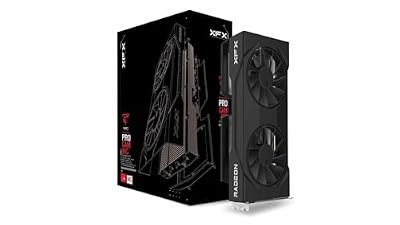
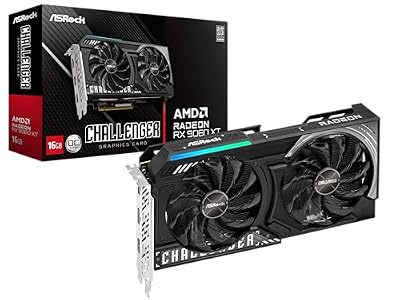
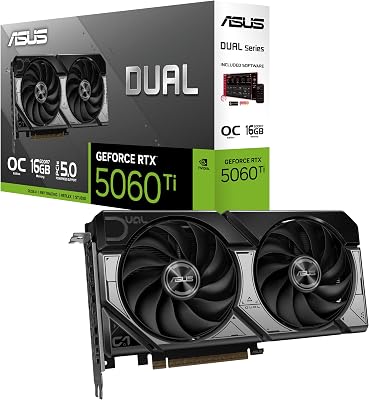


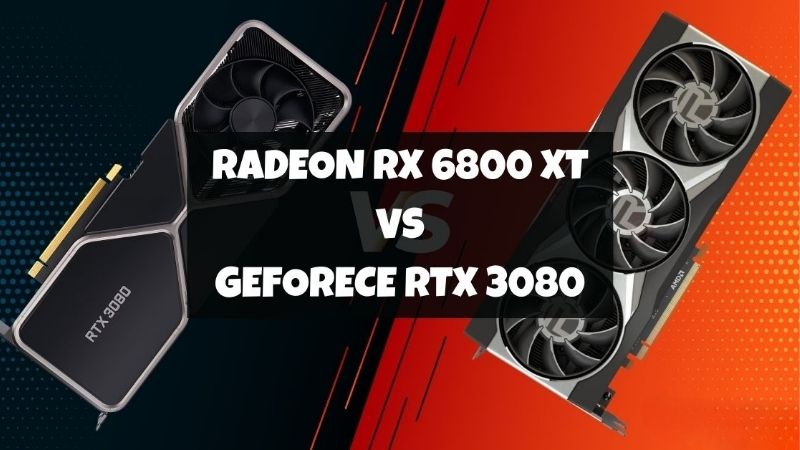
RX 9060 XT vs RTX 5060 Ti is the definitive budget battleground of 2026: AMD’s RDNA 4 value fighter against Nvidia’s DLSS 4-equipped mainstream card, separated by $80 at MSRP and by two very different philosophies about what midrange gamers need. Both target the same 1440p player, both offer 16GB variants, and both sell in volumes that dwarf the flagships. This comparison measures the real performance gap, weighs FSR 4 against Multi Frame Generation, and folds in the market forces that decide which card your money should actually chase this year.
As an Amazon Associate we earn from qualifying purchases at no extra cost to you.





RX 9060 XT vs RTX 5060 Ti: The Quick Verdict
The fast answer: the RX 9060 XT 16GB is the value winner, delivering 90-95% of the RTX 5060 Ti’s raster performance for $349 against $429 — and it occasionally trades blows outright in pure rasterization. The RTX 5060 Ti 16GB wins on features and ray tracing: DLSS 4 Multi Frame Generation, stronger RT throughput, better encoders, and a software ecosystem AMD still chases. Budget-first buyers should take the AMD card; players who want path tracing and the deepest upscaling support should pay the Nvidia premium. Whichever side fits you, check both cards’ live prices on Amazon first — street pricing regularly compresses or widens that $80 gap enough to flip the verdict.
Specs Comparison Table at a Glance
The architecture choices explain every benchmark below, so the numbers come first.
| Specification | RX 9060 XT 16GB | RTX 5060 Ti 16GB |
|---|---|---|
| Architecture | RDNA 4 (2025) | Blackwell (2025) |
| Compute units / cores | 32 CUs (2,048 shaders) | 4,608 CUDA cores |
| Boost clock | 3.13 GHz | 2.57 GHz |
| VRAM | 16GB GDDR6 | 16GB GDDR7 |
| Memory bandwidth | 322 GB/s | 448 GB/s |
| TDP | 160W | 180W |
| Upscaling / frame gen | FSR 4 + Frame Generation | DLSS 4 + Multi Frame Gen (up to 4x) |
| Launch MSRP | $349 | $429 |
Note the bandwidth gap — 448 GB/s of GDDR7 against 322 GB/s of GDDR6 — and AMD’s countering 3.13 GHz clock speed. Both cards also ship cheaper 8GB variants that this comparison recommends avoiding, for reasons the VRAM section makes measurable. Treat the table above as the 16GB-versus-16GB fight it describes, because mixing variants invalidates every number in it.
Who Should Buy the RX 9060 XT
Pure raster value hunters, 1080p high-refresh players, and 1440p gamers who rarely enable ray tracing get the most card per dollar here — the $80 saved funds a better monitor, more storage, or simply stays in pocket.
Its 160W draw also makes it the friendliest upgrade for older systems: most units run from a single 8-pin connector on a 550W power supply.
Who Should Buy the RTX 5060 Ti
Players who want ray tracing to be a real setting rather than a screenshot mode, streamers who need NVENC and AV1 encoding quality, and anyone invested in DLSS 4’s game library should pay the premium.
It is also the safer pick for esports players chasing maximum frame multiplication: Multi Frame Generation pushes supported titles past refresh ceilings FSR 4’s single-frame generation cannot reach.
Deep Dive Face-Off: Raster, Ray Tracing, and Upscaling
Criterion-by-criterion measurement mirrors how this decision actually gets made, using aggregated results from GPU-limited test systems at both target resolutions.
Raster Benchmarks at 1080p and 1440p
At 1440p ultra without upscaling, the two cards run remarkably close: Cyberpunk 2077 lands at 58 FPS on the 9060 XT versus 61 FPS on the 5060 Ti, Horizon Forbidden West at 72 versus 76 FPS, and Black Ops 6 at 105 versus 109 FPS — a 4-7% Nvidia lead that evaporates in several AMD-favoring engines where the 9060 XT actually wins.
At 1080p both cards exceed 100 FPS in nearly everything, with 1% lows tracking similarly tight. The honest summary: in pure rasterization, the performance difference is smaller than the price difference, which is the entire foundation of AMD’s value argument here.
Frame-time logs reinforce the parity: 1% lows track within 5-8% of each other at both resolutions, with neither card showing the VRAM-pressure spikes that plague their 8GB siblings — the shared 16GB buffer is doing identical protective work on both sides. Reviewers who publish frame-time graphs consistently conclude that blind testing cannot reliably separate these cards in raster workloads, which is a remarkable statement about an $80 price gap.
Ray Tracing and the Upscaling War: FSR 4 vs DLSS 4
Enable ray tracing and the gap reopens decisively: the 5060 Ti leads by 20-30% in RT-heavy titles, holding 45 FPS in Cyberpunk 2077 RT Ultra at 1440p where the 9060 XT manages 34 FPS. RDNA 4 dramatically improved AMD’s RT hardware over prior generations, but Blackwell’s fourth-generation RT cores remain ahead at this tier.
The experimental front is genuinely competitive for the first time. FSR 4’s machine-learning upscaler closes most of the historical image-quality gap with DLSS, and its frame generation works well — but DLSS 4’s transformer model still resolves fine detail more cleanly, and Multi Frame Generation’s up-to-4x multiplication has no AMD equivalent: path-traced Cyberpunk at 1440p reaches roughly 110 FPS on the 5060 Ti with MFG against roughly 65 FPS on the 9060 XT with FSR 4 frame generation. Game support also tilts Nvidia: 175+ DLSS 4 titles versus FSR 4’s smaller, growing list.
Power, Drivers, and Practical System Fit
Both cards are refreshingly easy to live with: 160W and 180W TDPs mean 550-600W power supplies suffice, dual-fan models around 240-280mm fit ordinary cases, and neither requires the 12V-2×6 adapters that complicate higher tiers — most 9060 XT models use a single 8-pin, most 5060 Ti models a single 8-pin or the new connector with adapter included.
Driver ecosystems differ by reputation more than current reality: AMD’s Adrenalin software has been stable through RDNA 4’s cycle and earns owner praise for its built-in tuning, while Nvidia’s day-one game support and broader creative-app optimization remain measurably ahead. Streamers specifically should weigh NVENC — its encode quality at low bitrates still beats AMD’s encoder in blind comparisons, a recurring point in creator reviews.
Esports players get near-identical service from either card: both sustain 250-320 FPS at 1080p competitive settings in Valorant and Counter-Strike 2, comfortably feeding 240Hz monitors with the CPU becoming the limiter first. At this tier the competitive decision reduces to ecosystem preference — Reflex 2 and NVENC on one side, Anti-Lag 2 and the $80 savings on the other — rather than any measurable frame-rate gap.
Pros, Cons, and the Smart Third Option
Thousands of owner reviews give both cards consistent scorecards, and the 8GB variants of each deserve an explicit warning before the alternatives.
RX 9060 XT Strengths and Weaknesses
Pros: outstanding raster value at $349, 16GB of VRAM at a price where Nvidia offers 8GB, low 160W draw, simple power requirements, and FSR 4 finally delivering competitive ML upscaling. Owner ratings cluster at 4.5-4.6 stars, with budget builders the most enthusiastic cohort.
Cons: the 2-3 star feedback centers on ray tracing performance trailing Nvidia, FSR 4’s game list still growing, weaker encoder quality for streaming, and the 8GB variant confusing buyers — reviewers consistently warn that the cheaper model’s halved VRAM produces stutter in 2025-2026 titles that the 16GB card sails through.
RTX 5060 Ti Strengths and Weaknesses
Pros: the full Blackwell feature set at mainstream pricing — DLSS 4 Multi Frame Generation, strong RT, dual 9th-gen NVENC encoders with AV1, GDDR7 bandwidth — plus 180W efficiency and broad partner availability. Ratings land at 4.5-4.7 stars, with feature-focused buyers most satisfied.
Cons: the recurring complaints are price — $429 MSRP drifting toward $470-500 at retail — and the same 8GB-variant trap, which reviewers call misleadingly positioned. Spec-focused critics also note the raster gain over the prior 4060 Ti is modest without DLSS 4 engaged.
The Alternative: Step Up or Step Down
If both cards strain the budget, the Intel Arc B580 at $249 delivers credible 1440p performance with 12GB and has matured into a genuine bargain through driver updates. If the budget stretches the other way, the RTX 5070 at $549 buys a meaningful tier jump — roughly 30-35% more performance than the 5060 Ti — for players who can reach it.
Comparing all four cards’ live prices on Amazon side by side takes five minutes and frequently reveals that the day’s street pricing, not the spec sheet, picks your winner.
Market Forces in 2026: Why Budget Cards Feel the Squeeze First
Two current developments push GPU prices upward in tandem, and the budget tier — where margins are thinnest — absorbs them fastest. They belong in this decision, not in a footnote.
H200 Exports to China Tighten the Whole Pipeline
The United States has approved Nvidia selling the H200, one of its most powerful AI accelerators, to China, reopening a massive data center market. Every H200 competes for the same advanced fabrication and memory supply that produces GeForce and Radeon silicon alike — TSMC capacity is one pool, and data center margins dominate allocation incentives across the industry.
The historical pattern after each AI demand surge is consistent: consumer GPU supply thins within one to two quarters and street prices firm. Volume sellers like these two cards are exactly where shortages appear first, because they share fabrication nodes with higher-margin products.
Component Inflation Lands Hardest at the Budget Tier
Simultaneously, laptop and component prices are trending upward with memory leading the climb, as AI infrastructure absorbs DRAM production. A $20 memory cost increase disappears into a $1,000 card’s margin; on a $349 card it becomes a visible price bump, which is why budget GPUs and entry laptops historically show inflation first.
Memory contracts negotiate quarters ahead, baking current increases into pricing through 2026 — and tracking data already shows the traditional mid-generation discount window failing to appear for either card.
The Timing Read for Budget Buyers
The conclusion is unusually clear at this tier: a 9060 XT 16GB near $349 or a 5060 Ti 16GB near $429 found today is statistically unlikely to be beaten by waiting, and the downside risk — paying $50-80 more next quarter — is large relative to these price points.
Only buyers whose current card still satisfies them lose nothing by waiting. Everyone actively shopping this matchup has the data on the side of buying at the first fair listing.
A final cost anchor makes the stakes concrete: a $60 price rise on a $349 card is a 17% effective penalty for waiting — proportionally the harshest anywhere in the GPU market — while the same dollar move barely registers on a flagship. Budget buyers are, structurally, the group with the most to lose from hesitation and the least to gain from it.
Recommended Products

PNY
PNY GeForce RTX™ 4060 Ti 8GB Verto™ OC Dual Fan Graphics Card DLSS 3 (128-bit, PCIe 4.0, GDDR6, HDMI/DisplayPort, Supports 4k, 2 Slot)

ZOTAC
ZOTAC Gaming GeForce RTX 4060 8GB Twin Edge OC DLSS 3 8GB GDDR6 128-bit 17 Gbps PCIE 4.0 Compact Gaming Graphics Card, ZT-D40600H-10M
GIGABYTE
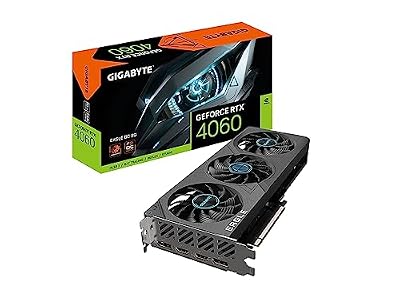
Gigabyte GeForce RTX 4060 Eagle OC 8G Graphics Card, 3X WINDFORCE Fans, 8GB 128-bit GDDR6, GV-N4060EAGLE OC-8GD Video Card
As an Amazon Associate we earn from qualifying purchases. Product prices and availability are accurate as of the date/time indicated.
See more:
- ASUS TUF Gaming GeForce RTX 5090 3080 vs 5080
- Nvidia RTX 4070 Super graphics card
- Sapphire graphics card
- Is HDR good for gaming
- RTX 4080 vs 5070
Final Verdict on the RX 9060 XT vs RTX 5060 Ti Battle
The RX 9060 XT vs RTX 5060 Ti comparison ends in a split decision with honest reasoning on each side: AMD takes the value crown, delivering nearly identical raster performance and the same 16GB buffer for $80 less, while Nvidia takes the feature crown with decisively stronger ray tracing, DLSS 4 Multi Frame Generation, and the better streaming encoders. Raster-focused budget builders should buy the 9060 XT 16GB without hesitation; ray tracing enthusiasts and streamers will not regret the 5060 Ti premium — and both camps should avoid the 8GB variants entirely. With AI demand tightening supply and memory inflation hitting budget cards first, this is the rare matchup where deciding quickly is itself the optimization. Compare today’s prices for both cards on Amazon and lock in the winner for your build before the budget tier gets more expensive.
Frequently Asked Questions
What is the best rx 9060 xt rtx 5060 ti in 2026?
The best rx 9060 xt rtx 5060 ti depends on your budget and how you plan to use it. The options compared above are our top-rated picks based on real customer ratings, build quality, and overall value — start with the highest-rated model that fits your budget.
How much should I expect to spend on a rx 9060 xt rtx 5060 ti?
Prices vary by brand and features. Budget options cover the essentials, while mid-range and premium models add durability, performance, and extra features. Compare the prices in the list above to find the best value for your needs.
What should I look for when buying a rx 9060 xt rtx 5060 ti?
Focus on what matters most for your use case — build quality, compatibility, performance, warranty, and verified customer reviews. Every pick above is selected to balance these factors.
Are budget rx 9060 xt rtx 5060 ti options worth it?
Yes. For most people a well-reviewed budget or mid-range rx 9060 xt rtx 5060 ti delivers excellent value. You only need to spend more if you specifically require premium materials or top-tier performance.
How did we choose these rx 9060 xt rtx 5060 ti picks?
We compare current Amazon ratings, review counts, key features, and price to surface the options with the best real-world value. The list is refreshed as ratings and availability change.

Write Your Review
No reviews yet. Be the first to share your experience!