
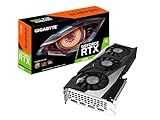
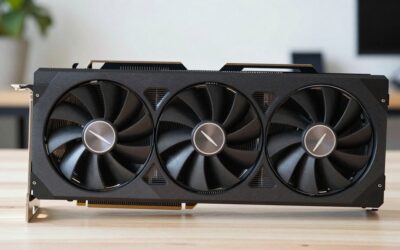
- Top Pick: msi Gaming GeForce RTX 3060 Ventus 2X 12G OC V1 Graphics Card – 15 Gbps GDRR6 Boost Clock: 1807 MHz 192-Bit HDMI/DP PCIe 4 Torx Twin Fan Ampere
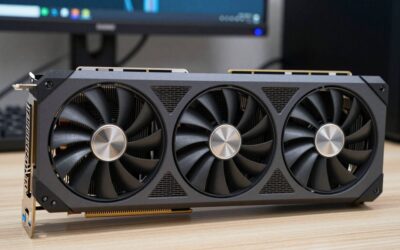
- Best Value: NVIDIA GeForce RTX 3060 Ti Founders Edition 8GB GDDR6 PCI Express 4.0 Graphics Card (Renewed)
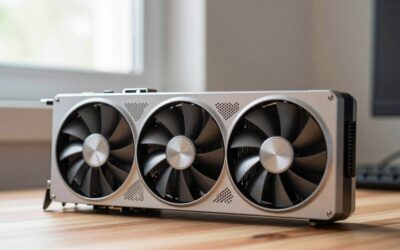
- Premium Choice: EVGA GeForce RTX 3060 XC Gaming, 12G-P5-3657-KR, 12GB GDDR6, Dual-Fan, Metal Backplate


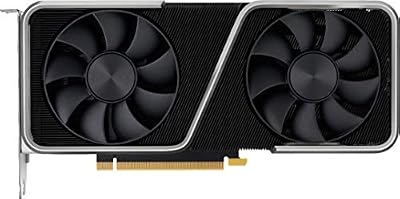
Best Seller
NVIDIA GeForce RTX 3060 Ti Founders Edition 8GB GDDR6 PCI Express 4.0 Graphics Card (Renewed)
RTX 2070 vs RTX 3060 was settled in 2021 and the verdict was “basically a tie, buy whichever is cheaper.” That verdict is now wrong, and every video still saying it was recorded before the thing that decided it: the RTX 3060 has 12GB of VRAM and the RTX 2070 has 8GB. In 2021 that looked like an odd spec quirk on a mid-range card. In 2026 it is the whole comparison. If you are shopping the used market or wondering whether to swap the 2070 sitting in your case, this page uses current game data rather than four-year-old benchmark averages that hid the problem.
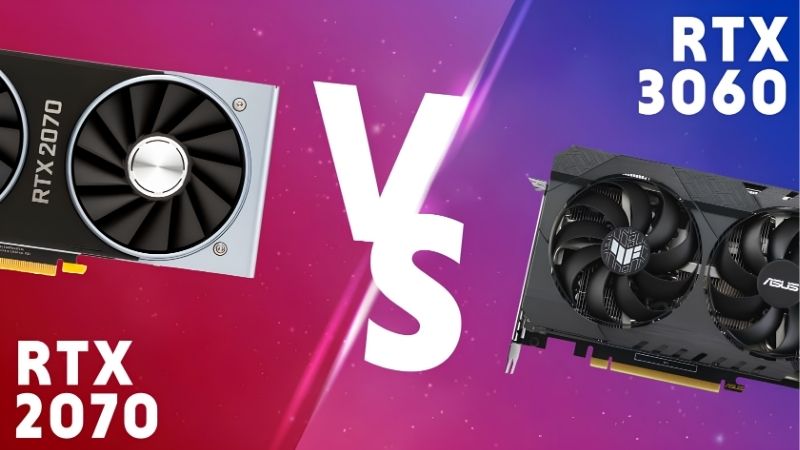
The Quick Verdict: RTX 2070 vs RTX 3060 in One Minute
Buy the RTX 3060. In raw rasterisation the two cards are close enough that the difference is a rounding error — the 2070 even edges ahead in some older titles. But raw rasterisation stopped being the deciding factor. The 3060’s 12GB frame buffer keeps it functional in 2026 titles where the 2070’s 8GB produces stutter and texture pop-in that no average frame rate will show you. Add Ampere’s better encoder and the fact that a 3060 is three years younger with correspondingly more life left, and the decision is not close. Pay up to $40 more for the 3060 without hesitation. Only take the 2070 if it is significantly cheaper and you play older or esports titles exclusively.
As an Amazon Associate we earn from qualifying purchases at no extra cost to you.



Why the 2026 Verdict Expired
Reviewers in 2021 were not wrong. They tested the games that existed, found the cards within a few percent of each other, and reported a tie. Their data was accurate.
What they could not test was 2026’s texture streaming. Modern engines assume a larger memory pool, and when an 8GB card runs short, the driver spills assets across PCIe into system RAM. The result is not a gentle 15% decline — it is one-second freezes and textures loading in visibly late. Averages hide this completely, which is precisely why a video showing “2070: 58 FPS, 3060: 56 FPS” understates the 2026 reality so badly.
This is the single most useful thing to understand about this matchup, and it is the reason a page beats a four-year-old video here.
Who Should Still Consider the RTX 2070
Two situations. The first is price — if the 2070 is $60+ cheaper on your local used market and you play CS2, Valorant, Dota 2 or older single-player titles, it delivers effectively identical performance and the money stays in your pocket.
The second is if you already own one. Do not sell a working 2070 to buy a 3060; the upgrade is too small to justify the transaction cost and the risk of buying someone else’s used card. Skip a tier and wait.
Outside those two cases, the 2070 is a card whose remaining life is measured in fewer years than its price suggests.
Who Should Buy the RTX 3060
Anyone playing modern single-player games, and anyone who wants the card to still be usable in 2028. The 12GB buffer is the entire argument and it is sufficient on its own.
Two secondary reasons matter more than they look. If you stream or record, Ampere’s NVENC block handles H.264 and HEVC with a quality-per-bitrate advantage over Turing’s older encoder. And if you touch any AI or ML work — Stable Diffusion, local models, CUDA learning — 12GB against 8GB is the difference between fitting a model and not fitting it. The 3060 has quietly become the standard entry point for that work for exactly this reason.
Specs and Real 2026 Frame Rates
The specification table shows why these cards benchmark so similarly and age so differently. Read the VRAM row and the bus width row together — they tell the whole story.
Core Specifications Side by Side
| Specification | RTX 2070 | RTX 3060 (12GB) |
|---|---|---|
| Architecture | Turing (TU106) | Ampere (GA106) |
| Launch year | 2018 | 2021 |
| CUDA cores | 2,304 | 3,584 |
| Boost clock | ~1.62 GHz | ~1.78 GHz |
| VRAM | 8GB GDDR6 | 12GB GDDR6 |
| Memory bus | 256-bit | 192-bit |
| Bandwidth | 448 GB/s | 360 GB/s |
| RT cores | 36 (1st gen) | 28 (2nd gen) |
| NVENC | Turing 6th gen | Turing 7th gen |
| TDP | 175W | 170W |
| Power connector | 1x 8-pin + 1x 6-pin | 1x 8-pin |
The CUDA core row is misleading and it is worth explaining why. The 3060 has 55% more cores, yet performs within a few percent of the 2070 in raster. Ampere doubled FP32 throughput per SM on paper, but that second FP32 pipeline shares resources with integer work, so the real-world gain is far below the spec-sheet implication. This is why core counts across architecture generations tell you almost nothing.
Note the bandwidth row runs the other way — the 2070’s 256-bit bus gives it 448 GB/s against the 3060’s 360 GB/s. On paper that favours the 2070. In practice it does not rescue an 8GB card, because bandwidth determines how fast you move data and capacity determines whether the data fits at all.
Frame Rates in 2026 Titles
1080p, High preset, no upscaling. The asterisked rows are where the 2070’s 8GB becomes the bottleneck rather than its shaders.
| Game (1080p High) | RTX 2070 | RTX 3060 | Verdict |
|---|---|---|---|
| Counter-Strike 2 | ~210 FPS | ~205 FPS | 2070 marginally ahead |
| GTA V Enhanced | ~102 FPS | ~98 FPS | Tie |
| Elden Ring | ~58 FPS | ~57 FPS | Tie |
| Cyberpunk 2077 | ~52 FPS | ~55 FPS | 3060 ahead |
| Hogwarts Legacy | ~44 FPS* | ~54 FPS | 3060 clearly ahead |
| Black Myth: Wukong | ~34 FPS* | ~42 FPS | 3060 clearly ahead |
| Ratchet & Clank: Rift Apart | ~48 FPS* | ~62 FPS | 3060 clearly ahead |
Read the top three rows and the bottom three rows as two different stories. In older engines the cards are a genuine tie and the 2070 sometimes wins. In titles built after roughly 2023, the 3060 pulls 20-30% ahead — not because it has more shader power, but because the 2070 has run out of memory.
In Hogwarts Legacy specifically, the 2070’s 1% lows drop below 20 FPS during traversal while its average reads 44. The game technically runs. Nobody would describe the experience as good.
Power, PSU and Used-Card Physical Checks
Both draw roughly the same power — 175W and 170W — and both run on a quality 550W supply. The 2070 needs an 8-pin plus a 6-pin, which is worth verifying against your PSU’s cables before you buy; the 3060 needs only a single 8-pin, which is one less thing to go wrong.
Since both are used purchases, the physical checks matter more than the specs. Ask the seller for a photo of the card running with a temperature reading on screen. Ask whether it was used for mining — a 3060 with an LHR lock is fine for gaming but tells you the card’s history. Check for fan noise, bent brackets and PCIe fingers that look scraped. And be aware that a 2070 in 2026 is a seven or eight-year-old component whose thermal paste is almost certainly past its useful life, which is a $15 fix but a fix you should budget for.
Deep Dive Face-Off: Where the Real Gap Lives
The averages above conceal three areas where these cards diverge for reasons that have nothing to do with shader count, and one of them is a capability difference rather than a performance one.
The VRAM Wall in Practice
8GB at 1080p High is adequate in most titles and insufficient in a growing minority. 12GB is comfortable everywhere at 1080p and workable at 1440p.
The distinction that matters is how failure feels. A card that is 15% slower delivers a consistently slightly lower frame rate. A card that is out of memory delivers a normal frame rate punctuated by freezes, with textures resolving visibly late as you turn. The first is a compromise. The second is a defect in the experience, and it is what 8GB now produces in the titles marked above.
DLSS 4.5, Ray Tracing and the FP8 Catch
Both cards support DLSS, and both benefit from Nvidia shipping newer models through the Nvidia app rather than requiring game patches. But there is a wrinkle that applies to both of these cards equally and that almost nobody mentions.
DLSS 4.5’s second-generation transformer models — Model M and Model L — rely on native FP8 support. Turing and Ampere do not have it. The consequence is that on both the 2070 and the 3060, selecting the newer models costs more performance than the image quality gain justifies, and Nvidia’s own guidance is that RTX 20 and 30 series owners should generally remain on Model K, the DLSS 4.0 model. If you own either card and someone tells you to set DLSS Override to “Recommended”, they are giving you bad advice.
On ray tracing, neither card is really a ray tracing card. The 3060’s 2nd-gen RT cores are more efficient per unit than the 2070’s 1st-gen, so it wins the comparison — but both land in the 25-35 FPS range in RT titles at 1080p, which is a technicality rather than a feature.
Pros and Cons of Each Card
| RTX 2070 | RTX 3060 | |
|---|---|---|
| Pros | Cheaper on the used market; 448 GB/s bandwidth beats the 3060; ties or wins in older and esports titles; 175W is modest | 12GB survives 2026 titles; better NVENC for streaming; 2nd-gen RT cores; three years younger; single 8-pin; the entry standard for local AI work |
| Cons | 8GB is the hard wall; 1% lows collapse in new titles; 7-8 years old with tired thermal paste; needs 8-pin + 6-pin; near-zero resale | 192-bit bus limits it at 1440p+; raster is only a tie despite 55% more cores; LHR variants carry mining history; still no FP8 for DLSS 4.5 models |
The asymmetry is instructive. The 2070’s advantages are all about today and about price. The 3060’s advantages are about whether the card still works in two years. On a used purchase you intend to keep, that is the axis that matters.
What the Used Market Is Doing in 2026
Both of these cards are used purchases, and used prices do not float free of the new market. Understanding what is happening upstream explains why neither has become the bargain its age suggests.
Why Old Cards Have Not Become Cheap
Component and laptop prices have kept trending upward rather than settling back, and entry-level new cards have absorbed that pressure hardest because memory is a large fraction of their bill of materials. When a new RTX 5060 does not fall below its launch price, everything beneath it on the used market is anchored by it.
That is the mechanism keeping a 2018 RTX 2070 priced like a card worth owning. Its value is not set by what it is worth — it is set by what the cheapest acceptable new alternative costs, and that number has not moved down. The same anchor holds the 3060 up, which is why a card released in 2021 still commands prices that feel high for its age.
The practical implication for this comparison: do not wait for either card to get cheap. Neither is going to, because the thing that would make them cheap — falling new-card prices — is not happening.
Prices Flattened, But Relief Is Years Out
There is genuine good news, stated accurately. The steep climb of late 2025 has eased. Framework, which publishes unusually candid component pricing updates, has reported a stretch of relative stability while still cautioning that volatility persists. That is stabilisation, not a decline.
Supply is opening. OEMs can now source DDR5 from Chinese manufacturers such as CXMT, and Micron is building two fabs in Idaho. Both are real capacity additions. Neither arrives before 2027-2028, which is well past the point where either of these cards will still be worth buying.
The honest summary: flat, not falling. If a 3060 at a sane price is in front of you today, the case for waiting is weak.
The Alternative: When Neither Card Is the Answer
If both feel like too much money for eight-year-old and five-year-old silicon — a reasonable reaction — two options sit nearby. A used RX 6700 XT offers 12GB with meaningfully stronger raster than either card, at the cost of DLSS and Nvidia’s encoder. An Intel Arc B580 is new rather than used, carries 12GB, and comes with a warranty, which on a used purchase is not nothing.
And if you can stretch, a new RTX 4060 or 5060 buys you Frame Generation, which neither of these cards will ever have.
Compare current used and new pricing across the 2070, 3060 and their nearest alternatives before committing — in this market the ordering shifts constantly, and the card that looks cheapest on a listing is frequently not the cheapest way to solve your problem.
See More:
- GTX 1650 vs RTX 3050
- Nvidia DIGITS
- Nvidia cuDNN
- Radeon RX 9070 XT vs RTX 5090
- PNY GeForce RTX 5080 review
Final Verdict: RTX 2070 vs RTX 3060
The rtx 2070 vs rtx 3060 question has a clear 2026 answer that the 2021 consensus got wrong through no fault of its own: buy the RTX 3060. The two cards trade blows in raw rasterisation and the 2070 even wins some older titles, but 12GB against 8GB decides everything that matters now. In modern engines the 3060 runs 20-30% ahead, and more importantly it runs without the frame time collapses that make the 2070 unpleasant rather than merely slower. Pay up to $40 more without thinking about it.
Take the RTX 2070 only if it is meaningfully cheaper and your library is esports and older single-player titles, or if you already own one — in which case keep it and skip a tier rather than making a lateral move. And whichever you buy, leave your DLSS model on K: neither card has the FP8 support that DLSS 4.5’s newer models need. With used prices anchored by a new market that is not falling, the card available at a fair price today is a better plan than the one you are waiting for.
Frequently Asked Questions
Which is faster in raw performance?
They are remarkably close. The RTX 2070 is a few percent ahead at 1080p in rasterised games thanks to its 256-bit bus and 448GB/s of bandwidth, while the RTX 3060 catches up or edges ahead at 1440p and in newer engines that suit the Ampere shader layout. Treat them as equals in speed.
Why does 12GB win the used market then?
Because capacity outlives raw speed. The 2070 has 8GB and the 3060 has 12GB, and the games that break 8GB at 1440p with high textures are multiplying. The failure mode is stutter and texture pop rather than lower averages, which is far more annoying than a five percent frame rate deficit.
Does the 3060 have better ray tracing and DLSS?
Yes on both counts. Second generation RT cores and third generation tensor cores make Ampere meaningfully faster in ray traced titles at the same raster performance, and the 3060 also supports newer DLSS features that Turing does not, along with AV1 decode which the 2070 lacks entirely.
How do the power requirements compare?
The RTX 2070 is 175W and the RTX 3060 is 170W, both with a single 8-pin on most models and both fine on a quality 550W supply. Neither is demanding, so PSU compatibility should not be the deciding factor between these two cards.
What should I pay for each used?
An RTX 2070 typically goes for 130 to 170 dollars and an RTX 3060 12GB for 150 to 200. At a similar price take the 3060 without hesitation for the extra memory, newer feature set and better local AI capability. Only pick the 2070 if it is at least 40 dollars cheaper.
Ready to decide? Our #1 pick for 2026 is the Architecture.
Live price & availability on Amazon.

Write Your Review
No reviews yet. Be the first to share your experience!