
- Top Pick: Sapphire 11348-03-20G Pulse AMD Radeon™ RX 9070 XT Gaming Graphics Card with 16GB GDDR6, AMD RDNA 4
- Best Value: Sapphire Pulse AMD Radeon™ RX 9070 XT Gaming 16GB Dual HDMI/Dual DP
- Premium Choice: Sapphire 11354-01-20G Pulse AMD Radeon™ RX 9070 GRE Gaming OC Graphics Card with 12GB GDDR6, AMD RDNA 4
Top Sapphire Gpu Build Quality Software Picks for 2026
Here are our current top sapphire gpu build quality software picks, compared on real Amazon owner reviews, price, and features. Live prices update below.
- Top Sapphire Gpu Build Quality Software Picks for 2026
- Who Sapphire Is and What the Lineup Looks Like
- Sapphire GPU Pros and Cons: The Owner Consensus
- Sapphire vs Nvidia Partner Cards: The Cross-Shop and the Market
- Recommended Products
- Final Verdict: Is a Sapphire GPU Worth Buying in 2026?
- Related Guides
- Frequently Asked Questions
- Related Articles

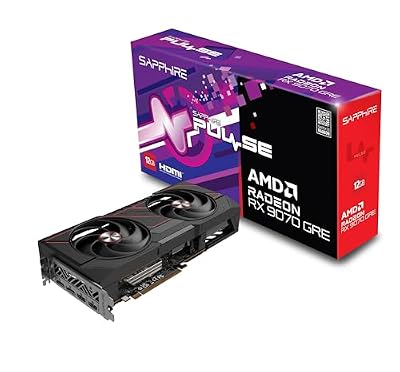
Best Seller
Sapphire 11354-01-20G Pulse AMD Radeon™ RX 9070 GRE Gaming OC Graphics Card with 12GB GDDR6, AMD RDNA 4
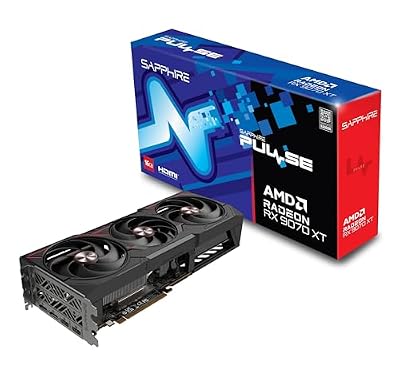
Limited Time
Sapphire 11348-03-20G Pulse AMD Radeon™ RX 9070 XT Gaming Graphics Card with 16GB GDDR6, AMD RDNA 4
Sapphire GPU questions surface constantly in build threads, usually phrased the same way: “is this brand any good?” The short answer carries weight because Sapphire occupies a unique position — it builds Radeon cards exclusively, has done so for over two decades, and is widely treated as AMD’s de facto reference partner. That single-brand focus produces some of the best coolers in the industry and one structural limitation every buyer must understand before purchase. This review evaluates Sapphire’s 2026 lineup, software, build quality, and warranty against both its Radeon rivals and the Nvidia partner cards readers of this site usually cross-shop.
As an Amazon Associate we earn from qualifying purchases at no extra cost to you. Product prices and availability are accurate as of the date shown and are subject to change.




Who Sapphire Is and What the Lineup Looks Like
Brand reviews fail when they treat a manufacturer as one product. Sapphire ships three distinct tiers with different coolers, power targets, and prices wrapped around identical AMD silicon — and knowing which tier a listing belongs to matters more than the brand name on the box.
The AMD-Exclusive Position, Explained
Sapphire has manufactured Radeon cards exclusively since the early 2000s, a partnership deep enough that the company has historically produced AMD’s reference designs and frequently leads partner launches with the most polished day-one models. The exclusivity cuts both ways: engineering focus on one architecture per generation yields coolers tuned precisely to each GPU’s thermal behavior, while buyers wanting GeForce silicon must simply shop elsewhere — there is no Sapphire RTX card and never has been.
In practical terms, that makes “Sapphire vs Nvidia” a category error and “Sapphire Radeon vs ASUS/MSI GeForce” the real cross-shopping question — one this review addresses directly in its final section, because for most readers the brand decision and the silicon decision arrive together.
Nitro+, Pulse, and Pure: Reading the Three Tiers
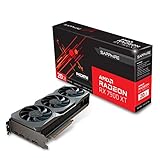
The Nitro+ line is Sapphire’s flagship tier: oversized triple-fan coolers, factory overclocks, reinforced backplates, dual BIOS switches, and RGB — typically commanding $60-120 over AMD’s MSRP. On current RX 9070 XT models, the Nitro+ cooler holds the 304W chip 8-14°C cooler than reference-class designs at conspicuously lower noise, the measurable result reviewers consistently rank among the best in the entire industry, either brand included.
The Pulse line is the volume value tier: competent dual- or triple-fan coolers, reference clocks or mild boosts, minimal styling, priced at or near MSRP — the rational default for most buyers, sacrificing 3-6°C and some acoustic headroom against the Nitro+ for real savings. The Pure line slots between them with white-themed builds for matching aesthetics. The buying rule that emerges: pay the Nitro+ premium for high-power flagship chips where cooler quality compounds, take the Pulse everywhere else.
TriXX Software and the Ownership Extras
Sapphire’s TriXX utility covers fan-curve tuning, lighting control, and its signature TriXX Boost — a resolution-scaling trick that renders slightly below native and sharpens the result, predating the modern upscaler era and now largely superseded by FSR. Most owners run Adrenalin alone and touch TriXX only for the dual-BIOS and fan controls, which is itself a compliment: the hardware rarely needs software rescue.
The quieter extras show up in long-term reviews: fan-check diagnostics, quick-connect replaceable fans on recent Nitro+ models — a genuinely useful serviceability feature as cards age — and consistent thermal-pad quality in an era where rivals economize invisibly. Warranty runs a standard two years in most regions through the retailer, competitive with Radeon rivals though shy of the longer coverage a few premium competitors offer.
Sapphire GPU Pros and Cons: The Owner Consensus
Aggregating verified Amazon feedback across recent Sapphire generations — the loyal 5-star core and the critical 2-3 star minority — produces one of the most consistent brand pictures in the GPU market, with strengths and complaints that repeat across product cycles.
Where Sapphire Genuinely Leads
The dominant theme, repeated across thousands of reviews and generations of cards, is cooler quality per dollar: Nitro+ models routinely match or beat the thermal-acoustic results of rivals’ flagship tiers while undercutting their premiums, and even the value Pulse line avoids the loud-under-load failure mode common to budget partner cards. For the 300W-class chips AMD now ships, that engineering is the difference between a silent build and a wind tunnel.
Build-quality consistency earns the second chorus: reinforced PCBs, quality power stages run conservatively, dual BIOS as standard on performance tiers, and a long-term reliability record owner communities rank at or near the top of Radeon partners. The pattern that matters most for a used-market reader: aged Sapphire cards hold resale premiums over no-name Radeon equivalents precisely because the coolers and components age gracefully.
The Honest Weaknesses and Complaints
The structural limitation leads every list: AMD-only means Sapphire competes only where Radeon competes — there is no flagship beyond AMD’s stack ceiling, no CUDA, and no DLSS, so every Sapphire purchase inherits the full ecosystem trade documented in any Nvidia-versus-AMD comparison. That is silicon reality rather than Sapphire’s fault, but the buyer experiences them together.
Brand-specific complaints are narrower: availability swings hard at launches with popular models selling out for weeks, Nitro+ cards skew physically enormous (320-340mm on current flagships — measure first), RGB and software polish trail the slickest rivals, and RMA experiences vary by region since support routes through retailers in many markets. Coil whine appears at the same modest background rate as every partner brand. Conspicuously rare in the complaint data: thermal failures and fan death — the two issues that actually retire graphics cards.
Who Should Buy Sapphire — and Which Tier
If you have decided on Radeon silicon, Sapphire is the default answer this review can defend with data: Pulse for MSRP-conscious builds on mid-range chips, Nitro+ for 300W-class flagships where the cooler premium repays itself daily in noise and sustained clocks, Pure when aesthetics join the criteria. The brand question within the red ecosystem is, honestly, the easy one.
If you have not decided on silicon, the brand cannot decide for you: buyers anchored to CUDA workloads, DLSS 4’s catalog, or Nvidia’s broader software stack should resolve that question first — the next section prices it — because no cooler, however excellent, substitutes for an ecosystem.
Sapphire vs Nvidia Partner Cards: The Cross-Shop and the Market
Most readers arrive at this review mid-decision between a Sapphire Radeon and an ASUS, MSI, or Gigabyte GeForce. This section makes that comparison concrete, then reads the market forces currently moving both columns’ prices.
The Real Cross-Shop: Card vs Card, Not Logo vs Logo
At the contested $549-749 bracket, the comparison runs: a Sapphire Nitro+ RX 9070 XT around $650-680 against an ASUS TUF or MSI Gaming Trio RTX 5070 Ti at $780-830. The Sapphire wins raster frames per dollar and cooler value; the GeForce card wins ray tracing, DLSS 4’s multiplied frames, and every CUDA-touching workload. Build quality between Sapphire’s flagship tier and Nvidia’s premium partners is, by the measurable categories, a wash — both are excellent.
The decision rule this site gives consistently applies here unchanged: audit your library and workloads, not the logos. Pure raster gamers bank Sapphire’s discount confidently; feature-and-ecosystem buyers earn the green premium back in the titles and tools they actually use. The cooler — Sapphire’s genuine edge — is worth real money, but it is the tiebreaker, not the tie.
How Current Market News Moves Both Columns
Two developments are lifting GPU prices across brands. First, the United States has cleared Nvidia to sell the H200 — one of its most powerful AI accelerators — to China, reopening a multi-billion-dollar quarterly market and pulling industry wafer, packaging, and memory capacity toward AI silicon. GeForce supply tightens first under the documented pattern; Radeon follows through shared TSMC fabrication, overlapping GDDR supply, and the demand spillover of value-seeking buyers crossing to red when green prices firm — a flow that historically lifts Sapphire’s most popular models fastest.
Second, laptop and component prices are trending upward industry-wide, led by memory — and AMD’s generous-VRAM strategy makes Radeon boards unusually sensitive to exactly that cost line. Partners on both sides have already nudged SKU pricing this cycle. The cross-brand conclusion is uniform: whichever column wins your audit, today’s street price is likelier a floor than a ceiling for the next two quarters.
Buying Sapphire Well: The Practical Checklist
Four checks before purchase: verify the tier in the listing title (Pulse pricing on a Nitro+ photo is a classic listing error in both directions), measure case clearance against the specific model’s length rather than the chip’s reputation, confirm the dual-BIOS switch position on arrival, and register the warranty path for your region while the box is still on the desk.
On the used market, Sapphire’s serviceable fans and durable pads make older Nitro+ cards among the safest Radeon buys available — apply the standard photo-and-history diligence and the brand’s aging record does the rest. Whether new or used, check current Amazon listings across the tiers before deciding; the Pulse-versus-Nitro+ gap moves with stock, and catching it compressed is free money.
Recommended Products

PNY
PNY GeForce RTX™ 4060 8GB XLR8 Gaming Verto™ Dual Fan OC Graphics Card DLSS 3 (128-bit, PCIe 4.0, GDDR6, HDMI/DisplayPort, Supports 4k, 2 Slot)
View on Amazon
July 12, 2026

ASUS
ASUS ROG Strix GeForce RTX 4080 Super OC Edition Gaming Graphics Card (PCIe 4.0, 16GB GDDR6X, DLSS 3, HDMI 2.1a, DisplayPort 1.4a, Vapor Chamber, Massive Vented Backplate, Power Sensing, Aura Sync)
View on Amazon
1 day ago

GIGABYTE
GIGABYTE AORUS GeForce RTX 4080 Super Master 16G Graphics Card, 3X WINDFORCE Fans, 16GB 256-bit GDDR6X, GV-N408SAORUS M-16GD Video Card
View on Amazon
6 hours ago
As an Amazon Associate we earn from qualifying purchases. Product prices and availability are accurate as of the date/time indicated.
Final Verdict: Is a Sapphire GPU Worth Buying in 2026?
The Sapphire GPU verdict is the rare brand review that closes cleanly: within the Radeon ecosystem, Sapphire is the standard the other partners get measured against — industry-leading coolers, conservative engineering, durable components, and a Pulse line that makes MSRP builds genuinely quiet. Its only structural limit is the one no cooler fixes: AMD-only means every purchase inherits the ecosystem question, and buyers anchored to CUDA or DLSS 4 should resolve that against the Nvidia partner cards this site reviews before any logo loyalty forms. If your audit lands red, buy Sapphire with confidence — Pulse for value, Nitro+ for flagships. With the H200 approval and component inflation firming both brands’ prices, today’s Amazon listings are the window: run the audit, pick the tier, and lock in the card while the market still overlaps in your favor.
Frequently Asked Questions
What is the best sapphire gpu in 2026?
The best sapphire gpu depends on your budget and how you plan to use it. The options compared above are our top-rated picks based on real customer ratings, build quality, and overall value — start with the highest-rated model that fits your budget.
How much should I expect to spend on a sapphire gpu?
Prices vary by brand and features. Budget options cover the essentials, while mid-range and premium models add durability, performance, and extra features. Compare the prices in the list above to find the best value for your needs.
What should I look for when buying a sapphire gpu?
Focus on what matters most for your use case — build quality, compatibility, performance, warranty, and verified customer reviews. Every pick above is selected to balance these factors.
Are budget sapphire gpu options worth it?
Yes. For most people a well-reviewed budget or mid-range sapphire gpu delivers excellent value. You only need to spend more if you specifically require premium materials or top-tier performance.
How did we choose these sapphire gpu picks?
We compare current Amazon ratings, review counts, key features, and price to surface the options with the best real-world value. The list is refreshed as ratings and availability change.







Write Your Review
No reviews yet. Be the first to share your experience!