
Top Rtx 4060 4070 200 Jump Picks for 2026
Here are our current top rtx 4060 4070 200 jump picks, compared on real Amazon owner reviews, price, and features. Live prices update below.
- Top Rtx 4060 4070 200 Jump Picks for 2026
- The Quick Verdict: RTX 4060 vs 4070 in 30 Seconds
- Deep Dive Face-Off: Performance, Longevity, and Fit
- 2026 Price Watch: H200 Exports and Rising Component Costs
- Final Verdict: Pros, Cons, and the Smart Alternative
- Conclusion
- Related Guides
- Frequently Asked Questions
- Related Articles

Save $240.00

Prime
Editor's Pick
Gigabyte GeForce RTX 4060 AERO OC 8G Graphics Card, 3X WINDFORCE Fans, 8GB 128-bit GDDR6, GV-N4060AERO OC-8GD Video Card
Dropped $41.29

Dropped $345.78
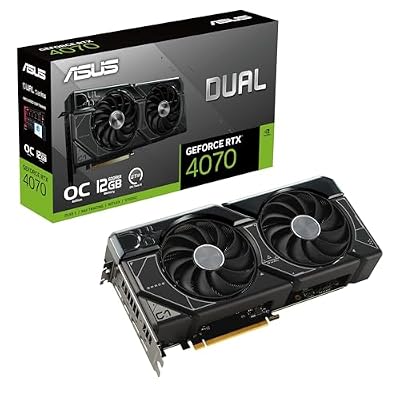
RTX 4060 vs 4070 is the classic budget-versus-midrange dilemma, and in 2026 it is still one of the most searched GPU matchups on the internet because both cards remain bestsellers on Amazon long after newer generations arrived. The RTX 4060 launched at $299 with 8GB of VRAM and a featherweight 115W power draw; the RTX 4070 launched at $599 — later settling near $549 — with 12GB, a much wider memory bus, and roughly 60% more performance. The $200-ish gap between their street prices buys a genuinely different class of experience, but only for certain players. This comparison quantifies exactly where that money goes, who gets full value from it, and how 2026’s rising hardware prices should shape your timing.
The Quick Verdict: RTX 4060 vs 4070 in 30 Seconds
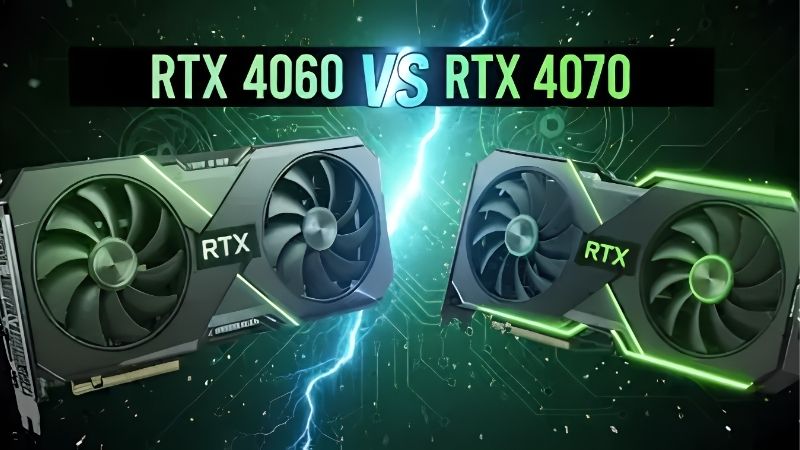
For readers who want the answer now: the RTX 4070 is roughly 55–65% faster than the RTX 4060, carries 12GB of VRAM versus 8GB, and is the correct choice for anyone gaming at 1440p or planning to keep their card past 2028. The RTX 4060 wins on price, a tiny 115W power budget that works in virtually any prebuilt PC without a PSU upgrade, and perfectly adequate 1080p performance. Rule of thumb: 1080p monitor and tight budget — buy the 4060; 1440p monitor or any future-proofing intent — the 4070 is worth every dollar of the gap. Check both cards’ live prices on Amazon, because the spread between them decides the value math week to week.
Why the RTX 4070 Justifies Its Price
The numbers are decisive. The RTX 4070 fields 5,888 CUDA cores against the 4060’s 3,072 — nearly double — plus 12GB of GDDR6X on a 192-bit bus delivering 504GB/s of bandwidth versus the 4060’s 272GB/s. That bandwidth gap alone explains why the 4070 scales to 1440p gracefully while the 4060 strains there.
In benchmark aggregates, the 4070 averages 55–65% higher frame rates at 1440p and maintains the gap at 1080p in GPU-bound titles. Per-dollar, that means the 4070 actually delivers comparable or better frames-per-dollar than the 4060 whenever its street price sits at $549 or below — the rare case where the more expensive card is not paying a premium per frame.
Why the RTX 4060 Still Sells in Huge Numbers
The 4060’s superpower is friction-free compatibility. At 115W with a single 8-pin connector (many models accept the old-style plug via adapter), it drops into aging prebuilts from Dell, HP, and Lenovo running 300–450W power supplies — systems where a 200W 4070 simply cannot go without a PSU swap that adds $60–$90 and an afternoon of work.
For pure 1080p gaming it is genuinely sufficient: 70–100+ fps on high settings in modern AAA titles and 150 fps+ in esports staples, with DLSS 3 Frame Generation as the bonus multiplier in supported single-player games. Millions of buyers need exactly that and not one frame more.
Specs Comparison Table
The hard numbers, side by side, before the deeper analysis.
| Specification | RTX 4060 | RTX 4070 |
|---|---|---|
| Architecture | Ada Lovelace (AD107) | Ada Lovelace (AD104) |
| CUDA Cores | 3,072 | 5,888 |
| VRAM | 8GB GDDR6 | 12GB GDDR6X |
| Memory Bus / Bandwidth | 128-bit / 272 GB/s | 192-bit / 504 GB/s |
| TGP (Power) | 115W | 200W |
| Recommended PSU | 450–550W | 650W |
| Frame Generation | DLSS 3 (2x) | DLSS 3 (2x) |
| Launch MSRP | $299 | $599 (later ~$549) |
| Target Resolution | 1080p | 1440p |
Deep Dive Face-Off: Performance, Longevity, and Fit
A 60% performance gap sounds simple, but its real-world meaning depends entirely on your monitor, your games, and how long you keep hardware. This section breaks the matchup down across the three criteria that decide post-purchase satisfaction: resolution-specific benchmarks, the VRAM longevity question, and power, size, and system compatibility.
Benchmark Reality at 1080p and 1440p
At 1080p, both cards clear the playable bar easily, but the texture of the experience differs: the 4060 delivers 70–100 fps on high settings in demanding titles, while the 4070 pushes the same games to 110–160 fps — the difference between a 75Hz experience and genuinely feeding a 144Hz monitor. In esports titles, both exceed 144 fps and the gap stops mattering.
At 1440p, the cards separate into different classes. The 4070 averages 80–110 fps on high settings across modern AAA aggregates; the 4060 manages 45–65 fps and increasingly needs settings reductions or aggressive DLSS to stay smooth. Frame Generation helps both, but it multiplies a base frame rate — and the 4070’s higher base produces visibly better latency and consistency.
Ray tracing widens the spread further: the 4070’s extra RT cores and bandwidth keep 1440p RT playable with DLSS, while the 4060 is realistically a 1080p RT card in lighter implementations only.
The VRAM Question: 8GB vs 12GB Over Time
This is the longevity axis. Measured VRAM allocation in 2025–2026 AAA releases regularly reaches 9–11GB at 1440p high textures, and a handful of titles exceed 8GB even at 1080p maxed. The 4060 owner manages this by dropping textures a notch — workable today, more frequent every year. The 4070’s 12GB clears current demands with margin.
Project both cards to 2028: the 4070 likely remains a high-settings 1440p card, while the 4060 trends toward medium-settings 1080p. If you upgrade every two years, that decay curve barely matters; if you keep cards for four to five years, it is the single strongest argument for paying the gap now.
Frame Generation deserves one clarification because both cards support it: the feature multiplies whatever base frame rate exists, and it consumes VRAM while doing so. On the 4070, that means turning a 90 fps base into a fluid 150+ presentation with memory to spare; on the 4060 at 1440p, the lower base rate and tighter 8GB budget mean the multiplied result can feel less responsive than the counter suggests. Same feature, materially different experience — a nuance the spec table hides.
Power, PSU, and the Prebuilt Factor
The 4060 needs roughly 450–550W of quality PSU; the 4070 wants 650W and most partner models use the 16-pin connector with an included adapter. For new builds, neither requirement is burdensome. For upgrades to existing systems, this is frequently the deciding variable — a 4070 that requires a $80 PSU plus installation effort sees its real upgrade cost rise toward $630–$650.
Physically, the 4060’s compact dual-fan designs fit small-form-factor cases where many 4070 models do not. Measure your case’s GPU clearance before ordering either card; it is the cheapest five minutes of due diligence in PC building.
2026 Price Watch: H200 Exports and Rising Component Costs
Two market forces directly affect what this matchup costs you. The United States has approved Nvidia selling its H200 — one of its most powerful AI chips — to China, and laptop and PC component prices continue their well-documented climb. Together they explain why neither card is getting cheaper, and why your timing matters as much as your choice.
How the H200 Decision Touches Budget and Midrange Cards
The H200 approval adds a vast new demand pool for Nvidia’s advanced silicon and memory output. Wafer starts and memory production are zero-sum: capacity flowing to high-margin AI accelerators is capacity not producing GeForce dies and GDDR chips, and history shows consumer street prices drifting 5–15% above MSRP within a quarter or two of such demand surges.
Both cards in this comparison are exposed, but the dynamic hits the cheaper card harder in percentage terms — a $30 increase is 10% on a 4060 and barely 5% on a 4070, which quietly compresses the value gap between them during supply squeezes.
Component Inflation Is Already in the Price Tags
Memory contract prices have risen for consecutive quarters and laptop retail prices have already followed — a leading indicator for DIY parts built from the same supply chain. GPU listings reflect it: the sub-$280 4060 deals common in early 2025 have become rare events, and 4070 stock that dips near $520–$549 sells through in days.
The pattern to internalize: current MSRPs increasingly function as price floors, not ceilings, for both cards.
The Timing Play for This Matchup
If your upgrade is happening in 2026 regardless, the data favors acting on a fair price rather than waiting for a better one — two measurable forces push prices up and none visibly push them down. Set concrete targets: 4060 at $299 or less, 4070 at $549 or less, and buy whichever hits its number first if both fit your build.
One more practical note: when the gap between their live prices compresses below about $180, the 4070 becomes the near-automatic choice on pure math. Check both cards’ current Amazon listings and measure today’s actual gap before deciding.
Final Verdict: Pros, Cons, and the Smart Alternative
This is one of the cleaner verdicts in GPU buying because the two cards barely compete — they serve different players. Here is the honest ledger for each, a third option that disrupts both, and the final buyer-profile recommendation.
Pros and Cons of Each Card
RTX 4060 — Pros: lowest-friction upgrade in PC gaming at 115W; fits prebuilts and small cases without PSU changes; DLSS 3 Frame Generation at budget price; quiet, cool, reliable; strong 1080p performance. Cons: 8GB VRAM ceiling tightens yearly; 272GB/s bandwidth limits 1440p; narrow bus shows in frame-time spikes when memory overflows.
RTX 4070 — Pros: 55–65% faster with 12GB VRAM; true high-settings 1440p card with years of headroom; comparable frames-per-dollar at fair prices; efficient 200W for its class. Cons: needs a 650W PSU and 16-pin adapter; meaningfully larger cards; Ada is discontinued, so street prices vary with remaining stock.
The Alternative: RTX 5060 Shakes the Bottom of This Bracket
The RTX 5060 at $299 MSRP brings Blackwell architecture, GDDR7 bandwidth, and DLSS 4 Multi Frame Generation to the budget tier — when it is in stock at list price, it beats the 4060 outright and is the better budget buy. Its catch is the same 8GB buffer, so it does not threaten the 4070’s longevity argument.
For the midrange side, a discounted RTX 5070 at $549 does to the 4070 what the 5060 does to the 4060: same money, newer architecture, DLSS 4. Whenever current-generation cards hit MSRP, prefer them; the Ada cards in this comparison win only on discounts.
Who Should Buy Which
Buy the RTX 4060 if you game at 1080p, upgrade a prebuilt or power-limited system, or simply need the cheapest competent modern GPU — at $299 or less it does its job with zero drama. Buy the RTX 4070 if you own or plan a 1440p monitor, keep hardware four-plus years, or want high-refresh performance in AAA titles; the $200 gap purchases a genuinely different tier of experience.
And if either card’s current-generation successor is sitting at MSRP when you shop, take the newer card — that is the one scenario where this entire comparison gets overruled by the calendar.
See More:
Conclusion
The rtx 4060 vs 4070 decision reduces to your monitor and your timeline: the 4060 remains the friction-free 1080p value champion, while the 4070’s near-double core count, 12GB of VRAM, and 1440p headroom make it the clear pick for higher resolutions and longer ownership. With H200 exports tightening silicon supply and component prices climbing, both cards’ fair prices are more likely to rise than fall through 2026 — so decide which profile is yours, then act on today’s numbers. Tap through to check the latest RTX 4060 and RTX 4070 prices on Amazon and lock in the right card before the gap moves again.
Frequently Asked Questions
What is the best rtx 4060 4070 in 2026?
The best rtx 4060 4070 depends on your budget and how you plan to use it. The options compared above are our top-rated picks based on real customer ratings, build quality, and overall value — start with the highest-rated model that fits your budget.
How much should I expect to spend on a rtx 4060 4070?
Prices vary by brand and features. Budget options cover the essentials, while mid-range and premium models add durability, performance, and extra features. Compare the prices in the list above to find the best value for your needs.
What should I look for when buying a rtx 4060 4070?
Focus on what matters most for your use case — build quality, compatibility, performance, warranty, and verified customer reviews. Every pick above is selected to balance these factors.
Are budget rtx 4060 4070 options worth it?
Yes. For most people a well-reviewed budget or mid-range rtx 4060 4070 delivers excellent value. You only need to spend more if you specifically require premium materials or top-tier performance.
How did we choose these rtx 4060 4070 picks?
We compare current Amazon ratings, review counts, key features, and price to surface the options with the best real-world value. The list is refreshed as ratings and availability change.






Write Your Review
No reviews yet. Be the first to share your experience!