
- Top Pick: ASUS Dual GeForce RTX 4060 Ti EVO OC Edition 8GB GDDR6 (PCIe 4.0, 8GB GDDR6, DLSS 3, HDMI 2.1a, DisplayPort 1.4a, Axial-tech Fan Design, Auto-Extreme Technology), 3 Year Warranty
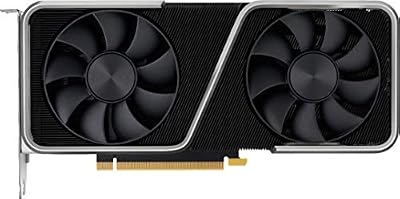
- Best Value: NVIDIA GeForce RTX 3060 Ti Founders Edition 8GB GDDR6 PCI Express 4.0 Graphics Card (Renewed)
- Premium Choice: EVGA GeForce RTX 3060 Ti FTW Ultra Gaming, 08G-P5-3667-KL, 8GB GDDR6, iCX3 Cooling, ARGB LED, LHR (Renewed)
Best Seller
NVIDIA GeForce RTX 3060 Ti Founders Edition 8GB GDDR6 PCI Express 4.0 Graphics Card (Renewed)


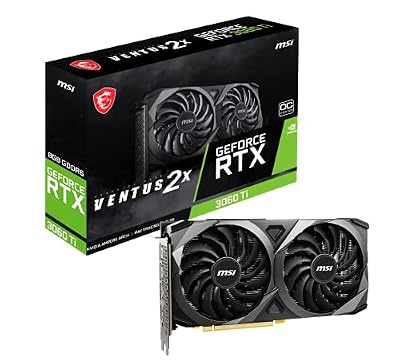

The RTX 4060 Ti vs RTX 3060 Ti matchup is the classic upgrade question: is the newer card actually worth the money, or is the older one still the smarter buy? On paper the 4060 Ti brings efficiency and DLSS frame generation, while the 3060 Ti remains a raster bargain, especially on the used market. The answer is not as obvious as the generation gap suggests. This comparison breaks down the raw specifications, real gaming performance at 1080p and 1440p, DLSS and NVIDIA’s AI features, power and compatibility, and honest price-to-value math. We also suggest a smarter alternative and explain what today’s rising prices mean for upgrading now. Start with the quick verdict if you are in a hurry.
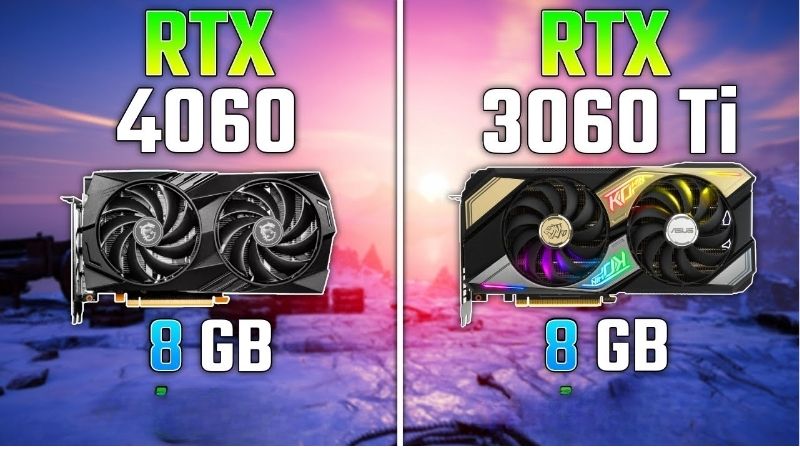
RTX 4060 Ti vs RTX 3060 Ti: The Quick Verdict
These two cards are closer than a two-generation gap would imply, which is exactly what makes the upgrade question interesting. The 4060 Ti wins on efficiency and features, while the 3060 Ti wins on value, particularly used. Your priorities on power, DLSS frame generation, and price decide it. Here is the short answer, then who each card suits.
As an Amazon Associate we earn from qualifying purchases at no extra cost to you.




The One-Line Answer for Busy Buyers
The RTX 4060 Ti wins on efficiency and DLSS frame generation. The RTX 3060 Ti wins on raw value, especially if you find one used at a good price.
So if you want the newest features, lower power, and frame generation, the 4060 Ti is the pick. If you want the most raster performance per dollar and do not need frame gen, the 3060 Ti is still a strong buy. In pure rasterized games the two are often within a modest margin of each other.
Who Should Pick the RTX 4060 Ti
Choose the RTX 4060 Ti if you value low power draw, cooler and quieter operation, and DLSS frame generation in supported titles. Its efficiency makes it easy to drop into almost any build.
It is also the better pick if you want the 16 GB memory option for more demanding games and light creative work. For buyers who care about future features and a tidy, low-power system, the 4060 Ti is the modern choice.
Who Should Pick the RTX 3060 Ti
Choose the RTX 3060 Ti if value is your priority and you can find one at a low price, often on the used market. Its raster performance remains genuinely competitive for 1080p and entry 1440p gaming.
It is the smart pick for budget builders who do not need frame generation and want strong performance for the money. Just remember that a used card comes without warranty, so buy from a reputable seller.
Specifications and Performance Face-Off
The specs reveal why these cards stay close in raster while the 4060 Ti pulls ahead on efficiency and features. NVIDIA traded some raw bandwidth for a newer, cooler architecture and frame generation. The numbers set up the gaming results.
Core Specs Side by Side
Here are the key specifications that shape performance:
| Spec | RTX 4060 Ti | RTX 3060 Ti |
|---|---|---|
| Architecture | Ada Lovelace | Ampere |
| Memory | 8 GB or 16 GB GDDR6 | 8 GB GDDR6 |
| Frame generation | Yes (DLSS) | No |
| Typical power draw | ~160 W | ~200 W |
| Upscaling | DLSS + frame gen | DLSS (no frame gen) |
| Best resolution | 1080p / 1440p | 1080p / 1440p |
The 4060 Ti draws less power and adds frame generation, while the 3060 Ti’s wider memory setup keeps its raw raster performance surprisingly close. The 16 GB 4060 Ti option is the key differentiator for memory-heavy games.
Gaming Performance at 1080p and 1440p
In pure rasterized games at 1080p, the two cards are close, and the 3060 Ti sometimes matches or nearly matches the 4060 Ti thanks to its strong memory bandwidth. This is why the upgrade is not automatic.
At 1440p and in newer, heavier titles, the 4060 Ti’s efficiency and the availability of a 16 GB version give it more staying power, especially where 8 GB cards start to strain. Where the 4060 Ti truly separates itself is in games that support DLSS frame generation, which can lift framerates well beyond what the 3060 Ti can reach. If frame gen support matters to your library, the newer card’s advantage becomes large.
Your game library is the deciding factor here. If you mostly play older or competitive titles that lack frame generation, the two cards feel remarkably similar and the 3060 Ti’s lower price wins. If your favorites are newer single-player games that support DLSS frame generation, the 4060 Ti can pull far ahead, turning a modest raster gap into a large perceived-smoothness gap.
DLSS, Frame Generation, and NVIDIA’s AI Features
Both cards support DLSS upscaling, but only the 4060 Ti adds AI frame generation, and that is the headline difference. In supported games, frame gen can dramatically boost smoothness, letting the 4060 Ti punch above its raw specs.
This is where NVIDIA’s forward-looking technology tips the scales. Frame generation is a software-driven feature that keeps improving, so the 4060 Ti is positioned to gain from future updates in a way the 3060 Ti cannot. It does add a little latency and needs a decent base framerate to feel best, so treat it as a smoothness boost rather than a cure-all. For buyers who value AI-driven features and longevity, this is a meaningful point in the 4060 Ti’s favor.
The 16 GB memory option deserves a mention alongside the AI features. Newer games increasingly punish 8 GB cards at higher settings, and the 3060 Ti has no larger-memory version to fall back on. Pairing frame generation with 16 GB makes the 4060 Ti the more future-resistant card, which is precisely what an upgrader planning to keep a GPU for several years should weigh.
Value, Power, and Real-World Fit
Beyond frames, upgrading comes down to price, power, and how each card fits your system. This section makes the 3060 Ti’s value and the 4060 Ti’s efficiency concrete, and lays out the honest pros and cons.
Price-to-Performance: What You Really Pay For
The RTX 3060 Ti’s strength is price, particularly used, where it often lands well below a new 4060 Ti while delivering similar raster performance. For a value-focused gamer, that frames-per-dollar math is compelling.
The RTX 4060 Ti asks a premium for efficiency, frame generation, and the 16 GB option. Whether that is worth it depends on your library and priorities. If you play frame-gen-supported titles or want lower power and more memory, the premium is justified; if you just want strong raster cheaply, the 3060 Ti wins on value.
Total cost over time is worth a glance too. The 4060 Ti’s lower power draw means slightly lower running costs and less heat dumped into your room, which matters more in hot climates or small spaces. It is a small factor next to the purchase price, but combined with quieter operation it nudges the efficiency argument a little further in the newer card’s favor.
Power Draw, PSU, and Case Compatibility
Practical fit favors the 4060 Ti. At roughly 160 W, it runs cooler and quieter than the 3060 Ti’s ~200 W, and it is happy on a modest 500 W to 550 W power supply, making it an easy upgrade for compact or prebuilt systems.
The 3060 Ti’s higher draw is still manageable, but it wants a touch more power and produces a bit more heat. If you are upgrading an older prebuilt with a small power supply, the efficient 4060 Ti is the safer drop-in. Always confirm your wattage and case clearance before buying either card.
If you are upgrading from an even older card, remember to update your graphics drivers cleanly after installing either one, since leftover files from a previous brand or generation can cause odd behavior. A clean driver install is a five-minute step that prevents hours of confusing troubleshooting, and it applies equally to a shiny new 4060 Ti or a used 3060 Ti.
Pros and Cons of Each Card
Here is the honest balance sheet for this RTX 4060 Ti vs RTX 3060 Ti decision:
| RTX 4060 Ti | RTX 3060 Ti | |
|---|---|---|
| Pros | Efficient; DLSS frame gen; 16 GB option; cool and quiet | Great value used; strong raster; competitive at 1080p |
| Cons | Narrow memory bus; premium price; 8 GB base is limiting | No frame gen; higher power; older; no warranty if used |
The takeaway is nuanced. If you skip frame generation and buy the 3060 Ti used, you save a lot; if you want features and efficiency, the 4060 Ti earns its premium, and the 16 GB version is the one worth targeting.
The Smart Alternative and What Today’s Prices Mean
Sometimes neither card is the best use of your money. If you are already spending on an upgrade, a slightly different card or better timing may serve you more, and the current market makes timing worth weighing.
A Third Option Worth Considering
If your budget can flex, an RTX 4070 delivers a much larger jump for 1440p and holds its value well, making it a better long-term upgrade than either Ti card. Alternatively, a current-generation RTX 5060 Ti 16 GB offers newer features and ample memory at a mainstream price.
These options are worth pricing before you commit, because a slightly bigger step now can outlast a marginal one. If one interests you, compare current prices on Amazon alongside both cards in this matchup.
A quick word on the used route for the 3060 Ti: inspect the card’s history where possible, prefer sellers with returns, and be wary of prices that look too good to be true. A new 4060 Ti costs more but arrives with a warranty and the latest features, which for many buyers is the difference between a confident purchase and a gamble.
Should You Buy Now or Wait?
Timing is a fair question in 2026, because component prices have trended upward and the memory shortage behind that rise has not fully cleared. The cautiously good news is that prices have stopped climbing as steeply as they did in late 2025, and some hardware makers have reported a stretch of relative stability, while still warning that volatility remains.
New supply is coming from Chinese memory makers and new Micron fabs in Idaho, but those plants are not expected to run until 2027 or 2028. In plain terms, prices have leveled off rather than dropped, and real relief is still years out. If you need an upgrade now, waiting is unlikely to reward you in the near term, and used 3060 Ti pricing can move with the market too.
Final Recommendation
Buy the RTX 4060 Ti, ideally the 16 GB version, if you want efficiency, DLSS frame generation, and more memory for newer games and light creative work. Buy the RTX 3060 Ti if value is king and you can find one cheaply, especially used, and you do not need frame generation.
For most upgraders chasing features and longevity, the 4060 Ti 16 GB is the wiser buy, while the 3060 Ti remains a smart value pick for budget-focused gamers.
See More:
- Radeon drivers
- What is NVIDIA CUDA Toolkit
- 4080 Super vs 5060 Ti
- NVIDIA PhysX
- NVIDIA Game Ready Driver
Conclusion
The RTX 4060 Ti vs RTX 3060 Ti decision is really about whether efficiency and DLSS frame generation are worth a premium over a proven raster bargain, and the answer depends on your games, your power supply, and your budget. The 4060 Ti leads on features and efficiency, especially in its 16 GB form; the 3060 Ti delivers excellent value, particularly used, with a 4070 or 5060 Ti as strong alternatives. With prices only stabilizing rather than falling, there is little reason to wait if you are ready to upgrade. Weigh features against price, then check today’s prices to make the smartest move.
Frequently Asked Questions
Is the RTX 4060 Ti actually faster than the RTX 3060 Ti?
Only modestly in pure raster, typically five to fifteen percent at 1080p and less at 1440p. The 4060 Ti has a narrow 128-bit memory bus versus 256-bit on the 3060 Ti, so its higher clocks and larger L2 cache are partly cancelled out once resolution and texture load rise.
Is upgrading from a 3060 Ti worth the money in 2026?
Generally no. A single digit to low double digit raster gain does not justify the cost of a new card. The only genuine reasons are DLSS frame generation support, roughly 40 watts lower power draw, AV1 encoding for streaming, and the 16GB variant if you keep running out of VRAM.
How much does the 8GB versus 16GB choice matter?
At 1080p with sensible settings, 8GB still works in most titles. In recent releases with ultra textures, ray tracing or heavy mod use, 8GB causes texture pop-in and sudden frame time spikes at 1440p. The 16GB 4060 Ti fixes that without adding raw speed, so it ages better.
What PSU and connectors do these cards need?
The 3060 Ti is a 200 watt card and typically wants a 600 watt supply with one or two eight-pin connectors. The 4060 Ti drops to about 160 watts and runs fine on a good 550 watt unit, often using a single eight-pin through an adapter or a native 12V-2×6 plug.
Which is better for 1440p gaming today?
They trade blows, so pick on price. If both are similar cost, take the 4060 Ti 16GB for the VRAM headroom, DLSS frame generation and lower heat. If the 3060 Ti is significantly cheaper used, it remains excellent value thanks to its wider memory bus at higher resolutions.




Write Your Review
No reviews yet. Be the first to share your experience!