
- Top Pick: ASRock Radeon RX 6500 XT Phantom Gaming D 4GB OC Graphics Card, 2820 MHz Boost Clock, AMD RDNA 2 Architecture, GDDR6, Dual Fan Cooling, DisplayPort 1.4, HDMI 2.1
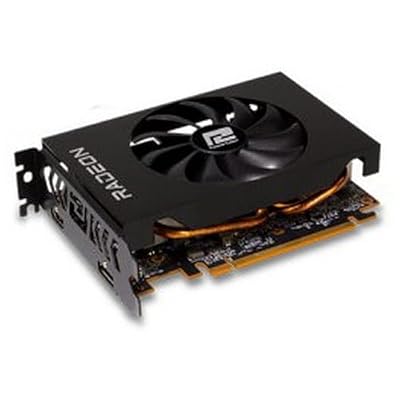
- Best Value: PowerColor AMD Radeon RX 6500 XT ITX Gaming Graphics Card with 4GB GDDR6 Memory
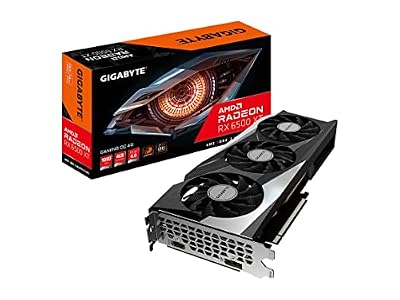
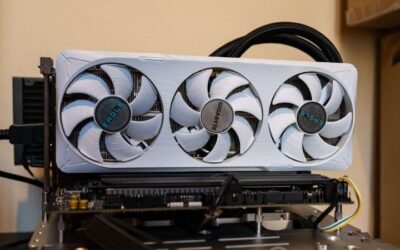
- Premium Choice: GIGABYTE Radeon RX 6500 XT Gaming OC 4G Graphics Card, WINDFORCE 3X Cooling System, 4GB 64-bit GDDR6, GV-R65XTGAMING OC-4GD Video Card (Renewed)
RX 6500 XT is one of the most debated budget graphics cards on the market, offering low power draw and a tempting price but hiding some serious catches that can trip up unwary buyers. Understanding those limitations is the difference between a smart purchase and a frustrating one. So is the RX 6500 XT worth buying in 2026, or is it a budget trap? This review breaks down the specs, honest performance, the crucial warnings, and exactly who this card is right for.
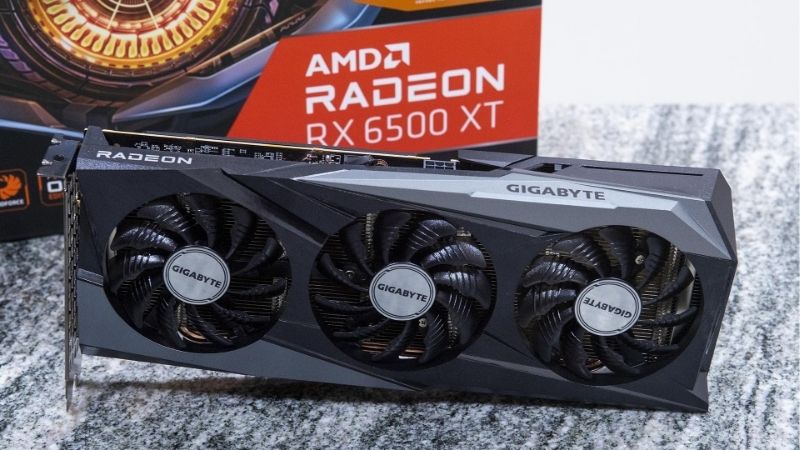
RX 6500 XT in 2026: Specs and Real-World Performance
Before buying, it is essential to understand what the RX 6500 XT offers and, just as importantly, where it cuts corners. This card was designed to hit a low price and low power target, and those goals led to some unusual compromises. Here is a grounded look at its specifications and the performance you can realistically expect from it now.
As an Amazon Associate we earn from qualifying purchases at no extra cost to you.


RX 6500 XT Key Specs at a Glance
The RX 6500 XT is built on AMD’s RDNA 2 architecture but trimmed aggressively, which explains both its efficiency and its notable limitations.
| Spec | RX 6500 XT |
|---|---|
| Architecture | RDNA 2 |
| VRAM | 4GB GDDR6 |
| PCIe interface | x4 |
| Board power | ~107W |
| Power connector | 1x 6-pin |
| Hardware encoder | None |
| Typical price | ~$120–$150 |
The standout RX 6500 XT specs include decent efficiency and a modern architecture, but the catches are what define it: a narrow x4 PCIe interface, only 4GB of VRAM, and no hardware video encoder at all. These are the details that catch buyers who do not research the card first.
These compromises were made to hit a low price, but they have real consequences. The RX 6500 XT is a card best judged with its limitations front and center, because those limitations shape whether it is a smart buy or a mistake for your specific system.
1080p Gaming Performance Today
At 1080p on a modern platform, the RX 6500 XT handles esports and lighter games well, delivering playable frame rates in competitive titles and older games at reasonable settings. For casual and esports-focused play, it does a respectable job.
In demanding modern AAA games, the 4GB VRAM buffer becomes a real bottleneck, forcing lowered textures and settings to avoid stutter. This is not a card for high-settings modern gaming, and buyers expecting that will be disappointed.
The x4 PCIe interface is the crucial warning. On a modern PCIe 4.0 system the card performs as intended, but on an older PCIe 3.0 board that narrow link is effectively halved, causing a significant performance drop that hits exactly the budget systems this card often goes into.
In concrete terms, the RX 6500 XT handles popular esports games at 1080p on a modern platform but stumbles in demanding AAA titles, where its 4GB buffer forces real compromises on textures and settings. The card’s reputation as a potential trap comes almost entirely from buyers who overlooked one of its three catches, so weighing all of them against your exact system is essential before purchase.
What Owners Say: Strengths and Common Complaints
Owner feedback on the RX 6500 XT is heavily shaped by whether buyers understood its limits. Those who paired it with a modern PCIe 4.0 system for esports gaming tend to be reasonably satisfied, praising its efficiency and low temperatures.
The most common complaints are pointed and consistent. Owners frequently criticize the PCIe 3.0 performance penalty, the lack of any hardware encoder for streaming or recording, and the 4GB VRAM limit in modern games, all of which catch buyers who expected a straightforward budget card.
The consensus is that the RX 6500 XT is acceptable only when its specific limitations align with your system and needs. It is one of the clearest examples of a card where research before buying makes all the difference.
Positive reviews almost always come from buyers who did their homework—modern board, esports focus, no streaming—while the harshest criticism comes from those who hit an unexpected limitation. This split is unusually stark for a graphics card, and it is the clearest signal that the RX 6500 XT rewards informed buyers and punishes impulse purchases made without checking the details first.
Is the RX 6500 XT Worth Buying?
The specs and performance reveal the RX 6500 XT’s true nature, but whether it is worth buying depends entirely on your system and expectations. This is a card that can be fine or frustrating depending on the details. Here is an honest assessment of where it works and where it falls short.
Where the RX 6500 XT Makes Sense
The RX 6500 XT makes sense on a modern PCIe 4.0 system for a buyer focused on esports and lighter gaming. In that specific pairing, it delivers efficient, cool-running performance at a low price without hitting its worst limitations.
It is also a reasonable pick for a compact, efficiency-focused build where its low power draw and modest cooling needs are genuine advantages, provided streaming and heavy AAA gaming are not priorities.
For a buyer who understands and accepts its constraints—modern platform, esports focus, no streaming—the RX 6500 XT can be a serviceable budget card rather than the trap it becomes for the wrong user.
Pros and Cons of the RX 6500 XT in 2026
The RX 6500 XT is a card defined by its trade-offs, and being honest about them is essential. Here is the direct breakdown to help you decide.
- Pros: Low power draw, modern RDNA 2 architecture, cool and quiet operation, capable esports performance on PCIe 4.0 systems.
- Cons: x4 PCIe penalty on older boards, no hardware encoder, only 4GB VRAM, weak in modern AAA games, poor value versus alternatives.
The balance favors the RX 6500 XT only for esports-focused buyers on modern platforms, and strongly against it for anyone on an older system, anyone who streams, or anyone who wants strong modern gaming.
Power, Compatibility, and the PCIe Warning
The RX 6500 XT’s power profile is friendly, drawing around 107W with a single 6-pin connector and fitting easily into most cases. On that front, it is an easy card to accommodate in a budget build.
The critical compatibility check is your motherboard generation. Because the card uses a x4 PCIe link, pairing it with a PCIe 4.0 board is essential to avoid the significant performance loss it suffers on older PCIe 3.0 systems—this is the single most important factor in whether you will be happy with it.
You should also account for the missing hardware encoder if you plan to stream or record, since the card cannot handle that workload the way most GPUs can. Confirm both points before buying to avoid the card’s biggest pitfalls.
Buying the RX 6500 XT: Value and Alternatives
If the RX 6500 XT still fits your situation, the final step is confirming the value and knowing your alternatives, which are often the better choice. Because this card is so situational, comparing options matters more than usual. Here is what to weigh, how it compares, and who should ultimately buy it.
Fair Pricing and What to Check
The RX 6500 XT typically sells around $120–$150. At that price, the most important check is not condition but compatibility: confirm your motherboard is PCIe 4.0 and that you do not need streaming, since those factors determine whether the card is a fair buy or a poor one.
If those boxes are ticked, verify the card works and test it in your actual games within a return window. Watch for the PCIe-related performance drop if there is any chance your system is running the card on an older interface.
Given how situational the card is, the smartest check of all is simply asking whether a nearby alternative would serve you better for similar money.
RX 6500 XT vs Alternatives
The RX 6500 XT faces stiff competition. A used RX 6600 offers dramatically better performance, more VRAM, full x16 bandwidth, and a hardware encoder for a similar or slightly higher price, making it the clearly superior pick when available.
Even older cards like the RX 570 8GB or GTX 1650 can be better fits in specific cases, offering more VRAM or an encoder that the RX 6500 XT lacks. These alternatives are worth pricing out before committing.
The RX 6500 XT only wins when it is notably cheaper and its limitations happen to line up perfectly with your modern, esports-focused, non-streaming build.
The pattern across these comparisons is consistent: for similar money, a card without the RX 6500 XT’s compromises usually exists, which is why it so often loses head-to-head value matchups. Only when it is priced clearly below those alternatives, and its limitations happen not to affect you, does it become a genuinely reasonable pick rather than a compromise.
See More:
Final Verdict: Who Should Buy the RX 6500 XT
The RX 6500 XT is the right choice only for a specific buyer: someone on a modern PCIe 4.0 system focused on esports and lighter gaming, who does not stream and finds the card at a genuinely low price. In that narrow case, it is serviceable.
It is the wrong choice for almost everyone else. On an older system, for a streamer, or for anyone who can find a used RX 6600 nearby in price, the alternatives are simply better.
If your situation matches the card’s strengths exactly, it can work, but for most buyers a small step up delivers far more. You can compare current pricing and alternatives through the links on this page.
In summary, the RX 6500 XT is a heavily compromised budget card that only makes sense in a narrow set of conditions: a modern PCIe 4.0 platform, an esports focus, and no need to stream. Its trap-like drawbacks—the PCIe 3.0 penalty, missing encoder, and 4GB VRAM—catch buyers who do not research it first. Match the RX 6500 XT to exactly the right system and it is passable, but for most budget gamers a used RX 6600 or similar alternative is the smarter, safer buy.
Top-Rated Picks

Save $27.70


| Product | Brand | Rating | Reviews | Price |
|---|---|---|---|---|
| ARCTIC MX-4 (4 g) – Premium Performance Thermal Paste… | ARCTIC | ★ 4.8 | 104k | $4.99 |
| ARCTIC MX-4 (incl. Spatula, 4 g) – Premium Performanc… | ARCTIC | ★ 4.8 | 71.9k | $5.49 |
| Crucial 8GB DDR4 RAM 3200MHz (PC4-25600), Downclockab… | Crucial | ★ 4.8 | 62.8k | $74.99 |
| AMD Ryzen 5 5600X 6-core, 12-thread unlocked desktop … | — | ★ 4.8 | 30.2k | $177.60 |
| NVIDIA Shield Remote; Voice Search, Motion-Activated,… | — | ★ 4.7 | 10.6k | $25.99 |
Frequently Asked Questions
Why is the RX 6500 XT so criticized?
It cuts corners that other budget cards do not. It has only 4GB of VRAM on a narrow 64-bit bus, a PCIe 4.0 x4 interface, just two display outputs, and no hardware H.264 or HEVC encoder. Those omissions make it far less flexible than its price suggests.
How badly does the PCIe x4 link hurt performance?
Severely on older systems. On a PCIe 3.0 motherboard the x4 link provides only about 4GB/s, and because the card has just 4GB of VRAM it frequently spills to system memory. Losses of 20 percent or more are common versus the same card in a PCIe 4.0 slot.
Can it stream or record gameplay?
Not with hardware acceleration. Navi 24 omits the video encode block entirely, so OBS must fall back to CPU-based x264 encoding, which costs significant frame rate. If streaming or recording matters at all, a GTX 1650 with NVENC or almost any Nvidia card is a better choice.
What power supply does the RX 6500 XT need?
It is efficient at roughly 107W board power with a single 6-pin or 8-pin PCIe connector depending on the partner model. A quality 400W to 450W supply is enough. Power is one area where the card genuinely does well, and it fits comfortably in small cases.
Is there any situation where the RX 6500 XT makes sense?
Yes, in a modern PCIe 4.0 system used for esports titles at 1080p where you never stream and only need two monitors. In that narrow case it is competent and quiet. For anything involving high textures, video encoding, or an older motherboard, look elsewhere.



Write Your Review
No reviews yet. Be the first to share your experience!