
The GeForce RTX 2080 was announced by NVIDIA in August 2018 at Gamescom and reached shelves in September 2018, alongside the RTX 2080 Ti. It was the second-fastest card in the first wave of Turing GPUs and the one that introduced real-time ray tracing hardware to mainstream gaming PCs.
- Announcement and Launch: How It Unfolded
- What the RTX 2080 Replaced
- Launch Timeline at a Glance
- Key Specifications at Launch
- What Came Next
- Is It Still Relevant Today?
- Features That Defined the Launch
- Partner Cards and Cooling Choices
- Who Should Buy or Skip It
- Quick Checklist Before You Buy
- Frequently Asked Questions
- Related Guides
That timeline is easy to state, but it does not tell you what the card replaced, how quickly NVIDIA refreshed it, or whether it still makes sense now. This article lays out the launch sequence, the key specifications, the cards that followed, and a realistic view of where the RTX 2080 stands.
Announcement and Launch: How It Unfolded
NVIDIA revealed the RTX 20-series at a Gamescom event in Cologne in August 2018. The pitch was unusual: instead of leading with raw speed, the company led with new hardware features, namely dedicated ray tracing cores and Tensor cores for AI-driven upscaling. The RTX 2080 and RTX 2080 Ti were available in September 2018, with the RTX 2070 following in October 2018. If you need an exact day for a specific retailer or region, check NVIDIA’s original announcement.
The launch was met with mixed reactions. The performance gain over the previous generation in games that did not use the new features was more modest than many buyers hoped, and software support for ray tracing and DLSS arrived gradually after launch. Over the following months, game updates and driver improvements made the card age better than its first reception suggested.
What the RTX 2080 Replaced
The RTX 2080 took over the high-end slot held by the GTX 1080 and GTX 1080 Ti from the Pascal generation. NVIDIA moved from the GTX branding to RTX, and the name change signaled the shift to ray tracing. The new architecture, called Turing, also moved from GDDR5X memory on the earlier cards to GDDR6.
For owners of a GTX 1080 Ti the upgrade case was weak, and many held on to their cards. For owners of older GTX 900 or 700-series hardware, the 2080 was a more compelling leap.
Launch Timeline at a Glance
| Milestone | Timing | Notes |
|---|---|---|
| RTX 20-series announced | August 2018 | Unveiled at Gamescom with a focus on ray tracing |
| RTX 2080 and 2080 Ti available | September 2018 | First Turing gaming cards on shelves |
| RTX 2070 arrives | October 2018 | Smaller TU106 chip |
| RTX 2060 arrives | January 2019 | Entry point to the RTX family |
| Super refresh | July 2019 | 2060 Super, 2070 Super and 2080 Super |
| RTX 30-series (Ampere) | September 2020 | The generation that replaced Turing |
Key Specifications at Launch
The RTX 2080 uses the TU104 chip with 2,944 CUDA cores, 368 Tensor cores and 46 ray tracing cores. It carries 8GB of GDDR6 memory on a 256-bit bus at 14 Gbps, which delivers around 448 GB/s of bandwidth. Board power sits in the neighborhood of 215 to 225 watts depending on whether you read the reference or Founders Edition figures, and it needs both an 8-pin and a 6-pin power connector on the reference design.
The interface is PCIe 3.0 x16, and outputs on the reference card included DisplayPort 1.4, HDMI 2.0b and a USB-C VirtualLink port. The Founders Edition shipped with a dual-fan vapor chamber cooler, a departure from NVIDIA’s earlier blower-style reference designs. Partner cards from other brands varied widely in clocks and cooling.
What Came Next
NVIDIA responded to competition and to buyer feedback with the Super refresh in July 2019. The RTX 2080 Super moved to a fuller version of the same chip with faster memory, which effectively made the original 2080 redundant. Many retailers cleared out original 2080 stock after that.
The bigger shift came in September 2020 with the RTX 30-series. Cards such as the RTX 3070 delivered performance in the same class as the 2080 Ti, and the generation ended Turing’s run at the top of the market. Newer generations have followed since then, so the 2080 is now several architectures old. NVIDIA has not changed the fact that it keeps the same 8GB of memory it launched with.
Is It Still Relevant Today?
As of late 2026 the RTX 2080 remains a capable card for 1080p and 1440p gaming at moderate to high settings, and it still supports DLSS upscaling. The 8GB memory pool is the clearest limit, since new releases increasingly want more. Ray tracing works but is demanding on this first-generation hardware.
Driver support is worth verifying. Turing is old enough that you should check NVIDIA’s driver release notes for the current support status of the 20-series before buying.
- Strengths: strong memory bandwidth, DLSS support, solid build on most partner models.
- Weaknesses: 8GB capacity, first-generation ray tracing, no frame generation, high power for its performance class.
Features That Defined the Launch
Three features shaped how buyers talked about the card at release. The first was hardware ray tracing, which let developers simulate reflections, shadows and global illumination with dedicated silicon rather than shader tricks. The second was DLSS, an AI upscaling method that runs on the Tensor cores and renders at a lower internal resolution before reconstructing a sharper image. The third was a redesigned memory system using GDDR6, which raised bandwidth over the previous generation.
The first versions of these features were rough. Early DLSS implementations looked soft in some games, and only a handful of titles shipped with ray tracing in the first months. Later software revisions improved image quality substantially, and the broader industry adopted the same ideas, which is why the card is still discussed today. When you read launch-era opinions, keep in mind that they describe the software of 2018 rather than what a Turing card can do now.
Partner Cards and Cooling Choices
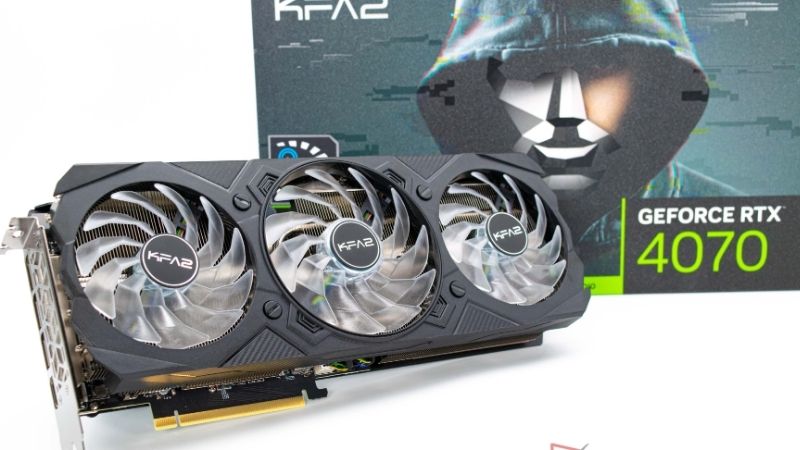
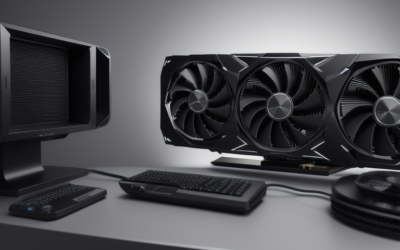
NVIDIA’s own Founders Edition was joined by dozens of partner models from the usual board makers. Some used compact dual-fan coolers suited to small cases, while others used large triple-fan designs with factory overclocks. A handful of models carried “A” chip variants, which were binned for higher clocks at launch. If you are shopping the used market, the cooler matters more than the badge: a large, well-built cooler tends to run quieter and age better than a compact one working at its limit.
Power connectors vary too. The reference layout uses an 8-pin and a 6-pin, but some partner boards use two 8-pin connectors. Check the listing photos and the seller’s description rather than assuming.
Who Should Buy or Skip It
The Used-Market Value Hunter
If you find a clean used card at a sensible price and play at 1080p or 1440p, the 2080 is a reasonable choice. Confirm its condition and ask for proof that it works.
The Owner of a Pascal Card
If you already own a GTX 1080 Ti, the move to a 2080 offers little. Wait for a larger jump in capability and memory.
The 4K or New-Release Player
Skip it if you want to play the newest games at high settings or at 4K, where the memory and ray tracing limits will show quickly.
Quick Checklist Before You Buy
- Confirm whether the listing is a 2080, 2080 Super or 2080 Ti, since names are often mixed up.
- Check that your PSU offers 8-pin and 6-pin connectors.
- Inspect the card for dust, fan wear and any sign of mining use.
- Verify NVIDIA’s current Turing driver support status.
- Compare against newer cards with more memory before committing.
Frequently Asked Questions
When did the RTX 2080 come out?
It was announced in August 2018 and became available in September 2018. Check NVIDIA’s original announcement for the exact date in your region.
What came after the RTX 2080?
The RTX 2080 Super arrived in July 2019, followed by the RTX 30-series in September 2020. Later generations have followed since.
How much memory does the RTX 2080 have?
It has 8GB of GDDR6 on a 256-bit bus. That has not changed across the 2080 and 2080 Super.
Is the RTX 2080 still good for gaming?
Yes for 1080p and many 1440p games, though 8GB can limit the newest titles. It remains a decent option for older libraries and esports.
Related Guides
- RTX 2080 Ti Review: Is This Legendary GPU Still A Gaming Powerhouse?
- RTX 2080 GPU in 2026: Is This Turing Card Worth Buying?
- RTX 2080 or RX 6700? Picking the Right GPU
- GeForce RTX 2080 Ti Review: Is the Old Flagship Worth It?
Write Your Review
No reviews yet. Be the first to share your experience!