
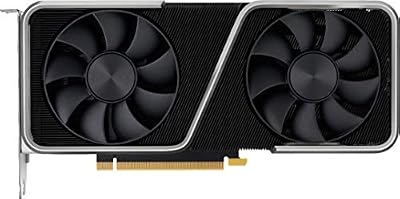
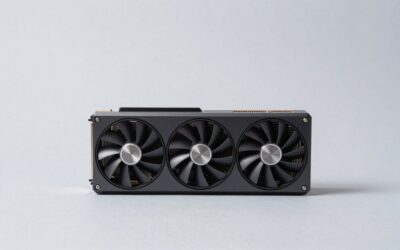
- Top Pick: NVIDIA GeForce RTX 3060 Ti Founders Edition 8GB GDDR6 PCI Express 4.0 Graphics Card (Renewed)
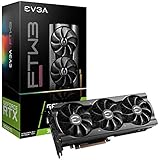
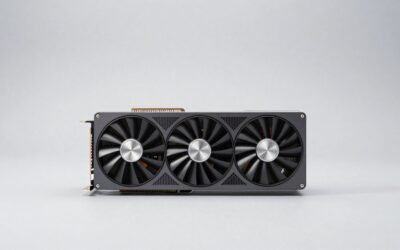
- Best Value: EVGA GeForce RTX 3060 Ti FTW Ultra Gaming, 08G-P5-3667-KL, 8GB GDDR6, iCX3 Cooling, ARGB LED, LHR (Renewed)
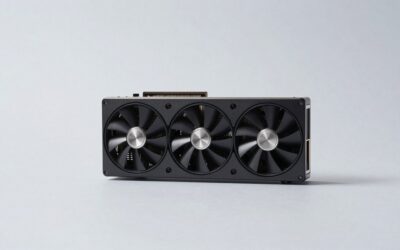
- Premium Choice: maxsun Graphics Card GeForce RTX 3060 Ti OC Edtion 8G Vidoe Gaming Computer Graphics Cards for Copmputer Gaming PC PCI Express 4.0 x16 HDMI 2.1 GPU (GDDR6 8G)
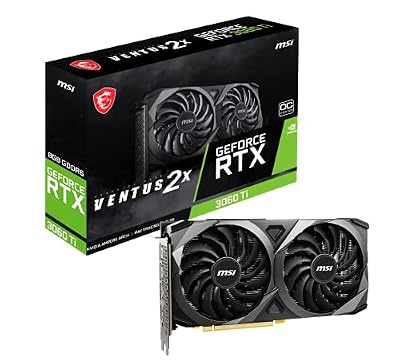


Best Seller
NVIDIA GeForce RTX 3060 Ti Founders Edition 8GB GDDR6 PCI Express 4.0 Graphics Card (Renewed)

Best Seller
EVGA GeForce RTX 3060 Ti FTW Ultra Gaming, 08G-P5-3667-KL, 8GB GDDR6, iCX3 Cooling, ARGB LED, LHR (Renewed)
RTX 3060 Ti vs RTX 3060 had an obvious answer in 2021: the Ti was 25-30% faster for $70 more, take the Ti, next question. Every video still on YouTube says exactly that, and it was correct at the time. It is no longer reliably correct, because the comparison was never really about speed — it was about a spec quirk that looked strange then and looks decisive now. The Ti has 8GB. The non-Ti has 12GB. In 2021 that was a curiosity. In 2026 it is the entire argument, and this page uses current game data to show you exactly where the crossover happens.
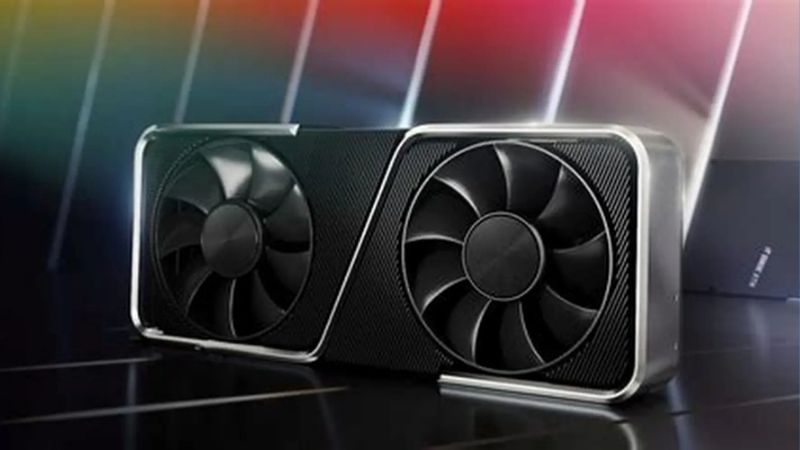
The Quick Verdict: RTX 3060 Ti vs RTX 3060 in One Minute
It depends on what you play, and that is a real answer rather than a hedge. For 1080p esports and older titles, the 3060 Ti is faster and remains the better card — 25-30% ahead, and 8GB is never the constraint at those settings. For modern AAA titles at 1080p High or anything at 1440p, the 12GB non-Ti increasingly wins despite being the slower card on paper, because the Ti runs out of memory and its frame times collapse in ways averages hide. If you play both, buy the 12GB card: a card that is 25% slower is a compromise, while a card that stutters is a defect. Pay up to $50 more for the Ti if your library is competitive shooters. Otherwise take the 3060.
As an Amazon Associate we earn from qualifying purchases at no extra cost to you.



Why the 2026 Verdict Is Expiring
Reviewers in 2021 were not wrong and it is worth saying so. They tested the games that existed, found the Ti roughly 28% faster, and recommended it. Every number in those videos was accurate.
What no one could test was 2026’s texture streaming. Modern engines assume a larger memory pool, and when an 8GB card runs short the driver spills assets across PCIe into system RAM. The result is not a graceful decline — it is second-long freezes and textures resolving visibly late as you turn the camera.
Average frame rate does not capture this at all. That is why a 2021 video showing “3060 Ti: 78 FPS, 3060: 61 FPS” gives you a completely misleading picture of how these two cards compare in a 2026 title. The Ti still posts the higher average. It is no longer the better experience.
Who Should Still Buy the RTX 3060 Ti
Two clear cases. If your library is CS2, Valorant, Rocket League, Dota 2 and older single-player games, the Ti is 25-30% faster and 8GB is comfortable in every one of them. On a 1080p 144Hz panel it converts directly into frames you can see.
The second case is bandwidth-sensitive work. The Ti’s 256-bit bus and 448 GB/s beat the 3060’s 192-bit and 360 GB/s, which matters in some video encoding and compute workloads more than the core count difference suggests.
Outside those, the Ti is a card whose headline advantage is being quietly undermined by its own memory configuration.
Who Should Buy the RTX 3060
Anyone playing modern single-player games, anyone at 1440p, and anyone who wants the card usable in 2028. The 12GB buffer is the whole argument and it is sufficient by itself.
The secondary reason matters more than it looks: local AI work. Stable Diffusion, small language models, CUDA coursework — 12GB against 8GB is the difference between a model loading and not loading. The 3060 12GB has quietly become the standard entry point for that work, and it is why its used price has held up far better than its gaming performance justifies.
If you are buying used and might touch any of that in the next two years, this alone decides it.
Specs and Real 2026 Frame Rates
The table shows two cards that were configured for different eras without anyone intending it. Read the VRAM and bus rows together — they pull in opposite directions, and that tension is the whole comparison.
Core Specifications Side by Side
| Specification | RTX 3060 Ti | RTX 3060 (12GB) |
|---|---|---|
| Architecture | Ampere (GA104) | Ampere (GA106) |
| CUDA cores | 4,864 | 3,584 |
| Boost clock | ~1.67 GHz | ~1.78 GHz |
| VRAM | 8GB GDDR6 | 12GB GDDR6 |
| Memory bus | 256-bit | 192-bit |
| Bandwidth | 448 GB/s | 360 GB/s |
| L2 cache | 4MB | 3MB |
| TDP | 200W | 170W |
| Power connector | 1x 8-pin (some 2x) | 1x 8-pin |
| PSU recommended | 600W | 550W |
| Launch price | $399 | $329 |
The Ti wins every row except the one that matters most in 2026. 36% more CUDA cores, 24% more bandwidth, a wider bus — and 33% less memory. Same architecture, so there is no efficiency argument to muddy it: the Ti is simply a bigger chip with a smaller buffer.
Note the power rows if you are dropping this into an older build. 200W against 170W, and some 3060 Ti models take two 8-pins rather than one. Check your PSU cables before ordering.
Frame Rates Where the Crossover Happens
1080p High, no upscaling. The asterisked rows are where the Ti’s 8GB becomes the bottleneck instead of its shaders.
| Game (1080p High) | RTX 3060 Ti | RTX 3060 | Winner |
|---|---|---|---|
| Counter-Strike 2 | ~262 FPS | ~205 FPS | Ti, clearly |
| Valorant | ~310 FPS | ~240 FPS | Ti, clearly |
| GTA V Enhanced | ~128 FPS | ~98 FPS | Ti, clearly |
| Elden Ring | ~60 (capped) | ~57 FPS | Tie |
| Cyberpunk 2077 | ~70 FPS | ~55 FPS | Ti |
| Hogwarts Legacy | ~58 FPS* | ~54 FPS | Ti on paper, 3060 in feel |
| Black Myth: Wukong | ~45 FPS* | ~42 FPS | Effectively tied |
| Ratchet & Clank: Rift Apart | ~52 FPS* | ~62 FPS | 3060 wins outright |
Read this table top to bottom and you can watch the verdict change. In the first three rows the Ti wins by 28-30% — exactly what 2021 promised. By the bottom rows the margin has evaporated, and in Rift Apart the slower card is 19% faster because the Ti has run out of memory.
The Hogwarts row deserves attention. The Ti posts a higher average, 58 against 54, and feels worse to play — its 1% lows drop into the low 20s during traversal while the 3060 holds around 40. This is the exact failure that averages conceal and that no 2021 review could have caught.
Used-Card Checks Before You Buy Either
Both are used purchases now, so condition matters as much as specification. Ask the seller for a photo of the card running with a temperature reading visible. Ask directly whether it was mined on — both of these were mining-era cards and many were, and while a mined card is not automatically bad, it tells you the fan bearings have run continuously for years.
LHR variants exist on both. For gaming this is irrelevant; as a history signal it is useful. And on a card five or six years old, budget $15 for thermal paste and pads — it is not optional maintenance at this age, and it is the difference between 68C and 82C.
Check physical length too. Most models run 200-250mm dual-fan and fit anywhere, but some triple-fan 3060 Ti models are longer than the 3060 equivalents.
Deep Dive Face-Off: Where the Gap Actually Lives
Three axes separate these cards, and only one of them was visible when the original reviews were filmed.
Rasterization: The Ti’s Real and Shrinking Lead
With memory pressure removed — esports, older titles, lower settings — the Ti leads by a consistent 25-30%. That is genuine and it is not disputed. On a 144Hz or 240Hz panel running competitive titles, those frames are real and visible.
The lead is largest at 1080p Medium in older engines and smallest, or negative, at 1080p High and 1440p in newer ones. The trend line runs one direction only, and every game released from here pushes it further.
DLSS, Ray Tracing and the FP8 Catch Both Share
Both are Ampere with 2nd-generation RT cores, and neither is a ray tracing card in any practical sense — both land in the 25-35 FPS range in RT titles at 1080p. The Ti’s extra shaders help marginally; it is a technicality either way.
On upscaling there is a catch that applies to both equally and that almost nobody mentions. DLSS 4.5’s second-generation transformer models — Model M and Model L — rely on native FP8 support. Ampere does not have it. On both of these cards, selecting the newer models costs more performance than the image quality gain justifies, and Nvidia’s own guidance is that RTX 30 series owners should generally remain on Model K, the DLSS 4.0 model.
So if anyone tells you to set DLSS Override to “Recommended” on either of these cards, ignore them. Neither gets Frame Generation either — that requires Ada’s optical flow hardware, which is silicon neither of these has. This is a shared limitation and it does not move the decision, but it is worth knowing before you spend an evening chasing a feature that cannot exist.
Pros and Cons of Each Card
| RTX 3060 Ti | RTX 3060 (12GB) | |
|---|---|---|
| Pros | 25-30% faster where memory allows; 448 GB/s on a 256-bit bus; dominant in esports at 1080p; still the better 1080p Medium card | 12GB survives modern titles and 1440p; the entry standard for local AI; 170W on a 550W PSU; single 8-pin; better frame times where it counts |
| Cons | 8GB is the hard wall; 1% lows collapse in new titles; loses outright in some 2026 games despite 36% more cores; 200W and sometimes 2x 8-pin | 25-30% slower in esports; 192-bit limits it above 1440p; no Frame Generation, ever; no FP8 for DLSS 4.5 models |
The instructive part is that both columns are about different time horizons. The Ti’s advantages are about the games you already own. The 3060’s are about the ones you have not bought yet — and about whether the card is still usable when you get there.
What the Used Market Is Doing to Both Prices
These are both used purchases, and used prices are anchored by the new market rather than floating free. Understanding that anchor explains why neither has become the bargain its age implies.
Why 12GB Cards Refuse to Get Cheap
Component and laptop prices have kept trending upward rather than settling, and entry-level new cards have absorbed the most pressure because memory is a large share of their bill of materials. When a new RTX 5060 does not drop below launch pricing, everything beneath it on the used market is held up by it.
This produces an outcome that surprises people: the 3060 12GB, a slower card, frequently sells for close to or more than the 3060 Ti on the used market. That is not irrational. Buyers have worked out that 12GB is worth more than 30% raster in 2026, and the local AI crowd bids the 12GB card up further. The market has already priced in the argument this page is making.
Practically: do not expect either card to become cheap. The mechanism that would make it happen — falling new-card prices — is not operating.
Prices Flattened, But Relief Is Years Out
There is real good news and it deserves precision rather than optimism. The steep climb of late 2025 has eased. Framework, which publishes unusually candid component pricing updates, has reported a stretch of relative stability while still cautioning that volatility persists. That is stabilisation, not decline.
New capacity is genuinely coming. OEMs can now source DDR5 from Chinese manufacturers such as CXMT, and Micron is building two fabs in Idaho. Both are real additions to a constrained supply base. Neither arrives before 2027-2028 — long past the point where either of these cards is worth buying at all.
The honest summary: flat, not falling. If a 3060 12GB at a fair price is in front of you, the case for waiting is weak.
The Alternative: When Neither Is the Answer
If both feel like too much for five-year-old silicon — a fair reaction — two options sit nearby. A used RX 6700 XT gives you 12GB with meaningfully stronger raster than either, at the cost of DLSS and Nvidia’s encoder. An Intel Arc B580 is new rather than used, carries 12GB, and comes with a warranty, which on a used purchase is worth something real.
And if you can stretch to a new RTX 4060 or 5060, you get Frame Generation — a capability neither of these Ampere cards will ever have, at any settings, in any game. Compare current used and new pricing across the 3060, 3060 Ti and their nearest alternatives before committing, because the ordering shifts constantly and the cheapest listing is frequently not the cheapest way to solve your problem.
See More:
- GTX 1650 vs RTX 3050
- Nvidia DIGITS
- Nvidia cuDNN
- Radeon RX 9070 XT vs RTX 5090
- PNY GeForce RTX 5080 review
Final Verdict: RTX 3060 Ti vs RTX 3060
The rtx 3060 ti vs rtx 3060 question genuinely splits, and anyone giving you a single answer without asking what you play is guessing. For competitive shooters and older titles at 1080p, buy the 3060 Ti — 25-30% faster, 8GB never binds at those settings, and the frames are real on a high refresh panel. That buyer exists in large numbers and the Ti serves them well.
For modern single-player games, for 1440p, for anything involving local AI, or if you simply want the card to still work in 2028, buy the RTX 3060 12GB. It loses on paper and wins in practice, because a card that is 25% slower is a compromise while a card that stutters is broken. And whichever you take, leave your DLSS model on K — neither has the FP8 support the newer models need. With used prices anchored by a new market that is not falling, the card available at a fair price today beats the one you are waiting for.
Frequently Asked Questions
Speed or VRAM, which matters more here?
The RTX 3060 Ti is around 25 to 30 percent faster thanks to more CUDA cores and a 256-bit bus at 448GB/s, while the plain RTX 3060 has 12GB against 8GB. For 1080p and most 1440p gaming the Ti speed wins. For texture heavy 1440p titles and any local AI work, the 12GB card wins.
Which is better for 1440p specifically?
The 3060 Ti in most games, because its extra bandwidth and shader count deliver higher averages and better 1 percent lows. The exception is a small but growing set of titles that exceed 8GB at 1440p high with ray tracing, where the 3060 12GB avoids the stutter that no amount of raw speed fixes.
Does the 12GB help with AI, video or 3D work?
Yes, and this is where the 3060 12GB earns its reputation. Stable Diffusion, local LLM inference, Blender scenes and DaVinci Resolve timelines all care about capacity before speed, and a workload that fits in 12GB but not 8GB runs many times faster simply because it stops spilling to system memory.
What are the power supply requirements?
The RTX 3060 is 170W and the 3060 Ti is 200W. Nvidia recommends 550W for the first and 600W for the second. Both usually use a single 8-pin, though some 3060 Ti models take two. Ampere transient spikes mean a quality unit matters more than the raw wattage number.
Which is the better used buy in 2026?
Take the 3060 Ti if you only game and it costs under about 30 dollars more. Take the 3060 12GB if you play at 1440p with high textures, do any GPU compute work, or want the card to stay usable longer. Watch for ex-mining 3060 Ti cards, which were heavily used.

Write Your Review
No reviews yet. Be the first to share your experience!