
- Top Pick: ZOTAC Gaming GeForce RTX 5060 Twin Edge OC DLSS 4 8GB GDDR7 128-bit 28 Gbps PCIE 5.0 Gaming Graphics Card, SFF-Ready Compact Card, ZT-B50600H-10A
- Best Value: ASUS TUF Gaming GeForce RTX 5060 Ti 8GB GDDR7 OC Edition Graphics Card
- Premium Choice: ASUS Dual GeForce RTX 5060 Ti 8GB GDDR7 OC Edition Gaming Graphics Card
RTX 5060 8GB vs RTX 3060 12GB is a fascinating budget dilemma that pits newer speed against more memory: the modern RTX 5060 with 8GB, or the older RTX 3060 with a larger 12GB buffer. You landed here to skip the long video and get the numbers — specs side by side, real 1080p frame rates, the VRAM debate settled, and where pricing is heading — so you can buy smart. This comparison delivers exactly that, then names the winner for your budget and how you actually play.


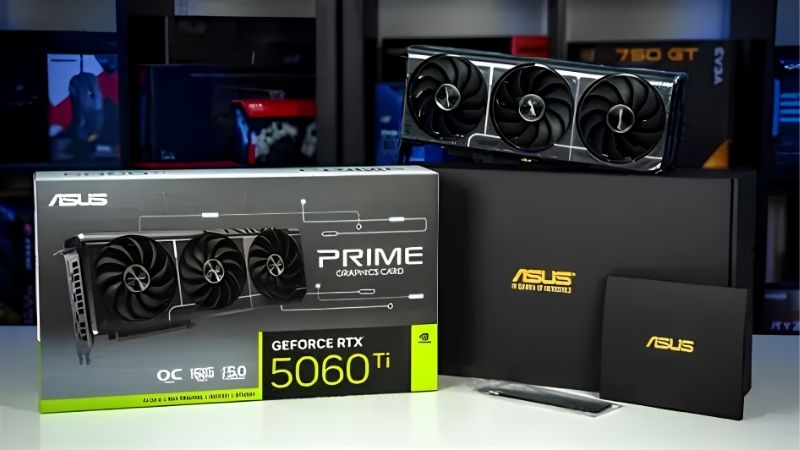
RTX 5060 8GB vs RTX 3060 12GB — Quick Verdict and Specs
Most budget buyers want the answer first, so here it is: the RTX 5060 8GB is the faster, more modern card and the better all-around pick thanks to DLSS 4 and newer architecture, while the RTX 3060 12GB appeals mainly to those who prioritize raw VRAM capacity or find it heavily discounted. This section backs that with the full spec table and the architectural context.
As an Amazon Associate we earn from qualifying purchases at no extra cost to you.




The Quick Verdict for Busy Buyers
Buy the RTX 5060 8GB if you want the newest architecture, DLSS 4 multi-frame generation, better efficiency, and stronger overall performance. It is the more capable card for modern gaming despite its smaller memory.
Buy the RTX 3060 12GB if you specifically value the larger VRAM for certain workloads, or if you find it at a significantly lower price and only need solid 1080p gaming without the latest features.
The tension is speed versus memory. For most gamers the RTX 5060 8GB vs RTX 3060 12GB decision favors the newer card, but the VRAM angle keeps the older card relevant for specific buyers.
Head-to-Head Specs Comparison Table
The table below lays out the specs that drive this speed-versus-memory decision.
| Spec | RTX 5060 (8GB) | RTX 3060 (12GB) |
|---|---|---|
| Architecture | Blackwell | Ampere |
| Generation | RTX 50-series | RTX 30-series |
| Memory | 8GB GDDR7 | 12GB GDDR6 |
| Upscaling | DLSS 4 + Multi-Frame Gen | DLSS (Super Resolution) |
| Ray tracing | Improved (Blackwell) | 2nd-gen (Ampere) |
| Efficiency | Improved | Older, less efficient |
| Target resolution | 1080p | 1080p |
| Interface | PCIe 5.0 | PCIe 4.0 |
The core trade-off is clear. The RTX 5060 brings newer Blackwell architecture, faster GDDR7 memory, and DLSS 4, but only 8GB of it; the RTX 3060 counters with 12GB of slower GDDR6 on older Ampere silicon. Speed and features versus raw capacity.
If the spec sheet already tilts you one way, it is worth checking each card’s live listing before pricing shifts again.
Blackwell vs Ampere — What the Architecture Means
The RTX 5060 runs on Blackwell, Nvidia’s newest architecture, with DLSS 4 multi-frame generation, improved ray-tracing cores, and better efficiency. It represents two generations of progress over the older card.
The RTX 3060 uses Ampere, a capable but aging architecture from the RTX 30-series. It supports DLSS Super Resolution but lacks the frame generation and efficiency gains of newer designs.
That generational gap is wider than it looks on paper. Two full architecture generations separate these cards, which brings not just more speed but also better power efficiency, newer encoders, and access to features that simply did not exist when the 3060 launched.
For buyers, the key point is support longevity and features. The newer Blackwell card will benefit from DLSS 4’s expanding adoption and longer driver optimization, while the Ampere card is nearer the end of its feature relevance despite its extra memory.
Deep Dive Face-Off — Performance, VRAM, and Compatibility
Specs set expectations; frame rates and the VRAM reality decide satisfaction. This section compares the two on the criteria that matter for this matchup: 1080p performance, the crucial 8GB-versus-12GB memory debate, and how each card fits a budget build.
1080p Gaming Performance
At 1080p, the RTX 5060 8GB is clearly the faster card in raw performance, benefiting from its newer architecture to deliver higher frame rates than the RTX 3060 12GB in most modern titles at high settings.
The gap widens further with DLSS 4 enabled, where the RTX 5060’s multi-frame generation can push frame rates well beyond what the RTX 3060’s older DLSS achieves in supported games. That upscaling advantage is a major performance separator.
The practical conclusion is that for pure frame rates, the RTX 5060 8GB wins comfortably at 1080p. The RTX 3060’s only performance-related counterargument is its memory, which we examine next.
For competitive and esports titles, both cards easily exceed the frame rates needed for smooth play, so either handles fast-paced games well. The RTX 5060’s advantage becomes most visible in demanding AAA titles where its architecture and upscaling do the heavy lifting.
The 8GB vs 12GB VRAM Debate
This is the heart of the comparison. The RTX 3060’s 12GB buffer is larger than the RTX 5060’s 8GB, and in specific scenarios — very high texture settings, certain modded games, or memory-heavy non-gaming workloads — that extra capacity can matter.
However, for mainstream 1080p gaming, 8GB remains sufficient in most current titles, and the RTX 5060’s superior speed and DLSS 4 generally outweigh the memory deficit. The 12GB advantage is real but situational rather than decisive for typical gamers.
It is also worth noting that DLSS and efficient memory management help the newer card make better use of its 8GB than raw numbers suggest. Modern upscaling can reduce the effective memory load, softening the gap between an optimized 8GB card and an older 12GB one in practice.
The analytical takeaway is that VRAM capacity alone does not make a card better. The RTX 5060’s newer architecture and features usually deliver a better overall experience at 1080p, with the RTX 3060’s memory mattering most for edge cases and specific workloads.
A useful way to decide is to think about what you actually run. If you play mainstream games at 1080p, the RTX 5060’s speed wins; if you do memory-heavy creative or AI work on a tight budget, the 3060’s 12GB becomes a more compelling reason to consider the older card.
Power, Card Size, and Budget Build Compatibility
The RTX 5060 is the more efficient card, drawing less power for more performance thanks to its newer architecture. This makes it easy to fit into budget systems without demanding a powerful supply.
The older RTX 3060 is less efficient and draws more power for lower performance, though it remains manageable on a modest PSU. Both are compact enough for typical builds, but always confirm your case clearance and power connectors.
The RTX 5060’s PCIe 5.0 interface runs fine on older PCIe 4.0 boards, so neither card forces a platform upgrade. For a budget builder, the newer card offers better efficiency without adding platform cost.
Because the RTX 3060 is now largely a used-market card, buyers should also factor in condition and warranty. A new RTX 5060 comes with a fresh warranty, while a used 3060 carries the usual risks of prior wear, which is worth weighing against any price saving.
Price, Timing, and the Final Recommendation
Performance is half the decision; price and timing are the other half, and the current market context genuinely rewards buying deliberately. This section covers the pricing climate, the honest pros and cons, and a clear who-buys-what verdict, plus an alternative pick.
Is Now the Right Time to Buy?
Pricing context matters at the budget tier, where a small difference changes the whole calculation. Component and laptop prices have been trending upward, with memory a major driver, and that pressure feeds straight into card street prices — affecting both the new RTX 5060 and the older, often used-market RTX 3060.
The positive news is real but weak and distant. Prices have stopped climbing as steeply as they did in late 2025, and the market has entered a period of relative stability, though analysts still warn of ongoing volatility. “Stable” here means plateaued, not falling — the sharp increases paused, but a broad price cut has not started.
New supply is opening the long-term relief valve: OEMs can source DDR5 from Chinese suppliers such as CXMT, and Micron is building two plants in Idaho. The catch is timing — those fabs are not expected online until 2027–2028. For a budget buyer today, the conclusion is blunt: meaningful relief is years away, so waiting for a dramatic 2026 discount is a weak plan. Buying a well-matched card during a stable window beats gambling on a drop the supply data says will not arrive soon. It is worth locking in a fair current price before the next swing.
Pros and Cons of the RTX 5060 8GB and RTX 3060 12GB
RTX 5060 8GB strengths: newer Blackwell architecture, DLSS 4 multi-frame generation, faster GDDR7, better efficiency, stronger 1080p performance, and improved ray tracing. Its trade-off: only 8GB of VRAM, which can be limiting in the most memory-hungry scenarios.
RTX 3060 12GB strengths: a larger 12GB VRAM buffer useful for certain workloads, proven 1080p capability, and potential value if discounted or found used. Its trade-offs: older Ampere architecture, weaker performance, no DLSS 4, lower efficiency, and a shorter feature runway ahead.
The pattern is clean: the RTX 5060 competes on speed and modern features, the RTX 3060 on raw memory capacity. Whichever matters more to you should decide the pick.
The Alternative Pick and Final Verdict — Who Buys What
If you want both speed and memory, the answer is to stretch to the RTX 5060 Ti 16GB, which pairs the newer Blackwell architecture and DLSS 4 with a generous 16GB buffer — resolving the entire speed-versus-VRAM dilemma this comparison highlights.
For the final call: buy the RTX 5060 8GB if you want the best overall 1080p performance and modern features, and 8GB covers the games you play. Buy the RTX 3060 12GB only if you specifically need the larger VRAM for certain workloads or find it at a much lower price.
One practical tip settles many close calls: check the real price difference. If the RTX 5060 is only modestly more than a used RTX 3060, its newer features make it the clear choice; if the 3060 is dramatically cheaper and you value its VRAM, the older card earns a second look.
For most budget buyers in 2026, the RTX 5060 8GB is the recommendation — its newer architecture, DLSS 4, and stronger performance make it the smarter buy for modern gaming, with the RTX 3060’s extra VRAM mattering only for specific cases. Ready to choose? Compare today’s live prices on both and grab the card that fits your needs.
See More:
- 3060 Ti vs 9060 XT
- Nvidia Shield TV Pro
- RTX 5070 vs RX 9060 XT
- RTX 3090 24GB
- Nvidia price prediction
Conclusion
The RTX 5060 8GB vs RTX 3060 12GB decision comes down to newer speed and features versus raw memory capacity. The RTX 5060 8GB wins on architecture, DLSS 4, efficiency, and 1080p performance, making it the smarter buy for most modern gamers. The RTX 3060 12GB stays relevant only for those who specifically need its larger VRAM buffer or find it heavily discounted. For anyone wanting both, the RTX 5060 Ti 16GB resolves the dilemma. With pricing stable but real relief years away, buying a well-matched card now is the rational move. Check the current listings and secure the budget GPU that fits how you play today.
Frequently Asked Questions
Which card is faster?
The RTX 5060 is comfortably faster, typically by forty per cent or more at 1080p. Despite the older card having 3584 cores against roughly 3840, Blackwell brings much higher clocks, GDDR7 memory at about 448GB per second versus 360GB per second, and far stronger ray tracing hardware, so the generational gap is decisive in most titles.
Does the 3060 twelve gigabytes beat the 5060 eight gigabytes?
Only in specific situations. At 1080p with sensible settings, eight gigabytes is still workable and the 5060 wins easily. In titles with ultra texture packs, heavy ray tracing or at 1440p, the 3060 can avoid the stutter that a full eight gigabyte buffer causes. For local AI model loading, the larger buffer is genuinely valuable.
What are the power and PSU differences?
The RTX 5060 is rated near 145W and the RTX 3060 at 170W, so the newer card is both faster and more efficient. Both use a single eight-pin connector and both run on a quality 500W to 550W supply, which makes either a straightforward drop-in upgrade for an older office or prebuilt system.
What features does the older card lack?
The 3060 cannot use frame generation at all, while the 5060 supports DLSS 4 including multi frame generation. Blackwell also adds improved AV1 encode and decode capability for streaming and video work, plus newer tensor cores for AI acceleration. Ampere continues receiving super resolution updates, so it is not abandoned, only limited.
Which suits 1080p esports or entry AI work?
For high refresh esports at 1080p the RTX 5060 is the obvious pick, delivering higher frame rates on less power with modern encoding for streaming. For hobby AI work where model size matters more than speed, a cheap used RTX 3060 12GB remains a well-known budget option precisely because of its memory capacity.

Write Your Review
No reviews yet. Be the first to share your experience!