
Top Rtx 4080 Super 5080 Benchmark Picks for 2026
Here are our current top rtx 4080 super 5080 benchmark picks, compared on real Amazon owner reviews, price, and features. Live prices update below.

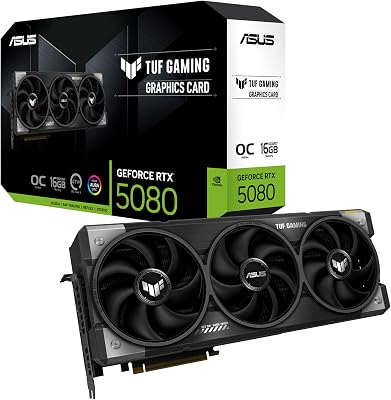


Save $855.01
4080 Super vs 5080 benchmark numbers are unusually interesting because both cards launched at the same $999 price with the same 16 GB on a 256-bit bus. That makes the comparison a clean test of one generation of progress at a fixed price point: Ada GDDR6X against Blackwell GDDR7, and DLSS 3 against DLSS 4. This 2026 comparison breaks down the real frame rates, the spec differences, the power and value picture, and exactly which card is the smarter buy before prices climb further.
Quick Verdict: 4080 Super vs 5080 Benchmark
Same price, same memory, one generation apart: this is the rare comparison where the newer card simply offers more for the money. The decision turns on availability and whether you buy new or used. Here is the fast answer, the spec sheet, and the honest pros and cons.
The Fast Answer
The RTX 5080 wins the benchmark battle, typically running 10 to 20 percent faster than the 4080 Super at 4K while adding GDDR7 bandwidth and exclusive DLSS 4 Multi Frame Generation, all at the same launch price. For a new purchase, it is the obvious pick.
The RTX 4080 Super remains a strong 4K card and is worth choosing only if you find one meaningfully cheaper than the 5080 on the used market, since its 16 GB and DLSS 3 keep it highly capable.
With identical MSRPs, the 5080 is the better value new, leaving the 4080 Super as a used-market option. Checking current pricing below is wise given the tightening market.
The short version for skimmers: at the same launch price, the 5080 is simply the better buy new, so choose it unless you find a 4080 Super meaningfully cheaper on the used market. Because both carry 16 GB, neither choice compromises on memory, which keeps the decision purely about speed, features, and the price in front of you today.
Specs Comparison
With the same 16 GB, 256-bit bus, and $999 launch price, the differences come down to core count, memory type, and features.
| Specification | RTX 4080 Super | RTX 5080 |
|---|---|---|
| Architecture | Ada Lovelace (AD103) | Blackwell (GB203) |
| CUDA Cores | 10,240 | 10,752 |
| Memory | 16 GB GDDR6X | 16 GB GDDR7 |
| Memory Bus | 256-bit | 256-bit |
| Bandwidth | ~736 GB/s | ~960 GB/s |
| Board Power (TGP) | 320 W | 360 W |
| DLSS Support | DLSS 3 (Frame Gen) | DLSS 4 (Multi Frame Gen) |
| Launch MSRP | $999 | $999 |
Pros and Cons of Each Card
The 4080 Super vs 5080 benchmark trade-offs are clear because the cards are so closely matched on paper. The 5080 leads on speed, bandwidth, and features; the 4080 Super’s case rests on used-market value.
RTX 4080 Super — Pros: 16 GB VRAM, strong 4K performance, slightly lower 320 W draw, mature drivers, good value if discounted. Cons: lower bandwidth, no DLSS 4, slower than the 5080 at the same price.
RTX 5080 — Pros: 16 GB GDDR7, higher bandwidth, DLSS 4, faster benchmarks at the same MSRP, PCIe 5.0. Cons: 360 W draw, exposure to steeper 2026 Blackwell price increases, occasional availability gaps.
Because both cards share 16 GB, neither holds a memory-capacity advantage, so the benchmark gap is a clean reflection of architecture and bandwidth rather than one card running out of VRAM.
This shared-capacity point keeps the benchmark gap honest. Against a 12 GB card, part of the lead would come from simply not running out of memory, but here both cards have the same 16 GB, so every frame of advantage reflects genuine architectural and bandwidth improvement. It means the 4080 Super is not a compromised choice on capacity, only a slower one at the same price.
Deep Dive Face-Off: 4080 Super vs 5080 Benchmark
Beyond the headline numbers, the benchmark story depends on resolution, build, and features. The face-off compares the two by gaming performance, power and setup, and the feature stack that shapes longevity.
Gaming Performance and Benchmarks
At 1440p, both cards exceed most monitors’ refresh rates in many titles, so the benchmark gap is real but often academic. The 5080’s extra bandwidth shows most in the heaviest games, while CPU-limited scenarios can leave the two nearly level.
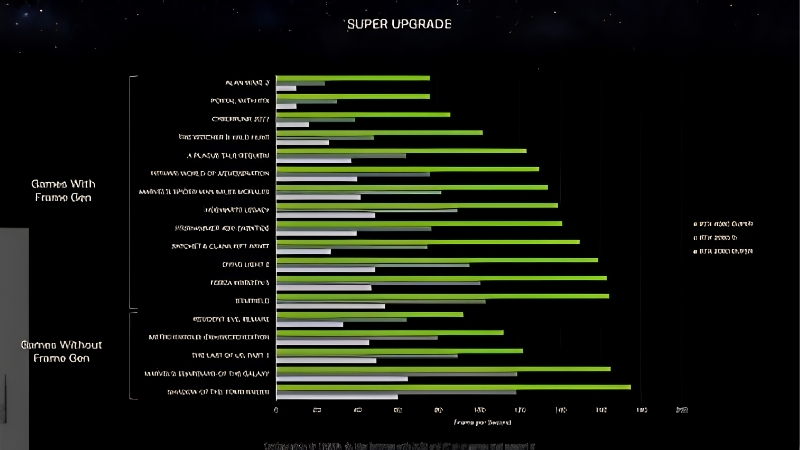
At 4K, the difference becomes meaningful. In a demanding AAA title the 4080 Super typically lands in the 70 to 95 FPS range while the 5080 holds 80 to 110 FPS, a 10 to 20 percent lead that grows in bandwidth-heavy and ray-traced scenes. DLSS 4 widens the gap further in supported titles.
The analytical takeaway is that the 5080 is consistently faster at the same price, and the gap widens with resolution and ray tracing, exactly where high-end buyers spend their time.
The same-price framing makes these numbers especially meaningful. When two cards cost the same at launch, a 10 to 20 percent benchmark lead is effectively free performance, and that is what the 5080 offers over the 4080 Super. The gap is smaller than against the standard 4080 because the Super is the stronger Ada card, but it remains a clear, repeatable advantage at 4K where it matters most.
Power, Efficiency, and Real-World Setup
Practically, the two are similar to live with. The 4080 Super’s 320 W and the 5080’s 360 W both run on a quality 750 W to 850 W supply, and neither is difficult to fit in a modern mid-tower.
The 5080’s slightly higher draw is offset by its higher performance, so frames per watt improve over the 4080 Super. In practice this means more performance for a marginal increase in heat and noise, rather than a meaningful efficiency penalty.
For anyone upgrading from a 4080 Super or older card, the 5080 is a straightforward swap that rarely demands a new power supply, though confirming the connector and case clearance is always sensible.
Cooling behaves similarly across both cards because their power figures are close. Modern triple-fan designs keep either card in the high 60s to low 70s Celsius under load while staying quiet, so noise and thermals are unlikely to sway the decision. The practical setup verdict is a near-tie, which pushes the choice back onto benchmarks, features, and price.
Features and Future-Proofing
This is where the 5080 separates itself for the long term. Its DLSS 4 Multi Frame Generation can insert multiple AI-generated frames between rendered ones, lifting frame rates well beyond the 4080 Super’s DLSS 3 in supported games.
The experimental angle worth testing is how much that feature gap grows as DLSS 4 adoption spreads. In those titles the 5080 can reach frame counts the 4080 Super structurally cannot, even with similar raw hardware, and its updated media engine benefits creators. Both share the same 16 GB buffer.
For a buyer thinking several years ahead, the feature and bandwidth advantage is arguably more decisive than the current benchmark gap, since it determines how the card ages.
The benchmark longevity question also favours the 5080. Because game engines increasingly lean on upscaling and frame generation, a card with the newest DLSS version tends to age better than its raw specs suggest. The 4080 Super will remain capable for years, but the 5080’s DLSS 4 support means its effective performance in future titles is likely to pull further ahead than today’s numbers indicate.
Pricing, Alternatives, and Final Recommendation
The 2026 market context matters because neither card is getting cheaper, and their identical MSRP makes the value comparison especially clear.
How the 2026 Price Surge and H200 News Change the Math
GPU prices are rising in 2026 as a memory shortage drives up GDDR and DRAM costs. The Blackwell 5080 faces steeper increases of roughly 15 to 23 percent, while the older Ada 4080 Super’s used pricing is propped up by overall scarcity rather than falling as it normally would.
The H200 export decision adds indirect pressure. With the U.S. approving capped H200 shipments to China in January 2026, advanced memory is being diverted to AI accelerators, tightening the supply that produces consumer GDDR7 and keeping 5080 stock volatile.
For the 4080 Super vs 5080 benchmark decision, the implication is that the 5080’s same-price advantage is best captured now, since increases could erode it. A used 4080 Super only makes sense if it is clearly cheaper than a 5080.
The pricing math is unusually clean because the two launched at the same $999. In a normal market that alone would settle the comparison in the 5080’s favour, but with Blackwell facing the steeper increases, the 5080’s real-world price can drift above the 4080 Super’s used cost. That makes a 5080 near MSRP the clear window, while a used 4080 Super is only worth it at a genuine discount.
The Alternative if Both Are Too Expensive
If both cards are priced beyond your budget, the RTX 5070 Ti offers 16 GB of GDDR7 and DLSS 4 at a lower price, delivering most of the modern benefits for less.
For buyers who want a discounted 16 GB Ada card, the standard RTX 4080 is a slightly slower sibling that can be cheaper used, though the 4080 Super is usually the better-balanced choice of the two.
A third route suits patient shoppers: because 5080 and used 4080 Super prices move independently with supply, watching both and buying whichever offers the better real-world value avoids overpaying in a volatile market.
Buyers who already own a 4080 Super should think carefully before upgrading. The 10 to 20 percent gain plus DLSS 4 is real but not dramatic, so the move makes most sense if you specifically want DLSS 4 or can sell the 4080 Super while its value holds. For everyone else, the 4080 Super remains a strong 4K card that does not need replacing yet, and waiting for a larger generational leap may be the wiser play.
Final Verdict: Who Should Buy Which
Buy the RTX 5080 if you are buying new, since it is faster, adds GDDR7 and DLSS 4, and costs the same as the 4080 Super did at launch. It is the better card on every front at MSRP.
Buy the RTX 4080 Super only if you find one significantly cheaper than the 5080 on the used market and are happy with DLSS 3, since its 16 GB keeps it capable at 4K.
The deciding factor in this matchup is almost always price rather than capability. Since the two cards are close in performance and identical in memory, the smarter purchase is simply whichever offers better value when you buy: a 5080 near MSRP for a new build, or a 4080 Super only when it is clearly cheaper. Let the current listings, not brand loyalty, make the final call.
Once you have weighed the 4080 Super vs 5080 benchmark gap against current prices, check the latest availability below before the next adjustment.
See More:
- Graphics cards RTX 4090
- RTX 4070 Ti vs 5080
- 4090 vs 4070 Ti Super
- RTX 3080 Ti vs RTX 5080
- Nvidia RTX 4090 vs 5090
Conclusion
The 4080 Super vs 5080 benchmark comparison is unusually clean: at the same $999 launch price, the 5080 is 10 to 20 percent faster, adds GDDR7 and DLSS 4, and ages better, making it the stronger choice for new buyers, while the 4080 Super competes only as a discounted used card. With the 2026 memory shortage and the H200 export shift keeping prices elevated, the smart move is to secure a 5080 near its MSRP rather than waiting for a discount the market is unlikely to deliver.
Frequently Asked Questions
What is the best 4080 super 5080 benchmark in 2026?
The best 4080 super 5080 benchmark depends on your budget and how you plan to use it. The options compared above are our top-rated picks based on real customer ratings, build quality, and overall value — start with the highest-rated model that fits your budget.
How much should I expect to spend on a 4080 super 5080 benchmark?
Prices vary by brand and features. Budget options cover the essentials, while mid-range and premium models add durability, performance, and extra features. Compare the prices in the list above to find the best value for your needs.
What should I look for when buying a 4080 super 5080 benchmark?
Focus on what matters most for your use case — build quality, compatibility, performance, warranty, and verified customer reviews. Every pick above is selected to balance these factors.
Are budget 4080 super 5080 benchmark options worth it?
Yes. For most people a well-reviewed budget or mid-range 4080 super 5080 benchmark delivers excellent value. You only need to spend more if you specifically require premium materials or top-tier performance.
How did we choose these 4080 super 5080 benchmark picks?
We compare current Amazon ratings, review counts, key features, and price to surface the options with the best real-world value. The list is refreshed as ratings and availability change.










Write Your Review
No reviews yet. Be the first to share your experience!