
TPU vs GPU is the ultimate debate dominating the artificial intelligence landscape today, especially as developers, startups, and enterprise giants seek the most cost-effective and powerful compute engines. With deep learning models expanding exponentially in parameter count, choosing the right hardware infrastructure can make or break your machine learning pipeline. In this comprehensive comparison, we pit the Google Cloud TPU v5p against the industry-standard Nvidia H100 GPU to find out which accelerator delivers the best performance, speed, and overall value in 2026. Whether you are looking to rent cloud instances for massive LLM training or purchase dedicated local workstation hardware to bypass escalating data center fees, understanding these distinct architectures is crucial for maximizing your return on investment. Let us dive deep into the specific tech, real-world benchmarks, and market shifts driving the modern AI hardware revolution.
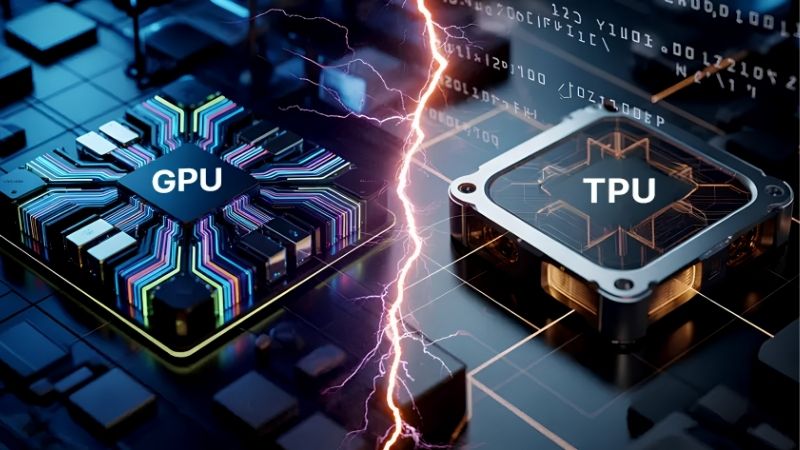
The Quick Verdict and Core Tech Breakdown of TPU vs GPU
Selecting between Google’s custom-built Tensor Processing Unit and Nvidia’s versatile Graphics Processing Unit requires a solid understanding of how application-specific integrated circuits compare against general-purpose processors in handling tensor operations.
As an Amazon Associate we earn from qualifying purchases at no extra cost to you.



The Quick Verdict on Google TPU vs GPU Dynamics
For users seeking an immediate recommendation without diving into complex architectural nuances, the quick verdict is straightforward: choose Google’s TPU v5p if you are fully committed to the Google Cloud Platform ecosystem, utilize TensorFlow or JAX, and are training massive, transformer-based models that benefit from high-speed, multi-node scaling. However, choose Nvidia’s H100 GPU if you require ultimate flexibility, rely heavily on PyTorch, need to run diverse workloads beyond deep learning, or plan to build on-premises hardware clusters. The GPU ecosystem remains the gold standard for compatibility, ease of deployment, and raw developer tool maturity across all AI disciplines.
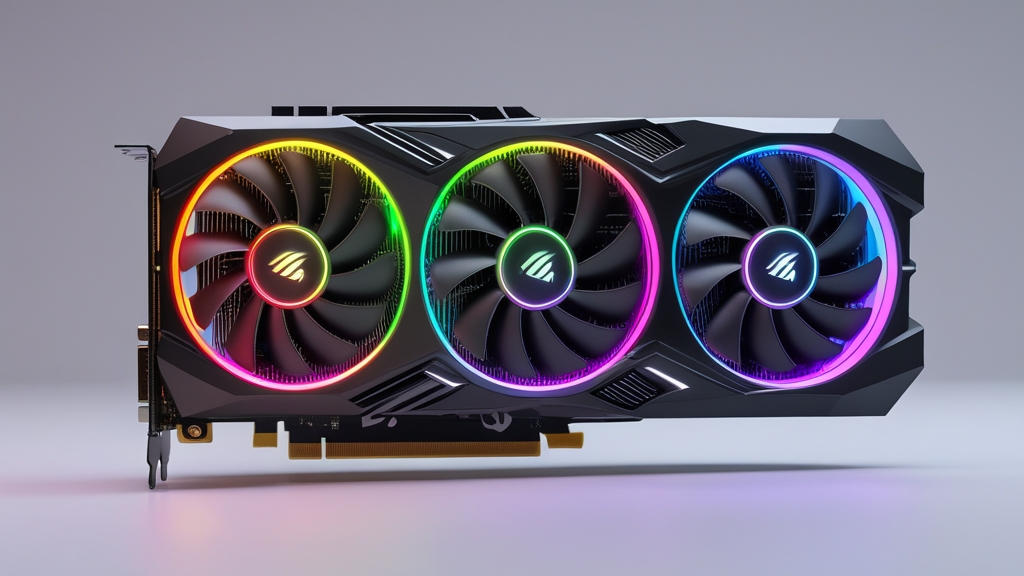
If you are a developer looking to secure local hardware to run local models without paying recurring cloud fees, high-end consumer and workstation GPUs are the most practical solution available today. Securing a premium GPU allows you to bypass cloud queues and retain full control over your computational workflows. You can explore the latest pricing and secure your own dedicated workstation graphics cards right now on Amazon to future-proof your development setup before inventory tightens. [Check the latest Nvidia workstation GPUs and desktop graphics cards on Amazon]
Architectural Differences: TPU vs GPU Performance
At the architectural level, a TPU is an Application-Specific Integrated Circuit (ASIC) designed from the ground up by Google specifically to accelerate machine learning. Unlike general-purpose processors, TPUs utilize a Matrix Multiply Unit (MXU) that relies on a systolic array design to stream data through a grid of processing elements without constantly reading and writing to registers. This makes the TPU incredibly efficient at matrix multiplication, which is the foundational mathematical operation for deep learning models. By streamlining these repetitive calculations, TPUs achieve immense throughput while minimizing power consumption.
To better visualize the technical specifications of these two dominant architectures in 2026, let us look at how Google’s TPU v5p compares directly against the Nvidia H100 GPU:
| Specification | Google TPU v5p | Nvidia H100 SXM5 |
| Architecture Type | Application-Specific ASIC | General-Purpose GPU |
| Memory Capacity | 95GB HBM3 | 80GB HBM3 |
| Memory Bandwidth | 4.8 TB/s | 3.35 TB/s |
| Interconnect Speed | 4.8 Tbps (ICI) | 900 GB/s (NVLink) |
| Primary Frameworks | TensorFlow, JAX, PyTorch | PyTorch, TensorFlow |
| Deployment Model | Cloud Only (Google Cloud) | Cloud & On-Premises |
This specifications table highlights that while the TPU v5p offers slightly higher memory capacity and bandwidth, the Nvidia H100 remains highly competitive and infinitely more accessible across different cloud and physical deployment models.
Software Ecosystems: Cloud TPU vs GPU Frameworks
Hardware specifications tell only half the story; the software ecosystem is where the TPU vs GPU battle is often decided. Nvidia’s dominance is largely sustained by CUDA (Compute Unified Device Architecture), a proprietary parallel computing platform and API model. Over nearly two decades, CUDA has become the industry standard, supported by an exhaustive library of optimizations, debuggers, and developer tools. Frameworks like PyTorch are natively optimized for CUDA, ensuring that almost any open-source AI project on GitHub runs out of the box on an Nvidia GPU without modification.
If you prefer a seamless development environment where you can copy-paste open-source code and have it run instantly, the Nvidia ecosystem is unmatched. For independent creators and research teams, having a local GPU workstation means you can experiment with local LLMs, stable diffusion models, and custom training loops without the software friction often associated with cloud-only TPUs.
Deep Dive Face-Off and Market Shifts of TPU vs GPU
Evaluating these compute platforms requires analyzing real-world performance workloads alongside macro-economic factors that are shifting the availability and pricing of hardware globally in 2026.
Training and Inference Face-Off: TPU vs GPU Solutions
When it comes to training massive large language models with billions of parameters, Google’s TPU v5p pods excel at scale. Google’s custom optical circuit switches (OCS) allow thousands of TPU chips to be dynamically interconnected in a reconfigurable mesh. This allows model parallel training to scale with near-linear efficiency across thousands of nodes. For massive enterprise projects like Gemini, the cloud-native TPU architecture offers an exceptionally unified and streamlined training pipeline that is difficult to replicate without deep networking expertise.
Ultimately, while TPUs offer a highly specialized, powerhouse environment for massive cloud-based training, GPUs remain the undisputed champions for versatile, multi-tenant deployment and high-throughput inference across a wide variety of edge and server platforms.
The Pros and Cons of TPU vs GPU Accelerators
Analyzing the pros and cons of TPU vs GPU hardware reveals clear trade-offs in flexibility, accessibility, and optimization. The primary advantage of Google TPUs is their unmatched cost-performance ratio for specific, highly optimized tensor workloads, alongside massive memory bandwidth and a cloud-native design that eliminates hardware maintenance headaches. However, the cons are significant: you are locked into the Google Cloud Platform, you cannot buy physical TPU hardware for your own server racks, and compile times via XLA can slow down the initial development cycle.
On the flip side, Nvidia GPUs offer ultimate flexibility, a massive global developer community, seamless integration with PyTorch, and the ability to run workloads locally on physical workstations. The primary drawbacks of GPUs are their premium acquisition costs, high power consumption, and the intense global supply shortages that often make the latest enterprise chips like the H100 difficult to acquire. For many developers, buying a high-end consumer GPU is a highly effective way to gain access to local hardware acceleration without dealing with these enterprise supply chains.
To help you weigh these critical trade-offs, let us summarize the pros and cons of each platform side-by-side:
- Google TPU Pros: Exceptional matrix multiplication speeds; massive 95GB HBM3 memory on v5p; integrated high-speed networking; fully managed cloud infrastructure.
- Google TPU Cons: Locked into Google Cloud; restricted framework compatibility; no physical hardware ownership.
- Nvidia GPU Pros: Absolute framework flexibility; gold-standard CUDA software ecosystem; physical ownership options; superior edge inference.
- Nvidia GPU Cons: Extremely high purchase costs; severe global inventory shortages; complex local cooling and power requirements.
Analyzing Current Market Impacts on TPU vs GPU Choices
To truly understand the TPU vs GPU landscape in 2026, we must analyze how recent macroeconomic and geopolitical developments are shifting supply and demand dynamics. Recently, the United States government made a major policy shift, allowing Nvidia to sell its H200 chip—one of the company’s most powerful and advanced AI processors—directly to customers in China. This move has immediately intensified global demand for Nvidia’s cutting-edge hardware. While it temporarily eases certain regional supply pressures, it has prompted major Chinese technology conglomerates to aggressively purchase all available allocations, creating a cascading shortage of enterprise-grade silicon in Western markets and shifting more cloud-bound developers toward Google’s custom Cloud TPU solutions as a reliable fallback.
Simultaneously, global supply chain constraints, soaring shipping costs, and rising silicon fabrication fees have led to a steady, upward trend in the retail prices of consumer laptops and computer components. This means that high-performance graphics cards, desktop workstations, and creator laptops are becoming progressively more expensive with each passing month. For developers, data scientists, and AI hobbyists, this price inflation creates an immediate sense of urgency. Waiting to buy local hardware could result in paying significantly higher premium prices later in the year, which heavily influences the financial calculations of building an on-premise GPU rig versus renting cloud-based TPUs.
Furthermore, this dynamic changes the cost-benefit analysis of cloud renting versus hardware ownership. When the cost of local GPUs rises, cloud-based TPUs look more appealing for large, one-off projects. However, for continuous development, purchasing local hardware still beats recurring subscription fees, provided you lock in your hardware purchase before prices climb higher. Therefore, taking immediate action to acquire physical development components is the most financially sound move for any serious AI engineer navigating the tight 2026 supply market.
Financial Impact, Alternatives, and Choosing TPU vs GPU
Making a final hardware decision requires a balanced look at your operational budget, long-term scalability requirements, and viable alternative options available in the marketplace.
Cost-Efficiency and Cloud vs On-Premises Budgeting
The financial equation of TPU vs GPU deployment is deeply tied to your organizational structure and project lifespan. Google Cloud TPUs operate on a pure operational expenditure (OpEx) model. You pay hourly rates for TPU instances, which can range from under $1 per hour for older v4 models to several dollars per hour for the latest TPU v5p pods. This model is incredibly attractive for startups that need massive computing power for a short, intensive training phase but do not want to invest hundreds of thousands of dollars in physical server infrastructure, specialized cooling, and enterprise electricity rates.
For independent developers and small business owners, a hybrid approach is often best: run rapid, small-scale experiments on highly affordable local hardware, and scale up to cloud-based TPUs or GPU clusters only when training large-scale production models that require massive parallelization.
The Best Alternative Hardware for TPU vs GPU Projects
If the extreme costs of renting enterprise cloud TPUs or purchasing high-end Nvidia enterprise GPUs are out of reach, there are brilliant alternative hardware solutions designed for budget-conscious creators and developers. For local AI development, the Nvidia GeForce RTX 4090 is an absolute powerhouse. Featuring 24GB of high-speed GDDR6X VRAM and specialized Tensor Cores, the RTX 4090 allows you to train small models, fine-tune existing open-source LLMs, and perform rapid local inference at a fraction of the cost of enterprise-grade hardware. It remains the gold standard for personal deep learning rigs.
Whether you choose a dedicated Nvidia desktop graphics card for raw PyTorch training power or a premium Apple Silicon machine for its massive unified memory capabilities, acquiring a capable local system is essential. You can browse a curated selection of highly rated AI development laptops and desktop graphics cards on Amazon to find the perfect hardware that fits your specific workflow and budget. [Explore top-tier AI laptops and desktop graphics cards on Amazon]
Final Recommendation on TPU vs GPU Hardware
To make your final decision easier, let us break down the exact scenarios where one platform clearly outshines the other. You should choose Google TPUs if you are a cloud-native organization with a workflow heavily centered on TensorFlow or JAX, need to perform massive distributed training runs, and want a fully managed service that handles hardware clustering automatically. TPUs will save you significant time and effort in system administration, letting your engineering team focus entirely on model design and data preparation.
You should choose Nvidia GPUs if your workloads are diverse, you rely heavily on PyTorch, you need the flexibility to deploy on-premises or across multiple cloud vendors, or you are developing edge computing applications. The absolute dominance of the CUDA ecosystem ensures that your development team will face minimal software friction, making GPUs the safest and most future-proof investment for general-purpose artificial intelligence research and commercial deployment.
See more:
Recommended Products

msi
MSI Gaming GeForce RTX 3080 Gaming Z Trio 10G LHR 10GB GDRR6X 320-Bit HDMI/DP Nvlink Torx Fan 4 RGB Ampere Architecture Computer Gaming Graphics Card, NVIDIA GPU Video Cards for Gaming PC (Renewed)

EVGA
EVGA GeForce RTX 3080 FTW3 Ultra Gaming, 10G-P5-3897-KL, 10GB GDDR6X, iCX3 Technology, ARGB LED, Metal Backplate, LHR

GIGABYTE
GIGABYTE GeForce RTX 3080 Gaming OC 10G (REV2.0) Graphics Card, 3X WINDFORCE Fans, LHR, 10GB 320-bit GDDR6X, GV-N3080GAMING OC-10GD REV2.0 Video Card (Renewed)
As an Amazon Associate we earn from qualifying purchases. Product prices and availability are accurate as of the date/time indicated.
Conclusion
In conclusion, the decision between TPU vs GPU comes down to matching your deep learning framework, budget, and deployment preferences with the strengths of each platform. While Google’s cloud-based TPUs offer unparalleled training performance for massive scaling, Nvidia’s GPU ecosystem provides the universal framework compatibility and local ownership opportunities that most developers rely on daily. As global chip demands shift and component prices continue to rise, securing your own hardware is a smart, future-proof strategy. Assess your project parameters today, choose the platform that aligns with your engineering goals, and invest in the essential computational tools you need to lead the next wave of AI innovation.
Frequently Asked Questions
What is the actual architectural difference between a TPU and a GPU?
A TPU is built around large systolic array matrix units that stream data through a fixed grid of multiply-accumulate cells, which is extremely efficient for the dense matrix maths in neural networks but inflexible. A GPU uses thousands of general-purpose cores plus Tensor cores, trading some efficiency for the ability to run arbitrary parallel workloads.
Can I buy a TPU for my own machine?
Not the datacentre ones. Google’s TPU v5e, v5p and Trillium generations are available only as rented capacity through Google Cloud and are not sold as cards. The separate Coral Edge TPU is purchasable but is a small inference-only accelerator for embedded vision models, not comparable to a training-class GPU.
How do the software ecosystems compare?
TPUs are first-class in JAX and TensorFlow through the XLA compiler, and PyTorch works via PyTorch/XLA with more caveats. GPUs run CUDA, which almost every research repository, custom kernel and inference framework targets by default. If your code depends on custom CUDA kernels or niche libraries, porting to TPU is real engineering work.
Which is cheaper for large-scale training?
For large, well-suited transformer training runs on Google Cloud, TPU pods often deliver better cost per unit of compute thanks to high-bandwidth interconnects and efficient matrix hardware. GPUs win on flexibility, multi-cloud availability and avoiding vendor lock-in. The real answer depends heavily on how well your model maps onto XLA compilation.
Which makes more sense for inference at a small team?
GPUs, in most cases. They are available from every cloud provider and on local hardware, support every serving framework, and let the same machine handle experimentation and deployment. TPUs become compelling when you are already committed to Google Cloud, using JAX, and running steady high-volume inference where the efficiency gain outweighs the lock-in.

Write Your Review
No reviews yet. Be the first to share your experience!