
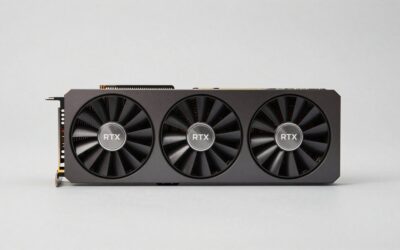
- Top Pick: msi Gaming GeForce RTX 3060 Ventus 2X 12G OC V1 Graphics Card – 15 Gbps GDRR6 Boost Clock: 1807 MHz 192-Bit HDMI/DP PCIe 4 Torx Twin Fan Ampere
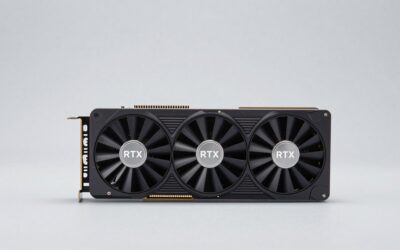
- Best Value: GIGABYTE GeForce RTX 3060 WINDFORCE OC 12G (rev. 2.0) Graphics Card, 2X WINDFORCE Fans, 12GB 192-bit GDDR6, GV-N3060WF2OC-12GD Rev2.0 Video Card
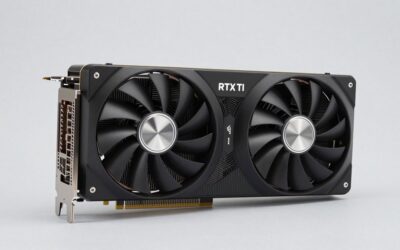
- Premium Choice: NVIDIA GeForce RTX 3060 Ti Founders Edition 8GB GDDR6 PCI Express 4.0 Graphics Card (Renewed)
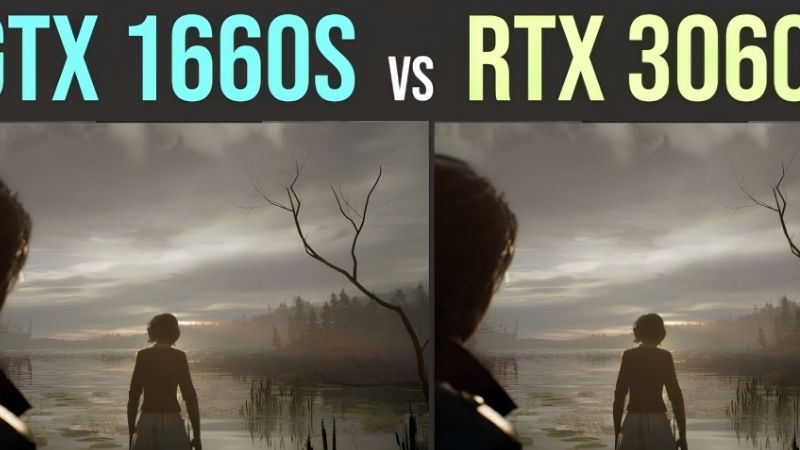
GTX 1660 Super vs RTX 3060 had a settled answer for five years, and that answer stopped being correct two weeks ago. In early July 2026 the RTX 3060 12GB returned to retail as new stock — a card discontinued in 2024, resurrected at close to its original 2021 price. Every comparison written before this month priced the 3060 as a used-market gamble. It is now something else entirely, and that changes the recommendation in ways the specification sheets alone will not tell you.
The Quick Verdict: GTX 1660 Super vs RTX 3060
The performance answer is not close. The RTX 3060 delivers roughly twice the compute, double the VRAM, and DLSS support the GTX 1660 Super physically cannot access. If the two cost the same, there is no discussion.
As an Amazon Associate we earn from qualifying purchases at no extra cost to you.


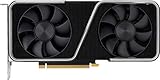

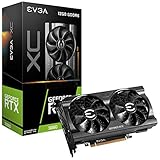
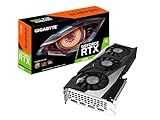


The complication is that they do not cost the same, and the RTX 3060’s newly restored retail price of around 329 to 339 puts it uncomfortably close to current-generation cards that beat it. The right answer depends less on this head-to-head than on what else that money buys.
Who Should Upgrade to the RTX 3060
Upgrade if 6 GB is what breaks your games. Modern titles at 1080p high settings routinely exceed a 6 GB frame buffer, and the failure mode is stutter and texture pop-in rather than a graceful frame rate decline. Doubling to 12 GB removes that ceiling completely.
Upgrade if you want DLSS. The 1660 Super has no Tensor Cores, which means no DLSS at any settings level, ever. This is a hardware absence, not a driver limitation.
Upgrade if you run local AI inference. 12 GB holds a 13B model at 4-bit quantisation. 6 GB does not. For this specific buyer the comparison is not close and price barely matters.
Who Should Keep the GTX 1660 Super
Keep it if you play esports. Counter-Strike 2, Valorant, and Rocket League already exceed most monitors’ refresh rates on a 1660 Super. Paying 329 to go faster than “faster than you can see” buys nothing.
Keep it if your budget stretches to a current-generation card instead. The RTX 5060 has been selling around 329 to 359 — the same money for a card that beats the 3060 outright and adds frame generation.
Keep it if the rest of your system is the constraint. A 1660 Super paired with 8 GB of system RAM is not GPU-limited, and a new card fixes nothing.
The Full Specification Comparison Table
| Specification | GTX 1660 Super | RTX 3060 12GB |
|---|---|---|
| Architecture | Turing (TU116) | Ampere (GA106) |
| Launch | October 2019 | February 2021 |
| Launch price | 229 | 329 |
| July 2026 retail | Discontinued | 329 – 339 (relaunched) |
| CUDA cores | 1,408 | 3,584 |
| RT cores | None | 28 (2nd gen) |
| Tensor cores | None | 112 (3rd gen) |
| VRAM | 6 GB GDDR6 | 12 GB GDDR6 |
| Memory bus | 192-bit | 192-bit |
| Bandwidth | 336 GB/s | 360 GB/s |
| Boost clock | ~1,785 MHz | 1,777 MHz |
| FP32 compute | ~5 TFLOPS | ~12.7 TFLOPS |
| TDP | 125 W | 170 W |
| DLSS support | No | Yes |
| Frame Generation | No | No |
Two rows deserve a second look. Bandwidth is nearly identical — 336 against 360 GB/s — because both cards use a 192-bit bus, and the 1660 Super’s fast 14 Gbps GDDR6 closes most of the gap. The generational leap is in shader count and Tensor Cores, not in memory throughput.
And note the Tensor Core row carefully, because it is the one that cannot be worked around.
Deep Dive Face-Off: Where Each Card Wins
Comparing by criteria rather than card by card clarifies what you are actually buying. The RTX 3060 wins on compute, on memory capacity, and on software capability. The GTX 1660 Super wins on power draw and on the fact that you already own it. Understanding which of those dimensions binds your particular workload settles the question faster than any average frame rate.
1080p Frame Rates and the Compute Gap
The compute delta is roughly 2.5x — 12.7 TFLOPS against 5. Real-world scaling never matches the theoretical figure, and in practice the RTX 3060 lands somewhere near 60 to 80 percent faster at 1080p depending on title.
That range is wide for a reason worth understanding. In titles that fit comfortably in 6 GB, the gap narrows toward the lower end, because shader throughput alone governs the result. In titles that exceed 6 GB, the gap widens dramatically — not because the 3060 gets faster, but because the 1660 Super collapses.
This is why averaged benchmark charts mislead here. The mean hides a bimodal distribution: two similar cards in older titles, two very different cards in anything memory-hungry.
VRAM: 6GB vs 12GB and What Breaks First
Frame buffer exhaustion does not behave like a shortage of shader power. When a GPU runs out of compute, frames arrive slower but arrive steadily. When it runs out of memory, the driver begins streaming assets across the PCIe bus mid-frame, and the result is hitching that no settings slider fully removes.
A 6 GB card in 2026 hits this regularly at 1080p high. The RTX 3060’s 12 GB removes the ceiling entirely at this resolution — there is no realistic 1080p workload that exhausts it.
There is a hard warning attached to this row, and it costs buyers real money. The RTX 3060 shipped in both 12 GB and 8 GB configurations, and secondhand listings mislabel the 8 GB card as the 12 GB one at a rate that market audits have put above 60 percent of listings. Verify the VRAM with GPU-Z before paying. A listing priced suspiciously below the used range is almost always an 8 GB board.
DLSS: The Feature the 1660 Super Can Never Have
This is where the two-year gap between these cards becomes permanent rather than incremental. The GTX 16 series occupies an unusual position: it reports the same compute capability as the RTX 20 series, but ships with no Tensor Cores and no RT cores. It is Turing with the defining Turing features removed.
The consequence is absolute. DLSS Super Resolution requires Tensor Cores. No driver update grants access. The 1660 Super will never run DLSS, in any title, at any setting.
The RTX 3060 does, and the forward-looking angle matters here. NVIDIA continues extending DLSS Super Resolution and Ray Reconstruction to the 30 series alongside the 50 series, which means an Ampere card gains capability after purchase as more titles adopt the technology. What the 3060 does not get is Frame Generation — that requires Ada or Blackwell hardware. This distinction is where most comparisons overstate the 3060’s case.
Pros and Cons: The Honest Upgrade Maths
Sentiment on the RTX 3060 has been unusually consistent for five years, and the relaunch has sharpened rather than settled it. The card is genuinely good at what it does. It is also priced against competition that did not exist when it was designed, and pretending otherwise would not serve anyone reading this.
Where the RTX 3060 Earns Its Money
The 12 GB frame buffer is the strongest case and it has aged better than anyone expected. Entry cards two generations newer still ship with 8 GB, which means a 2021 card holds a specification advantage over 2025 hardware.
Availability is the newly restored second case. After the discontinuation, this card was a used-market proposition with no warranty. It is now purchasable new with a retail return window.
Steam survey data has kept the RTX 3060 at or near the top of the most-used GPU list for years. That translates into a practical benefit that rarely gets named: developers test against it, and driver regressions on hardware this widespread get fixed quickly.
The Complaints and the Buyer Traps
Price against alternatives is the dominant criticism, and it is fair. Tom’s Hardware notes the relaunched 3060 arrives for only marginally less than an RTX 5060 that offers stronger baseline performance and full access to current DLSS technology. Their testing has even the entry-level RTX 5050 outpacing the 3060.
The blunt framing from that analysis is worth repeating: the 3060’s extra VRAM relative to newer cards only becomes relevant at settings and resolutions where its shader performance is already inadequate. The 12 GB is real, but it is not always reachable.
Power draw is the third complaint. 170 W against the 1660 Super’s 125 W means more heat and a genuinely different PSU requirement.
The Alternative: What to Buy If Neither Fits
The Intel Arc B580 has been listed near 309.99 with 12 GB of GDDR6 — the same memory capacity as the 3060, cheaper, and faster than an RTX 4060. For a pure 1080p gaming buyer this is the value answer.
The RTX 5060 at 329 to 359 is the performance answer. Same money as the relaunched 3060, better in every metric except VRAM capacity, with frame generation included.
The RTX 5050 is worth considering only if the price gap is meaningful, since it outpaces the 3060 while carrying 8 GB.
The 2026 Relaunch: Why a Card Is Back on Shelves
There is a reason a five-year-old GPU reappeared at its original price in the same month you are reading this, and it is not nostalgia. Understanding the mechanism explains both why the RTX 3060 is buyable again and why waiting for prices to improve is a worse plan than it looks.
Memory Prices and the Samsung 8nm Lever
The RTX 3060’s GA106 chip is built on Samsung’s 8nm process — an older node with spare capacity that does not compete with the TSMC 4N lines producing RTX 40, RTX 50, and AI accelerators. It also uses GDDR6 rather than the GDDR7 that nearly every RTX 50 card requires, and GDDR6 is less exposed to the current shortage.
That combination is the entire logic of the relaunch. At CES 2026, NVIDIA’s Jensen Huang called reviving older cards from trailing-edge nodes “a good idea” for easing pricing and availability pressure. Two weeks ago that idea reached retail shelves.
Read what it implies. Component costs have kept rising instead of drifting back toward where they sat in 2024, and the squeeze is tight enough that building a 2021 design on an idle node is now the economically rational move. That is not a market about to reward patience.
Why 12GB Suddenly Matters Again
Memory makers — Samsung, SK Hynix, Micron — have reallocated cleanroom capacity toward high-bandwidth memory for AI accelerators. That reallocation constrains standard GDDR6 and GDDR7 supply for consumer graphics cards.
The downstream effect is the one you feel: VRAM capacity at the entry tier has stagnated. NVIDIA reportedly shelved a rumoured 9 GB RTX 5050 variant. Entry cards still ship with 8 GB in 2026, which is precisely why a 12 GB card from 2021 remains competitive on the specification that matters most.
There is real good news here and burying it would be dishonest. The escalation that ran through late 2025 has eased. Framework, among others, has reported a stretch of comparative calm — paired with an explicit caveat that the turbulence is not over. Levelling off is not the same as coming down.
Relief Waits Until Late 2027 at the Earliest
Capacity is being added, and the timeline is not a secret. Micron has two fabrication plants under construction in Idaho. China’s CXMT has meanwhile widened the pool of DDR5 suppliers that OEMs can actually buy from. Neither is vapourware.
Neither helps this year. Those Idaho plants do not come online until the 2027 to 2028 window, and IDC’s DRAM supply forecast projects capacity reallocation will hold conventional supply growth below historical norms through 2026, with no meaningful consumer price relief expected until late 2027 at the earliest.
For a 1660 Super owner the arithmetic is therefore simple. Waiting means running a 6 GB card through eighteen more months of releases designed around larger frame buffers, chasing a discount that forecasters do not expect before late 2027.
Compare the relaunched RTX 3060 against current RTX 5060 and Arc B580 street pricing before committing — the three sit close enough together that the right answer depends on today’s numbers rather than on the generation printed on the box.
See More:
- NVIDIA
- NVIDIA DeepStream
- NVIDIA GPU driver update
- NVIDIA GeForce NOW download
- NVIDIA RTX A2000 12GB driver
Final Verdict and Recommendation
GTX 1660 Super vs RTX 3060 is a clear technical win for the 3060 and a much less clear purchase. Twice the compute, double the VRAM, and DLSS access the 1660 Super can never obtain — but at 329 to 339, it is priced against cards that beat it.
Upgrade to the RTX 3060 if you run local AI inference where 12 GB is the binding constraint, or if you find one on the used market near 200 with verified 12 GB. At used pricing this card is excellent.
Keep the GTX 1660 Super if you play esports, or if your budget can reach an RTX 5060 or Arc B580 instead — both of which are the better buy at the 3060’s new retail price.
Buy the Arc B580 or RTX 5060 instead if you are shopping new. The 3060’s relaunch is a supply story, not a value story.
With memory capacity reallocated toward AI and no meaningful relief forecast before late 2027, this is not a market that rewards waiting. Decide on today’s prices, and verify the VRAM on anything you buy secondhand.
Frequently Asked Questions
Which card wins at 1080p?
The RTX 3060 by a clear margin, typically 35 to 45 percent faster in rasterized titles and much further ahead once DLSS is enabled. The GTX 1660 Super remains capable in esports games, but in recent AAA releases it needs medium settings where the 3060 comfortably runs high.
Does the 6GB versus 12GB difference matter at 1080p?
Yes, more than people expect. Several recent titles exceed 6GB at high texture settings even at 1080p, producing texture pop-in and frame time spikes on the 1660 Super. The 3060’s 12GB removes that ceiling entirely and gives headroom for modded games and content creation.
Can the 1660 Super use any upscaling?
It supports FSR and XeSS in their shader-based compatibility modes, which do help frame rates meaningfully at 1080p. It cannot use DLSS, since Turing’s TU116 die ships without tensor cores. Image quality from the shader-based upscalers is softer, particularly on fine detail and in motion.
What are the power and cooling differences?
The 1660 Super draws 125W with a single 8-pin on a 450W system, while the 3060 is a 170W card, also single 8-pin, on a 550W recommendation. The 3060 runs warmer and its coolers are physically larger, so check case length clearance before ordering a triple-fan model.
Is ray tracing usable on the RTX 3060?
In lighter implementations at 1080p with DLSS Quality, yes, reflections and shadows are playable. Full path tracing is not realistic. The more valuable RTX features on this card are DLSS super resolution and the NVENC encoder, which are useful every day rather than in a handful of titles.
Ready to decide? Our #1 pick for 2026 is the Architecture.
Live price & availability on Amazon.

Write Your Review
No reviews yet. Be the first to share your experience!