
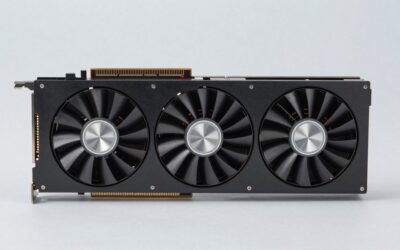
- Top Pick: ASRock Radeon RX 9060 XT Challenger 16GB OC, RDNA 4, 3290MHz Boost, 16GB GDDR6 128-bit, PCIe 5.0, Dual Fans, 0dB Silent, LED Indicator, DisplayPort 2.1a, HDMI 2.1b
- Best Value: ASUS Dual Radeon RX 9060 XT 16GB GDDR6 Gaming Graphics Card
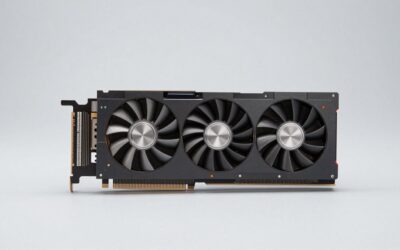
- Premium Choice: ASRock Radeon RX 9060 XT Steel Legend 16GB GDDR6 OC Graphics Card | 3275 MHz Boost | Triple Fan | 0dB Cooling | Metal Backplate | PCIe 5.0 | DisplayPort 2.1a, HDMI 2.1b
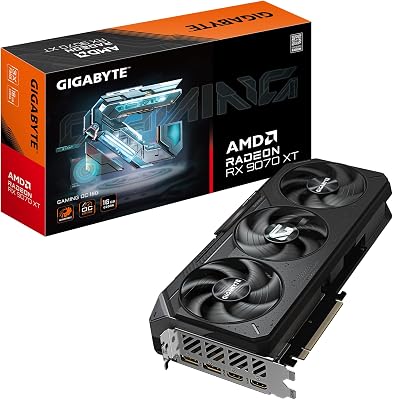

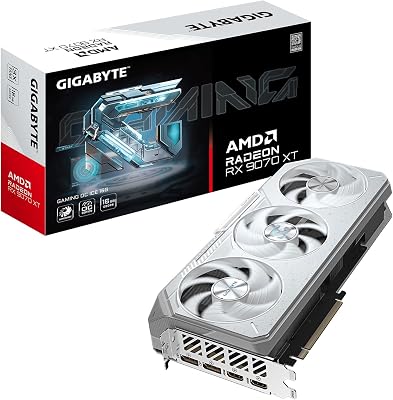
The 9070 vs 9060 xt question is really a question about how much GPU you actually need. Both are RDNA 4 cards, both carry 16GB of memory, and both share AMD’s newest FSR 4 upscaling. But one is a 256-bit 1440p-to-4K machine and the other is a lean 128-bit 1080p-to-1440p value pick that costs $200 less. That gap in silicon, and in price, is the whole story. This face-off lays out the numbers so you can decide in minutes whether the step up to the 9070 is money well spent or overkill for your screen.
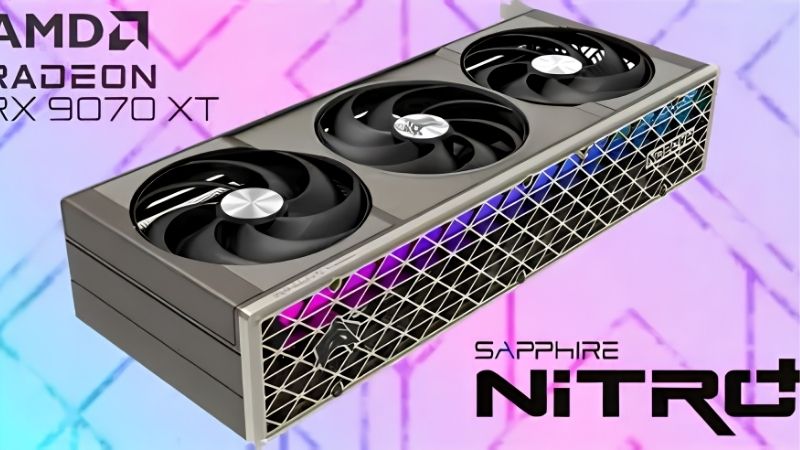
Quick Verdict: 9070 vs 9060 XT at a Glance
If you want the answer up front, here it is. The RX 9070 is meaningfully faster and the right pick for 1440p high-refresh and entry 4K gaming, while the RX 9060 XT is the smarter value for 1080p and lighter 1440p play. The 9070 costs roughly $200 more at MSRP, so the deciding factor is your monitor and your budget, not brand loyalty. The table and mini-verdicts below sort it for you.
As an Amazon Associate we earn from qualifying purchases at no extra cost to you.






Who Wins the 9070 vs 9060 XT Value Race
On raw hardware, the RX 9070 is in a different weight class. It packs 56 compute units and 3,584 stream processors on a 256-bit bus, against the 9060 XT’s 32 compute units, 2,048 stream processors, and a narrower 128-bit bus. In practice that translates to roughly 40-55% more performance in demanding titles.
Price reframes that lead. At MSRP the 9070 launched at $549 and the 9060 XT 16GB at $349, so you pay about 57% more for that 40-55% jump. For a 1080p gamer, the extra spend buys headroom you may never use; for a 1440p or 4K gamer, it is the difference between comfortable and compromised.
The shortest answer: choose the 9060 XT if you game at 1080p and want the best frames per dollar, and choose the 9070 if you push 1440p high-refresh or 4K and want performance that lasts a few years without another upgrade. Think of it as buying for your monitor, not for bragging rights: a 1080p player who buys the 9070 is effectively pre-paying for frames a 1080p panel will never display, while a 1440p player who saves with the 9060 XT will feel the shortfall in the most demanding scenes.
The Full 9070 vs 9060 XT Comparison Table
Specs settle arguments faster than paragraphs, so here is the core sheet side by side. Use it to sanity-check any deal before you click through to a store.
| Spec | RX 9070 | RX 9060 XT 16GB |
|---|---|---|
| Architecture | RDNA 4 (Navi 48) | RDNA 4 (Navi 44) |
| Compute units | 56 CUs | 32 CUs |
| Stream processors | 3,584 | 2,048 |
| Memory | 16GB GDDR6 | 16GB GDDR6 |
| Bus width | 256-bit | 128-bit |
| Boost clock | ~2.5 GHz | ~3.13 GHz |
| Board power | ~220W | ~160W |
| Launch MSRP | $549 | $349 |
| Best for | 1440p / entry 4K | 1080p / 1440p |
Note the two numbers that matter most: the bus width and the compute units. The 9070’s 256-bit memory bus feeds a 16GB buffer far faster than the 9060 XT’s 128-bit bus, which is exactly why the bigger card pulls away as resolution climbs. On top of that, the doubling of compute units from 32 to 56 is the other half of the gap, and the two advantages compound rather than simply add together.
Why 2026 Prices Reshape the 9070 vs 9060 XT Math
Here is the part spec sheets skip: neither card reliably sells at MSRP in 2026. A tight memory market has pushed GPU street prices above their launch figures, and component prices across PC parts have been trending up rather than down. That inflation matters more for the 9060 XT, because a $200 value gap can shrink fast if the cheaper card is the one carrying the bigger markup on a given day.
There is cautious good news, but it is weak and sits in the future. Prices have stopped climbing as steeply as they did in late 2025, and some hardware makers have reported a stretch of relative stability, while still warning that volatility is not over. For a buyer, the free-fall has paused rather than reversed.
Fresh supply is being lined up but is years away. New memory capacity, including DDR5 from Chinese suppliers and two Micron plants in Idaho, is not expected to run until 2027-2028. The practical takeaway: compare live prices on both cards on the same day, and if either lands near MSRP with a warranty, treat that as a strong deal rather than holding out for a crash the supply schedule does not support.
Deep Dive Face-Off: Performance, Features and Efficiency
The headline gap is raster performance, but the two cards also differ in how they scale with resolution, how their shared features behave, and how they fit a real build. This section walks those three battlegrounds using measured behavior rather than adjectives.
Raw Rasterization and 1080p to 4K Frame Rates
At 1080p the 9060 XT is already comfortable, driving most modern titles at high frame rates thanks to its aggressive 3.13GHz boost clock. The 9070’s advantage here is real but partly wasted, since many 1080p games are limited by other parts of the system before the GPU is fully stretched.
At 1440p the picture flips in the 9070’s favor. Its extra compute units and 256-bit bus let it hold high frame rates where the 9060 XT starts dipping in the heaviest scenes, making the bigger card the natural 1440p high-refresh choice.
At 4K the gap is widest. The 9070 remains playable in many titles with sensible settings, while the 9060 XT’s 128-bit bus becomes the bottleneck and pushes it toward upscaling to stay smooth. If 4K is on your radar at all, the analytical case points firmly at the 9070. In practical terms the 9060 XT can still reach 4K in lighter or older titles, but treating it as a native 4K card in current AAA releases sets you up for disappointment, whereas the 9070 handles the resolution with sensible settings.
FSR 4, Media Engine and Future RDNA 4 Gains
Both cards share the same forward-looking toolkit, which levels part of the field. FSR 4 upscaling, AV1 encode and decode, and DisplayPort 2.1 are present on each, so the 9060 XT does not feel like a stripped-down product on features.
The experimental upside favors whoever keeps their card longer. As AMD matures its RDNA 4 drivers and expands FSR 4 game support, both cards should gain usable performance over time, but the 9070’s larger shader array gives it more raw headroom to benefit from those software gains.
For creators and light AI work, FSR 4 and the shared media engine make either card capable, yet the 9070’s higher throughput pulls ahead in Blender-style rendering and heavier content workloads. If your use extends beyond gaming, that extra muscle is the more future-proof pick.
Power Draw, Bandwidth and Real-World Build Fit
Efficiency is where the 9060 XT shines. At roughly 160W it sips power compared with the 9070’s roughly 220W, which means a smaller case, a quieter cooler, and a more forgiving power supply are all easier to achieve on the cheaper card.
For real builds, plan a quality 550W to 600W supply for the 9060 XT and a 650W to 750W unit for the 9070 to absorb transient spikes safely. If you are reusing an older supply, the 9060 XT is far more likely to slot in without an upgrade.
The bandwidth difference also shapes real use. The 9070’s 256-bit bus keeps its 16GB buffer fed at high resolutions, while the 9060 XT’s 128-bit bus is perfectly balanced for 1080p and 1440p but is the reason it leans on FSR 4 at 4K. Match the card to your screen and both feel right; mismatch them and you either waste money or hit a wall. That single principle resolves most of the debate: the hardware is not in question, only how well each card is paired to the display it will drive day to day.
Pros, Cons, Alternatives and Final Buying Advice
With specs, benchmarks, and efficiency on the table, the recommendation gets simple once you weigh the honest scorecard against your monitor. This section covers the pros and cons of each card, a cheaper fallback if both feel steep, and a clear who-should-buy-what verdict.
9070 vs 9060 XT: Pros and Cons Breakdown
The RX 9070’s strengths are strong 1440p and entry-4K performance, a 256-bit bus, ample bandwidth for its 16GB buffer, and extra headroom for creation and future driver gains. Its cons are the higher $549 price, greater power draw, and performance that a pure 1080p gamer simply cannot use in full.
The RX 9060 XT’s strengths are excellent value at $349, class-leading efficiency near 160W, a high 3.13GHz boost clock, and the same FSR 4 and AV1 feature set. Its cons are the narrower 128-bit bus that limits 4K, and a raw performance ceiling that shows in the most demanding titles.
Put plainly: the 9070 wins on performance and longevity, the 9060 XT wins on value and efficiency. Neither is a mistake; the only real error is buying the 9070 for a 1080p screen or forcing the 9060 XT to chase 4K. Both cards are well-engineered for their intended slot, so the quality of your purchase is decided almost entirely by matching tier to resolution rather than by any weakness in the silicon itself.
A Smart Alternative If Neither Fits
If the 9070 is out of budget but the 9060 XT feels a touch light for your 1440p ambitions, the RX 9070’s sibling territory offers middle ground, and Nvidia’s RTX 5060 Ti 16GB is a natural cross-shop for anyone who values DLSS 4 and stronger ray tracing.
For strict budgets, the 8GB version of the 9060 XT at $299 trims cost further, though the 16GB model is the wiser buy for longevity as game texture demands rise. Paying the small premium for 16GB is usually the better long-term call.
Given the inflated 2026 market, buying exactly the tier your monitor needs, rather than the biggest card you can stretch to, is the defensible move. Real price relief is years away, so overspending now for future-proofing has a weaker payoff than usual.
Final Verdict: Which AMD GPU Should You Buy
Buy the RX 9060 XT 16GB if you game at 1080p or lighter 1440p, want the best frames per dollar, and value a cool, quiet, low-power build. It is the sensible mainstream pick that leaves money in your pocket. Paired with a modern mid-range CPU and a 1080p or 1440p panel, it delivers a smooth, balanced experience without asking you to overspend on the rest of the build.
Buy the RX 9070 if you run a 1440p high-refresh panel, dip into 4K, or want a card with the raw headroom to stay relevant for several years and handle creative work. The extra $200 is justified only when your display can cash the performance cheque.
Whichever way you lean, timing matters in this market. Compare live prices on both cards on the same day before stock shifts, and grab the one that matches your screen the moment it appears near MSRP. Follow the link to check current deals and lock in the better buy.
See more:
- amd driver auto-detect tool
- nvidia geforce rtx 5080 best buy
- TechPowerUp GPU-Z
- nvidia china
- nvidia etf price
Conclusion
The 9070 vs 9060 xt decision comes down to one honest question: what resolution do you actually play at. The RX 9060 XT 16GB is the efficient value champion for 1080p and 1440p, while the RX 9070 is the higher-headroom choice for 1440p high-refresh, entry 4K, and light creation. In a 2026 market where prices have merely flattened and real relief is still years out, the smart move is not overspending on future-proofing but buying the right tier for your monitor at a fair price. Compare current prices through the link above and secure the AMD GPU that fits your build and budget today.
Frequently Asked Questions
How much faster is the RX 9070 than the RX 9060 XT?
Substantially. The RX 9070 is a much larger RDNA 4 die with 16GB of GDDR6 on a 256-bit bus and a roughly 220W board power, against a 128-bit bus and about 160W on the 9060 XT. Expect forty to sixty percent more performance depending on resolution, with the gap widening at 1440p and 4K.
Do both cards support FSR 4?
Yes. Both are RDNA 4 parts with the machine learning acceleration FSR 4 requires, so both get the improved upscaling image quality and the driver-level override that upgrades many FSR 3.1 titles. This is the key advantage of the RX 9000 family over older RDNA 3 cards like the 7700 XT and 7800 XT.
What power supply does each card need?
The RX 9060 XT runs from a single 8-pin with a 500W to 550W recommendation. The RX 9070 typically uses two 8-pin connectors with a 650W to 700W recommendation, and partner overclocked models may ask for more. If you are upgrading from the smaller card, check that your supply has two spare PCIe cables.
Will the RX 9070 fit in my case?
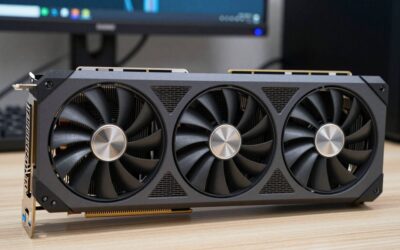
Check clearance carefully. Most RX 9070 partner cards are triple-fan designs between 280mm and 330mm long and often 2.5 to 3 slots thick. The RX 9060 XT is commonly a compact dual-fan card around 200mm to 250mm. Also confirm you have enough depth for side-mounted power connectors before ordering.
Which is the better value?
The RX 9060 XT 16GB is better value per dollar for 1080p and light 1440p gaming and is much easier to fit into an existing system. The RX 9070 is the better card if you actually target 1440p high refresh or 4K with upscaling, where the smaller card simply runs out of headroom regardless of its memory capacity.
Ready to decide? Our #1 pick for 2026 is the Architecture.
Live price & availability on Amazon.

Write Your Review
No reviews yet. Be the first to share your experience!