
Top Rtx 3080 5090 Big Two Picks for 2026
Here are our current top rtx 3080 5090 big two picks, compared on real Amazon owner reviews, price, and features. Live prices update below.
- Top Rtx 3080 5090 Big Two Picks for 2026
- 3080 vs 5090: Quick Verdict and the Numbers Behind the Leap
- Deep Dive: What Two Generations Actually Bought
- The 2026 Market: Timing a Two-Generation Upgrade
- Final Verdict: Who Should Make This Leap?
- Conclusion
- Related Guides
- Frequently Asked Questions
- Related Articles


3080 vs 5090 is less a comparison than a measurement: how far has Nvidia traveled in two full generations? The RTX 3080 was 2020’s defining card — $699 of Ampere that an entire build cycle was constructed around. The RTX 5090 is 2025’s $1,999 Blackwell flagship, a 575W monster with 32GB of GDDR7. Nobody cross-shops these cards at the same budget; people search this matchup because they own the first and are deciding whether the second justifies its extraordinary price. This comparison quantifies the leap honestly — performance, memory, features, power, and cost — so 3080 owners know exactly what $1,999-plus buys, and whether a smaller step makes more sense.
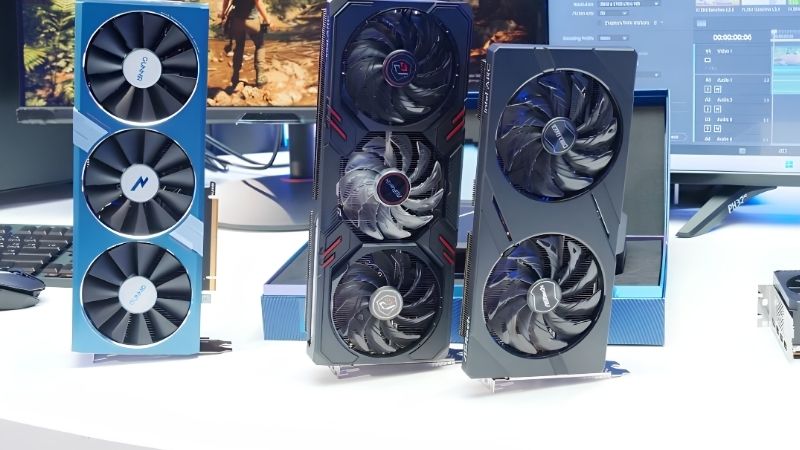
3080 vs 5090: Quick Verdict and the Numbers Behind the Leap
Two generations compound: Ampere to Ada brought efficiency and frame generation, Ada to Blackwell brought bandwidth and multi-frame AI. Stack both and the gulf below is the result — the widest in any matchup this site covers.
The Quick Verdict for Busy Buyers
The RTX 5090 is roughly 2.5 to 3 times faster than the RTX 3080 in 4K raster, more than 4 times faster in heavy ray tracing, and effectively further ahead still once DLSS 4 Multi Frame Generation multiplies presented frames. It carries 3.2 times the memory and 2.4 times the bandwidth. As an upgrade, it is the largest single jump a 3080 owner can buy.
Whether it is the right jump is a budget question: at $1,999 MSRP — and street prices frequently higher — the 5090 costs more than most complete builds. For many 3080 owners, the smarter move is the RTX 5080 at $999, which still triples the experience in ray-traced titles. Check both cards’ live Amazon prices; the verdict section maps each profile to a card.
Specification Comparison Table
The table reads like two different product categories, because after two generations it effectively is.
| Specification | RTX 3080 (10GB) | RTX 5090 |
|---|---|---|
| Architecture | Ampere (2020) | Blackwell (2025) |
| CUDA Cores | 8,704 | 21,760 |
| VRAM | 10GB GDDR6X | 32GB GDDR7 |
| Memory Bandwidth | 760 GB/s | 1,792 GB/s |
| Board Power | 320W | 575W |
| DLSS Support | DLSS 2 (Super Resolution) | DLSS 4 (Multi Frame Generation) |
| Launch Price | $699 | $1,999 |
Every line at least doubles except power — and even there, the 5090 produces roughly 5 times the frames per watt-hour of gaming than the 3080 manages, despite the larger absolute draw.
Pros and Cons of Each Card
A useful 3080 vs 5090 assessment respects what each card is in 2026: a beloved budget veteran and an uncompromising flagship, each with liabilities the other never faces.
RTX 3080 pros: still a competent 1440p card at high settings; used prices around $330 to $380 make it the cheapest serious GPU on the market; standard 8-pin connectors fit any aging power supply; massive parts and knowledge base. Cons: the 10GB buffer is a hard wall in modern 4K and texture-heavy titles; no frame generation, ever; five-plus years of unknown history on most units; performance per watt from another era.
RTX 5090 pros: the fastest consumer GPU in existence by a wide margin; 32GB of GDDR7 future-proofs gaming, AI, and creative work simultaneously; DLSS 4 and the complete Blackwell feature set; full warranty. Cons: $1,999-plus pricing with frequent street premiums; 575W demands a 1,000W-plus power supply and serious case airflow; physically enormous; overkill below 4K high-refresh.
Deep Dive: What Two Generations Actually Bought
Multipliers summarize; details persuade. These four sections break the leap into the categories a 3080 owner actually weighs — games, memory, system demands, and money.
Gaming: From Compromise Back to Abundance
The 3080’s 2026 reality at 4K is a settings negotiation: 45 to 60 fps with managed textures, upscaling mandatory, and its 10GB buffer producing stutter in exactly the showcase titles that motivate upgrades. At 1440p it remains genuinely solid — 90 to 110 fps in heavy games — which is why so many owners have held on this long. The card’s age shows least in esports and most in the showcase releases each holiday season — the exact titles that prompt searches like this one.
The 5090 deletes the negotiation. Native 4K lands at 120 to 160 fps in the same demanding titles, path-traced showcases run beyond 200 presented fps with Multi Frame Generation and Reflex managing latency, and 4K 240Hz monitors become legitimate purchases rather than aspirations. The experiential gap is the difference between managing a card and forgetting about it.
One caution for the spreadsheet: at 1440p with mid-tier CPUs, the 5090 hits processor limits constantly — this upgrade assumes a 4K display and a current top-tier CPU, or much of the payment evaporates into bottlenecks.
Memory and Beyond Gaming: 10GB vs 32GB
The buffer gap reshapes what the machine is for. The 3080’s 10GB, generous in 2020, now disqualifies it from serious local AI work, large video timelines, and maximum-texture 4K — the workload categories that grew fastest since its launch.
The 5090’s 32GB does not just fit those workloads; it defines the consumer ceiling for them. Large local language models load whole, video generation pipelines run unconstrained, and fifth-generation Tensor Cores with FP4 support deliver inference throughput an entire rack of 3080s could not match efficiently. For owners whose GPU earns money or runs experiments, this section alone can justify the price; for pure gamers it is expensive insurance. A useful test: if you cannot name the workload that needs more than 16GB, you probably do not have one — and the alternative below saves you $1,000.
Power, Cooling, and the System Around the Card
This upgrade bills the rest of your PC. The 5090’s 575W board power makes a quality 1,000W ATX 3.1 supply the realistic minimum — 1,200W for loaded systems — against the 750W-class units 3080 builds typically carry. The 12V-2×6 connector demands full seating and no sharp bends within 35mm of the plug; treat the installation guidance as law, not suggestion.
Physically, partner 5090s commonly exceed 340mm and 3.5 slots with serious mass — measure clearance, plan airflow for a card exhausting nearly 600W of heat, and budget an anti-sag bracket without debate. Many 3080-era cases and power supplies simply cannot host this card, and that $150 to $300 of system updates belongs in the upgrade math from the start.
Electricity is the recurring line: four hours of daily full-load gaming on the 5090 draws roughly 370 kWh more per year than the 3080 — modest money, but honest accounting includes it.
Value per Frame: The Cost Math
The arithmetic is brutal in both directions. A used 3080 effectively costs nothing more to keep — its $350 resale value is the budget’s starting credit — while the 5090 costs $1,999-plus minus that credit. Per 4K frame, the 5090 at 140 fps average runs about $14.28 per frame of new spend; no card in the stack prices worse per frame, because flagships never do.
The honest framing is capability purchase, not value purchase: the 5090 buys experiences and workloads the 3080 cannot deliver at any settings. Buyers seeking value per dollar should read the alternative section below; buyers seeking the ceiling already know which column they are in.
One mitigating number: 3080 resale values are unusually firm right now, and selling into that strength meaningfully discounts whichever upgrade you choose — a timing detail the market section explains.
The 2026 Market: Timing a Two-Generation Upgrade
Upgrade math this large deserves the market context shaping both its cost and its trade-in credit. Two current forces are doing exactly that, in opposite and usefully aligned directions.
The H200 China Approval Squeezes the Top First
The United States has approved Nvidia selling the H200 — among its most powerful AI accelerators — to China, unleashing data-center orders that compete with GeForce flagships for the same memory, packaging, and wafer allocation. The 5090, sharing the most production DNA with that silicon, feels the squeeze first: MSRP windows shorten and street premiums widen whenever allocation tightens.
For prospective buyers the implication is uncomfortable but clear — $1,999 listings are events to act on, not baselines to wait against. Previous AI demand waves ran this exact script at the flagship tier.
Rising Component Prices Strengthen the Trade-In Side
Simultaneously, laptop and PC component prices are climbing industry-wide, led by memory — and the same pressure that firms new-card prices has frozen used-card depreciation. The 3080’s $330 to $380 resale band has held for consecutive quarters, an extraordinary trajectory for a six-year-old GPU.
That firmness is the upgrade’s hidden subsidy: selling the old card into a strong market recovers a larger fraction of the new card’s cost than normal cycles allow. Both forces point the same direction — earlier action captures the resale strength and dodges the supply premium.
Buy Now or Wait?
If the 4K-flagship profile fits you, act on the next fair listing: the plausible reward for waiting is small, and the plausible costs — a higher street price and a softer trade-in — are not.
Set an Amazon alert at $1,999, list the 3080 for sale the week your target triggers, and let the two transactions fund each other.
Final Verdict: Who Should Make This Leap?
The recommendation sorts cleanly by display, workload, and budget — with one alternative that suits more 3080 owners than the flagship does.
Who Should Keep the RTX 3080
Keep the 3080 if you game at 1440p, your library leans on established titles, and nothing about your current experience feels like compromise. It remains a competent card, and its resale value is not going anywhere fast.
Revisit the decision when your monitor changes — resolution, not age, is what finally retires this card.
Who Should Buy the RTX 5090
Buy the 5090 if you run 4K high-refresh, your work needs 24GB-plus of VRAM, or you simply want the consumer ceiling for the next five years and the budget genuinely allows it. From a 3080, no purchase in PC hardware delivers a bigger single-day transformation.
Watch Amazon for MSRP windows and be ready — at $1,999 it sells out in hours, and the trade-in math works best while 3080 values hold.
The Alternative: RTX 5080
For most 3080 owners, the RTX 5080 at $999 is the rational leap: roughly double the raster performance, vastly better ray tracing, 16GB of GDDR7, and full DLSS 4 — at half the flagship’s price and 360W instead of 575W.
Unless your workload demands 32GB or your monitor runs 4K 240Hz, it captures most of this comparison’s payoff for half its cost. Price both on Amazon before deciding which leap is yours.
See More:
- Nvidia Reflex low latency
- RTX 4070 vs 5060 Ti
- Zephyr RTX 4070
- RTX 3080 Ti price
- Nvidia RTX 2060 Super
Conclusion
The 3080 vs 5090 measurement comes back unambiguous: two generations bought 2.5 to 3 times the raster performance, 4 times the ray tracing, 3.2 times the memory, and a frame-generation tier the older card will never see — at a flagship price and system demands that deserve equal honesty. For 4K gamers and AI-adjacent professionals, the 5090 is the definitive upgrade; for most 1440p-content 3080 owners, the 5080 captures the leap’s substance at half the cost. With the H200 export approval squeezing flagship supply and firm used prices subsidizing trade-ins, the timing favors deciding now. Settle your side of the 3080 vs 5090 question, check live Amazon listings, and let your monitor and workload — not the spec sheet alone — choose the card.
Frequently Asked Questions
What is the best 3080 5090 in 2026?
The best 3080 5090 depends on your budget and how you plan to use it. The options compared above are our top-rated picks based on real customer ratings, build quality, and overall value — start with the highest-rated model that fits your budget.
How much should I expect to spend on a 3080 5090?
Prices vary by brand and features. Budget options cover the essentials, while mid-range and premium models add durability, performance, and extra features. Compare the prices in the list above to find the best value for your needs.
What should I look for when buying a 3080 5090?
Focus on what matters most for your use case — build quality, compatibility, performance, warranty, and verified customer reviews. Every pick above is selected to balance these factors.
Are budget 3080 5090 options worth it?
Yes. For most people a well-reviewed budget or mid-range 3080 5090 delivers excellent value. You only need to spend more if you specifically require premium materials or top-tier performance.
How did we choose these 3080 5090 picks?
We compare current Amazon ratings, review counts, key features, and price to surface the options with the best real-world value. The list is refreshed as ratings and availability change.










Write Your Review
No reviews yet. Be the first to share your experience!