
- Top Pick: ZER-LON GeForce GTX 1660 Super 6GB Graphics Cards, GDRR6 192Bit PCIE 3.0X16 Computer Gaming Gpu, Dual Freeze Fans Video Card with HDMI/DP/DVI Ports Support 4K and 8K HD
- Best Value: GPVHOSO RTX 2060 8GB Super Graphics Card 256Bit GDDR6,
- Premium Choice: SRhonyra GTX 1660 Ti 6GB Graphics Card GDDR5


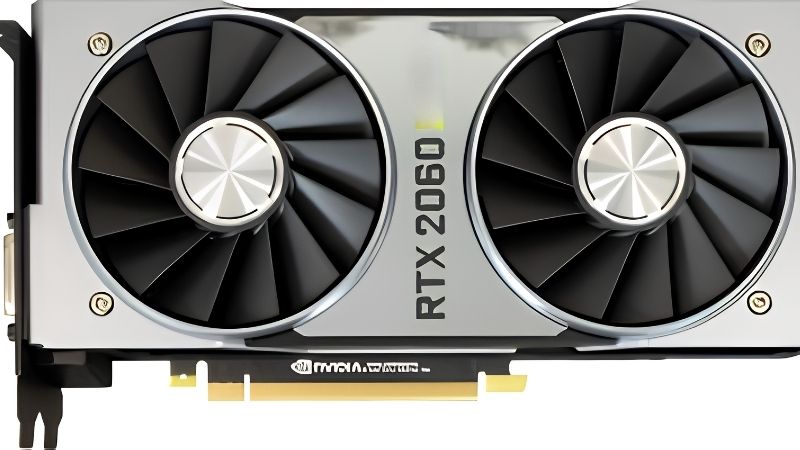
GTX 1660 vs RTX 2060 is the cleanest comparison in the used market, because these two cards are the same generation. Same Turing architecture, same 6GB, same 192-bit bus, same driver support in 2026. Nvidia built them at the same time and sold them $130 apart. What separates them is exactly what Nvidia chose to remove to hit a price — which makes this the best available answer to a question people ask constantly: what actually is the GTX 16-series?
The Quick Verdict
The RTX 2060 wins decisively — roughly 35–40% in rasterization, which is unusually large for two cards from the same architecture. It has 36% more cores and, more importantly, 75% more memory bandwidth. It also runs DLSS 4.5, which the GTX 1660 cannot do at all.
As an Amazon Associate we earn from qualifying purchases at no extra cost to you.


Where the 1660 Holds Up
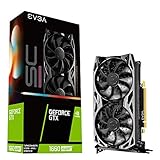
Power and fit. 120W against 160W, and many 1660 models are compact single or dual-fan designs that drop into slim prebuilts where nothing else will. If your PSU is a 300W OEM unit, that is not a small thing.
The Thing Nobody Tells You
The GTX 1660 Super has more memory bandwidth than the GTX 1660 Ti — 336 GB/s against 288. The naming says Ti is the better card. The specifications disagree, and on the used market that costs people money.
Comparison Table
Same generation, same VRAM, same bus width, same driver status. Read the bandwidth row.
| Spec | GTX 1660 (2019) | RTX 2060 (2019) | Advantage |
|---|---|---|---|
| Architecture | Turing (TU116) | Turing (TU106) | Same generation |
| CUDA cores | 1,408 | 1,920 | 2060, +36% |
| RT cores | None | Yes (1st gen) | 2060 |
| Tensor cores | None | Yes (2nd gen) | 2060 — decisive |
| VRAM | 6GB GDDR5 | 6GB GDDR6 | 2060 — memory type |
| Memory speed | 8 Gbps | 14 Gbps | 2060 |
| Bus width | 192-bit | 192-bit | Identical |
| Bandwidth | 192 GB/s | 336 GB/s | 2060, +75% |
| TDP | 120W | 160W | 1660, −40W |
| Upscaling | FSR / XeSS only | DLSS 4.5 | 2060 |
| Driver status 2026 | Full support | Full support | Identical |
| Launch MSRP | $219 | $349 | 1660, −$130 |
The Memory Type Row Is the Story
Both cards have a 192-bit bus. Identical width. Yet the RTX 2060 delivers 336 GB/s against the 1660’s 192 — a 75% advantage.
The difference is entirely the memory chips. The GTX 1660 uses GDDR5 at 8 Gbps; the RTX 2060 uses GDDR6 at 14 Gbps. Same road, faster traffic.
This is the single largest factor in the performance gap, and it is larger than the core count difference. A 36% core advantage plus a 75% bandwidth advantage compounds into 35–40% real-world, which is why these cards feel further apart than one tier.
What the GTX 16-Series Actually Was
This comparison answers a question that confuses people every time they shop used. Understanding it makes the whole Turing lineup legible.
Turing Minus Two Things
Nvidia built Turing with RT cores for ray tracing and Tensor cores for AI acceleration. Those units take die area, and die area costs money.
To hit a lower price, Nvidia made TU116 — the same Turing architecture with the RT and Tensor cores removed entirely. Same shader design, same driver branch, same generation. Just without the hardware that defines RTX.
That is the whole of the GTX 16-series. It is not an older architecture wearing a new number. It is Turing with the expensive parts cut out, sold under the old GTX branding precisely because it could not do the RTX things.
Why That Decision Aged Badly
In 2019 it looked reasonable. Ray tracing was a curiosity, DLSS 1 was poor, and paying $130 less to skip both was defensible.
It aged badly because DLSS became the point. DLSS 4.5 now draws 23 of every 24 pixels on screen by Nvidia’s own figure, and games are increasingly designed assuming upscaling is available, with performance targets set on that basis.
The RTX 2060, a card criticised at launch for weak ray tracing, turned out to have bought something valuable — not the RT cores, but the Tensor cores nobody was excited about. That is the part that kept it relevant.
The Naming Confusion Worth Fixing
The 1660 family has three members and the ordering is not what the names suggest.
| Card | Cores | Memory | Bandwidth |
|---|---|---|---|
| GTX 1660 | 1,408 | GDDR5, 8 Gbps | 192 GB/s |
| GTX 1660 Super | 1,408 | GDDR6, 14 Gbps | 336 GB/s |
| GTX 1660 Ti | 1,536 | GDDR6, 12 Gbps | 288 GB/s |
The Super has the same core count as the plain 1660 and 75% more bandwidth — which is why it is dramatically faster despite the modest name. And it has more bandwidth than the Ti, which has more cores but slower memory.
In practice the Super and the Ti trade blows, with the Super frequently ahead. If you are shopping used and paying a premium for the Ti because it sounds better, you are paying for the wrong thing.
Deep Dive Face-Off
Three criteria. One is identical, one decides the benchmarks, and one decides everything else.
Rasterization: 35–40%
The RTX 2060 leads by roughly 35–40% in most titles. For two cards from the same architecture launched within months of each other, that is a very large gap — and it is what happens when you combine 36% more cores with 75% more bandwidth.
Both are 1080p cards. The 2060 does 1080p high comfortably; the 1660 does 1080p medium-to-high and has to work for it.
DLSS: The Binary One
The GTX 1660 has no Tensor cores, so no DLSS, in any version, ever. It is a hardware requirement rather than a driver feature and no update changes it.
The RTX 2060 runs DLSS 4.5. On a card this size that is not an enhancement — it is what makes recent titles playable. In a supported title the two cards are not 40% apart; one runs the game and the other does not.
The 1660 gets FSR 1, 2, and 3, which are hardware-agnostic, and Intel’s XeSS in DP4a mode on Turing. Neither matches DLSS. When AMD brought FSR 4.1 to older cards in May 2026 it reached RX 6000 and 7000 — nothing in that wave helps an Nvidia card.
Neither card gets Frame Generation, which needs RTX 40, or Multi Frame Generation, which is RTX 50 only. DLSS 5 arrives this autumn and is expected to require RTX 50 silicon. Both are outside that.
Drivers: Identical, and That Surprises People
Both cards receive full Game Ready driver support. When Nvidia ended support for Maxwell, Pascal, and Volta after October 2025 — moving those to quarterly security updates through October 2028 — Turing was explicitly excluded.
So a GTX 1660 owner is on the supported branch while a GTX 1070 owner, with a faster card, is not. That is an odd outcome created by the GTX badge sitting on two different architectures, and it favours you if you have the 1660.
Neither card is abandoned. Both are simply outside the feature set, which is the more permanent problem.
Power and Practical Fit
120W against 160W, and this is where the 1660 earns its keep. Many models are compact single or dual-fan cards, and low-profile variants exist — which matters because these cards go into slim OEM prebuilts where clearance and PSU connectors are the binding constraints rather than performance.
If your machine is a 300W office Dell with no PCIe power connector, the 1660 is installable and the 2060 may not be. That is a real advantage the benchmarks never show.
Both are six-year-old cards, though. Thermal paste degrades and fan bearings wear. A card throttling at 83°C because its paste dried out will underperform every review you have read — budget a repaste on either, and an undervolt afterwards recovers sustained clocks you have quietly been losing.
The Alternative
Both are used cards with no warranty, and the gap to something new is smaller than it looks.
The RTX 2060 12GB
If you are leaning toward the 2060, know that a 12GB version exists. It is not a 6GB card with more memory — it runs 2,176 cores against 1,920 and draws 184W against 160W. It is a faster product wearing the same name, and it fixes the 2060’s real weakness, which is 6GB.
The RTX 5050 and 5060
The RTX 5050 at $249 MSRP brings 2,560 Blackwell cores, 8GB of GDDR6 at 320 GB/s, 130W on a single 8-pin, and Multi Frame Generation — the first xx50-class desktop card to get it. Partner models have run $269–$310.
The RTX 5060 at $299 MSRP is the better buy if you can stretch: 3,840 cores, 8GB of GDDR7 at 448 GB/s, and it has held nearest to list of anything in the current lineup at around $339 as of July 2026.
Against a used 2060 at $120–$160, either is roughly $120–$180 for a warranty, a longer runway, and frame generation no Turing card can have.
Keeping the 1660
Legitimate for esports at 1080p. The card runs CS2, Valorant, and anything from before roughly 2021 at fine frame rates, it keeps its drivers, and nobody should spend money for frames they cannot perceive.
The counter is the trajectory. Without DLSS you are running native in a world tuned for reconstruction, and that gap widens with every release rather than holding steady.
What the 2026 Market Means Here
Used prices are anchored to new ones, and the new market has held these cards up past where they belong.
Why Nothing Is Getting Cheaper
Component pricing has continued trending upward, memory foremost. The positive news is real but weak: the steep late-2025 climb has flattened, and Framework has reported a stretch of relative stability while still warning that volatility remains. New supply is opening — OEMs can source DDR5 from Chinese suppliers such as CXMT, and Micron is building two Idaho fabs — but neither produces until 2027–2028.
At CES 2026 board partners reported the RTX 5070 Ti and RTX 5060 Ti 16GB as end of life while Nvidia disputed the claim, and allocation shifted toward 8GB parts. When new mid-range supply thins, used entry-level prices rise. That is why a 2019 card still commands real money.
The Practical Read
Waiting for used prices to collapse is not a plan — they track a new market where relief is three years out.
The good news for this bracket is that the tiers still in normal supply are exactly the ones you were shopping. The RTX 5060 at $339 is not going anywhere and is not getting cheaper. It is worth comparing what it actually costs today before committing to a five or six-year-old card with no warranty.
See More:
- Nvidia beta
- Nvidia CUDA 11.8
- Check CUDA version
- Nvidia GPU for gaming
- PNY GeForce RTX 5080 16GB OC review
Final Verdict and Recommendation
The GTX 1660 vs RTX 2060 verdict is decisive and instructive. Same Turing generation, same 6GB, same 192-bit bus, same driver support — and the RTX 2060 wins by 35–40%, because it pairs 36% more cores with 75% more bandwidth. The bus is identical; the memory chips are not. GDDR6 at 14 Gbps against GDDR5 at 8 Gbps is the largest single factor here.
The deeper answer is what the GTX 16-series was: Turing with the RT and Tensor cores cut out to hit a price. That looked reasonable in 2019 and aged badly, because the Tensor cores nobody was excited about turned out to be the ones that mattered. DLSS 4.5 is what keeps a 2060 usable and what a 1660 can never have.
Buy the RTX 2060 between these two, and look for the 12GB variant if you find one. Do not pay a premium for a GTX 1660 Ti over a 1660 Super — the Super has more bandwidth, 336 GB/s against 288, and frequently wins despite the humbler name. Keep the 1660 if you play esports and it is fine; you keep your drivers, and Turing was spared the deprecation that took Pascal. And if you can reach $339, the RTX 5060 ends this conversation entirely.
Frequently Asked Questions
What exactly did Nvidia strip out of the GTX 1660?
The 1660 uses the TU116 die, which removes the RT cores and the tensor cores present on the RTX 2060 TU106 die. That means no hardware ray tracing acceleration and, more importantly for everyday gaming, no DLSS support. Nvidia also dropped the memory from GDDR6 on a 192-bit bus to GDDR5 on a 192-bit bus in the base 1660.
How much faster is the RTX 2060 in real games?
At 1080p with high settings the RTX 2060 is typically fifteen to twenty five percent ahead of the base GTX 1660, and around ten to fifteen percent ahead of the 1660 Super. That gap widens considerably in any title that supports DLSS, where the 2060 can render at a lower internal resolution and upscale for a large frame rate gain the 1660 simply cannot access.
Is 6GB of VRAM still enough on either card?
Both carry 6GB, so neither has an advantage here. At 1080p medium to high settings 6GB remains workable in most titles, but recent releases with high resolution texture packs will force you to drop texture quality to avoid stutter. Neither card is a sensible choice for 1440p ultra textures in modern AAA games.
What power supply and connectors do they need?
The GTX 1660 draws around 120W and needs a single 8-pin PCIe connector, comfortable on a decent 400W to 450W unit. The RTX 2060 draws roughly 160W and also uses a single 8-pin, but a quality 500W supply is the sensible minimum. Both are short, dual-fan cards that fit almost any mid-tower without clearance concerns.
Are both still receiving driver updates?
Yes. Turing covers both the GTX 16 series and the RTX 20 series, and Turing has not been moved to legacy status, so both cards continue to receive current Game Ready and Studio drivers. The GTX 1660 will never gain DLSS through a driver update, however, because the tensor hardware it needs was physically removed from the die.
Ready to decide? Our #1 pick for 2026 is the Architecture.
Live price & availability on Amazon.

Write Your Review
No reviews yet. Be the first to share your experience!