
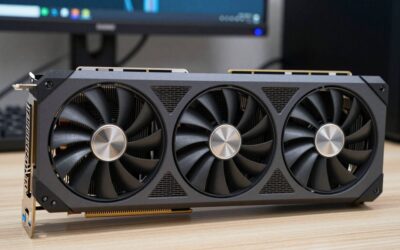
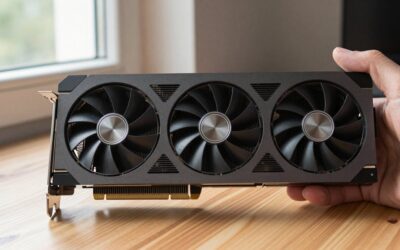
- Top Pick: msi Gaming GeForce RTX 3060 Ventus 2X 12G OC V1 Graphics Card – 15 Gbps GDRR6 Boost Clock: 1807 MHz 192-Bit HDMI/DP PCIe 4 Torx Twin Fan Ampere
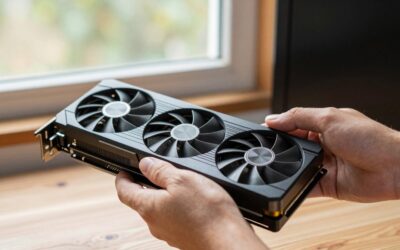
- Best Value: ASRock AMD Radeon RX 6600 Challenger D 8GB GDDR6 DisplayPort 14Gbps HDMI 0dB Silent Cooling 128-bit 7680 x 4320 Dual Fan Graphics Card PCI Express 4.0 x8 8-pin
- Premium Choice: GIGABYTE GeForce RTX 3060 WINDFORCE OC 12G (rev. 2.0) Graphics Card, 2X WINDFORCE Fans, 12GB 192-bit GDDR6, GV-N3060WF2OC-12GD Rev2.0 Video Card
RX 6600 vs RTX 3060 is the exact crossroads most budget 1080p gamers hit when their old card finally gives up. Both land in the same price bracket, both promise smooth high-refresh gaming, and both have loud defenders in every forum thread. If you just want a clear answer instead of scrubbing through a 15-minute video, this side-by-side breakdown hands you the specs, the real-world frame rates, and a straight verdict on which card deserves your money in 2026.
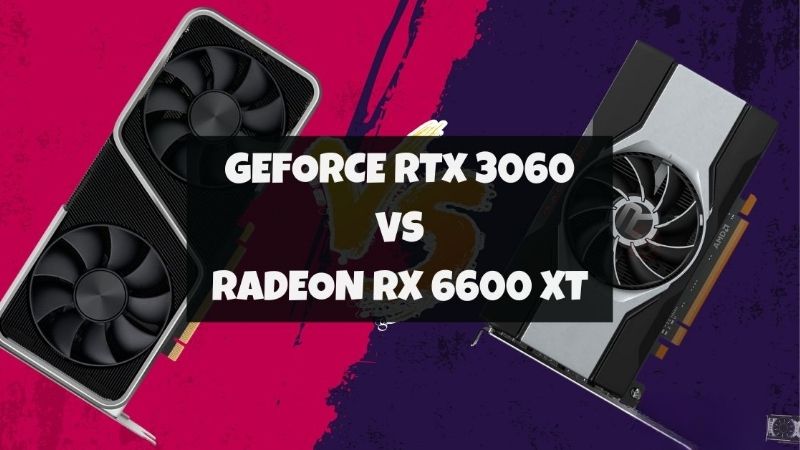
The Quick Verdict and Full Spec Comparison
Before the deep dive, here is the compressed version for buyers who are one tab away from checkout. The gap between these two cards is smaller than the internet suggests, and the right pick depends almost entirely on the resolution you play at and whether you stream. The table below puts every number that matters in one place, so you never have to guess which card is actually ahead.
As an Amazon Associate we earn from qualifying purchases at no extra cost to you.




Quick Verdict: Who Wins at a Glance
For pure 1080p gaming on a tight budget, the RX 6600 is the value winner. It typically matches or slightly beats the RTX 3060 in raw rasterized frame rates while drawing far less power, which makes it the smarter buy if your only goal is high frames in esports and mainstream titles.
The RTX 3060 wins the moment you care about anything beyond raw 1080p frames. Its 12GB of VRAM, stronger ray tracing, DLSS upscaling, and NVENC encoder make it the more flexible card for 1440p, streaming, and content creation. You pay a little more and burn more watts for that flexibility.
Short version: buy the RX 6600 to save money at 1080p, buy the RTX 3060 to future-proof, stream, or step up to 1440p.
Full Spec Comparison Table
Numbers first. These are the reference specifications that drive every performance difference you will actually feel in games.
| Spec | Radeon RX 6600 | GeForce RTX 3060 |
|---|---|---|
| Architecture | RDNA 2 | Ampere |
| VRAM | 8GB GDDR6 | 12GB GDDR6 |
| Memory bus | 128-bit | 192-bit |
| Cores | 1,792 stream processors | 3,584 CUDA cores |
| Ray tracing | 1st-gen ray accelerators | 2nd-gen RT cores |
| Upscaling | FSR (open) | DLSS + FSR |
| Encoder | H.264 / HEVC | NVENC (H.264 / HEVC) |
| Board power | ~132W | ~170W |
| Recommended PSU | 400W | 550W |
| Typical used price | ~$150–$180 | ~$200–$230 |
The two figures that shape most buying decisions are VRAM and power. The RTX 3060’s 12GB buffer ages better in modern games that load high-resolution textures, while the RX 6600’s lower power draw makes it the easier drop-in for prebuilt PCs with weak power supplies.
What the Raw Numbers Actually Mean
A 128-bit versus 192-bit memory bus is not just trivia. The RTX 3060 moves more data per cycle, which is why it stretches its lead as resolution climbs and textures get heavier. At 1080p that extra bandwidth mostly sits unused, so the cheaper RX 6600 keeps pace.
The VRAM gap is the sleeper factor. 8GB is still enough for the vast majority of 1080p games today, but several 2024–2025 titles already push past it at ultra settings, forcing texture pop-in or stutter. 12GB gives the RTX 3060 breathing room that pure benchmark charts often hide.
Power efficiency swings the other way. At roughly 132W, the RX 6600 runs cooler and quieter and slots into a 400W system without a supply upgrade—a practical saving that rarely shows up in a frames-per-second graph.
Deep Dive Face-Off: Performance, Features, and Real-World Fit
Averages hide the story. To pick correctly you need to see how each card behaves in the three areas that actually decide satisfaction: raw frame rates, the software features stacked on top, and how easily the card fits your existing build. Here is where the RX 6600 vs RTX 3060 debate gets settled by use case rather than brand loyalty.
Rasterization Performance at 1080p and 1440p
At 1080p in mainstream titles, both cards comfortably clear 100 fps in esports games and land in the 60–110 fps range in demanding AAA games at high settings. In pure raster, the RX 6600 often edges ahead by a small single-digit margin, which is impressive given its lower price and power.
At 1440p the ranking flips. The RTX 3060’s wider memory bus and larger VRAM buffer let it hold roughly 50–75 fps in modern AAA games where the RX 6600 starts to dip and stutter. If a 1440p monitor is anywhere in your future, the RTX 3060 is the safer long-term frame-rate bet.
For competitive players chasing high refresh at 1080p, either card feeds a 144Hz panel well in lighter titles. The RX 6600 is the leaner, cheaper path to those frames; the RTX 3060 is the one that also survives a resolution upgrade.
Ray Tracing, DLSS, and NVENC: The Nvidia Advantage
This is where Nvidia’s software stack pulls away. The RTX 3060 uses dedicated Tensor cores to run DLSS, an AI upscaler that reconstructs a sharper image from a lower internal resolution and can lift frame rates by 30–70% in supported games. The RX 6600 relies on FSR, which is open and runs on both cards but is not as clean at lower resolutions.
Ray tracing follows the same pattern. The RTX 3060’s second-generation RT cores handle reflections and lighting far better than the RX 6600’s first-generation accelerators, which struggle to stay playable with ray tracing switched on. If cutting-edge lighting matters to you, this is not a close contest.
For streamers and creators, the NVENC encoder is the quiet dealbreaker. It offloads video encoding from the CPU, giving noticeably cleaner OBS streams and faster exports than the RX 6600’s encoder. As more engines lean into AI upscaling and future driver optimizations, the Nvidia feature set is built to keep gaining ground over time.
Power Draw, Size, and System Compatibility
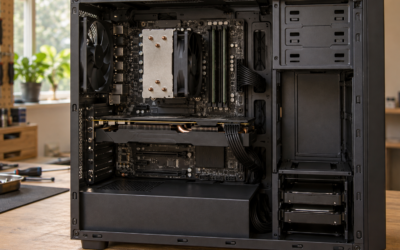
Specs only matter if the card fits your machine. The RX 6600 draws about 132W and is happy on a quality 400W power supply with a single 8-pin connector, making it the easiest upgrade for budget prebuilts and small cases.
The RTX 3060 pulls roughly 170W, and Nvidia recommends a 550W supply. That extra demand means some owners of older office-style prebuilts will need a PSU upgrade first—an added cost worth checking before you buy.
Both cards are compact enough for most mid-tower builds, but always confirm your case length and available PCIe power connectors. For anyone dropping a card into an existing system without touching the power supply, the RX 6600’s lower requirements are a real practical edge.
Value, Alternatives, and the 2026 Price Picture
Performance tells you which card is faster; value tells you which card is smart to buy right now. With the used market shifting and component prices climbing again, timing matters almost as much as the hardware itself. This section covers the honest trade-offs, a strong third option, and what the latest market news means for your wallet.
Pros and Cons of Each Budget GPU
Every budget card is a set of compromises. Here is the blunt breakdown so you can match the trade-offs to how you play.
Radeon RX 6600
- Pros: Lowest price, class-leading 1080p raster per dollar, low 132W power draw, quiet and cool, easy drop-in for weak power supplies.
- Cons: Only 8GB VRAM, weak first-gen ray tracing, no DLSS, weaker streaming encoder, runs out of steam at 1440p.
GeForce RTX 3060
- Pros: Generous 12GB VRAM, DLSS support, stronger ray tracing, excellent NVENC encoder for streaming, better 1440p longevity.
- Cons: Higher used price, 170W draw, may require a PSU upgrade, slightly behind in pure 1080p raster.
Should You Buy Now? What Rising Prices and Supply News Mean
Timing has quietly become part of this decision. Laptop and PC component prices have been trending upward again, and that pressure spills straight into the used GPU market where both of these cards mostly live. Sellers are asking more than they did a year ago, so waiting around for one of these cards to get dramatically cheaper is a losing bet in the current climate.
There is cautiously good news, but it is thin and far off. Prices have stopped climbing as steeply as they did in late 2025, and some hardware makers have reported a stretch of relative stability, though they still warn of more volatility ahead. Fresh memory supply is also opening up—OEMs can now source DDR5 from Chinese suppliers like CXMT, and Micron is building two new plants in Idaho—but those factories will not come online until 2027–2028. Translation: the market has plateaued, not dropped, and real relief is years away.
Nvidia’s broader supply picture adds another wrinkle. With the US now allowing Nvidia to sell its powerful H200 AI chips to China, the company’s manufacturing focus stays firmly on lucrative data-center parts, which does nothing to loosen consumer GPU supply in the near term. The practical takeaway for a budget buyer is simple: if a well-priced RX 6600 or RTX 3060 appears today, it is smarter to grab it than to gamble on a discount the market is not signaling. When you find the right listing, checking current pricing through the links here takes only a few seconds.
See More:
The Alternative Pick and Final Recommendation
If your budget can stretch a little, there is a third option worth naming: the Intel Arc B580. It pairs 12GB of VRAM with strong 1080p and 1440p performance and modern AV1 encoding, often at a price between these two cards. For buyers who find the RX 6600 too limited or the RTX 3060 too expensive on the used market, the Arc B580 is the current value curveball—just confirm your system supports Resizable BAR, which Arc cards need to perform their best.
Choose the RX 6600 if you play mostly at 1080p, want the lowest price and power draw, and never plan to stream. Choose the RTX 3060 if you want 12GB of VRAM, DLSS, cleaner streaming, and a card that will not tap out the day you buy a 1440p monitor.
Whichever way you lean, prices on both cards move constantly, so it pays to compare live listings before you commit. You can check the latest deals on each option through the links on this page and grab the one that fits your build and budget.
In the end, the RX 6600 vs RTX 3060 choice is not about which card is universally better—it is about which trade-off fits your setup. The RX 6600 is the lean, efficient value king for 1080p, while the RTX 3060 is the more versatile, VRAM-rich card built to last through streaming, ray tracing, and a resolution bump. Match the card to how you actually play, buy while pricing is stable rather than waiting on relief that is years out, and you will squeeze the most frames out of every dollar you spend.
Top-Rated Picks


| Product | Brand | Rating | Reviews | Price |
|---|---|---|---|---|
| ARCTIC MX-4 (4 g) – Premium Performance Thermal Paste… | ARCTIC | ★ 4.8 | 104k | $4.99 |
| ARCTIC MX-4 (incl. Spatula, 4 g) – Premium Performanc… | ARCTIC | ★ 4.8 | 71.9k | under $10 |
| Crucial 8GB DDR4 RAM 3200MHz (PC4-25600), Downclockab… | Crucial | ★ 4.8 | 62.8k | under $80 |
| AMD Ryzen 5 5600X 6-core, 12-thread unlocked desktop … | — | ★ 4.8 | 30.2k | under $200 |
| NVIDIA Shield Remote; Voice Search, Motion-Activated,… | — | ★ 4.7 | 10.6k | under $30 |
Frequently Asked Questions
Which card is faster at 1080p and 1440p?
At 1080p the RX 6600 and RTX 3060 are very close in rasterized games, with the Radeon often slightly ahead thanks to its large Infinity Cache. At 1440p the RTX 3060 pulls ahead because the RX 6600 has only a 128-bit bus and its cache hit rate drops at higher resolutions.
Does the RX 6600 suffer on PCIe 3.0 motherboards?
Yes, this matters. The RX 6600 uses a PCIe 4.0 x8 interface, so on an older PCIe 3.0 board it effectively runs at 3.0 x8 bandwidth. Losses are usually a few percent but can be larger in VRAM-heavy titles. The RTX 3060 uses a full x16 link and is unaffected.
How do power draw and connectors compare?
The RX 6600 is notably efficient at roughly 132W with a single 8-pin connector, running well on a quality 450W to 500W supply. The RTX 3060 draws about 170W with one 8-pin and is better paired with 550W. The Radeon runs cooler and quieter in small cases.
Is the RTX 3060 twelve gigabytes of VRAM a real advantage?
It is, in specific cases. The RX 6600 has 8GB, which is adequate for 1080p but tight in newer titles with ultra textures or ray tracing. The RTX 3060 twelve gigabytes helps in modded games, high-resolution texture packs, and local AI workloads where capacity matters more than bandwidth.
Which is better for ray tracing and upscaling?
The RTX 3060 clearly wins on ray tracing since RDNA 2 ray accelerators are much weaker than Ampere RT cores. It also has DLSS, which is generally sharper than FSR at the same performance level. The RX 6600 remains the better pure-raster value if ray tracing is unimportant.
Ready to decide? Our #1 pick for 2026 is the Architecture.
Live price & availability on Amazon.

Write Your Review
No reviews yet. Be the first to share your experience!