
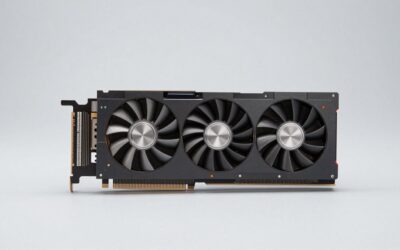
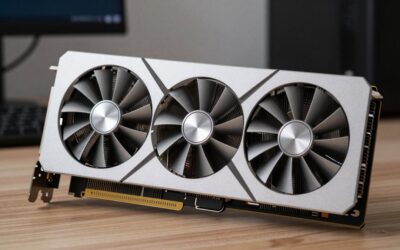
- Top Pick: MSI Gaming GeForce GTX 1660 Ti 6GB GDRR6 – 192-bit HDMI/DP, Dual Fan, VR Ready, OC Graphics Card for Gaming PC, NVIDIA Video Card GPU (GTX 1660 TI Ventus XS 6G OC) Computer Graphics Cards (Renewed)
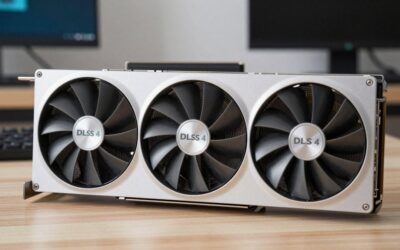
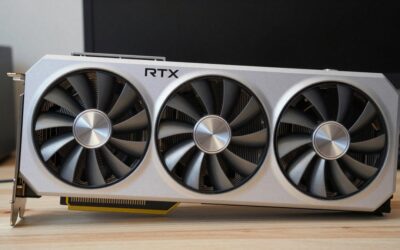
- Best Value: EVGA GeForce RTX 2060 XC GAMING, 6GB GDDR6, HDB Fan Graphics Card 06G-P4-2063-KR
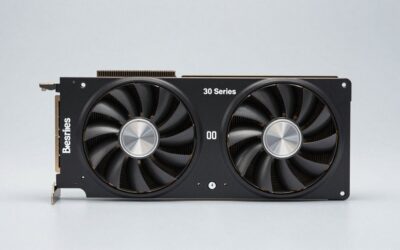
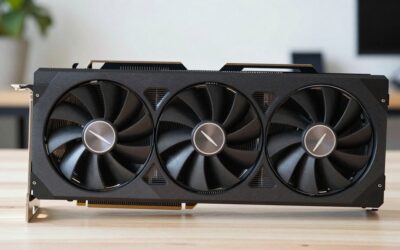
- Premium Choice: SRhonyra GTX 1660 Ti 6GB Graphics Card GDDR5
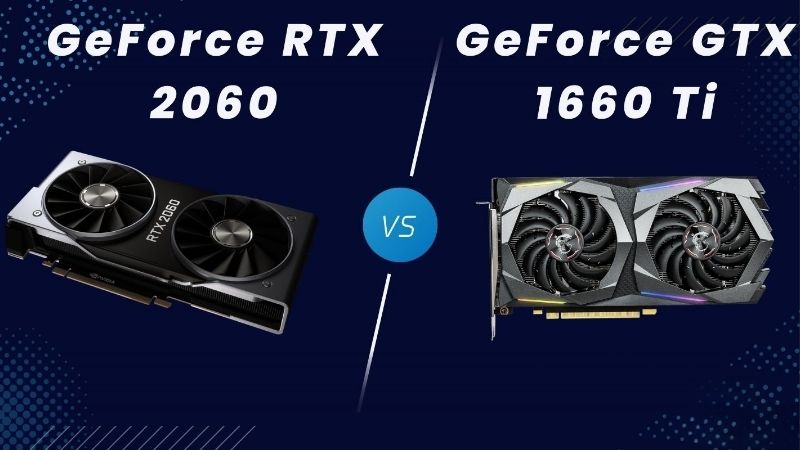
RTX 2060 vs 1660 Ti was a close call in 2019 and is not a close call in 2026 — but for reasons that have nothing to do with frame rates. These cards launched five weeks apart with a raster gap of roughly 20 percent. Seven years later that gap is unchanged, while a second gap has opened that nobody could measure at launch. Understanding what actually separates them now, including the part NVIDIA quietly recommends against, is what this comparison is for.
The Quick Verdict: RTX 2060 vs 1660 Ti
The short version: the RTX 2060 is roughly 15 to 20 percent faster in raster and runs DLSS across more than 400 titles. The GTX 1660 Ti runs DLSS in exactly zero titles and always will. If the used-market gap between them is small, the 2060 is the obvious pick.
As an Amazon Associate we earn from qualifying purchases at no extra cost to you.




Best Seller
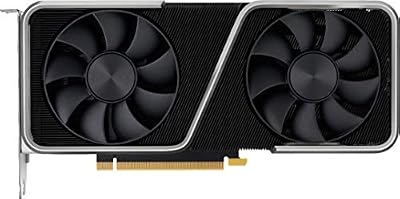
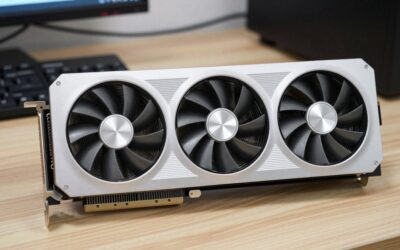
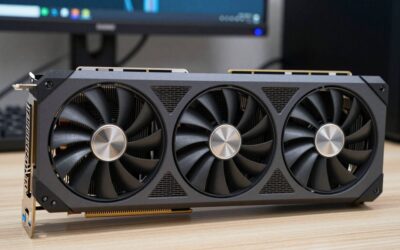
NVIDIA GeForce RTX 3060 Ti Founders Edition 8GB GDDR6 PCI Express 4.0 Graphics Card (Renewed)
The honest complication is that the RTX 2060 does not get the best version of DLSS, and NVIDIA’s own guidance says so. That nuance is worth 500 words and it changes how much premium the feature justifies.
Who Should Buy the RTX 2060
Buy it if you play modern single-player titles. DLSS Super Resolution at Quality mode delivers a performance uplift the 1660 Ti has no equivalent for, and it is the difference between playable and not in demanding releases.
Buy it if the used price gap is under roughly 30. At that margin the extra 25 percent shader count and the entire DLSS ecosystem come nearly free.
Buy it if you might keep the card for years. It gains capability with driver updates. The other one does not.
Who Should Buy the GTX 1660 Ti
Buy it if you play esports exclusively. CS2, Valorant, Overwatch, League — these run past most refresh rates on a 1660 Ti, and DLSS is irrelevant in titles that already exceed your monitor.
Buy it if the price gap is wide. A 20 percent raster difference does not justify a large premium, and if you never touch DLSS you are paying for silicon you will not use.
Buy it if power draw matters. 120 W against the 2060’s 160 W is a real difference in a small case or on a modest supply.
The Full Specification Comparison Table
| Specification | GTX 1660 Ti | RTX 2060 6GB |
|---|---|---|
| Architecture | Turing (TU116) | Turing (TU106) |
| Launch | February 2019 | January 2019 |
| Launch price | 279 | 349 |
| CUDA cores | 1,536 | 1,920 |
| RT cores | None | 30 (1st gen) |
| Tensor cores | None | 240 (2nd gen) |
| VRAM | 6 GB GDDR6 | 6 GB GDDR6 |
| Memory bus | 192-bit | 192-bit |
| Bandwidth | 288 GB/s | 336 GB/s |
| FP32 compute | ~5.4 TFLOPS | ~6.5 TFLOPS |
| TDP | 120 W | 160 W |
| Power connector | 8-pin | 8-pin |
| DLSS support | No | Yes |
| Frame Generation | No | No |
Note what these two share: the same architecture generation, the same memory capacity, the same bus width, the same connector. This is not a comparison across a technology gap. It is the same chip family with two features surgically removed from one of them.
Deep Dive Face-Off: Raster, DLSS and Ray Tracing
Comparing these by criteria rather than card by card produces an unusual result. On every conventional metric they are siblings — close enough that the choice would come down to price alone. The entire case for the RTX 2060 rests on hardware the 1660 Ti does not physically contain, and evaluating that hardware honestly in 2026 requires acknowledging what it can and cannot do.
Raw Frame Rates: Closer Than the Names Suggest
The compute gap is 6.5 TFLOPS against 5.4 — about 20 percent. Bandwidth favours the 2060 at 336 GB/s against 288, roughly 17 percent. Both figures point the same direction and neither is dramatic.
In practice the RTX 2060 lands 15 to 20 percent ahead at 1080p in raster workloads. That is a consistent, unexciting margin. It is the kind of gap you measure rather than feel.
The lesson worth extracting: if raster performance is all you care about, these are effectively the same card at different prices, and you should simply buy whichever is cheaper. Everything that follows is about the other 80 percent of the decision.
DLSS 4.5 in 2026: What the RTX 2060 Actually Gets
Here is where the comparison resolves, and where most articles either overstate the case or miss the caveat entirely.
The good news is substantial. DLSS 4.5, announced at CES 2026, arrived for every GeForce RTX GPU on day one — including the seven-year-old RTX 20 series. Super Resolution works across all RTX GPUs in over 400 games and apps. A 2019 card received a state-of-the-art image quality upgrade in 2026 at no cost.
Now the caveat NVIDIA states plainly and few comparisons repeat. RTX 20 and 30 series GPUs lack native FP8 support, so the heavier DLSS 4.5 models carry a significant performance penalty on them. NVIDIA’s own recommendation is that those users may prefer to stay on Model K — the original DLSS 4.0 model — for a better balance of performance and image quality. The second-generation transformer is five times more compute-intensive than the first, and Turing’s Tensor Cores handle only FP16 inference natively. FP8 arrived with Ada, FP4 with Blackwell. The 2060 predates both.
The practical workaround is genuinely useful and worth knowing. Because the transformer model is so visually stable, you can drop the upscaling slider to Performance or even Ultra Performance and still end up with better image quality than the old model at Quality — recovering the performance you lost. You control this in the NVIDIA app under DLSS Overrides, and you can confirm which model is running via the overlay statistics view.
So the honest verdict: the RTX 2060 gets DLSS, gets 400+ titles, and gets image quality upgrades it was never designed for. It does not get the flagship experience, and pretending otherwise would misrepresent the card. The 1660 Ti gets none of it, which makes a compromised feature infinitely better than an absent one.
Ray Tracing on a 2026 Card: An Honest Assessment
The RTX 2060 has 30 first-generation RT cores. This is a real hardware capability and it is not a real reason to buy the card.
First-generation RT cores paired with 6.5 TFLOPS of shader throughput and 6 GB of VRAM do not produce a playable ray-traced experience in modern titles at settings anyone would want. Enabling RT on this card is a demonstration rather than a feature.
Buy the RTX 2060 for DLSS. Treat ray tracing as a checkbox that exists on the spec sheet and stays off in practice. Any comparison presenting RT as a meaningful advantage here is selling you a benchmark you will never run.
Pros and Cons: Two Used Cards, Seven Years On
Both cards are secondhand-only propositions now, which changes what you are actually evaluating. Provenance, warranty, and the honest limits of 2019 hardware matter more than the 20 percent that separates them on paper. Both sides deserve stating without spin.
Where the RTX 2060 Earns the Premium
DLSS access is the entire case, and it is enough. Over 400 supported titles, continuing driver-side improvements seven years after launch, and image quality that has improved twice since you would have bought the card.
The bandwidth advantage is the quiet second point. 336 GB/s on a 192-bit bus is more memory throughput than several newer entry cards manage, which softens the 6 GB limitation slightly.
Longevity is the third. A card still receiving meaningful feature updates in year seven has a track record that a card frozen at launch cannot match.
The 6GB Ceiling Both Cards Share
This is the honest limitation neither card escapes, and it is the reason this comparison has a low ceiling.
6 GB in 2026 hits the wall regularly at 1080p high settings. The failure mode is stutter and late-loading textures rather than a steady frame rate decline, and no settings adjustment fully removes it. DLSS helps — rendering at lower internal resolution reduces VRAM pressure — but it mitigates rather than solves.
Power draw is the second complaint. 160 W is a lot for the performance delivered, and it is 33 percent more than the 1660 Ti for 20 percent more frames.
The third is that both cards are old enough that fan bearings, thermal paste, and capacitors are genuine considerations. A listing does not tell you whether the card mined for three years.
The Alternative: What to Buy If Neither Fits
If your budget stretches to 200 or so used, an RTX 3060 12GB is a substantially better card than either — double the VRAM, roughly double the compute, and the same DLSS access. Verify it is genuinely the 12 GB version, because mislabelled 8 GB boards are endemic on secondhand listings.
If you want new hardware with a warranty, the RTX 3050 6GB at low retail pricing outperforms neither card decisively but arrives with a return window and no unknown history.
If you can reach 309.99, the Intel Arc B580 with 12 GB of GDDR6 outclasses both by a wide margin.
Used Prices in 2026: Does the Gap Still Make Sense?
The price gap between these two cards is the whole decision, and that gap is not being set by their specifications. It is set by what new cards cost, and the new-card market has been distorted for long enough that the distortion now reaches every used listing you will see.
How the Memory Shortage Reaches the Used Market
Used pricing anchors to the cheapest acceptable new alternative. When new entry cards are cheap, used cards from 2019 become nearly worthless. When new cards are expensive, seven-year-old hardware retains value it has not earned.
That anchor has been drifting upward. Component pricing never reverted to 2024 levels; it kept going up, and memory has led the way. The clearest evidence arrived this month: NVIDIA restarted production of the five-year-old RTX 3060 12GB and returned it to shelves at around 329 to 339, because manufacturing a 2021 design on an idle Samsung node is now the economical option.
The implication for your decision is direct. When a 2021 card is the cheapest thing a manufacturer can build, 2019 cards beneath it are not about to become bargains.
Prices Have Plateaued, But Not Fallen
There is real good news and it deserves an honest hearing. The sharp climb through the back half of 2025 has levelled off. Framework has described a spell of comparative steadiness — with a plain warning attached that conditions could turn again.
Read that carefully, because the distinction decides your move. A plateau lowers the cost of deliberating. It does not mean that waiting produces a discount. Prices stopped rising; they did not reverse.
For a purchase in this price bracket, a plateau is enough reason to act. The downside risk is small and the cost of stuttering through your evenings is paid nightly.
Relief Waits Until Late 2027
Two developments will eventually loosen this grip, and both are public. The first is CXMT, a Chinese memory maker now feeding DDR5 into the OEM channel. The second is a pair of Micron fabrication plants going up in Idaho.
Neither helps this year. The Idaho plants are not scheduled to produce anything until the 2027 to 2028 window, and forecasters do not expect meaningful consumer price relief until late 2027 at the earliest.
Eighteen months of waiting, on a card that costs less than a mid-range phone, to chase a discount nobody has promised.
Compare current used listings for both cards before deciding — if the gap is under about 30, the RTX 2060 is the straightforward pick, and above roughly 60 the 1660 Ti becomes the rational one.
See More:
- NVIDIA
- NVIDIA DeepStream
- NVIDIA GPU driver update
- NVIDIA GeForce NOW download
- NVIDIA RTX A2000 12GB driver
Final Verdict and Recommendation
RTX 2060 vs 1660 Ti is a price question with a feature answer. In raster they are siblings — 15 to 20 percent apart, same architecture, same 6 GB, same bus. Buy on price alone and you would not be wrong.
But the RTX 2060 runs DLSS in over 400 titles and received a free image quality upgrade in January 2026, seven years after launch. The 1660 Ti runs it in none and never will. That asymmetry is permanent.
Buy the RTX 2060 if the used gap is small and you play modern single-player games. Accept that NVIDIA recommends you stay on the lighter DLSS model, and that ray tracing is a spec-sheet entry rather than a feature.
Buy the GTX 1660 Ti if the gap is wide, you play esports, or you need the lower 120 W draw.
Buy neither if you can reach a verified RTX 3060 12GB — the 6 GB ceiling both cards share is the real limitation, and only more VRAM fixes it.
With used prices anchored to a new-card market where a 2021 GPU is the cheapest option and no relief forecast before late 2027, waiting is not a strategy. Compare today’s listings, apply the price rule above, and buy.
Frequently Asked Questions
How much faster is the RTX 2060 in raw performance?
Roughly 15 to 20 percent ahead at 1080p in rasterized games, thanks to more shader cores and a 192-bit memory bus with higher bandwidth. Both carry 6GB of GDDR6, so neither has a capacity advantage, and both increasingly run into that limit at high texture settings in recent titles.
Is DLSS support worth paying extra for?
It is the single strongest argument for the 2060. The GTX 1660 Ti has no tensor cores, so it cannot run DLSS at all and must fall back to FSR or XeSS compatibility modes. DLSS Quality on the 2060 typically yields a 30 to 40 percent frame rate gain with better image stability.
Can the 2060 realistically use ray tracing?
Only in light implementations at 1080p with DLSS enabled. First generation RT cores plus a 6GB buffer means path traced titles are out of reach entirely. Treat ray tracing on this card as an occasional option in older games rather than a feature you can rely on going forward.
What are the power requirements for each?
The RTX 2060 is a 160W board with a single 8-pin connector and a 500W system recommendation. The GTX 1660 Ti runs at 120W, also single 8-pin, on a 450W recommendation. Both fit comfortably in older prebuilt systems, with the 1660 Ti being the easier drop-in for weak OEM supplies.
Which should I buy used today?
The 2060 if the price gap is small, purely for DLSS and encoder support. If the 1660 Ti is significantly cheaper and you play esports titles at 1080p, it remains adequate. Both are old enough that spending slightly more on a modern 8GB card is usually the better long term decision.
Ready to decide? Our #1 pick for 2026 is the Architecture.
Live price & availability on Amazon.

Write Your Review
No reviews yet. Be the first to share your experience!