
- Top Pick: Gigabyte AORUS GeForce RTX 4080 Master 16G Graphics Card, 3X WINDFORCE Fans, 16GB 256-bit GDDR6X, GV-N4080AORUS M-16GD Video Card
- Best Value: GIGABYTE GeForce RTX 4080 Gaming OC 16G Graphics Card, 3X WINDFORCE Fans, 16GB 256-bit GDDR6X, GV-N4080GAMING OC-16GD Video Card
- Premium Choice: Gigabyte GeForce RTX 4080 Super WINDFORCE V2 Graphics Card – 2550MHz Core, 16GB GDDR6X 23000MHz 256-bit Memory, PCI-E 4.0, 3X DP 1.4, 1x HDMI 2.1a, NVIDIA DLSS 3.5, GV-N408SWF3V2-16GD
Gigabyte Aorus RTX 4080 sits at the premium end of the 4080 lineup, and if you are comparing high-end 4080s you want one thing fast: is the Aorus cooling and build worth paying more for? You need an objective verdict, the exact specs, and a clear answer on whether this large card fits your case and power supply, not a sponsored-feeling video. This review pulls together the numbers, real buyer reports, and the practical fit details so you can decide in minutes.
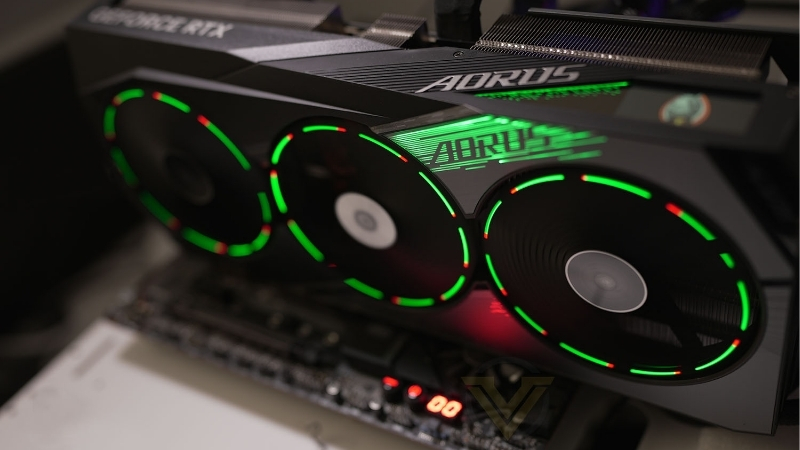
Is the Gigabyte Aorus RTX 4080 Worth the Premium?
Short answer: yes, if you want one of the coolest and quietest 4080 designs and have the case clearance; no, if you only care about frames, since cheaper 4080s reach the same performance for less money. The Aorus is a premium-tier card built around an oversized cooler and a heavy, durable chassis, so the real question is never performance but whether that refinement justifies the cost over a baseline 4080. For buyers who value low temperatures, quiet fans, and a flagship build, the premium is usually easy to justify, and the sections below show exactly where it pays off.
As an Amazon Associate we earn from qualifying purchases at no extra cost to you.


Who This Card Is For
The Aorus RTX 4080 targets buyers who have settled on a 4080 and want the most refined version rather than the cheapest. These are people building a high-end 4K system who care about acoustics and temperatures as much as raw frame rates.
It is not the card for the most budget-conscious shopper. If your single priority is maximum frames per dollar, a baseline 4080 hits the same performance ceiling while saving you real money.
The Aorus makes sense when the premium buys something you notice daily: a card that runs cool and quiet under sustained load, with a premium build that suits a visible, no-compromise machine. For that buyer, it is a natural fit rather than an indulgence. If your tower sits hidden and you never hear it, much of that premium is wasted; if it sits in view and runs hard, the refinements earn their cost.
Specs and Size at a Glance
Because case and power-supply fit can rule this card out before performance matters, here are the key specs and physical figures in one place. Treat the dimensions as approximate and confirm the exact numbers for your specific revision before buying.
| Spec | Gigabyte Aorus RTX 4080 |
|---|---|
| VRAM | 16 GB GDDR6X |
| Board power | Around 320W (higher in OC mode) |
| Recommended PSU | 850W or higher |
| Power connector | 16-pin (12VHPWR) |
| Length | Approximately 342 mm |
| Thickness | Around 3.5 to 4 slots |
The headline takeaway is size. This is one of the larger 4080 designs, so length and slot thickness, not performance, are the factors most likely to exclude it from a given build. The 16-pin connector also means you will want a compatible PSU cable or the included adapter, so measure your case and check your power supply before anything else.
Real Performance Expectations
In raw terms the Aorus performs like any well-cooled 4080, delivering excellent 4K gaming and strong creator throughput thanks to its 16 GB of GDDR6X memory. It is a high-end card that handles demanding titles at high settings with ease.
Its factory overclock and large cooler can yield marginally higher sustained clocks, but the real-world frame difference over a baseline 4080 is small and rarely noticeable in actual gameplay. You are buying refinement, not a different performance tier.
Where it genuinely shines is consistency. The cooling headroom helps it hold boost clocks steadily through long sessions, which delivers more usable performance for marathon gaming and rendering than a flashier peak that sags under heat. For creators on hour-long renders or gamers in extended sessions, a card that never thermal-throttles is doing real work that a single benchmark number never shows. That steadiness is the quiet, practical case for premium cooling.
Living With the Gigabyte Aorus RTX 4080
Day-to-day ownership of a premium card is shaped by heat, noise, and whether it physically fits your system far more than by peak benchmarks. The Aorus is built to excel on cooling and acoustics, but its size makes the fit question a genuine consideration that deserves attention before you buy rather than after.
Cooling and Noise
Cooling is the Aorus headline strength. Its oversized heatsink and fan array keep the GPU noticeably cooler than smaller 4080 designs under sustained load, with plenty of thermal margin to spare.
That margin translates directly into quieter operation, since the fans can spin slower to hold the same temperatures. For a card in a quiet-focused or visible build, the lower noise is a tangible everyday benefit rather than a spec-sheet bragging point.
The trade is bulk. The same cooler that delivers low temperatures and low noise is exactly what makes the card so large, which loops straight back to the fit question every buyer must answer before committing. There is no way around the physics: the cooling you pay for is the reason the card is hard to fit, so accept that trade knowingly rather than discovering it when the side panel will not close.
Will It Fit Your Case and PSU?
This is the single most important practical check, and the one videos rarely make easy to verify. At roughly 342 mm and up to about 4 slots, the Aorus demands a large case with generous clearance for both length and thickness.
On power, plan for an 850W or higher supply with a proper 16-pin connector or the included adapter, route the cable cleanly without tight bends, and account for the card’s weight with a support bracket to prevent sag over time.
Before purchase, measure your case’s maximum GPU length and confirm slot clearance, then verify your PSU wattage and connector. Getting these right in advance is what separates a smooth install from an expensive return on a card this large.
Pros and Cons of the Gigabyte Aorus RTX 4080
Weigh the premium honestly with this breakdown tied directly to whether the Aorus is worth choosing over a cheaper 4080.
- Pros: class-leading cooling, very quiet under load, a premium durable build, stable sustained clocks, and a meaningful factory overclock.
- Cons: a clear price premium over baseline 4080s, very large size that excludes many cases, added weight that benefits from a support bracket, and only a marginal real-world performance gain.
The verdict is consistent: the Aorus is worth it for cooling, quiet, and build quality, not for raw speed, so buy it for what it actually delivers over a cheaper 4080 rather than for extra frames.
Should You Buy the Gigabyte Aorus RTX 4080?
With performance and fit understood, the buying decision comes down to what real owners report, whether now is a sensible time to spend on a premium 4080, and the lingering questions buyers tend to have. This section closes those out so you can commit without second-guessing.
What Buyers Report
Owner feedback skews highly positive on the things that justify the premium, with the strongest praise centered on low temperatures, quiet fans, and a reassuringly solid build. Buyers consistently note how composed the card stays under heavy, sustained load.
The recurring complaints in lower ratings are practical rather than about performance: the card’s sheer size causing case-fit problems, its weight requiring a support bracket, and the price being hard to justify for frame rates alone.
The pattern is clear. Buyers who wanted a cool, quiet, premium 4080 and had the space are happy, while the few regrets come from underestimating the size or overestimating the performance gain over a cheaper card.
Is Now the Right Time to Buy?
Timing matters on a purchase this expensive. The encouraging news is that prices have steadied in 2026 rather than climbing, with some makers reporting a relatively stable stretch, so you are not buying into a sharp upward spike.
At the same time, broader component prices have kept trending upward and supply remains tight, with meaningful memory relief not expected until new capacity arrives around 2027 to 2028, so waiting for a large 4080 price drop is unlikely to pay off soon.
The practical conclusion is to buy when you find the Aorus at a fair price rather than holding out for a crash, especially since a current-gen card keeps gaining value from ongoing Nvidia driver and DLSS improvements over its life. A 4080 bought today tends to feel more capable a year later as those features mature, which softens the case for waiting indefinitely for a discount that may never come.
FAQ on the Gigabyte Aorus RTX 4080
Fast answers to the questions that come up before committing to a premium 4080.
Is the Aorus much faster than a cheaper 4080? No, the real-world frame difference is small; you are paying for cooling, quiet, and build quality rather than a meaningful speed jump.
Do I need a support bracket? It is strongly recommended given the card’s weight and size, and many owners use one to prevent sag over time, so plan for it in your build. Most large cards include or support one, and fitting it during the install is far easier than retrofitting later.
See More:
- Are GPU prices dropping
- Refurbished GPU worth it
- Open box GPU risk
- GPU warranty transfer
- Microcenter GPU deals
Conclusion
The Gigabyte Aorus RTX 4080 is a premium 4080 done right, but only for the right buyer: it delivers some of the best cooling, the quietest operation, and a flagship build, while offering only a marginal performance edge over cheaper 4080s. If you have the case clearance and the budget, and you value a cool, quiet, well-built card, the premium is justified. Measure your case and confirm your power supply first, then when you find it at a fair price, use the links in this guide to check the latest Amazon listing and buy with confidence.
Top-Rated Picks


| Product | Brand | Rating | Reviews | Price |
|---|---|---|---|---|
| ARCTIC MX-4 (4 g) – Premium Performance Thermal Paste… | ARCTIC | ★ 4.8 | 104k | $4.99 |
| ARCTIC MX-4 (incl. Spatula, 4 g) – Premium Performanc… | ARCTIC | ★ 4.8 | 71.9k | $5.49 |
| Crucial 8GB DDR4 RAM 3200MHz (PC4-25600), Downclockab… | Crucial | ★ 4.8 | 62.8k | $74.99 |
| AMD Ryzen 5 5600X 6-core, 12-thread unlocked desktop … | — | ★ 4.8 | 30.2k | $177.60 |
| NVIDIA Shield Remote; Voice Search, Motion-Activated,… | — | ★ 4.7 | 10.6k | $25.99 |
Frequently Asked Questions
Does the Aorus premium buy real performance?
Not much in frame rates. Every RTX 4080 shares the same AD103 chip and a similar 320W power ceiling, so results cluster within a few percent. The Aorus premium pays for a very large heatsink, a higher factory clock, stronger build quality and quieter operation under sustained 4K load rather than extra speed.
What power supply does the Aorus RTX 4080 need?
A quality 750W supply is the baseline for a 320W card, with 850W preferable alongside a high-end CPU. The card uses a 12VHPWR input fed by a native ATX 3.x cable or the bundled three-way 8-pin adapter. Seat the connector fully and avoid tight bends immediately behind the plug.
How much clearance does the Aorus cooler require?
It is one of the largest RTX 4080 designs, around 340mm long and roughly three and a half slots thick. Confirm your case lists at least that much GPU clearance after accounting for front radiators, and use the support bracket, since a card of this mass will visibly sag in a vertical tower.
Is 16GB of VRAM enough for 4K and ray tracing?
Yes for current games. Sixteen gigabytes of GDDR6X on a 256-bit bus handles 4K ultra textures with ray tracing and DLSS without running short of memory. The limitation only appears in creative and AI workloads where scene or model size, not game settings, determines how much capacity you need.
Should I buy an RTX 4080 now or wait for a newer card?
Buy it if the discount against a current-generation equivalent is substantial. The 4080 remains an efficient, capable 4K performer with mature DLSS support. If prices are close, the newer RTX 5080 offers GDDR7 bandwidth and multi frame generation, which makes the older card harder to justify at parity pricing.




Write Your Review
No reviews yet. Be the first to share your experience!