
- Top Pick: ASUS Prime GeForce RTX 5060 Ti 16GB GDDR7 Gaming Graphics Card
- Best Value: CyberPowerPC Gaming PC, AMD Ryzen 7 8700F, GeForce RTX 5060 Ti 8GB
- Premium Choice: GIGABYTE GeForce RTX 5060 Ti WINDFORCE OC 8G Graphics Card, 8GB 128-bit GDDR7, PCIe 5.0, WINDFORCE Cooling System, GV-N506TWF2OC-8GD Video Card

Prime
Best Seller
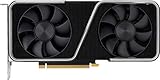
NVIDIA GeForce RTX 3060 Ti Founders Edition 8GB GDDR6 PCI Express 4.0 Graphics Card (Renewed)

The rtx 3060 ti vs rtx 5060 question is really an upgrade question: if you already own the 2020 favorite, is the 2025 replacement worth the money? Both cards carry 8GB of memory and both target 1080p gaming, but they take very different paths there. The RTX 3060 Ti leans on a wide 256-bit bus and brute-force Ampere cores, while the RTX 5060 counters with newer Blackwell efficiency, faster GDDR7, and exclusive DLSS 4 Multi Frame Generation. This breakdown shows exactly where the newer card pulls ahead and whether the jump justifies your budget.
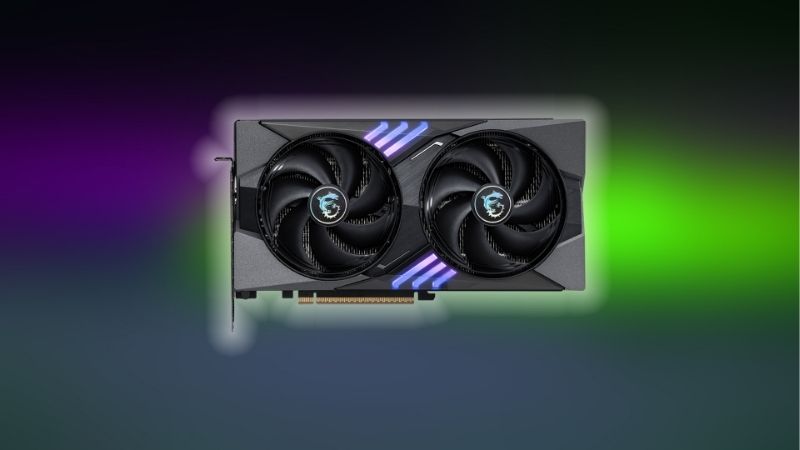
Quick Verdict: RTX 3060 Ti vs RTX 5060 at a Glance
Here is the short answer. The RTX 5060 is the faster and far more efficient card, with a modest raster lead over the 3060 Ti but a decisive advantage in features thanks to DLSS 4 Multi Frame Generation, which the older card cannot run at all. For a new build the 5060 is the clear pick, but for existing 3060 Ti owners the raw-performance jump alone is smaller than you might hope. The table and mini-verdicts below help you decide whether the features tip the balance.
As an Amazon Associate we earn from qualifying purchases at no extra cost to you.





Is the RTX 5060 a Real Upgrade Over the 3060 Ti
On raw frames, the 5060 wins but not dramatically. Testing positions the RTX 5060 as roughly a modern, more efficient equivalent to the 3060 Ti with a measurable raster edge, close enough that reviewers have described the 5060 as feeling like a “3060 Ti Super” rather than a generational leap in pure rendering.
Where the gap widens is everything around raw raster. The 5060 adds DLSS 4 Multi Frame Generation, far lower power draw, and newer media and AI features, none of which the 3060 Ti can match. So the upgrade is less about frames and more about the modern feature set wrapped around them.
The shortest answer: for a new 1080p build, the RTX 5060 is the better card. For a 3060 Ti owner, upgrade if DLSS 4 and efficiency genuinely appeal to you, but if you only care about raw raster, consider waiting for a bigger jump like the RTX 5070 instead. The honest framing is that Nvidia positioned the 5060 as a modern replacement for new buyers rather than a compelling upgrade for recent owners, and treating it that way will save you from disappointment.
The Full RTX 3060 Ti vs RTX 5060 Comparison Table
Specs settle the argument faster than prose, so here is the core sheet side by side. Use it to sanity-check any deal before you click through to a store.
| Spec | RTX 3060 Ti | RTX 5060 |
|---|---|---|
| Architecture | Ampere (GA104) | Blackwell (GB206) |
| CUDA cores | 4,864 | 3,840 |
| Memory | 8GB GDDR6 | 8GB GDDR7 |
| Bus width | 256-bit | 128-bit |
| Upscaling | DLSS 2 (no frame gen) | DLSS 4 + Multi Frame Gen |
| Board power | ~200W | ~145W |
| Launch MSRP | $399 (2020) | $299 (2025) |
| Best for | Existing owners | New 1080p builds |
Two details stand out. The 3060 Ti actually has more CUDA cores and a wider 256-bit bus, yet the 5060’s newer architecture, faster GDDR7, and 55W lower power draw let it come out ahead while sipping far less electricity. It is a neat illustration of why raw core counts across different generations tell you very little on their own.
Why 2026 Prices and Timing Reshape the Decision
Here is the context spec sheets skip: a tight 2026 memory market has pushed GPU prices up rather than down, and component prices across PC parts have trended higher. For an upgrade buyer, that means the 5060 may cost a little more than its $299 MSRP suggests, which raises the bar for justifying a jump from a card that still works fine.
There is cautious good news, but it is weak and in the future. Prices have stopped climbing as steeply as they did in late 2025, and some hardware makers have reported a stretch of relative stability, while still warning that volatility is not over. For an upgrader, the free-fall has paused rather than reversed.
Fresh supply is coming but is years away. New memory capacity, including DDR5 from Chinese suppliers and two Micron plants in Idaho, is not expected to run until 2027-2028. The practical takeaway: if your 3060 Ti still delivers the frames you need, there is no urgency to upgrade for raster alone, but if you want DLSS 4 and lower power bills, a 5060 near $299 with a warranty is a sensible buy rather than a gamble on future price cuts. The key discipline for an upgrader is to separate want from need: a 3060 Ti that still hits your target frame rates owes you nothing, so the upgrade should be driven by features you will actually use, not by the mere existence of a newer model.
Deep Dive Face-Off: Performance, Features and Efficiency
The raster gap is modest, so the decision leans on upscaling, efficiency, and how each card fits a real system. This section walks those three battlegrounds with measured behavior rather than adjectives.
Raw Rasterization and 1080p Frame Rates
At 1080p the RTX 5060 leads, but the margin is measured rather than massive. Its Blackwell cores and faster GDDR7 memory give it a consistent edge over the Ampere-based 3060 Ti across most modern titles, enough to notice on a frame counter but not enough to transform a game.
The 3060 Ti’s 256-bit bus remains a genuine strength, feeding its 8GB buffer with more bandwidth than the 5060’s narrower 128-bit interface. In the most bandwidth-hungry scenarios that helps the older card stay closer than its age would suggest.
The analytical read is that the 5060 is the faster card overall, but a 3060 Ti owner chasing raw frames alone is looking at an incremental gain rather than a night-and-day difference. That is the crux of the upgrade dilemma. A brand-new builder sees a faster, cheaper, more efficient card and buys happily, while an existing owner sees a familiar performance level with a nicer feature set, and those two perspectives lead to very different value judgments about the same silicon.
DLSS 4 Multi Frame Generation and Feature Gap
Upscaling is where the two cards truly diverge. The RTX 5060 supports DLSS 4 with Multi Frame Generation, which can insert AI-generated frames to lift smoothness in supported titles, while the 3060 Ti is limited to DLSS 2 super resolution and cannot run frame generation at all.
The experimental caveat is honesty about frame generation. At higher multipliers it can introduce latency and visual artifacts, so it works best as a bonus in supported games rather than a raw-power claim, but it remains a real feature the older card simply lacks.
Looking forward, the 5060’s fifth-generation Tensor cores and DLSS 4 support mean it stands to gain from future driver and game updates, while the 3060 Ti’s five-year-old feature set falls further behind each year. For longevity of features, the newer card has a clear and widening edge. Over a multi-year ownership window that gap compounds, as each new game that ships with DLSS 4 support quietly widens the practical distance between a card that can use it and one that cannot.
Power, Bandwidth and Real-World Build Fit
Efficiency is a rout in the 5060’s favor. At roughly 145W it draws about 55W less than the 3060 Ti’s 200W, which means less heat, a quieter cooler, and a more forgiving power supply, making it an easy drop-in for compact or lower-wattage systems.
For real builds, the 5060 runs comfortably on a quality 450W to 550W unit, whereas the older 3060 Ti’s higher draw pushes you toward a little more headroom. Upgraders reusing an older supply will find the 5060 the more accommodating card.
The shared 8GB buffer is the practical ceiling for both. It handles 1080p well but can strain at 1440p with high textures, so treat either card as a strong 1080p performer and lean on upscaling for heavier games rather than expecting comfortable native 1440p. This shared ceiling is also a reminder that the upgrade from a 3060 Ti to a 5060 does not solve the VRAM question at all, since both sit at 8GB and both will meet the same wall in the most memory-hungry modern titles.
Pros, Cons, Alternatives and Final Buying Advice
With frames, features, and efficiency on the table, the upgrade decision comes down to an honest scorecard and your priorities. This section covers the pros and cons, a stronger alternative if your budget can flex, and a clear verdict.
RTX 3060 Ti vs RTX 5060: Pros and Cons Breakdown
The RTX 3060 Ti’s strengths are its wide 256-bit bus, ample bandwidth, and the fact that it still handles 1080p gaming perfectly well years after launch. Its cons are high 200W power draw, an aging DLSS 2 feature set with no frame generation, and no path to modern AI upscaling.
The RTX 5060’s strengths are a modest raster lead, DLSS 4 Multi Frame Generation, far better 145W efficiency, faster GDDR7 memory, and newer AI features. Its cons are the narrower 128-bit bus and the same 8GB VRAM limit that caps both cards at 1080p.
Put plainly: the 5060 wins on features, efficiency, and outright speed, while the 3060 Ti remains a capable card that owners do not need to replace in a hurry. The wrong move is upgrading purely for raster and being underwhelmed by an incremental gain.
A Smart Alternative If You Want a Bigger Jump
If you own a 3060 Ti and want an upgrade you can actually feel, the RTX 5070 is the more satisfying target, delivering a large step up in both raster and DLSS 4 features rather than the incremental gain the 5060 offers over your current card.
For those who value VRAM headroom on a budget, the RX 9060 XT 16GB is a strong cross-shop, pairing solid performance with a 16GB buffer that ages far better than the 8GB both Nvidia cards here carry.
Given the 2026 market, spending a little more for a card that delivers a meaningful jump is often smarter than a sideways upgrade at the 8GB tier. Real price relief is years away, so buying once and buying well beats upgrading twice.
Final Verdict: Is the RTX 5060 Worth It
Buy the RTX 5060 for a new 1080p build, where it is comfortably the better card thanks to its speed, efficiency, and DLSS 4 feature set. As a fresh purchase it is an easy recommendation over the discontinued 3060 Ti.
If you already own a 3060 Ti, upgrade to the 5060 only if DLSS 4 and lower power draw genuinely matter to you, since the raw-frame gain alone is modest. Otherwise, hold out for a bigger leap like the 5070 and get more for your money.
Whichever path fits you, timing and price matter in this market. Compare live pricing and availability before you commit, and grab the card that offers the best real value in your region. Follow the link to check current RTX 5060 prices and lock in the better buy.
See more:
- amd driver auto-detect tool
- nvidia geforce rtx 5080 best buy
- TechPowerUp GPU-Z
- nvidia china
- nvidia etf price
Conclusion
The rtx 3060 ti vs rtx 5060 decision is clear for new builders and nuanced for upgraders: the RTX 5060 is the faster, far more efficient card with exclusive DLSS 4 Multi Frame Generation, but its raw-raster lead over the 3060 Ti is modest. In a 2026 market where budget GPU prices have merely flattened and real relief is still years out, new builds should choose the 5060, while 3060 Ti owners should upgrade only for the features or wait for a bigger jump. Compare current prices through the link above and secure the GPU that fits your build and budget today.
Frequently Asked Questions
How much faster is the RTX 5060 than the RTX 3060 Ti in raw raster?
In pure rasterised 1080p and 1440p testing the gap is modest, typically ten to twenty percent depending on title. The 3060 Ti has a wider 256-bit bus that ages well, while the 5060 relies on faster GDDR7 across a narrower 128-bit bus plus a much larger L2 cache. The real separation comes from ray tracing and DLSS 4 rather than raster.
Both have 8GB, so is the upgrade pointless?
VRAM capacity is identical at 8GB, which is the weakest part of the argument for upgrading. If you are already hitting VRAM limits at 1440p with high textures, the 5060 will hit the same wall. The upgrade makes sense for efficiency, ray tracing, AV1 encoding, and multi frame generation, not for extra memory headroom.
What is the power and PSU difference?
The 3060 Ti draws around 200W and typically needs an 8-pin plus a 600W recommended supply. The RTX 5060 sits near 145W on a single 8-pin with a 550W recommendation. Swapping cuts roughly 55W of heat and noise from the case, which is meaningful in small builds or systems with an older or lower-wattage power supply.
Does the RTX 5060 support features the 3060 Ti cannot run?
Yes. Multi frame generation in DLSS 4 is exclusive to 50-series Blackwell cards, and the 5060 adds a ninth-generation NVENC encoder with improved AV1 and HEVC quality plus dual AV1 decode. Ampere cards like the 3060 Ti still get DLSS 4 super resolution and ray reconstruction, but not frame multiplication.
Is it better to buy a used RTX 3060 Ti or a new RTX 5060?
A used 3060 Ti at well under half the price of a new 5060 is still decent value for 1080p, but you lose the warranty, get worse efficiency, and inherit a card that may have run mining workloads. If you keep GPUs four or more years, the new card with warranty, better encoders, and current feature support is the safer purchase.
Ready to decide? Our #1 pick for 2026 is the Architecture.
Live price & availability on Amazon.


Write Your Review
No reviews yet. Be the first to share your experience!