
- Top Pick: NVD RTX PRO 6000 Blackwell Professional Workstation Edition Graphics Card for AI, Design, Simulation, Engineering – 96GB DDR7 ECC Memory – 4th Gen RT/5th Gen Tensor Core GPU – OEM Packaging
- Best Value: PNY NVIDIA RTX PRO 6000 Blackwell MAX-Q Workstation Edition Dual Fan 96GB GDDR7
- Premium Choice: PNY VCNRTXPRO6000B-PB RTX PRO 6000 96GB GDDR7 Graphic Card
Nvidia RTX PRO 6000 Blackwell is the new ceiling for what a single professional card can do, pairing a massive 96 GB of GDDR7 memory with Nvidia’s latest Blackwell architecture. For studios, research labs, and AI developers who push workstations to their absolute limit, this is the card that removes bottlenecks the previous flagship could not. This review synthesizes early deployment reports and buyer feedback to show exactly what the RTX PRO 6000 Blackwell delivers, where it demands the most from your system, and whether this flagship is worth its considerable price in 2026.
- What the Nvidia RTX PRO 6000 Blackwell Offers
- Nvidia RTX PRO 6000 Blackwell Performance in Real Work
- Buying the RTX PRO 6000 Blackwell in 2026: Value, Market, and Pros and Cons
- Final Verdict: Is the Nvidia RTX PRO 6000 Blackwell Worth It?
- Top-Rated Picks
- Related Guides
- Frequently Asked Questions
- Related Articles
- Related Guides
As an Amazon Associate we earn from qualifying purchases at no extra cost to you.


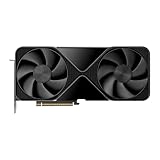


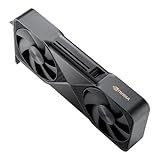

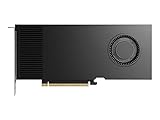
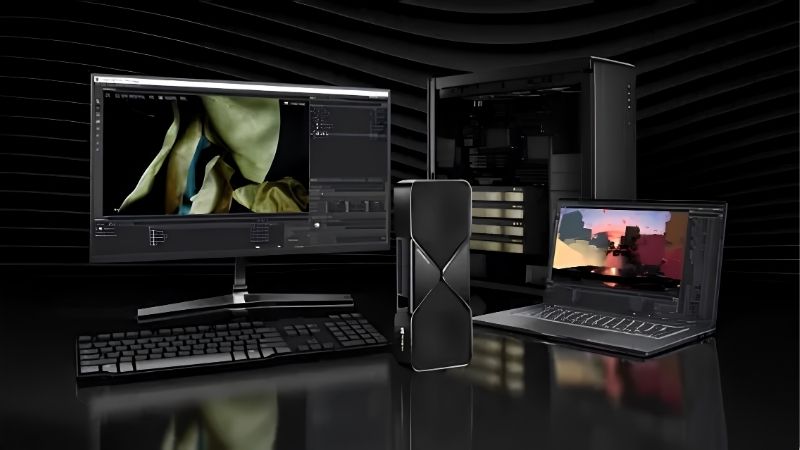
What the Nvidia RTX PRO 6000 Blackwell Offers
The RTX PRO 6000 Blackwell replaces the Ada-generation flagship and raises nearly every specification that matters, from memory capacity to AI precision support. Understanding what that generational leap actually delivers, and what it asks of your system in return, is the key to knowing whether this is the flagship your workflow genuinely needs.
Blackwell Architecture and 96 GB of GDDR7
The RTX PRO 6000 Blackwell carries roughly 24,000 CUDA cores, fifth-generation Tensor cores, and fourth-generation RT cores, paired with an enormous 96 GB of GDDR7 memory with error correction. That memory capacity is double the previous flagship’s 48 GB and is the single most transformative feature of the card.
For AI developers, 96 GB is the headline: it holds very large models entirely in VRAM, enabling local work on models that previously required splitting across multiple cards or renting cloud compute. For 3D and visualization, it swallows the most complex scenes without compromise.
Analytically, the fifth-generation Tensor cores add FP4 support alongside FP8, pushing AI inference throughput far beyond the Ada generation. The faster GDDR7 memory also lifts bandwidth substantially, so the card feeds its cores better and sustains higher real-world performance on demanding work.
For a buyer, the combination is what matters: capacity and bandwidth rising together means the card does not just hold bigger models but runs them faster, so the 96 GB is usable headroom rather than a number that outstrips the compute behind it.
Power, Cooling, and Serious System Demands
All that capability comes at a cost in power. The workstation RTX PRO 6000 Blackwell can draw up to around 600 watts, which is a significant step above the Ada flagship and demands a robust power supply and serious case cooling to run reliably.
For buyers, this is the most important practical consideration. Unlike lower-power professional cards that drop into most systems, the Blackwell flagship needs a workstation designed around it, so confirm your power delivery and thermal headroom before purchase. A Max-Q variant with a lower power target exists for more constrained builds.
The honest framing is that this is a no-compromise card that expects a no-compromise system. You are buying the absolute top of professional performance, and extracting it requires infrastructure that matches the card’s ambition rather than a standard desktop.
In budgeting terms, that means the true cost of adoption includes the workstation around the card. A robust power supply, serious cooling, and a capable chassis are part of the purchase, and factoring them in up front avoids the most common cause of a disappointing first deployment.
Where It Fits vs RTX 6000 Ada and Data-Center GPUs
Against the previous RTX 6000 Ada, the Blackwell flagship doubles memory to 96 GB, adds FP4, and delivers a large generational performance jump, making it the clear upgrade for professionals who hit the Ada card’s limits. It is a genuine leap, not an incremental refresh.
Against data-center cards like the H100, the RTX PRO 6000 Blackwell is the workstation-and-single-server flagship, offering huge memory and display capability rather than the HBM bandwidth and clustering of dedicated training accelerators. It serves professionals and single-node AI, not massive training clusters.
Choosing correctly means recognizing when you truly need the top. Buyers whose work genuinely fills 48 GB or demands the newest AI precision find the Blackwell flagship transformative, while those comfortably within older limits may be paying for headroom they will not use.
The clean test is your current bottleneck. If you are already splitting large models across cards or renting cloud compute to fit them, the 96 GB directly solves a problem you have; if you are not, the flagship is capability held in reserve rather than capability at work.
Nvidia RTX PRO 6000 Blackwell Performance in Real Work
Specifications promise a great deal, but the flagship’s value shows in how it handles the most demanding professional work. Across large-scale AI, heavy 3D, and intensive engineering, early feedback describes a card that genuinely redefines what a single workstation can accomplish.
Large-Model AI and Local Inference
For AI, the 96 GB buffer combined with FP4 and FP8 support is transformative. Developers can run and fine-tune large language models locally that previously demanded multiple cards or cloud rental, keeping sensitive work private and iteration fast on a single machine.
This local capability is the standout reason AI professionals are drawn to the card. Being able to hold a large model entirely in one GPU’s memory eliminates the complexity and communication overhead of splitting it, which simplifies development and speeds experimentation dramatically.
Early adopters consistently highlight this as the card’s defining strength, while noting that fully exploiting FP4 requires software tuned for it. As frameworks mature around the newest precision formats, the card should keep gaining inference performance through updates alone.
Heavy 3D Rendering and Visualization
For 3D rendering and visualization, the RTX PRO 6000 Blackwell handles the most complex scenes with room to spare, and its fourth-generation RT cores accelerate ray tracing beyond the previous flagship. Studios working at the highest end get faster iteration and fewer memory-driven compromises.
The enormous memory means even the largest production scenes, high-resolution assets, and complex simulations fit comfortably, removing the out-of-core workarounds that slow the biggest projects. For top-tier studios, that headroom translates directly into more finished work.
The common observation is that this level of capability is genuine overkill for moderate projects, and that is fair. The card rewards those pushing the absolute limits of scene complexity, not professionals whose work fits comfortably on a mid-tier or previous-flagship card.
Engineering, Simulation, and Compatibility
For demanding engineering and simulation, the flagship’s compute and 96 GB let professionals work with the largest models and datasets without memory constraints, keeping even the most intensive certified workloads responsive. It is built for the heaviest professional lifting.
Practically, the up-to-600-watt draw is the key compatibility factor, requiring a robust workstation with strong power and cooling. Confirm your system is provisioned for it before buying, and consider the Max-Q variant if your build cannot support the full power target.
The pattern in early feedback is that buyers who genuinely need the top find the card transformative, while the few who question the value almost always have workloads that a previous-generation flagship would have handled just as well for less money.
That divide runs through nearly all the feedback: satisfaction is highest among buyers whose work genuinely outgrew the previous flagship, and doubt clusters among those who bought the newest card by reflex rather than need. Matching the purchase to a real limit is everything here.
Buying the RTX PRO 6000 Blackwell in 2026: Value, Market, and Pros and Cons
The RTX PRO 6000 Blackwell makes sense only for professionals who genuinely need the absolute top, but for those buyers it is uniquely capable. Two market realities in 2026 also shape the decision, and both favor buying to a real need over waiting.
Why the Flagship Justifies Its Price for the Right Buyer
The core argument is capability nothing else matches in a workstation. For professionals whose work fills 48 GB or demands the newest AI precision, the 96 GB buffer and FP4 support remove hard bottlenecks, and that leap directly enables work that was previously impractical on a single card.
For AI developers especially, the ability to run large models locally can replace ongoing cloud costs and protect data privacy, which reshapes the total-cost calculation well beyond the sticker price. Over a demanding workload’s life, the flagship can pay for itself in capability and saved rental.
Where it stops making sense is any workload a previous flagship already handles, and buyers should be ruthlessly honest about that. Chosen for genuinely top-tier needs, the RTX PRO 6000 Blackwell is the most capable professional card available; chosen for prestige, it is expensive headroom.
Memory Prices and Buying Timing
The main external factor is the memory market, which weighs heavily on a card carrying 96 GB of cutting-edge GDDR7. Component and memory prices climbed steeply through late 2025 before leveling off, and that plateau is a pause rather than a price cut, keeping this flagship firmly premium.
New supply is coming, with OEMs able to source DDR5 from vendors such as CXMT and Micron building two plants in Idaho, but those fabs will not reach volume production until 2027 to 2028. The measured conclusion is that this card’s price is unlikely to soften meaningfully in the near term.
With broad component prices still drifting upward, the practical takeaway is that today’s price is likely close to the best you will see for a while, so if your work genuinely needs this flagship, buying now to capture the capability beats waiting on relief that remains years away.
Nvidia RTX PRO 6000 Blackwell Pros and Cons
The ownership picture distilled for a fast decision.
Pros: enormous 96 GB GDDR7 memory for the largest models and scenes; Blackwell architecture with FP4 and FP8 for top-tier AI; huge generational leap over the Ada flagship; runs large local AI that once needed multiple cards or the cloud.
Cons: very high price; up to 600 watts demanding a robust workstation; genuine overkill for moderate workloads; newest precision formats need tuned software; pricing held up by a premium memory market into 2027.
See More:
Final Verdict: Is the Nvidia RTX PRO 6000 Blackwell Worth It?
For studios, labs, and AI developers who genuinely push a workstation to its limits, the Nvidia RTX PRO 6000 Blackwell is worth its price, delivering 96 GB, FP4 acceleration, and a generational leap that removes bottlenecks no previous single card could. If your work fits comfortably within a previous flagship’s limits, that older card will serve you at far lower cost.
If your workload truly needs this flagship, a premium memory market means waiting is unlikely to reward you. Check the latest Nvidia RTX PRO 6000 Blackwell pricing, availability, and workstation requirements through the link below and secure the capability while supply lasts.
Top-Rated Picks


Best Seller
PNY Technology VCNRTXPRO6000BQ-PB NVIDIA RTX PRO 6000 Blackwell Max-Q Workstation Graphics Card


| Product | Brand | Rating | Reviews | Price |
|---|---|---|---|---|
| ARCTIC MX-4 (4 g) – Premium Performance Thermal Paste… | ARCTIC | ★ 4.8 | 104k | $4.99 |
| ARCTIC MX-4 (incl. Spatula, 4 g) – Premium Performanc… | ARCTIC | ★ 4.8 | 71.9k | $5.49 |
| Crucial 8GB DDR4 RAM 3200MHz (PC4-25600), Downclockab… | Crucial | ★ 4.8 | 62.8k | $74.99 |
| AMD Ryzen 5 5600X 6-core, 12-thread unlocked desktop … | — | ★ 4.8 | 30.2k | $177.60 |
| NVIDIA Shield Remote; Voice Search, Motion-Activated,… | — | ★ 4.7 | 10.6k | $25.99 |
Frequently Asked Questions
How much VRAM does the RTX PRO 6000 Blackwell have?
It carries 96GB of GDDR7, which is the headline feature. That capacity allows very large scenes, high-resolution volumetric simulation, and local inference on models that would not fit on any consumer card. For memory-bound professional work this is the primary reason to choose it.
What are the power and cooling requirements?
The workstation variant targets around 600W, which demands a high-capacity power supply, adequate case airflow, and the correct 12V-2×6 power cable properly seated. Server and Max-Q variants run at lower limits for dense or thermally constrained deployments, trading peak throughput for manageable heat.
How does it compare to a top consumer Blackwell card?
They share architecture, but the professional card offers roughly three times the memory, ECC support, certified professional drivers, and workstation and server form factor options. In raw rasterized gaming the consumer flagship is competitive for far less money. The premium buys capacity, validation and support.
Is it worth it for local AI model work?
If your models exceed the 24GB to 32GB available on consumer cards, then yes, since a single 96GB card avoids the complexity and communication overhead of splitting across multiple GPUs. If your models fit in consumer VRAM, the price premium is difficult to justify on performance alone.
Will it fit in a standard desktop case?
The workstation edition is a dual-slot full-height card designed to fit standard chassis, but verify length, slot spacing and airflow before buying. At 600W sustained you need genuine case ventilation, not just clearance, or the card will throttle and heat surrounding components significantly.



Write Your Review
No reviews yet. Be the first to share your experience!