
Nvidia RTX A4500 is the previous-generation professional card that keeps tempting value-focused buyers, because it offers 20 GB of memory and genuine workstation credentials at prices that have fallen well below the newer Ada cards. For engineers, artists, and IT buyers weighing a discounted Ampere card against a pricier current model, the real question is whether the A4500 still delivers enough for your workflow to justify the savings. This review synthesizes deployment reports and buyer feedback to show exactly what the RTX A4500 does well, where its age shows, and who should still choose it in 2026.
As an Amazon Associate we earn from qualifying purchases at no extra cost to you.


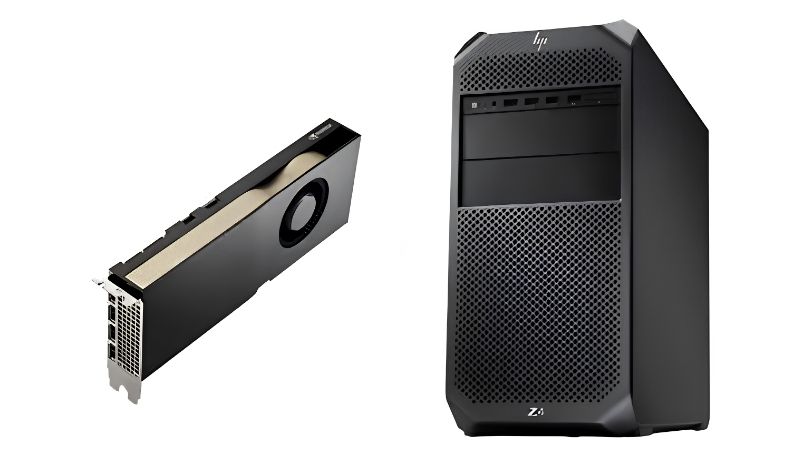
What the Nvidia RTX A4500 Offers
The RTX A4500 is built on Nvidia’s Ampere architecture, the generation before Ada, and was a strong upper-mid professional card in its day. Understanding what it still delivers, and where the newer generation has moved past it, is the key to deciding whether a discounted A4500 is a smart buy or a false economy for your particular work.
Ampere Architecture and 20 GB of Memory
The RTX A4500 pairs 7,168 CUDA cores with 224 third-generation Tensor cores and 56 second-generation RT cores, fed by 20 GB of GDDR6 memory with error correction. That memory capacity remains genuinely useful, handling large CAD assemblies, complex scenes, and mid-sized models comfortably on a single board.
For professional buyers, the ECC memory is a reliability feature that matters in long jobs and certified software, where silent errors can corrupt output. The 20 GB buffer is the A4500’s most enduring strength, and it is the specification that keeps the card relevant despite its age.
Analytically, the ceiling is clear: as an Ampere-generation part, the A4500 lacks the FP8 acceleration that Ada cards use to speed modern AI inference. On traditional professional graphics it remains capable, but on cutting-edge AI workloads the newer generation pulls meaningfully ahead.
For a buyer, that split is the whole decision in miniature: on traditional professional graphics the A4500 still competes, but on anything leaning heavily on modern AI acceleration it visibly trails, and knowing which side your work sits on settles the purchase.
A Proven 200-Watt Professional Card
The RTX A4500 draws 200 watts in a dual-slot design and supports NVLink to pair two cards into a larger memory pool. These are solid data-center and workstation credentials that let the card behave predictably in professional systems and multi-card configurations.
For buyers, that maturity is part of the appeal. The A4500 is a well-understood, thoroughly tested platform with stable certified drivers, and there is real value in hardware whose behavior and quirks are fully known rather than freshly released.
The trade-off is generational: newer Ada cards deliver more performance per watt and modern features. The A4500 trades that efficiency edge for a lower price, which is precisely the calculation a value-focused buyer is weighing when they consider it.
Maturity also brings a subtler benefit around driver stability. Years of updates have ironed out the edge cases a new card can still surprise you with, so for risk-averse professional environments the A4500’s long track record is itself a feature worth valuing.
Where It Fits vs RTX 4500 Ada and RTX A5000
Against the newer RTX 4500 Ada, the A4500 is the older, cheaper option that lacks FP8 and Ada efficiency but offers similar memory. For pure value on traditional professional work, the A4500 can win; for modern AI and best efficiency, the Ada card leads.
Against the higher-tier RTX A5000, the A4500 is the more affordable step down within the same Ampere generation, sensible when you do not need the A5000’s extra memory and performance. It occupies a clear value position in the previous-generation stack.
Choosing correctly is about matching the card to your workload and honestly weighing the savings. Buyers who pick the A4500 for traditional professional graphics at a discount are consistently satisfied, while those expecting current-generation AI efficiency are the ones who feel its age.
The honest framing is that the A4500 is a discount specialist. Bought cheaply for the work it still does well, it is a shrewd purchase; bought as a future-proof, do-everything card, it disappoints, and the difference lies entirely in the buyer’s expectations.
Nvidia RTX A4500 Performance in Real Work
Specifications hint at value, but the A4500’s worth shows in how it handles daily professional work. Across CAD, 3D, and inference, buyer feedback describes a still-capable card whose value depends heavily on matching it to the right, mostly traditional, workloads.
CAD, Engineering, and Certified Reliability
For CAD and engineering software, the RTX A4500 still performs strongly, with certified drivers delivering stable, correct behavior in applications like SolidWorks, Revit, and CATIA. For these tools, proven reliability matters more than the latest architecture, and the A4500 has years of validation behind it.
The 20 GB buffer handles large assemblies and detailed models without memory-related slowdowns, keeping complex projects responsive. For professionals whose work is firmly in traditional CAD and engineering, the A4500 remains a thoroughly competent tool at an attractive price.
Feedback from engineering users is positive on reliability, with the recurring theme that the card simply keeps working dependably. For certified workflows, that track record is a genuine asset, and it is a large part of why the A4500 retains a loyal following.
That loyalty is telling in a market obsessed with the newest hardware. When professionals keep choosing a previous-generation card for real work, it is usually because it quietly does the job at a price that makes the newer option hard to justify.
3D Rendering and Visualization
For 3D rendering and visualization, the A4500 handles complex scenes capably thanks to its 20 GB buffer and second-generation RT cores. Studios and design teams use it as a reliable rendering and visualization node, especially when acquired at a discount.
Its performance suits professional work that is demanding but not at the bleeding edge, and its NVLink support allows pairing for larger memory pools on heavier projects. That flexibility extends the range of scenes the card can handle in a multi-card setup.
For studios with existing A4500s, that pairing path also protects prior investment, letting them grow capacity without abandoning the platform they already know and trust.
The fair caveat is that newer Ada cards render faster and more efficiently, so for a fresh top-performance purchase the A4500 is not the choice. For value-driven rendering on established workflows, though, it continues to deliver real capability.
AI Inference and Compatibility
For AI inference, the A4500 is capable on many models but constrained by the absence of FP8, so newer Ada cards deliver more inference throughput per watt. It works well for lighter AI tasks, particularly when you already own the card or find it cheaply.
Practically, the 200-watt draw and dual-slot design fit standard workstations without special provisioning, and installation is straightforward. Confirm your power supply and case accommodate it, though its mainstream profile rarely causes trouble in typical professional systems.
The pattern in feedback is clear: buyers who deploy the A4500 for traditional professional graphics and lighter AI are pleased with the value, while the disappointed minority expected current-generation AI efficiency from a card that predates those features.
Buying the RTX A4500 in 2026: Value, Market, and Pros and Cons
The RTX A4500 is now a value play, and whether it makes sense depends on your workload and how you weigh its age against its discounted price. Two market realities in 2026 also shape the decision, and both are worth factoring into your timing.
When the RTX A4500 Still Makes Sense
The strongest case is traditional professional work bought at a discount. For CAD, engineering, and visualization that do not lean on modern AI acceleration, the A4500 delivers ample capability and certified reliability at a price newer cards cannot match, which is exactly what a value buyer wants.
It also suits organizations already standardized on the platform, where staying on a known, validated card simplifies support and avoids revalidation. That operational continuity has real, if unglamorous, value across a fleet’s life.
Where it stops being the right choice is modern AI inference at peak efficiency or a forward-looking purchase meant to last many years, and buyers should weigh the shorter remaining support horizon. Chosen honestly for value, though, the A4500 remains a sensible buy.
Put simply, the A4500 rewards buyers who know precisely why they are choosing it. Bought deliberately for discounted, traditional professional performance, it delivers exactly that with little to regret, whereas buyers chasing the newest capabilities should spend their money on current Ada hardware instead.
Memory Prices and Buying Timing
The broader memory market shapes even a previous-generation card like the A4500. Component and memory prices climbed steeply through late 2025 before leveling off, and that plateau is a pause rather than a price cut, so used and remaining-stock pricing stays firmer than buyers might expect.
New supply is coming, with OEMs able to source DDR5 from vendors such as CXMT and Micron building two plants in Idaho, but those fabs will not reach volume production until 2027 to 2028. In short, waiting for a broad hardware price collapse is optimistic, since real relief remains years away.
With component prices generally still drifting upward, the practical read is that if an A4500 fits your workload and the price is right, acting now is more defensible than betting on a market correction the supply timeline does not support.
Nvidia RTX A4500 Pros and Cons
The ownership picture distilled for a fast decision.
Pros: 20 GB ECC memory for demanding traditional work; certified drivers and a proven, stable platform; NVLink for a larger memory pool; strong value at discounted prices; dependable for CAD, engineering, and visualization.
Cons: Ampere generation lacks FP8, so Ada cards lead on AI efficiency; older architecture with a shorter remaining support horizon; GDDR6 bandwidth trails newer parts; pricing held up by a firm memory market into 2027.
See More:
Final Verdict: Is the Nvidia RTX A4500 Worth It?
For professionals doing traditional CAD, engineering, rendering, and visualization who can buy it at a discount, the Nvidia RTX A4500 remains a genuinely worthwhile card, delivering ample memory, certified reliability, and a proven platform at a price newer cards cannot touch. If your priority is modern AI-inference efficiency or a purchase meant to stay current for years, a newer Ada card such as the RTX 4500 Ada is the smarter investment.
If the RTX A4500 matches your workflow and the price is right, a firm memory market means waiting is unlikely to reward you. Check the latest Nvidia RTX A4500 pricing, availability, and seller ratings through the link below and secure the value while supply lasts.
Top-Rated Picks



| Product | Brand | Rating | Reviews | Price |
|---|---|---|---|---|
| ARCTIC MX-4 (4 g) – Premium Performance Thermal Paste… | ARCTIC | ★ 4.8 | 104k | $4.99 |
| ARCTIC MX-4 (incl. Spatula, 4 g) – Premium Performanc… | ARCTIC | ★ 4.8 | 71.9k | under $10 |
| Crucial 8GB DDR4 RAM 3200MHz (PC4-25600), Downclockab… | Crucial | ★ 4.8 | 62.8k | under $80 |
| AMD Ryzen 5 5600X 6-core, 12-thread unlocked desktop … | — | ★ 4.8 | 30.2k | under $200 |
| NVIDIA Shield Remote; Voice Search, Motion-Activated,… | — | ★ 4.7 | 10.6k | under $30 |
Frequently Asked Questions
What are the RTX A4500 core specifications?
It is an Ampere-generation professional card with 20GB of GDDR6 with ECC on a 320-bit bus, drawing roughly 200W in a dual-slot full-height form factor. It sits between the A4000 and A5000 in Nvidia professional lineup and supports NVLink for pairing two cards.
Does the RTX A4500 support NVLink?
Yes, unlike the later Ada generation professional cards, the A4500 supports an NVLink bridge with a matching card. That enables higher bandwidth peer transfers and, in supported applications, a combined memory pool that is useful for very large rendering scenes and certain compute workloads.
What power supply does it need?
Around 200W board power through a single PCIe power connector means a quality 650W to 750W system supply for a single-card workstation, more for dual-card NVLink configurations. Its blower-style cooler exhausts heat out the rear, which helps in enclosed workstation chassis with limited airflow.
Is it still worth buying in 2026?
On the used or discounted market it offers good value for CAD, visualization and moderate rendering, and 20GB with ECC remains genuinely useful. Newer Ada cards are more efficient and faster per watt, so pay a meaningful discount rather than close to Ada pricing.
How does it compare to a consumer RTX 3080?
They are architecturally related, but the A4500 offers 20GB versus 10 or 12GB, ECC memory, certified drivers, NVLink support, lower power draw and a blower cooler. The RTX 3080 is typically faster in games and cheaper. Choose the A4500 for capacity, certification and workstation integration.
Ready to decide? Our #1 pick for 2026 is the ARCTIC MX-4 (4 g) – Premium Performance Thermal Paste….
Live price & availability on Amazon.

Write Your Review
No reviews yet. Be the first to share your experience!