
Nvidia Tesla T4 has aged into one of the most interesting value questions in the data center: a low-power inference card from 2018 that still shows up in cloud fleets, budget servers, and second-hand listings everywhere. If you are optimizing inference cost or deciding whether to keep, buy, or replace T4s, the real question is whether its 70-watt efficiency still earns its place in 2026 or whether a newer card would pay for itself. This review synthesizes real-world usage and buyer feedback to answer exactly that, so you can size your fleet with clear eyes.
As an Amazon Associate we earn from qualifying purchases at no extra cost to you.


What the Nvidia Tesla T4 Still Delivers
The T4 is built on Nvidia’s Turing architecture and was designed from the start for efficient inference rather than training. Understanding what that focus still buys you, and where its age now shows, is the key to deciding whether the T4 belongs in a new deployment or only in the fleets that already run it.
Turing Architecture and 16 GB of Memory
The T4 carries 2,560 CUDA cores and 320 Tensor cores paired with 16 GB of GDDR6 memory. For its era it was a breakthrough in inference efficiency, introducing Turing Tensor cores that accelerated INT8 and FP16 workloads far beyond what general compute alone could achieve.
That 16 GB buffer remains useful for small and mid-sized models, comfortably serving many classic computer-vision, recommendation, and language workloads. It is not enough for today’s large models, but a great deal of production inference still runs on models that fit well inside it.
Analytically, the T4’s ceiling is clear: it predates FP8 and the newer Tensor-core generations, so on modern transformer workloads it lags far behind cards like the L4. Judged on the tasks it was built for, though, it remains a competent, efficient performer.
In buyer terms, the T4 is best understood as a specialist that aged: superb at the narrow job it was built for, increasingly outclassed everywhere else. Judging it by modern flagship standards misses the point, since it was never trying to compete on raw power in the first place.
Designed for Efficiency at 70 Watts
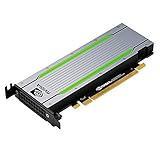
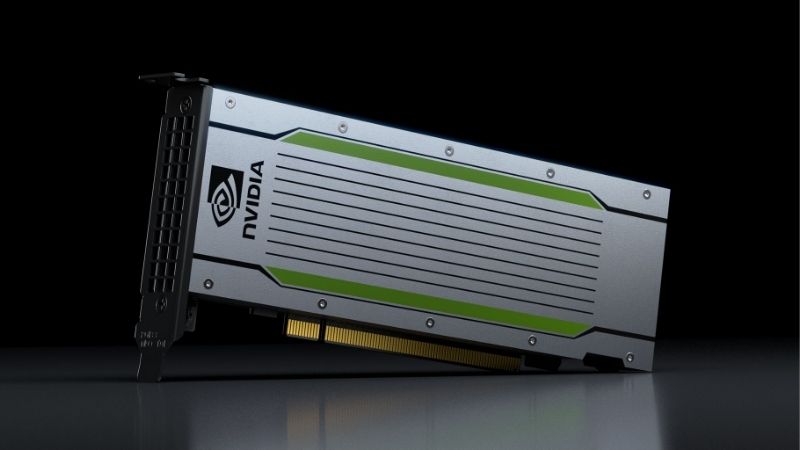
The T4’s headline feature is its 70-watt, single-slot, low-profile design that needs no external power connector. That efficiency let data centers pack many T4s into standard servers, and it is the reason the card became ubiquitous in cloud inference offerings.
For a fleet operator, low power is not a minor spec; it is the dominant cost over a card’s life. The T4’s frugality is exactly why it spread so widely and why it can still make financial sense where its performance is adequate for the workload.
The practical trade-off is that efficiency came at the cost of raw throughput. The T4 sips power because it is modest, so it suits high-volume serving of light models rather than demanding, latency-critical inference on large ones.
That balance is exactly why it dominated cloud inference menus for so long. Providers could offer cheap, low-power acceleration to countless customers whose models were modest, and the T4 delivered that democratized inference better than anything else of its era.
Where the T4 Fits vs the L4 and A10
The L4 is effectively the T4’s modern successor, offering a large generational leap in performance and efficiency along with FP8 and AV1 media support. For new deployments, the L4 is usually the smarter buy, delivering far more inference per watt.
Against the A10, the T4 is the lower-power, lower-performance option; the A10 suits heavier mixed workloads while the T4 targets pure lightweight inference. The T4’s niche is now narrow but real: maximum density and minimum power for models it can handle.
The honest framing is that the T4 is a legacy card living on value and ubiquity. It makes sense when you already own it or find it cheaply for a fitting workload, not as a forward-looking purchase for demanding new AI features.
Framed honestly, buying a T4 today is a bet on value over future-proofing. It can be the right bet for a fitting workload and a tight budget, but it is the wrong one if your roadmap points toward larger models, where the L4’s headroom quickly justifies its higher price.
Nvidia Tesla T4 Performance in Real Deployments
The T4’s value depends entirely on matching it to appropriate workloads. Across the jobs it still handles well, operator feedback is consistent, and it clarifies which teams should keep leaning on the T4 and which have outgrown it.
High-Volume, Lightweight Inference
For serving small or quantized models at scale, the T4 still delivers respectable cost per request thanks to its efficiency. Recommendation engines, image classification, and smaller language tasks all run acceptably, which is why so many cloud fleets kept T4 instances available for years.
Its strength here is density: many T4s per server on modest power translate into a lot of parallel inference capacity for the electricity budget. For workloads that fit its performance profile, that remains a reasonable economic proposition.
The recurring complaint is speed on modern models, and it is fair. Teams that tried to serve today’s large language models on T4s hit both memory and throughput limits, a mismatch that points them toward the L4 rather than a flaw in the T4 itself.
The lesson operators repeat is to right-size before deploying. A T4 pointed at a workload it fits delivers dependable, cheap inference for years; a T4 pointed at a modern large model frustrates everyone. The card has not changed, but expectations around it have.
Video Transcoding and Media Workloads
The T4 includes dedicated encode and decode engines, making it useful for video transcoding and media pipelines in addition to inference. For years it was a popular choice for cloud transcoding thanks to that combination of media acceleration and low power.
In practice, this dual capability let operators consolidate inference and transcoding onto one efficient card, which stretched its value. Newer cards like the L4 now do this better with AV1 support, but the T4 remains serviceable for older codecs and existing pipelines.
For teams with established media workflows built around the T4, that continuity has value. Ripping out working infrastructure for a marginal gain rarely pays, so the T4 often stays exactly where it already earns its keep.
This is the quiet reason so many T4s remain in service: replacing working, paid-for hardware for a marginal gain rarely survives a cost review. Inertia is not always laziness; sometimes it is simply the most rational financial decision available.
Compatibility, Density, and Deployment
Because it is single-slot, low-profile, and needs no power connector, the T4 fits almost any server, which is central to its enduring popularity. That flexibility made it the default inference card in countless standard configurations.
Before buying used units, confirm the server slot and airflow, since the passive design relies on chassis cooling. Reputable second-hand sources with clear return terms matter here, because a cheap card with no warranty is a false economy if it fails.
The deployment reality is that adding T4s is closer to a software change than a data-center project, which keeps rollout cost and risk low. That simplicity is a real practical advantage for teams expanding modest inference capacity cheaply.
For a team adding a little more capacity to an existing T4 fleet, that low friction is a genuine advantage. Staying on a known platform avoids revalidation work, and for incremental growth the T4 keeps the path of least resistance open.
Buying the T4 in 2026: Value, Market, and Pros and Cons
The T4 is now a pure value play, and whether it makes sense depends on your workload and how you weigh its age against its price. Two market realities in 2026 also shape the decision, and both are worth factoring into your timing.
When the T4 Still Makes Financial Sense
The strongest case is a workload the T4 already serves well and hardware you already own or can buy cheaply. In that situation, replacing working T4s for a marginal improvement rarely pays, and keeping them running is the sensible financial choice.
For new capacity, the calculation shifts. Cheap used T4s can still beat pricier cards on upfront cost for light workloads, but you inherit an older platform with a shorter remaining software-support horizon, which is a real consideration for a multi-year deployment.
The honest boundary is modern AI. If you are deploying today’s large models or want the best inference efficiency, the L4 is the better long-term buy, and forcing a T4 into that role leads to the disappointment its critics describe. In short, the T4 is a scalpel rather than a Swiss Army knife, and used as one it still cuts cleanly for the workloads it was built to serve.
Memory Prices and Buying Timing
The broader memory market shapes even a budget card like the T4. Component and memory prices climbed steeply through late 2025 before leveling off, and that plateau is a pause rather than a price cut, so used-card pricing stays firmer than buyers might expect.
New supply is coming, with OEMs able to source DDR5 from vendors such as CXMT and Micron building two Idaho plants, but those fabs will not reach volume production until 2027 to 2028. In short, waiting for a broad hardware price collapse is optimistic, since real relief remains years away.
With component prices generally still drifting upward, the practical read is that if a T4 fits your workload and the price is right, acting now is more defensible than betting on a market correction the supply timeline does not support.
Nvidia Tesla T4 Pros and Cons
The ownership picture distilled for a fast decision.
Pros: excellent efficiency at 70 W with no power connector; single-slot, low-profile fit for almost any server; capable inference on small and mid-sized models; media engines for transcoding; cheap and abundant on the used market.
Cons: Turing generation lags far behind on modern large models; 16 GB limits model size; no FP8 or AV1; a shorter remaining software-support horizon; used-market pricing held up by a firm memory market.
See More:
Final Verdict: Is the Nvidia Tesla T4 Worth It?
For high-volume lightweight inference, transcoding, and fleets that already run it, the Nvidia Tesla T4 remains a sensible, efficient card, especially when bought cheaply for workloads that fit its profile. If you are building for modern large models or want the best long-term inference efficiency, its successor the L4 is the smarter investment despite the higher upfront cost.
If the T4 fits your workload and budget, a firm memory market means waiting is unlikely to save you money. Check the latest Nvidia Tesla T4 pricing, availability, and seller ratings through the link below and secure the value while supply lasts.
Top-Rated Picks

Best Seller
PNY NVIDIA Tesla T4 Datacenter Card 16GB GDDR6 PCI Express 3.0 x16, Single Slot, Passive Cooling
Best Seller
PNY NVIDIA Tesla T4 Datacenter Card 16GB GDDR6 PCI Express 3.0 x16, Single Slot, Passive Cooling

Best Seller
PNY TESLAT4 NVIDIA Tesla T4 PCI-E 16GB GDDR6 GPU Accelerator Datacenter Card w/Full Height Bracket (Renewed)

| Product | Brand | Rating | Reviews | Price |
|---|---|---|---|---|
| ARCTIC MX-4 (4 g) – Premium Performance Thermal Paste… | ARCTIC | ★ 4.8 | 104k | $4.99 |
| ARCTIC MX-4 (incl. Spatula, 4 g) – Premium Performanc… | ARCTIC | ★ 4.8 | 71.9k | under $10 |
| Crucial 8GB DDR4 RAM 3200MHz (PC4-25600), Downclockab… | Crucial | ★ 4.8 | 62.8k | under $80 |
| AMD Ryzen 5 5600X 6-core, 12-thread unlocked desktop … | — | ★ 4.8 | 30.2k | under $200 |
| NVIDIA Shield Remote; Voice Search, Motion-Activated,… | — | ★ 4.7 | 10.6k | under $30 |
Frequently Asked Questions
What are the Tesla T4 core specifications?
The T4 is a Turing-based data center card with 16GB of GDDR6, a 70W power envelope, and a single-slot low-profile passive design with no fan. It was built for inference and virtual desktop density, and includes tensor cores plus dedicated video encode and decode engines.
Can I use a Tesla T4 in a normal desktop?
Only with care. It is passively cooled and relies on strong front-to-back server airflow, so in a standard desktop it will overheat without a shroud and dedicated fan. It also has no display outputs, so you need a separate GPU or integrated graphics for video.
Is the T4 still useful for AI inference in 2026?
It works for smaller models and classic computer vision workloads, and its 70W draw keeps operating cost low. However, Turing lacks newer precision formats such as FP8, and the L4 offers far more throughput at similar power. Buy a T4 only at a steep used discount.
What makes the T4 good for video transcoding?
It carries dedicated NVENC and NVDEC engines capable of many simultaneous H.264 and HEVC streams within a 70W budget, and it fits in single-slot low-profile server bays. That density made it extremely popular for transcoding farms, though it does not support AV1 encoding.
How does the T4 compare to the L4?
The L4 is the direct Ada-generation successor at a similar 72W and form factor but with 24GB of memory, far higher tensor throughput, and AV1 encode and decode. Unless the price difference is large, the L4 is the better purchase for both inference and transcoding.
Ready to decide? Our #1 pick for 2026 is the ARCTIC MX-4 (4 g) – Premium Performance Thermal Paste….
Live price & availability on Amazon.

Write Your Review
No reviews yet. Be the first to share your experience!