
- Top Pick: ASRock Radeon RX 7700 XT Challenger 12GB OC Graphics Card, AMD RDNA 3 Architecture, 12GB GDDR6, 2584 MHz Boost Clock, 3X DisplayPort 2.1, 1x HDMI 2.1, Dual Fan Cooling
- Best Value: Asrock 16GB Radeon RX 6800 XT Phantom Gaming OC Aktiv PCIe 4.0 x16 (Retail) (Renewed)
- Premium Choice: XFX Speedster MERC319 AMD Radeon RX 6800 XT CORE Gaming Graphics Card with 16GB GDDR6 HDMI 3xDP RX-68XTALFD9
RX 6800 XT is a last-generation high-end card that has aged into a genuine value proposition, offering real 1440p and 4K performance with 16GB of VRAM at prices well below what it once commanded. As an RDNA 2 card it trails newer options on ray tracing and features, but for a buyer who wants strong rasterized performance and a generous frame buffer without paying current-generation prices, it remains compelling, new or used. This review covers the 1440p and 4K performance, the practical build details, and the value math that decides whether the RX 6800 XT is still worth buying.
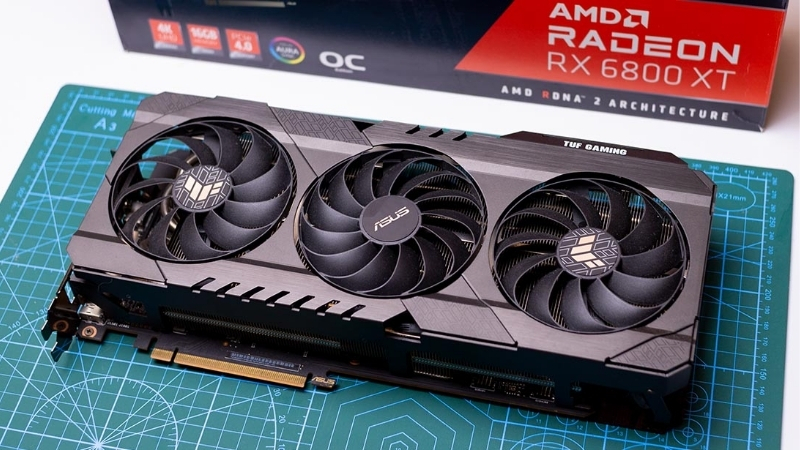
RX 6800 XT Performance: High-End 1440p and 4K Value
The RX 6800 XT is built on RDNA 2 Navi 21 with 16GB of GDDR6 on a 256-bit bus and a 300W board power. It was a flagship-adjacent card at launch, competing directly with the RTX 3080, and that pedigree is why it still handles high-end gaming well years later. Below, the performance is broken down the way a value-focused buyer evaluates a discounted high-end card.
As an Amazon Associate we earn from qualifying purchases at no extra cost to you.





1440p and 4K Frame Rates
At 1440p the RX 6800 XT is a strong performer, clearing high frame rates at maxed settings across most modern titles and comfortably feeding fast 1440p panels. This is its sweet spot, and it delivers a high-refresh 1440p experience that still feels current in rasterized games.
At 4K it remains a capable high-settings card, especially with FSR enabled, making it a reasonable choice for a 4K screen where you are willing to lean on upscaling for the heaviest titles. The 16GB frame buffer is a real asset here, providing comfortable headroom at 4K and in texture-heavy games where 10GB cards can struggle.
The practical takeaway is that the 6800 XT offers high-end rasterized performance and a generous 16GB of VRAM at a fraction of its original price. For a 1440p or entry-4K gamer focused on value, that combination is hard to match in this price range.
Ray Tracing, FSR and Feature Limitations
Ray tracing is the clearest weakness relative to newer cards. The 6800 XT can run ray tracing, and it does so better than the smaller RDNA 2 cards, but it still trails newer architectures and the comparable NVIDIA cards in heavy ray-traced titles. Most owners use it sparingly and prioritize the card’s strong rasterized performance.
On upscaling it supports FSR, including the software-based FSR 3 Frame Generation that works on RDNA 2, which helps lift frame rates in demanding titles and extend the card’s usable life at 4K. It does not support the newer RDNA 4-exclusive FSR 4, so it misses that specific upscaling leap.
As an older card it lacks AV1 encoding, found on newer RDNA 3 cards. For pure high-end gaming that is irrelevant, but a streamer or creator may factor it in. For most value buyers, the strong raster performance and 16GB of VRAM far outweigh these feature gaps.
What Owners Praise and Criticize
Owner sentiment is strongly positive, centered on value and longevity. The most common praise is the combination of high-end 1440p and 4K performance with 16GB of VRAM at a low price, with many owners noting how well the card has aged compared with 10GB rivals like the RTX 3080 and how confidently it still handles modern games.
The criticisms are the expected ones for an older high-end card: ray tracing trails newer options, the 300W power draw is significant, and modern features like AV1 encoding and FSR 4 are absent. None of these undermine its core value proposition of affordable high-end rasterized gaming, but they are worth knowing before you buy.
Taken together, owners frame it as one of the best ways to buy high-end rasterized performance on a budget, as long as you accept the older feature set and the higher power draw that come with it.
| Strengths | Trade-offs |
|---|---|
| High-end 1440p and 4K rasterized performance | Ray tracing trails newer cards |
| 16GB VRAM, more than the RTX 3080’s 10GB | 300W power draw and heat |
| Excellent value new or used | No AV1 encoding; no FSR 4 |
| Ages better than 10GB rivals | Older RDNA 2 feature set |
RX 6800 XT Build Fit: Power, Size and Cooling
As a high-end card, the RX 6800 XT has more substantial demands than the budget options, so a clean build depends on three things lining up: an adequate power supply, a case that fits a large card, and airflow to keep a 300W GPU comfortable. Each is covered below so your value high-end build comes together cleanly.
Power Draw and PSU Requirements
With a 300W board power, the RX 6800 XT wants a quality 750W power supply as a sensible floor, with a bit more headroom advisable for a strong CPU pairing. It uses standard 8-pin connectors, which many builders find convenient.
That draw is higher than the smaller budget cards, so check that your power supply has the capacity before buying. For a build coming from a lower-tier card, the 6800 XT is the kind of upgrade that may justify a power-supply check or upgrade alongside it.
It is worth budgeting for that possibility when you compare the 6800 XT against more efficient newer cards. If a power-supply upgrade is part of the equation, factor its cost in, because it narrows the real-world saving the discounted older card offers.
Card Size and Case Compatibility
Partner RX 6800 XT cards are generally sizeable, often 2.5 to 3 slots and over 300 mm long, so confirm your case clearance before buying. Reference and smaller models exist, but the high-end coolers are not compact.
Measure length against any front radiator or fans and confirm the slot below is not needed, since a thick card can block it. In tighter cases, prioritize a shorter model, and a support bracket is worth using given the card’s weight.
Because this is a high-end card with a substantial cooler, it pays to plan the case around it rather than the other way round. Confirm both the length and the slot clearance in advance, and the install will be straightforward despite the card’s size.
Cooling, Noise and Temperatures
The RX 6800 XT runs warm given its 300W draw, but the larger partner coolers handle the heat well and stay reasonably quiet, while smaller models work harder under sustained load. Fan-stop keeps it silent at idle.
An undervolt is a worthwhile tweak here, trimming temperatures, power, and noise with little performance cost, which suits a card running an older, power-hungry architecture. A well-cooled partner model is quiet enough for most builds out of the box.
RX 6800 XT Pricing, Value and When to Buy
The RX 6800 XT’s appeal is high-end performance at a value price, so pricing is central to the verdict, and the current component market is part of the picture. This section covers where prices sit, how the card compares to newer options, and which buyer it suits.
Where Prices Stand Right Now
For a value buyer, the market backdrop matters. PC component prices have broadly trended upward, driven mainly by memory costs, and that pressure reaches graphics cards and the rest of a build. The encouraging side is real but limited: the steep climb seen at the end of 2025 has cooled, and some makers, Framework among them, have reported a relatively stable recent stretch while still warning of further movement.
New memory supply is on the way but not soon. OEMs can now source DDR5 from suppliers like CXMT, and Micron is building two fabs in Idaho, yet those plants are not expected to come online until 2027–2028. In short, prices have stopped spiking rather than started falling, so genuine relief is still some distance out, which is worth keeping in mind when budgeting a high-end build.
The practical implication for an RX 6800 XT buyer is that its value depends on how low its price sits relative to newer high-end cards. As an older model it should be clearly cheaper than current-generation options to be the smart pick, so compare it directly against newer cards and used listings on the day you buy.
RX 6800 XT vs the Competition
Against the RTX 3080 it long competed with, the 6800 XT generally matches or beats it in rasterization and brings 16GB of VRAM against the 3080’s 10GB, which is a meaningful longevity edge. Against newer mid-range and high-end cards, it trades modern features and ray-tracing performance for raw value when significantly cheaper.
In the used market in particular, the 6800 XT is often a standout, offering high-end rasterized performance and a generous frame buffer for relatively little money. If you are comfortable buying second-hand, it is one of the better ways to reach high-end 1440p and entry-4K gaming on a budget, provided you compare it carefully against newer cards first.
When buying used, a few checks pay off: ask about the card’s history, confirm it has not run hot or been heavily mined or overclocked for long periods, and account for the lack of any remaining warranty. A clean, well-kept 6800 XT is one of the strongest high-end value options on the second-hand market.
Who Should Buy the RX 6800 XT
Buy it if you want high-end 1440p or entry-4K gaming, value the 16GB of VRAM for longevity, prioritize raw rasterized performance over newer features, and can find it at a clear discount to current-generation cards, new or used. For a value-focused high-end builder, it remains a strong choice with a capable power supply and a roomy case.
Look at a newer card instead if ray tracing, AV1 encoding, or the latest upscaling matter to you and the price difference is small, or if you cannot accommodate its 300W power draw. If the RX 6800 XT is genuinely cheap relative to newer options, check the current price and availability through the link here, and compare it against the current generation before deciding.
See More:
- Colorful iGame RTX 4090
- Founders Edition vs AIB
- Best RTX 4080 Super card
- Best RTX 5080 AIB
- Best RTX 5070 Ti card
Conclusion: Is the RX 6800 XT Worth It?
The RX 6800 XT remains one of the better value high-end cards available, pairing strong 1440p and entry-4K performance with 16GB of VRAM that gives it real longevity, all at the low prices it now commands new or used. Its limitations, weaker ray tracing, a 300W power draw, and the lack of newer features like AV1 encoding and FSR 4, are the expected trade-offs of an older RDNA 2 flagship. With component prices stabilizing rather than falling, the move is simple: if the RX 6800 XT is clearly cheaper than newer high-end cards, it is still a smart, longevity-friendly buy, so compare it against the current generation before you commit.
Top-Rated Picks


| Product | Brand | Rating | Reviews | Price |
|---|---|---|---|---|
| ARCTIC MX-4 (4 g) – Premium Performance Thermal Paste… | ARCTIC | ★ 4.8 | 104k | $4.99 |
| ARCTIC MX-4 (incl. Spatula, 4 g) – Premium Performanc… | ARCTIC | ★ 4.8 | 71.9k | $5.49 |
| Crucial 8GB DDR4 RAM 3200MHz (PC4-25600), Downclockab… | Crucial | ★ 4.8 | 62.8k | $74.99 |
| AMD Ryzen 5 5600X 6-core, 12-thread unlocked desktop … | — | ★ 4.8 | 30.2k | $177.60 |
| NVIDIA Shield Remote; Voice Search, Motion-Activated,… | — | ★ 4.7 | 10.6k | $25.99 |
Frequently Asked Questions
Is the RX 6800 XT still capable in 2026?
Yes for 1440p high refresh gaming and 4K at high settings in raster-heavy titles. Its 16GB buffer has aged particularly well, avoiding the texture stutter that hits 8GB and 10GB cards of the same era. The weakness is ray tracing, where RDNA 2 lags well behind current architectures.
What power supply does it require?
Total board power is 300W, typically through dual 8-pin connectors, with AMD recommending 750W. Partner models with factory overclocks pull more. A quality 750W unit with good transient response is the sensible minimum, especially if you pair it with a high core count processor that also spikes under load.
Does it support FSR 4 or AFMF?
AFMF driver-level frame generation works, since it needs RDNA 2 or newer, as do FSR 1 through 3.1 including in-game frame generation. FSR 4 does not work because it requires RDNA 4 hardware for the machine learning model. That upscaling gap is the main reason to consider a newer card.
How does it compare with an RTX 3080?
They are close in raster at 1440p, with the 3080 ahead at 4K on bandwidth and clearly ahead in ray tracing. The 6800 XT counters with 16GB against 10GB, which increasingly matters in modern titles. On the used market the AMD card usually costs less, making it the better value pick.
What should I check when buying used?
Inspect fans for bearing noise, ask about mining history, and expect that thermal pads and paste may need replacing after several years. Verify case clearance too, since many partner models are triple-slot and over 320mm long. Confirm the seller supplies both PCIe cables rather than a daisy chained one.



Write Your Review
No reviews yet. Be the first to share your experience!