
Normal GPU temp while gaming is the number every PC owner checks the first time their card sounds loud or a game starts stuttering. The short answer is that most graphics cards sit between 60°C and 80°C under a gaming load, and anything up to the low 80s is generally safe. But that headline figure hides important detail: core, hotspot, and memory junction temperatures are measured differently, and what is normal for one card can signal a problem on another. This guide breaks down the real temperature ranges, what pushes them up or down, and exactly how to tell the difference between a card that is simply warm and one that needs attention.
Quick Answer — Normal GPU Temp While Gaming
As an Amazon Associate we earn from qualifying purchases at no extra cost to you.


Core: 60–80°C (low 80s still safe) • Hotspot: 10–15°C above core • Memory junction (GDDR6X): 90–100°C normal, throttles ~105°C • Action needed? Only if the core stays above mid-80s or the card throttles under load.
What Counts as a Normal GPU Temperature While Gaming
Before you panic at a number on screen, it helps to know the expected ranges and which reading you are actually looking at. Modern Nvidia cards report several temperatures, and treating the highest one as your core temperature is a common source of unnecessary worry. The sections below define each range so you can interpret your own readout accurately.
Typical Temperature Ranges by Load
At idle, a healthy card usually reads 30–45°C, often with the fans stopped entirely thanks to zero-RPM modes. Under a sustained gaming load, the normal GPU temp while gaming lands in the 60–80°C band for the core on the majority of builds.
Readings in the low 80s are still within safe operating territory for most cards, since manufacturers rate them to run far hotter before any damage risk. Where you should start looking for a cause is when the core climbs past the mid-80s consistently, or when fans run at full speed just to hold those temperatures.
Context matters too. A compact mini-ITX case or a hot room will legitimately raise these numbers by several degrees, so a slightly higher reading is not automatically a fault.
It also helps to compare against your own card’s history rather than a stranger’s screenshot. If your GPU held 72°C in the same game last year and now reads 82°C, that ten-degree drift is the real signal worth chasing, even though both numbers fall inside the broadly safe range. A baseline you record once gives you far more useful information than any general chart.
Core vs Hotspot vs Memory Junction Temperature
The core (or edge) temperature is the average most monitoring tools show by default, and it is the figure the 60–80°C range refers to. The hotspot temperature is the single hottest point on the die and naturally reads higher; a gap of roughly 10–15°C over the core is normal, while a much larger delta can point to a mounting or paste issue.
Memory junction temperature, common on higher-end cards with GDDR6X, runs hotter still and is rated to tolerate it. Readings into the 90s and even past 100°C can be within spec, with throttling typically kicking in around 105°C to protect the modules.
Knowing which value you are reading prevents false alarms. A 95°C memory junction figure is routine, whereas a 95°C core temperature would be worth investigating.
How Nvidia Cards Manage Heat
Nvidia GPUs use a boost algorithm that constantly trades clock speed against temperature and power. As the card warms up, boost clocks step down in small increments well before any hard limit, which is the design working as intended rather than a malfunction.
Thermal throttling proper is the safety floor, usually around the low-to-mid 80s for the core depending on the model, where the card aggressively cuts clocks to stay safe. If you are hitting that wall and losing frames, that is the signal to improve cooling rather than a sign the card is failing.
What Affects Your GPU Temperature
Two identical cards can run ten degrees apart based on the system around them. Understanding the variables lets you judge whether your reading is reasonable for your setup, and it points you toward the cheapest effective fix if the number is higher than you would like. The factors below are the ones that move temperatures the most.
Case Airflow and Ambient Temperature
Airflow is the biggest lever most people ignore. A case starved of intake fans, choked with dust, or packed with cables can trap heat and add 5–15°C to your card with no other change. Good front-to-back airflow keeps the GPU fed with cool air.
Ambient room temperature feeds directly into the result. A card that reads 72°C in winter can read 80°C in a warm summer room, which is expected physics rather than degradation. Factor the season and room into your judgment before assuming something is wrong.
Thermal Paste, Pads, and Card Age
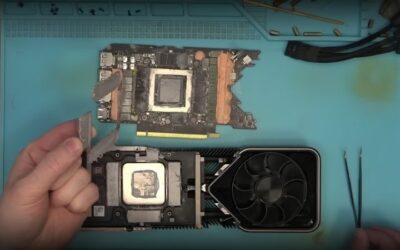
Heat transfer from the die to the cooler depends on the thermal interface materials, and these degrade over time. After three to five years, dried paste and hardened pads lose contact efficiency, and temperatures creep up even though nothing else changed.
This is why an older card running hot often responds dramatically to fresh paste and new pads, frequently dropping core temperatures by several degrees and memory junction temperatures by far more. It is the lowest-cost upgrade with the highest thermal return for an aging card.
Pros and Cons of Running a Cooler vs Hotter Card
There is a real trade-off in how cool you push a card. Running cooler extends component life, keeps fans quieter, and preserves higher sustained boost clocks, which can mean a small but real performance gain in long sessions.
The cost side is noise, effort, and sometimes money. Forcing very low temperatures usually means louder fans or spending on better cooling, and chasing the last few degrees has diminishing returns once you are comfortably in the safe range.
For most users the sweet spot is keeping the core in the 60s to mid-70s under load, where the card is quiet, long-lived, and performing near its peak without an aggressive fan profile. Anything in safe range that stays quiet is a perfectly good outcome.
How to Monitor and Lower a High GPU Temperature
If your readings sit above the comfortable range, the path forward is measure first, then act. Guessing wastes time and money, while a few minutes of monitoring tells you exactly which temperature is high and how your card behaves under load. The steps below cover both diagnosis and the fixes that actually work.
Tools to Monitor GPU Temperature
Free utilities such as GPU-Z, HWiNFO, and MSI Afterburner display core, hotspot, and memory junction temperatures in real time, along with fan speed and clocks. An on-screen overlay during gameplay shows you peak temperatures in the exact scenarios that matter, not just a synthetic benchmark.
Log a full gaming session rather than reading a single moment. Sustained load reveals whether temperatures plateau safely or keep climbing toward a throttle point, which is the data you need to decide on next steps.
Pay attention to the gap between core and hotspot while you log. A widening delta over time is one of the earliest signs that the thermal interface is aging, often appearing before the core temperature itself looks alarming. Catching that trend early lets you plan a paste and pad refresh before the card starts throttling in your favorite games.
Quick Fixes to Bring Temperatures Down
Start with the free wins. Clean dust from the card and case, improve cable management, add or rebalance case fans, and set a more aggressive fan curve so the card ramps earlier. These alone often drop temperatures by several degrees.
If the card is older, refreshing the thermal paste and pads is the highest-impact paid fix, restoring the heat transfer the cooler was designed for. Undervolting is another effective route, lowering power and heat with little or no performance loss on most Nvidia cards.
Order these fixes by effort and cost. Start with cleaning and a fan-curve tweak because they are free and instant, move to undervolting if you are comfortable in MSI Afterburner, and treat new paste or pads as the targeted fix for an aging card. Working in that order means you often solve the problem before spending anything, and you learn exactly which change moved the number.
When High Temps Mean You Should Upgrade Cooling
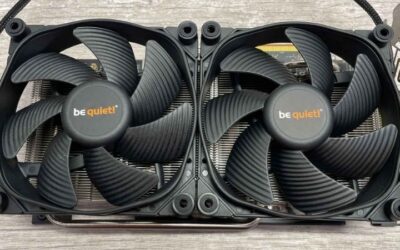
If you have cleaned, improved airflow, and refreshed the interface materials and the card still throttles, the cooling solution itself may be the limit. A more capable case airflow setup, a better cooler, or an aftermarket solution can move you back into comfortable territory.
Watch the memory junction temperature specifically on high-end cards, since it often hits its limit before the core does. If that reading is pinned near throttle while the core looks fine, new thermal pads are usually the targeted fix that solves it.
Knowing your numbers is only useful if you act on them. If your card runs hotter than the safe range, a fresh tube of quality thermal paste, new pads, or a few good case fans can transform its behavior.
See More:
- How to lower GPU temperature
- How to lower GPU hotspot temp
- How to increase GPU performance
- How to enable G-Sync
Conclusion
A normal GPU temp while gaming sits in the 60–80°C range for the core, with the low 80s still safe and hotspot and memory junction readings running legitimately higher. Once you know which value you are looking at, most worry disappears, and any genuinely high reading usually traces back to airflow, dust, room temperature, or aging thermal materials. Monitor first, apply the free fixes, and reach for fresh paste, new pads, or better cooling when the numbers justify it. Keep your card in that comfortable safe range and it will stay quiet, fast, and reliable for years.
Top-Rated Picks



| Product | Brand | Rating | Reviews | Price |
|---|---|---|---|---|
| ARCTIC MX-4 (4 g) – Premium Performance Thermal Paste… | ARCTIC | ★ 4.8 | 104k | $4.99 |
| ARCTIC MX-4 (incl. Spatula, 4 g) – Premium Performanc… | ARCTIC | ★ 4.8 | 71.9k | $5.49 |
| Crucial 8GB DDR4 RAM 3200MHz (PC4-25600), Downclockab… | Crucial | ★ 4.8 | 62.8k | $74.99 |
| AMD Ryzen 5 5600X 6-core, 12-thread unlocked desktop … | — | ★ 4.8 | 30.2k | $177.60 |
| NVIDIA Shield Remote; Voice Search, Motion-Activated,… | — | ★ 4.7 | 10.6k | $25.99 |
Frequently Asked Questions
What is a normal GPU temperature during gaming?
Between 60 and 80 degrees Celsius on the core sensor covers the large majority of well-cooled systems under sustained load. Compact cards and small cases sit at the upper end, large triple-fan coolers in mesh cases at the lower end. Hotspot will read ten to fifteen degrees above core, which is expected behaviour.
Should my card ever reach 85 degrees?
It can and often does in a warm room or a restricted case, and it remains within specification. What matters is whether clocks are holding steady. If boost frequency is stable and the fans are not at maximum, 85 degrees is simply the operating point your cooling and ambient conditions produce.
What temperature should the card idle at?
Between 30 and 50 degrees depending on ambient temperature and whether the fans stop at low load. Many cards use a zero-RPM mode below around 55 degrees, so an idle reading in the high forties with motionless fans is normal and not a sign that anything is wrong.
Why do my temperatures vary so much between games?
Different titles load different parts of the die. Ray tracing and heavy shader work drive the core hard, while high-resolution texture streaming drives memory temperature. An uncapped menu screen can also render thousands of frames per second and produce higher temperatures than actual gameplay, which is why frame rate caps are worth setting.
How do I lower gaming temperatures without losing performance?
Undervolting is the best answer. Reducing voltage while holding the same clock frequency cuts heat output substantially with little or no frame rate cost. Combine it with a fan curve that ramps earlier and gently rather than reacting late and aggressively, and both temperature and perceived noise improve at the same time.





Write Your Review
No reviews yet. Be the first to share your experience!