
- Top Pick: EVGA GeForce RTX 2080 Ti Black Edition Gaming, 11GB GDDR6, Dual HDB Fans & RGB LED Graphics Card 11G-P4-2281-KR (Renewed)
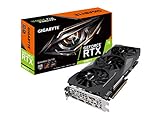
- Best Value: GIGABYTE GeForce RTX 2080 Ti Gaming OC 11GB Graphic Cards GV-N208TGAMING OC-11GC (Renewed)
- Premium Choice: NVDIA GeForce RTX 3070 8GB GDDR6 PCI Express 4.0 Graphics Card – Dark Platinum and Black (Renewed)
The RTX 3070 is not an upgrade over the RTX 2080 Ti: the two deliver nearly the same gaming performance, and the older 2080 Ti has 11 GB of VRAM against the 3070’s 8 GB, so pick whichever is cheaper, leaning toward the 2080 Ti for 1440p and 4K in newer games and toward the RTX 3070 if you value lower power draw and a slightly newer architecture. If you already own one of these cards, moving to the other is a sideways step that will not change how your games feel.
As an Amazon Associate we earn from qualifying purchases at no extra cost to you.



Why These Two Keep Getting Compared
When NVIDIA launched the RTX 3070 in 2020 at $499, the headline promise was RTX 2080 Ti performance for half of the older card’s $999 price. Reviews largely confirmed it. Years later, both cards sit in the same used-market bracket, which makes the comparison practical again: same speed, different trade-offs in memory, power and features.
Specs at a Glance
| Spec | RTX 2080 Ti | RTX 3070 |
|---|---|---|
| Architecture | Turing | Ampere |
| Release date | 20 September 2018 | 1 September 2020 |
| Launch MSRP | $999 | $499 |
| CUDA cores | 4,352 | 5,888 |
| Boost clock | 1,545 MHz | 1,725 MHz |
| Process | 12 nm | 8 nm |
| Board power | 250 W | 220 W |
| Memory | 11 GB GDDR6 | 8 GB GDDR6 |
| Memory bus | 352-bit | 256-bit |
| Bandwidth | 616.0 GB/s | 448.0 GB/s |
| L2 cache | 5.5 MB | 4 MB |
| Interface | PCIe 3.0 x16 | PCIe 4.0 x16 |
| Power connectors | 2x 8-pin | 1x 12-pin (Founders Edition) |
| Length / width | 267 mm, 2-slot | 242 mm, 2-slot |
| Outputs | 1x HDMI 2.0, 3x DP 1.4a, 1x USB-C | 1x HDMI, 3x DisplayPort |
The RTX 3070’s CUDA core count looks much higher, but Ampere counts cores differently: each streaming multiprocessor can run two FP32 operations per clock in some cases, which inflates the number without doubling real-world speed. The 2080 Ti counters with a wider memory bus and about 37% more bandwidth.
Gaming Performance: Within a Few Percent
According to TechSpot’s RTX 3070 review (Hardware Unboxed’s testing), the 3070 matched the 2080 Ti almost exactly in many games at 1440p, pulled slightly ahead in some titles like Rainbow Six Siege, and fell a few frames behind at 4K in memory-heavy games such as Shadow of the Tomb Raider. TechPowerUp’s RX 6800 XT review data, which included both NVIDIA cards, placed them at essentially the same level. Later multi-game aggregates tend to put the 2080 Ti marginally ahead on average, largely because recent games use more VRAM.
- 1080p: effectively a tie. The 3070 sometimes edges ahead by a few percent thanks to higher clocks.
- 1440p: within about 0-5% either way depending on the game. A title running near 100 fps on one will run near 100 fps on the other.
- 4K: the 2080 Ti tends to lead by a few percent and holds steadier 1% lows, because 8 GB starts to run out.
All frame rates vary with settings, CPU and game patch, but the pattern has held for years: same class, different memory.
Ray tracing
Ampere’s second-generation RT cores are more efficient than Turing’s first-generation units, so the RTX 3070 tends to hold a small edge in ray-traced workloads when VRAM is not a limit. Once ray tracing pushes memory use above 8 GB, which is common at 1440p in recent releases with high textures, the 2080 Ti’s extra memory can flip the result. In practice, ray tracing performance is close enough that it should not decide the purchase on its own.
The VRAM Question Decides Most Cases
This is the biggest practical difference between the cards in 2026. Many games launched in the past two years recommend 10-12 GB for 1440p with high textures and ray tracing. On an 8 GB card that usually means one of three things: lowering texture quality, accepting stutter, or watching textures load in late.
| Use case | RTX 2080 Ti (11 GB) | RTX 3070 (8 GB) |
|---|---|---|
| 1080p, high settings | Comfortable | Comfortable |
| 1440p, high textures | Comfortable in nearly all games | Some titles need texture reductions |
| 1440p, ray tracing on | Usually fine | Often over budget in newer games |
| 4K | Workable with tuning | Frequently memory-limited |
The 2080 Ti’s 3 GB advantage is not huge, but it lands right where many current games need it.
DLSS and Frame Generation
Both cards are RTX GPUs with tensor cores, so both support DLSS Super Resolution with the DLSS 4 transformer model, which improved image quality significantly over older DLSS versions. Neither supports NVIDIA’s DLSS Frame Generation, which requires RTX 40 or RTX 50. Both can use AMD’s FSR 3 frame generation in games that offer it.
The newer DLSS 4.5 second-generation model also runs on both, but because RTX 20 and 30 cards lack FP8 support, community tests reported by Tom’s Hardware showed frame-rate costs of roughly 14-24% compared with DLSS 4 on older RTX hardware. On either card, the DLSS 4 preset is usually the better balance. Both remain on NVIDIA’s current Game Ready driver branch.
Power, PSU and Case Fit
The RTX 3070 is a little more efficient, rated at 220 W against the 2080 Ti’s 250 W. Using the formula of GPU power plus CPU power plus about 150 W of headroom:
- RTX 2080 Ti: 250 W + 125 W + 150 W = about 525 W, so a quality 600-650 W unit.
- RTX 3070: 220 W + 125 W + 150 W = about 495 W, so a quality 550-650 W unit.
The facts list a single 12-pin connector for the RTX 3070, but that applies to the Founders Edition, which ships with an adapter. Most partner RTX 3070 cards use one 8-pin plus one 6-pin, or two 8-pin connectors. The 2080 Ti uses two standard 8-pin connectors. At 242 mm, the 3070 reference design is shorter than the 2080 Ti’s 267 mm, which helps in compact cases, though partner models vary.
Value Math: Same Speed, Different Price
At launch the calculation was simple: with performance indexed at 100 for both, the 2080 Ti cost $9.99 per performance point and the 3070 cost $4.99. That halving is what made the 3070 famous.
On the used market in late 2026 the picture is closer. A used RTX 3070 usually sells for somewhere around $200-$260, while a used RTX 2080 Ti generally sits around $220-$300. With performance essentially equal, cost per performance point is nearly identical, so the decision comes down to whether you value 3 GB more VRAM (2080 Ti) or 30 W less power, a newer card with potentially fewer hours on it, and PCIe 4.0 (3070).
Decision Table
| If you… | Pick |
|---|---|
| Play mostly at 1080p, esports or older titles | RTX 3070 (cheaper, cooler) |
| Play new AAA games at 1440p with high textures | RTX 2080 Ti |
| Want to try 4K | RTX 2080 Ti |
| Have a small case or a 550 W PSU | RTX 3070 |
| Already own either one | Keep it; look at a current card such as the RTX 5070 or RX 9070 for a real upgrade |
Buying Used: What to Check
- Early RTX 2080 Ti cards had a known rate of memory failures shortly after launch, showing up as artifacts. Surviving cards years later are generally stable, but test for artifacts under load before buying.
- Both cards were popular for cryptocurrency mining. Check fan bearings and look for high hotspot temperatures that suggest dried thermal paste.
- Confirm whether a 3070 listing is the standard model or the RTX 3070 Ti, which is faster but draws more power and still has 8 GB.
Frequently Asked Questions
Is the RTX 3070 faster than the RTX 2080 Ti?
Not meaningfully. Launch reviews showed them roughly tied, with the 3070 slightly ahead in some games at 1080p and 1440p and the 2080 Ti slightly ahead at 4K. In newer games, the 2080 Ti’s larger VRAM often gives it a small edge.
Should I upgrade from an RTX 2080 Ti to an RTX 3070?
No. You would gain almost no performance and lose 3 GB of VRAM. For a real upgrade from a 2080 Ti, look at a card at least 50% faster, such as an RTX 5070, RX 9070 or a used RTX 3080 12GB.
Does the RTX 3070’s 8 GB of VRAM cause problems in 2026?
In some recent games at 1440p with high textures or ray tracing, yes. Symptoms include stutter and blurry textures that load late. Lowering texture quality by one level usually solves it.
Can either card use DLSS 4?
Yes. Both support DLSS Super Resolution with the DLSS 4 transformer model. Neither supports DLSS Frame Generation, which requires an RTX 40 or RTX 50 card.
What power supply do I need for these cards?
A quality 600-650 W unit covers either card with a typical gaming CPU. The RTX 3070 can run on a good 550 W unit in many systems. Make sure the PSU has the right number of PCIe power cables for the specific model.
Ready to decide? Our #1 pick for 2026 is the Architecture.
Live price & availability on Amazon.









Write Your Review
No reviews yet. Be the first to share your experience!