
- Top Pick: ASUS Prime GeForce RTX 5060 Ti 16GB GDDR7 Gaming Graphics Card
- Best Value: ASUS Dual GeForce RTX 5060 Ti 16GB GDDR7 OC Edition Gaming Graphics Card
- Premium Choice: GIGABYTE GeForce RTX 5060 Ti WINDFORCE OC 8G Graphics Card, 8GB 128-bit GDDR7, PCIe 5.0, WINDFORCE Cooling System, GV-N506TWF2OC-8GD Video Card
Top Rtx 3080 5060 Old Flagship Picks for 2026
Here are our current top rtx 3080 5060 old flagship picks, compared on real Amazon owner reviews, price, and features. Live prices update below.

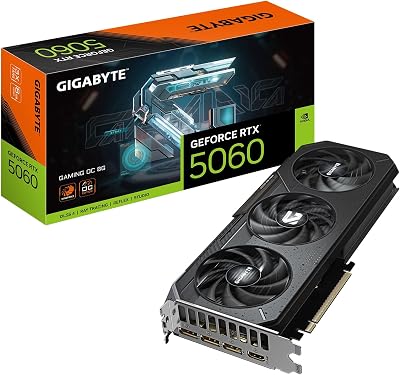


3080 vs 5060 Ti sets the old Ampere flagship against Blackwell’s clever mid-range card, and the result upends easy assumptions. The RTX 3080 still hits harder in raw rasterization, yet the RTX 5060 Ti 16GB answers with more VRAM, half the power draw, DLSS 4, and a fresh warranty. One is a five-year-old powerhouse from the used market; the other is a modern, efficient card built for the years ahead. This comparison weighs specs, real performance, power, and price so you can pick the right GPU for your build.
As an Amazon Associate we earn from qualifying purchases at no extra cost to you.




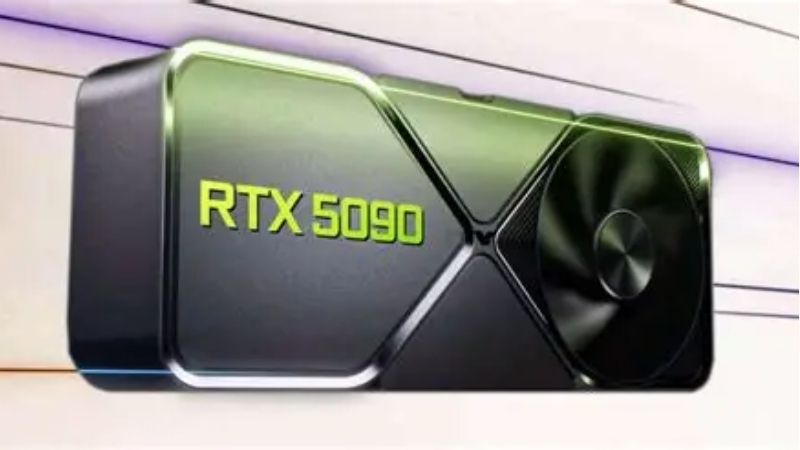
The Quick Verdict: RTX 3080 vs 5060 Ti
Here is the fast answer: if you want the most raw 1440p frames per dollar and trust the used market, the RTX 3080 still wins on pure rasterization. If you want more VRAM, far lower power, DLSS 4 Multi Frame Generation, and a new card with a warranty, the RTX 5060 Ti 16GB is the wiser long-term buy. The decision hinges on VRAM, efficiency, and your tolerance for secondhand hardware. Check current pricing on both, since street prices shift week to week in 2026.
The 30-Second Answer
The 3080 is roughly 15 to 25% faster in native rasterization, making it the stronger raw performer at 1440p.
The 5060 Ti counters with 16GB of VRAM versus the 3080’s 10GB, half the power draw, DLSS 4, and modern media features. For longevity and efficiency it is the safer pick; for brute frames today, the 3080 holds firm.
The twist is VRAM. The newer, slower card actually carries more memory, which means it can age better in texture-heavy games even as the older card wins raw benchmarks. That tension defines the whole matchup.
It helps to frame the question by time horizon. If you upgrade every couple of years and chase frames now, the 3080’s raw speed is tempting. If you want a card that stays relevant through several future game releases, the 5060 Ti’s larger memory and modern feature set make it the more patient, lower-risk choice.
Spec Comparison Table
The numbers reveal two very different design philosophies:
| Spec | RTX 3080 (10GB) | RTX 5060 Ti (16GB) |
|---|---|---|
| Architecture | Ampere (GA102) | Blackwell (GB206) |
| CUDA cores | 8,704 | 4,608 |
| VRAM | 10GB GDDR6X | 16GB GDDR7 |
| Memory bus | 320-bit | 128-bit |
| Bandwidth | 760 GB/s | 448 GB/s |
| Power (TDP) | 320W | 180W |
| DLSS 4 MFG | No | Yes |
| Launch MSRP | $699 | $379 |
Key Differences That Matter
The 3080 has nearly twice the CUDA cores and a far wider 320-bit bus, which is why it outpaces the 5060 Ti in native workloads. Its raw horsepower remains genuinely impressive for a card of its age.
The 5060 Ti’s advantages are different in kind: 6GB more VRAM, a 180W power draw that sips electricity, DLSS 4 Multi Frame Generation, and a current warranty. Those practical, forward-looking benefits are exactly what the aging 3080 cannot match.
Deep Dive Face-Off: Performance, Design, and Power
Raw specs hint at the outcome, but lived experience depends on resolution, features, and how each card behaves in a real system. This section compares them by architecture and design, gaming and ray tracing, and efficiency, with an honest pros and cons list tied to the matchup.
Architecture and Design
The 5060 Ti is built on the modern Blackwell GB206 die with 4th-gen RT cores, 5th-gen Tensor cores with FP4 support, and the latest NVENC encoder. It is a compact, efficient card that fits small cases and barely raises system temperature.
The 3080 is a large, power-hungry GA102 card from 2020. Its design is proven, but it runs hot, demands strong cooling, and its GDDR6X memory is known to reach high temperatures. In a cramped or quiet build, the 5060 Ti is far easier to house and cool.
The size and power difference shapes which systems each suits. The 5060 Ti slips into compact builds and runs on a modest power supply, while the 3080 needs a full-size tower with serious airflow to perform at its best.
That practical gap extends to upgrades. Dropping a 5060 Ti into an older prebuilt rarely requires a new power supply, making it a clean, low-friction upgrade. The 3080, by contrast, often forces a power supply and cooling rethink, which adds hidden cost and effort that the headline price does not show.
Gaming Performance and Ray Tracing
At native 1440p, the 3080 leads, delivering meaningfully higher frame rates across demanding titles thanks to its core count and bandwidth. For pure rasterization, it remains the stronger card.
The size of that lead depends heavily on the game. In older, well-optimized titles the 3080 can pull comfortably ahead, while in newer games that lean on upscaling and ray tracing the margin shrinks. Averaged across a modern test suite, the gap is real but not enormous, which is what makes the 5060 Ti’s other advantages so relevant to the final verdict.
But VRAM flips part of the story. The 5060 Ti’s 16GB buffer outlasts the 3080’s 10GB in the newest texture-heavy games, where the older card can run short on memory and stutter even when its core could keep up. Over the next few years, that capacity gap will only grow more relevant.
Ray tracing tilts toward the newer card in supported titles. The 5060 Ti’s DLSS 4 Multi Frame Generation can multiply on-screen frames in a way the 3080 cannot, lifting perceived smoothness well beyond it. So your library decides the winner: brute raster favors the 3080, while modern DLSS 4 games narrow or erase the gap and showcase Blackwell’s forward-looking strengths.
The VRAM question deserves one more point. Several recent titles already exceed 10GB at 1440p with high textures and ray tracing, the exact settings buyers of these cards tend to want. In those games the 5060 Ti’s 16GB keeps frame times smooth while the 3080 can stutter, which means the newer card sometimes delivers the better experience despite losing the raw benchmark.
Power, Efficiency, and Pros and Cons
The efficiency story is lopsided. The 5060 Ti does its work on 180W and pairs happily with a 550W power supply, while the 3080 needs 320W and a 750W unit, meaning more heat, more noise, and a higher electricity bill over time.
For buyers in regions with high power costs, that gap is real money over a year, and the extra heat can make a small room uncomfortable in summer. The 5060 Ti can also be cooled by quieter, smaller coolers, making it the more pleasant card during long sessions.
Efficiency also affects how each card fits a budget beyond its sticker price. A 320W 3080 may demand a power supply upgrade and better case cooling, hidden costs that narrow its apparent savings. The 180W 5060 Ti slots into almost any modern system as-is, so the price you see is closer to the price you actually pay once the whole build is accounted for.
Framing the 3080 vs 5060 Ti choice on the cards themselves:
- 5060 Ti pros: 16GB VRAM, very low 180W power, DLSS 4 MFG, runs cool and quiet, new with warranty, compact.
- 5060 Ti cons: narrow 128-bit bus, lower raw rasterization than the 3080.
- 3080 pros: much stronger native rasterization, wide 320-bit bus, strong 1440p frames.
- 3080 cons: only 10GB VRAM, 320W power draw, runs hot, used-only with no warranty, no DLSS 4 MFG.
Price, the 2026 Market, and the Final Verdict
Value, not just frames, decides this matchup, and the 2026 GPU market is being squeezed by forces well beyond either card. Understanding those pressures is the key to timing your purchase well.
Current Pricing, the Memory Crunch, and the H200 Effect
The RTX 5060 Ti 16GB’s $379 MSRP has drifted upward in 2026 as a severe GDDR7 and DRAM shortage raises component costs across the lineup. Nvidia has reportedly shifted production toward lower-memory cards to navigate the crunch, which keeps mid-range availability tighter and prices firm. The used RTX 3080, for its part, holds a stubborn price because scarcity of new cards pushes buyers into the secondhand market.
The squeeze runs deeper than gaming GPUs. In January 2026 the US cleared Nvidia’s H200 AI chip for sale to China, where firms reportedly ordered over two million units at around $27,000 each. Nvidia prioritizes that hugely profitable AI demand, diverting wafers and high-bandwidth memory away from consumer cards. Add rising laptop and component prices generally, and the message is clear: GPU prices are trending up, not down. If a 5060 Ti near MSRP or a clean, fairly priced 3080 appears, that is the window to buy rather than wait for relief the supply chain cannot deliver.
The Alternative If Neither Fits
If the 3080’s power draw worries you but you want more raw speed than the 5060 Ti, the RTX 5070 is the natural step up. It adds real performance and GDDR7 bandwidth while keeping Blackwell efficiency and DLSS 4.
Buyers chasing maximum value might also weigh a used RTX 4070, which slots between these two in performance. Compare all three before locking in a decision.
The cleanest way to shop this tier is to set a fair target price for each card and buy whichever hits it first. Because the 3080, 5060 Ti, 4070, and 5070 cluster within a narrow band, flexibility on the exact model usually saves more money than holding out for one specific card in a tight market.
Final Verdict: Who Should Buy Which
Buy the RTX 5060 Ti 16GB if you want a cool, quiet, efficient new card with generous VRAM, DLSS 4, and a warranty, and you play at 1080p or 1440p with upscaling. It is the low-stress, future-friendly choice that ages well.
Buy a used RTX 3080 if you want the most raw 1440p frames per dollar, have a strong power supply and good case airflow, and trust a reputable seller. For most new builds, though, the 5060 Ti’s VRAM and efficiency make it the smarter long-term pick.
Consider your monitor as the tiebreaker. If you game on a 1080p or 1440p panel and value a quiet, efficient system, the 5060 Ti is built for exactly that. If you have the cooling, the power headroom, and a hunger for the maximum raw frames a budget allows, a clean used 3080 still delivers. Matching the card to your display and your build is what turns this close call into an easy one.
See more:
- What graphics card do I have?
- How to tell what graphics card I have
- 5070 Ti vs 4080
- 5060 vs 3080
- RTX 2060 graphics card
Recommended Products
ASUS
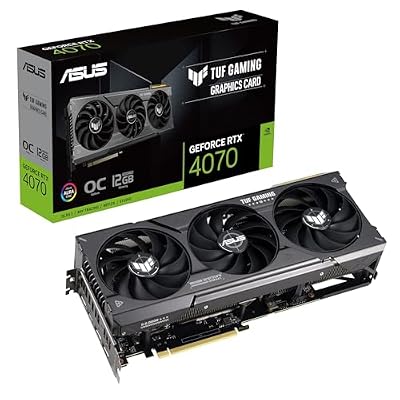
ASUS TUF Gaming NVIDIA GeForce RTX 4070 OC Edition Gaming Graphics Card (PCIe 4.0, 12GB GDDR6X, HDMI 2.1, DisplayPort 1.4a), 3 Year Warranty

Sapphire
Sapphire Pulse AMD Radeon RX 7800 XT Gaming 16GB GDDR6 Dual Video Card

ASUS
ASUS ROG Strix GeForce RTX 4090 OC Edition Gaming Graphics Card (PCIe 4.0, 24GB GDDR6X, HDMI 2.1a, DisplayPort 1.4a), 3 Year Warranty
As an Amazon Associate we earn from qualifying purchases. Product prices and availability are accurate as of the date/time indicated.
Conclusion
The 3080 vs 5060 Ti decision pits raw power against modern efficiency and VRAM: the 3080 still wins native rasterization, but the 5060 Ti answers with 16GB of memory, DLSS 4, half the power draw, and a warranty that ages far better. With 2026’s memory shortage and AI-chip demand keeping prices elevated, buying when you find a fair deal beats waiting for a drop. Compare the newest RTX 5060 Ti and used 3080 listings, check live pricing and stock on Amazon, and choose the card that matches your resolution, case, and tolerance for the used market.
Frequently Asked Questions
What is the best 3080 5060 ti in 2026?
The best 3080 5060 ti depends on your budget and how you plan to use it. The options compared above are our top-rated picks based on real customer ratings, build quality, and overall value — start with the highest-rated model that fits your budget.
How much should I expect to spend on a 3080 5060 ti?
Prices vary by brand and features. Budget options cover the essentials, while mid-range and premium models add durability, performance, and extra features. Compare the prices in the list above to find the best value for your needs.
What should I look for when buying a 3080 5060 ti?
Focus on what matters most for your use case — build quality, compatibility, performance, warranty, and verified customer reviews. Every pick above is selected to balance these factors.
Are budget 3080 5060 ti options worth it?
Yes. For most people a well-reviewed budget or mid-range 3080 5060 ti delivers excellent value. You only need to spend more if you specifically require premium materials or top-tier performance.
How did we choose these 3080 5060 ti picks?
We compare current Amazon ratings, review counts, key features, and price to surface the options with the best real-world value. The list is refreshed as ratings and availability change.

Write Your Review
No reviews yet. Be the first to share your experience!