
The best multi core CPU for gaming and work in 2026 is the AMD Ryzen 9 9950X3D for high-end hybrid users and the AMD Ryzen 7 9800X3D for gaming-first users, while the Intel Core Ultra 7 265K and AMD Ryzen 9 9900X offer the best value if you need strong multithreaded performance without paying flagship prices.
- How Many Cores Do You Actually Need in 2026?
- Best Multi-Core CPUs Compared: Gaming vs. Work Performance
- Decision Matrix: Which CPU Fits Your Situation
- Platform Cost: CPU Price Is Only Half the Budget
- Power Limits and Cooling Requirements: A Worked Calculation
- Compatibility Checks Before You Buy
- Final Recommendation
Quick answer: For most people in 2026, the best multi is the AMD Ryzen 7 9800X3D — our #1 rated choice. See the full ranked comparison, alternatives and buying advice below.
How Many Cores Do You Actually Need in 2026?
Core count is not linear for gaming, but it is for work. Most modern game engines scale well to 6-8 high-performance cores and then plateau, while renderers, compilers, and video encoders scale almost perfectly to 16 cores and beyond. That split defines the buying decision.
- 6 cores / 12 threads: Sufficient for 1080p/1440p gaming and light work like photo editing and streaming with GPU encoding. Struggles with heavy multitasking, like gaming + 4K editing + Chrome with dozens of tabs.
- 8 cores / 16 threads: The current sweet spot for gaming and work. No modern game is limited by 8 fast cores, and you get enough multithreaded headroom for DaVinci Resolve, Blender, Lightroom, and compiling.
- 12 cores / 24 threads: The crossover point where work performance jumps 35-50% over 8-core chips with minimal gaming loss. Ideal for creators who game.
- 16 cores / 32 threads: For professionals where time is money. Gaming does not benefit beyond 8 cores today, but 3D rendering, simulation, and heavily threaded compilation finish 25-40% faster than on 12-core parts.
- 20+ cores (Intel hybrid): Intel’s Core Ultra 9 285K uses 8 Performance-cores + 16 Efficiency-cores (24 cores / 24 threads). Thread count matters less than how workloads schedule across P-cores and E-cores.
Best Multi-Core CPUs Compared: Gaming vs. Work Performance
Gaming favors large L3 cache and high single-thread speed. Work favors sustained all-core frequency and thread count. The table below summarizes where each class actually wins, using typical DDR5-6000 / DDR5-5600 platforms at stock power limits.
| CPU | Cores / Threads | Boost Clock | Base TDP / PBP | Gaming (Avg vs. 9800X3D) | Multithreaded Work (Cinebench R23 nT) |
|---|---|---|---|---|---|
| AMD Ryzen 7 9800X3D | 8C / 16T (single 3D V-Cache CCD) | 5.2 GHz | 120W | 100% (baseline) | ~22,800 pts |
| AMD Ryzen 9 9950X3D | 16C / 32T (12C with 3D V-Cache + 4C standard) | 5.7 GHz | 170W | 97-99% | ~42,500 pts |
| AMD Ryzen 9 9900X | 12C / 24T | 5.6 GHz | 120W | 92-94% | ~33,800 pts |
| AMD Ryzen 7 9700X | 8C / 16T | 5.5 GHz | 65W | 90-93% | ~22,200 pts |
| Intel Core Ultra 9 285K | 24C (8P+16E) / 24T | 5.7 GHz (P-core) | 125W PBP / 250W MTP | 88-92% | ~42,000 pts |
| Intel Core Ultra 7 265K | 20C (8P+12E) / 20T | 5.5 GHz (P-core) | 125W PBP / 250W MTP | 87-91% | ~36,500 pts |
| Intel Core i7-14700K | 20C (8P+12E) / 28T | 5.6 GHz (P-core) | 125W PBP / 253W MTP | 89-93% | ~34,500 pts |
The pattern is consistent: 3D V-Cache chips lead in gaming by 5-12% at 1080p and 1440p because the 96MB+ L3 cache reduces memory latency, which matters more than extra cores for frame rates. In fully threaded work like Blender Classroom or Handbrake 4K transcoding, 16-core and 24-core chips finish almost twice as fast as 8-core parts, regardless of cache size.
What This Means for Real Games and Apps
In CPU-bound games like Counter-Strike 2, Starfield, and Cyberpunk 2077 with dense crowds, the 9800X3D and 9950X3D deliver 10-15% higher 1% lows than non-X3D 8-core and 12-core options at 1080p with a high-end GPU like a GeForce RTX 4080 Super or RTX 5080. At 4K, the difference shrinks to 2-5% because the GPU becomes the bottleneck.
In work, the difference reverses. A 16-core Ryzen 9 9950X3D or Core Ultra 9 285K will export a 10-minute 4K H.265 timeline in Premiere Pro in about 4:30-5:00 minutes, while an 8-core 9800X3D needs around 7:00-7:40 for the same project with the same GPU acceleration. For Blender, the 16-core parts cut render time by roughly 45% versus 8 cores.
Decision Matrix: Which CPU Fits Your Situation
Choose by your primary bottleneck, not just core count.
| Your Situation | Best Fit | Why |
|---|---|---|
| Gaming is 80%+ of use, occasional editing/streaming | Ryzen 7 9800X3D | Highest FPS and 1% lows, lower power and cooling cost than 12/16-core |
| Gaming + serious creation (4K editing, 3D, streaming + gaming) | Ryzen 9 9950X3D | Retains 98% of 9800X3D gaming while matching 16-core work performance |
| Work-first with gaming second, budget-conscious | Ryzen 9 9900X or Core Ultra 7 265K | 12-20 cores for ~30-40% lower price than flagships, gaming still excellent |
| Maximum multithreaded throughput on Intel platform | Core Ultra 9 285K | 24 cores excel in heavily threaded compiles and renders, DDR5-6400 support |
| Small form factor or efficiency-focused build | Ryzen 7 9700X | 65W base TDP, easy to cool, 90%+ of gaming performance of X3D at lower cost |
Platform Cost: CPU Price Is Only Half the Budget
AMD AM5 and Intel LGA1851 (Core Ultra 200 series) both require DDR5, but total cost differs.
- AMD AM5 (Ryzen 7000/9000 and X3D): Motherboards usually $130–$300 for B650/B650E and $200–$400 for X670E/X870. DDR5-6000 CL30 is the price/performance sweet spot; going faster gives minimal gaming gain on AM5. AM5 will support future Ryzen generations, which lowers long-term upgrade cost.
- Intel LGA1851 (Core Ultra 200): Motherboards usually $150–$350 for Z890/B860. Ideal memory is DDR5-5600 to DDR5-6400, with CUDIMM support for higher speeds. Power delivery requirements are higher if you run unlocked power limits.
- Carry-over costs: Both platforms support PCIe 4.0 and 5.0 NVMe SSDs and modern GPUs. A quality 750W PSU is sufficient for an 8-core build with a GPU up to RTX 4070 Super / RTX 5070 class. 12-16 core builds with RTX 4080/5080 class GPUs should use 850W or more if you plan to remove power limits.
If you already own an AM4 or LGA1700 DDR4 system, factor in a full platform swap: CPU + motherboard + DDR5 kit. For many upgraders, a Ryzen 7 9700X or Core Ultra 7 265K with a mid-range B-series board keeps total platform cost in the usually $400–$650 range, while a flagship 9950X3D + X870E build typically lands in the usually $700–$950 range before GPU.
Power Limits and Cooling Requirements: A Worked Calculation
Spec-sheet TDP does not tell you what cooler you need. You need to plan for sustained power (PPT / PL1 / MTP), not just base TDP.
Example 1: Power budget for a hybrid gaming/work PC
Take a Ryzen 9 9950X3D (170W PPT) + GeForce RTX 4080 Super (320W TGP) + 50W for motherboard, RAM, SSDs, and fans.
Total sustained DC draw = 170 + 320 + 50 = 540W. Add 30% headroom for transient spikes and capacitor aging: 540 x 1.30 = 702W. That is why an 850W 80+ Gold PSU is the practical minimum for this class. For a 9800X3D (162W PPT) + RTX 4070 Super (220W), total is 162 + 220 + 50 = 432W x 1.30 = 562W, so a 750W PSU is comfortable.
Example 2: Cooler sizing
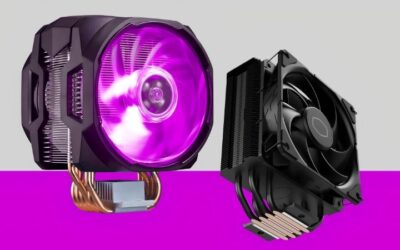
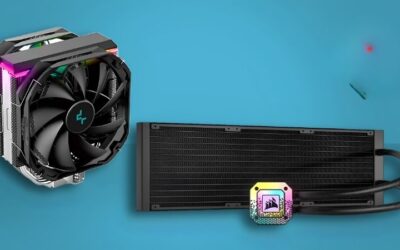
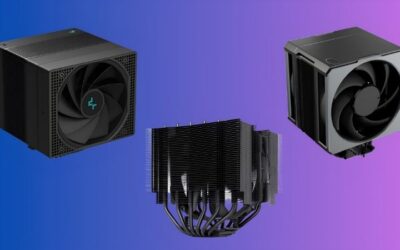
A cooler must dissipate sustained CPU power at a case air temperature of ~35-40C. For a 120W PPT chip like the Ryzen 9 9900X, a single-tower air cooler rated for 180-220W is sufficient with moderate noise. For a 170W PPT 9950X3D or a Core Ultra 9 285K running at 250W MTP, you need a 240mm to 360mm AIO or a large dual-tower air cooler rated for 260W+. Running a 250W Intel chip on a 150W-rated cooler will force thermal throttling to ~3.8-4.2 GHz all-core within 60-90 seconds, erasing the multithreaded advantage you paid for.
Recommended Settings for Power Limits
- Ryzen 9000 / X3D on AM5: Enable Precision Boost Overdrive (PBO) with limits set to Motherboard, Curve Optimizer -10 to -20 per core if stable. This keeps boost behavior while reducing voltage. For small cases, set a manual PPT of 120W on a 170W chip; you lose ~8% multithreaded performance but cut temperatures by 10-15C.
- Intel Core Ultra 200: In BIOS, check PL1 (PBP) and PL2 (MTP). Stock 125W/250W is the intended balance. Setting PL1=PL2=125W reduces all-core frequency by ~300-400 MHz but makes the chip far easier to cool. For work-first builds, leave 250W enabled and use a 360mm AIO with a contact frame for consistent all-core loads.
- General: Use an offset fan curve that reaches 100% at 85C, not 95C. Modern CPUs boost until they hit thermal limits, so keeping edge temperature 5-10C lower directly sustains higher all-core clocks.
Compatibility Checks Before You Buy
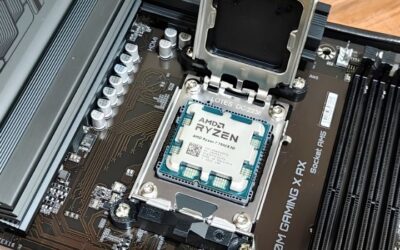
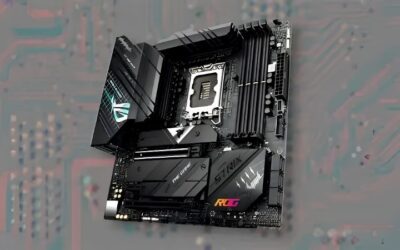
- BIOS version: Ryzen 9000 and 9000X3D require AGESA 1.2.0.0 or newer on 600-series boards. Verify the board has BIOS Flashback if you do not have an older AM5 CPU to update with.
- RAM clearance: Large air coolers overhang DIMM slots. Low-profile DDR5 or an AIO avoids conflict.
- Case airflow: 16-core and 24-core builds in compact cases need mesh front panels and at least two intake + one exhaust fan. A solid glass front panel can raise CPU temperatures by 8-12C under all-core load.
- GPU pairing: Do not pair a 16-core CPU with a low-end GPU if gaming is the priority; you will be GPU-limited. An 8-core X3D + RTX 4070 Super will outperform a 16-core + RTX 4060 in every game at 1440p.
Final Recommendation
If you want one CPU that does both without compromise and budget allows usually $650–$750 for the CPU alone, get the Ryzen 9 9950X3D. If pure gaming performance per dollar and lower cooling cost matter most, the Ryzen 7 9800X3D is the best multi core CPU for gaming. If your income depends on renders, compiles, or exports and you need many cores for less money, the Ryzen 9 9900X and Core Ultra 7 265K give you 90% of flagship work performance with much lower platform pressure.
Match the CPU to your bottleneck: buy cache and clock speed for gaming, buy cores and sustained power delivery for work, and size your cooler and PSU for the sustained power number you will actually run, not the number on the box.
Ready to decide? Our #1 pick for 2026 is the AMD Ryzen 7 9800X3D.
Live price & availability on Amazon.


Write Your Review
No reviews yet. Be the first to share your experience!