
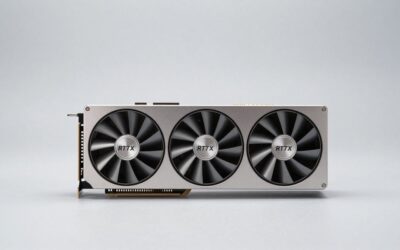
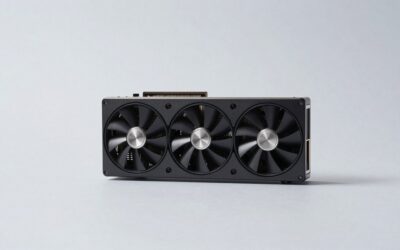
- Top Pick: GIGABYTE GeForce RTX 5070 Ti Gaming OC 16G Graphics Card, 16GB 256-bit GDDR7, PCIe 5.0, WINDFORCE Cooling System, GV-N507TGAMING OC-16GD Video Card
- Best Value: KOTIN Gaming PC, Ryzen 7 9800X3D, RTX 5070 Ti 16GB, 32GB DDR5, 1T SSD
- Premium Choice: ASUS Prime GeForce RTX 5070 Ti 16GB GDDR7 Gaming Graphics Card
Top Rtx 4090 5070 Used Flagship Picks for 2026
Here are our current top rtx 4090 5070 used flagship picks, compared on real Amazon owner reviews, price, and features. Live prices update below.
- Top Rtx 4090 5070 Used Flagship Picks for 2026
- RTX 4090 vs 5070 Ti: The Quick Verdict
- Deep Dive Face-Off: Performance, Features, and Cost of Ownership
- Pros, Cons, and the Smart Third Option
- Market Forces in 2026: Why This Matchup Is Price-Volatile
- Final Verdict on the 4090 vs 5070 Ti Question
- Related Guides
- Frequently Asked Questions
- Related Articles


Prime
Editor's Pick
ASUS SFF-Ready Prime NVIDIA GeForce RTX 5070 Graphics Card (PCIe 5.0, 12GB GDDR7, HDMI/DP 2.1, 2.5-Slot, Axial-tech Fans, Dual BIOS), 3 Year Warranty


4090 vs 5070 Ti is the strangest GPU matchup of 2026, and also one of the most searched: a discontinued $1,599 flagship that still tops raster charts against a $749 newcomer carrying features the old king will never receive. With used RTX 4090s circulating heavily and the RTX 5070 Ti established as Blackwell’s value sweet spot, thousands of buyers are weighing exactly this trade. This comparison puts measured benchmarks, total cost of ownership, and aggregated owner feedback side by side to determine which card actually earns your money this year.
As an Amazon Associate we earn from qualifying purchases at no extra cost to you.


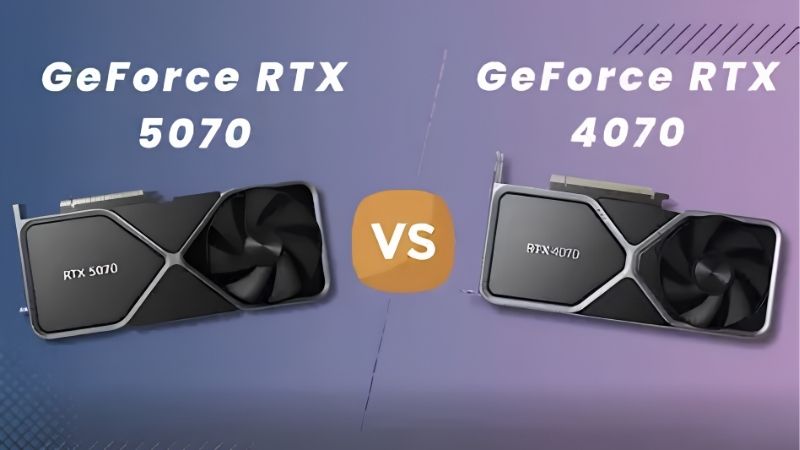
RTX 4090 vs 5070 Ti: The Quick Verdict
The fast answer: the RTX 5070 Ti is the smarter buy for the overwhelming majority of gamers. The RTX 4090 retains a 20-30% raw raster advantage and an untouchable 24GB of VRAM, but it costs roughly double on the used market, draws 150W more power, carries no warranty, and is permanently locked out of DLSS 4 Multi Frame Generation — which lets the 5070 Ti match or exceed the 4090’s effective frame rates in a growing list of supported titles. Buy the used 4090 only for VRAM-bound professional work; for gaming, the 5070 Ti wins on every value metric. Check its current price and stock on Amazon, because MSRP-adjacent listings rarely last the week.
Specs Comparison Table at a Glance
The raw silicon gap is enormous on paper, which is precisely why the final verdict surprises people. Here are the numbers driving everything below.
| Specification | RTX 4090 | RTX 5070 Ti |
|---|---|---|
| Architecture | Ada Lovelace (2022) | Blackwell (2025) |
| CUDA cores | 16,384 | 8,960 |
| Boost clock | 2.52 GHz | 2.45 GHz |
| VRAM | 24GB GDDR6X | 16GB GDDR7 |
| Memory bandwidth | 1,008 GB/s | 896 GB/s |
| TDP | 450W | 300W |
| Frame generation | DLSS 3 Frame Gen (2x) | DLSS 4 Multi Frame Gen (up to 4x) |
| Launch MSRP | $1,599 | $749 |
An 83% core-count advantage normally ends a comparison before it starts. Two generations of architecture, features, and economics are what keep this one alive.
Where the RTX 4090 Still Rules
Native rendering without upscaling assistance remains the 4090’s kingdom: in pure raster at 4K it outruns the 5070 Ti by 20-30%, and its 24GB buffer is untouched by anything below professional cards.
For local AI work, 3D rendering, and 8K video timelines, that VRAM is not a luxury but a requirement — workloads that overflow 16GB run on the 4090 and simply fail or crawl on anything smaller.
Where the RTX 5070 Ti Flips the Script
In DLSS 4 titles with Multi Frame Generation engaged, the 5070 Ti produces effective frame rates the 4090’s 2x frame generation cannot reach, inverting the hierarchy in the games most people actually play.
It also wins everywhere economics and practicality live: half the street price, 150W less draw, smaller coolers, a full warranty, and years of driver priority ahead of it.
Deep Dive Face-Off: Performance, Features, and Cost of Ownership
This section runs the comparison criterion by criterion using aggregated results from GPU-limited test benches, then prices the experience per frame — the math that actually decides between these two.
Native Performance: 4K and 1440p Benchmarks
At 4K native ultra, the 4090’s silicon advantage shows plainly: Cyberpunk 2077 runs at 82 FPS versus 67 FPS, Horizon Forbidden West at 116 FPS versus 94 FPS, and Black Ops 6 at 138 FPS versus 109 FPS — a consistent 20-25% lead. In pure rasterization, the old flagship has not been dethroned by anything below the 5080 and 5090.
At 1440p the gap compresses to 12-18% as CPU limits intrude, and 1% lows tell a similar story with one caveat: the 4090’s frame-time consistency at extreme settings remains the best of its generation, while the 5070 Ti’s 896 GB/s GDDR7 keeps it close enough that blind testing rarely identifies the difference at this resolution.
Esports workloads narrow things further: at 1440p competitive settings, both cards saturate 360Hz monitors in titles like Valorant and Counter-Strike 2, holding 350+ FPS where the CPU becomes the limiter long before either GPU does. Players whose libraries skew competitive are effectively paying the 4090 premium for headroom they cannot display — a point the value math below makes expensive to ignore.
DLSS 4 Changes the Effective-Performance Math
The experimental dimension is where two generations of separation appear. The 4090 is capped at DLSS 3 single frame generation; the 5070 Ti runs DLSS 4 Multi Frame Generation, producing up to three AI frames per rendered frame through the newer transformer model with measurably reduced ghosting.
The result in supported titles reverses the chart order: path-traced Cyberpunk 2077 at 4K reaches roughly 145 FPS on the 5070 Ti with MFG 4x against roughly 115 FPS on the 4090 with DLSS 3 — the cheaper card delivering a smoother experience in Nvidia’s flagship showcase. With 175+ DLSS 4 titles and monthly additions, this inversion expands rather than holding still.
Both cards share Reflex latency reduction and excellent upscaling quality from the transformer model, so the differentiator is strictly the frame multiplication — exclusive to Blackwell, permanent by hardware design.
Power, Heat, and the Real Total Cost
The practical gap is stark: 450W versus 300W TDP translates to measured gaming draws around 420W against 285W. The 4090 demands a 1000W power supply, 3.5-4 slot clearance, and case airflow planning; the 5070 Ti runs happily on a quality 750W unit in ordinary mid-towers. For a 20-hour-per-week gamer, the 135W delta compounds into a meaningful electricity line item over a three-year window.
Then the purchase math: used 4090s currently trade at $1,300-1,600 — at or above their original MSRP, a historical anomaly driven by AI demand for 24GB cards — while the 5070 Ti lists near $749-850 new. Per frame delivered in modern titles, the 5070 Ti costs roughly half as much, before counting the warranty and the used-market risks covered next.
Pros, Cons, and the Smart Third Option
Synthesizing thousands of owner reviews — the 4-5 star praise alongside the 2-3 star complaints — gives each card an honest ledger, and one alternative deserves a look before money moves.
RTX 4090 Strengths and Weaknesses
Pros: the strongest raster performance of its era, a 24GB buffer that professionals describe as career-enabling, superb build quality on most partner models, and frame-time consistency long-term owners still praise. AI hobbyists and 3D artists rate it nearly irreplaceable at its price tier.
The workload specifics explain that loyalty: 24GB holds quantized 30B-parameter language models entirely in VRAM, renders Blender scenes that crash 16GB cards, and scrubs 8K timelines without proxy files. Reviews from professional users repeatedly describe the card paying for itself in saved render hours — a calculus gamers cannot access but one that legitimately keeps demand, and prices, elevated.
Cons: every unit sold today is used, and the 2-3 star marketplace reviews document the risks — cards run hard in AI rigs for two-plus years, melted or stressed 12VHPWR connectors, degraded thermal pads, and absent warranties. Add the 450W draw, the physical bulk, and prices inflated by data-center-adjacent demand, and the gaming value case thins dramatically.
Buyers who proceed anyway should copy the pattern visible in the satisfied reviews: insist on listings with original packaging, recent stress-test screenshots showing memory temperatures under 95°C, and inspection of the power connector for discoloration before the return window closes. The hour of due diligence is the real price of the used discount — skipping it is how a flagship bargain becomes a four-figure paperweight.
RTX 5070 Ti Strengths and Weaknesses
Pros: the best price-to-performance ratio in Nvidia’s current stack, full DLSS 4 Multi Frame Generation, 16GB of fast GDDR7, 300W efficiency, ordinary case and PSU requirements, and a new warranty. Owner ratings cluster at 4.6-4.7 stars with remarkable consistency across partner models.
Cons: street prices frequently float $50-150 above the $749 MSRP, a minority of units exhibit coil whine at very high frame rates, and 16GB — generous for gaming — still cannot touch workloads built around the 4090’s 24GB. Buyers with genuine VRAM-bound workflows are the one group with a real objection.
The Alternative: RTX 5080 Splits the Difference
If the 4090’s raw power tempts you but the used-market risk does not, the RTX 5080 occupies the middle ground: roughly 90-95% of the 4090’s raster performance, the full DLSS 4 feature set that beats it in supported titles, 360W draw, and a $999 MSRP with warranty included.
For pure gamers who want flagship-adjacent native performance plus every Blackwell feature, it answers both cards’ weaknesses at once. Compare its live pricing against the 5070 Ti on Amazon — the gap between them on a given day often makes the decision for you.
Market Forces in 2026: Why This Matchup Is Price-Volatile
Two current developments push directly on both sides of this comparison, and they explain pricing behavior that looks irrational until the mechanism is visible.
H200 Exports to China Keep 24GB Cards Expensive
The United States has approved Nvidia selling the H200, one of its most powerful AI accelerators, to China — reopening a massive data center market. That demand cascades downward: organizations that cannot source enough data center silicon buy up high-VRAM consumer cards instead, which is precisely why used 4090s trade at or above launch price years after release.
The same dynamic squeezes GeForce production, since H200s compete for the identical advanced fabrication and memory supply chains. Historically, consumer allocations tighten within a quarter or two of each data center demand surge.
Component Inflation Lifts the Floor Under Both Cards
Simultaneously, laptop and component prices are trending upward, led by memory as AI infrastructure absorbs DRAM and advanced-node capacity. GDDR7 cards like the 5070 Ti carry that cost pressure directly, and the discontinued 4090’s price is propped up by the AI demand described above — neither card has a credible path to getting cheaper soon.
Price-tracking through this generation confirms it: the traditional mid-cycle discount window has not appeared, and memory contracts negotiated quarters in advance bake current increases into pricing through 2026.
The Timing Read for This Decision
For gamers, the conclusion is unambiguous: a 5070 Ti found near MSRP today is statistically unlikely to be beaten by waiting, and supply risk runs one direction. For professionals eyeing a used 4090, prices are hostage to AI demand that shows no sign of unwinding — if the workload genuinely needs 24GB, delay buys nothing.
One structural note completes the picture: memory contracts are negotiated quarters in advance, so today’s GDDR7 cost increases flow into card prices through 2026 regardless of short-term promotions, while the 4090’s price floor rests on AI demand with no scheduled end. Both curves point the same direction for the patient buyer — upward.
Only buyers content with their current card can wait for free; everyone actively shopping is better served acting on today’s numbers.
See more:
- ASUS TUF Gaming GeForce RTX 5090 3080 vs 5080
- Nvidia RTX 4070 Super graphics card
- Sapphire graphics card
- Is HDR good for gaming
- RTX 4080 vs 5070
Final Verdict on the 4090 vs 5070 Ti Question
The 4090 vs 5070 Ti comparison resolves into two clean recommendations: the RTX 5070 Ti is the gaming pick by a wide margin — half the cost, two-thirds the power draw, a warranty, and DLSS 4 Multi Frame Generation that overturns the old flagship’s lead in the titles that matter — while the RTX 4090 remains the rational choice only for VRAM-bound professional and AI workloads where 24GB is non-negotiable. Raw silicon won the 4090 its crown; economics, efficiency, and exclusive features hand the practical victory to the newer card. With AI demand propping up used flagship prices and memory inflation lifting everything else, the window favors deciding now rather than later. Compare today’s RTX 5070 Ti listings on Amazon and put this matchup’s winner in your build before the market moves again.
Frequently Asked Questions
What is the best 4090 5070 ti in 2026?
The best 4090 5070 ti depends on your budget and how you plan to use it. The options compared above are our top-rated picks based on real customer ratings, build quality, and overall value — start with the highest-rated model that fits your budget.
How much should I expect to spend on a 4090 5070 ti?
Prices vary by brand and features. Budget options cover the essentials, while mid-range and premium models add durability, performance, and extra features. Compare the prices in the list above to find the best value for your needs.
What should I look for when buying a 4090 5070 ti?
Focus on what matters most for your use case — build quality, compatibility, performance, warranty, and verified customer reviews. Every pick above is selected to balance these factors.
Are budget 4090 5070 ti options worth it?
Yes. For most people a well-reviewed budget or mid-range 4090 5070 ti delivers excellent value. You only need to spend more if you specifically require premium materials or top-tier performance.
How did we choose these 4090 5070 ti picks?
We compare current Amazon ratings, review counts, key features, and price to surface the options with the best real-world value. The list is refreshed as ratings and availability change.

Write Your Review
No reviews yet. Be the first to share your experience!