
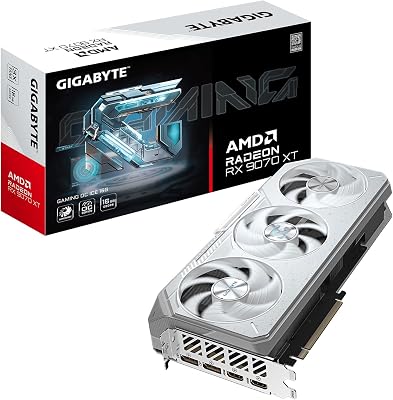
- Top Pick: GIGABYTE Radeon™ RX 9070 XT Gaming OC ICE 16G Graphics Card (16GB GDDR6, 256-bit, PCIe 5.0, HDMI/DP 2.1, 2.7 Slot, Hawk Fan, Server-Grade Thermal Gel, Reinforced Structure)
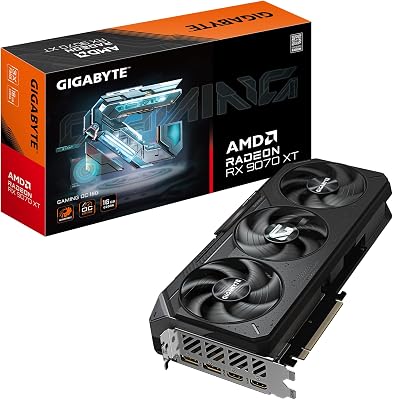
- Best Value: GIGABYTE Radeon RX 9070 XT Gaming OC 16G Graphics Card, PCIe 5.0, 16GB GDDR6, GV-R9070XTGAMING OC-16GD Video Card
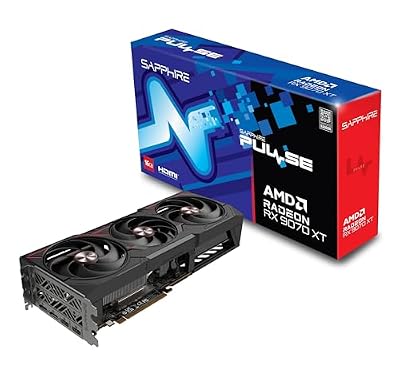
- Premium Choice: Sapphire 11348-03-20G Pulse AMD Radeon™ RX 9070 XT Gaming Graphics Card with 16GB GDDR6, AMD RDNA 4


Best Seller
Sapphire 11348-03-20G Pulse AMD Radeon™ RX 9070 XT Gaming Graphics Card with 16GB GDDR6, AMD RDNA 4
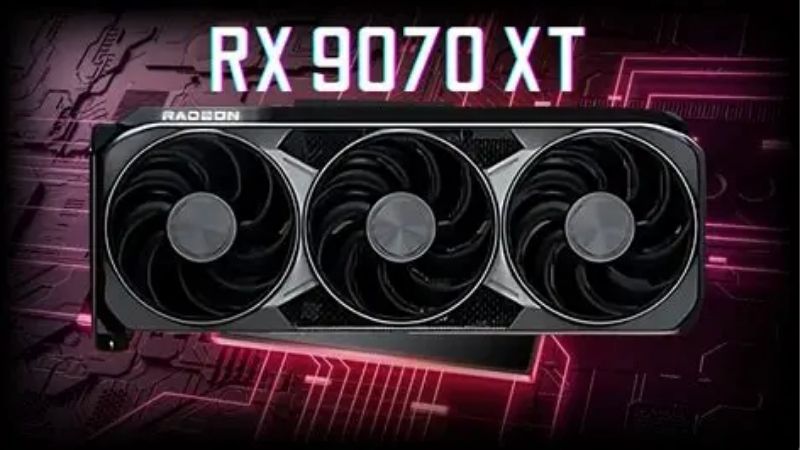
rx 9070 xt vs 4080 is a strange matchup on paper — a current-generation mid-high AMD card against a previous-generation Nvidia flagship — and that is exactly why it matters. Leftover and discounted 4080 stock keeps surfacing at prices that suddenly look tempting, and every review video you find was filmed at a price that no longer exists. This comparison is built around the one variable those videos cannot update: what these cards cost today, and what that does to the maths. Spec table, aggregated frame rates, the DLSS 4 catch nobody mentions, and a clear answer follows.
The Quick Verdict on RX 9070 XT vs 4080
Raw performance between these two is close enough that price decides the winner outright. The 4080 holds a modest raster lead and a larger ray tracing lead. The 9070 XT counters with a lower launch MSRP, standard power connectors, and a card that is still receiving front-line driver attention. The tipping point sits at roughly a $150 price delta — below that, Nvidia; above it, AMD.
As an Amazon Associate we earn from qualifying purchases at no extra cost to you.


When the RTX 4080 Is the Right Call
If you find a 4080 or 4080 Super at or below roughly $750, it is the better card. You get more raster throughput, considerably stronger ray tracing, full NVENC, and CUDA access. At that price, the previous-generation tag is irrelevant — Ada Lovelace is a mature, well-supported architecture with years of driver work behind it.
Sellers clearing old stock is a real thing, and it produces genuine bargains. The catch is that these listings appear and vanish inside days. If you are watching a specific listing, the window is narrower than you think.
When the RX 9070 XT Is the Right Call
Above roughly $850 for a 4080, the argument collapses. At that point you are paying a premium for last-generation silicon that is excluded from Nvidia’s newest headline feature, and the 9070 XT gives you 90-plus percent of the performance for meaningfully less.
The 9070 XT also wins on the boring practicalities: two or three standard 8-pin connectors instead of a 16-pin adapter, roughly 304W board power against the 4080’s 320W, and a physical footprint that is often shorter.
There is a longevity argument too. RDNA 4 is AMD’s current architecture and will receive optimisation priority for years. Ada is now two generations back in Nvidia’s stack.
RX 9070 XT vs 4080 Spec Comparison Table
Note how similar the memory configurations are, and note the last row — it is the single most important line in this table and the one almost nobody flags.
| Specification | Radeon RX 9070 XT | GeForce RTX 4080 |
|---|---|---|
| Architecture | RDNA 4 (current) | Ada Lovelace (2 gens back) |
| Shader Units | 4,096 SPs (64 CUs) | 9,728 CUDA cores (76 SMs) |
| RT Hardware | 64 Ray Accelerators (2nd gen) | 76 RT Cores (3rd gen) |
| VRAM | 16 GB GDDR6 | 16 GB GDDR6X |
| Memory Bus | 256-bit | 256-bit |
| Bandwidth | ~645 GB/s | ~717 GB/s |
| Board Power | ~304W | ~320W |
| Power Connector | 2-3x 8-pin | 1x 16-pin (12VHPWR) |
| Recommended PSU | 750W | 750-850W |
| Upscaling | FSR 4 (ML-based) | DLSS 4 upscaling |
| Frame Generation | AFMF 2 / FSR 3 FG | DLSS 3 FG only — no Multi Frame Gen |
| Launch MSRP | $599 | $1,199 ($999 Super) |
DLSS 4 Multi Frame Generation is Blackwell-exclusive. The 4080 receives the improved transformer upscaling model, but not the 3x/4x frame generation. If a video sold you the 4080 on “DLSS 4,” it sold you a partial truth.
Deep Dive Face-Off: Where the Two Cards Separate
Aggregating across published benchmark suites gives a stable picture. The two cards trade blows in raster and diverge under ray tracing load, but the interesting story is what happens when you put current street pricing next to the frame rates.
Raster Performance at 1440p and 4K
At 1440p the 4080 leads the 9070 XT by roughly 5% to 12% depending on the title mix. That is inside the range where a factory-overclocked AIB 9070 XT can erase most of the gap. In practical terms, both cards clear 100 fps in the overwhelming majority of modern titles at high settings.
At 4K the 4080’s bandwidth advantage stretches the lead to roughly 10% to 18%. Both remain viable 4K cards with upscaling enabled; neither is a comfortable native-4K-maxed card in 2026’s heaviest releases.
Now the arithmetic. At $780 for a 4080 versus $680 for a 9070 XT, you pay 15% more for roughly 12% more 4K performance — that is defensible. At $950 versus $680, you pay 40% more for 12%. That is not. This is why the price you see today, not the price in a six-month-old video, is the entire decision.
Ray Tracing and the Upscaling Feature Gap
Ray tracing is the 4080’s clearest advantage. Third-generation RT cores plus a mature denoising pipeline put it roughly 20% to 35% ahead of the 9070 XT in RT-heavy titles, and further ahead again in path-traced workloads. RDNA 4 roughly doubled AMD’s RT throughput per CU versus RDNA 3, which made the 9070 XT competitive rather than dominant.
On upscaling, the gap has genuinely narrowed. FSR 4 moved to a machine-learning model, and in side-by-side stills the difference against DLSS 4’s transformer model is subtle at Quality preset. DLSS still wins on breadth of game support and on Nvidia’s ability to force newer models into older titles via driver-level DLSS Override — an ongoing optimisation channel with no AMD equivalent.
But return to the frame generation row. Blackwell cards can generate up to three additional frames per rendered frame. The 4080 cannot. Buying a previous-generation Nvidia card specifically for Nvidia’s feature stack while being locked out of its newest feature is a contradiction worth sitting with before you spend.
Practical Fit: Power, Connectors and Case Clearance
The 4080 uses the 16-pin 12VHPWR connector. On an older ATX 2.x PSU you are running the bundled octopus adapter off three or four 8-pin cables. It works, but the connector must be fully seated — partial seating is the documented root cause of the melting reports. If you buy used, inspect that connector before anything else.
The 9070 XT sidesteps all of this with conventional 8-pin connectors. Any decent 750W unit made in the last eight years handles it without ceremony. For a builder upgrading an existing system rather than starting fresh, that is one fewer purchase.
Physically, 4080 partner cards commonly run 310 to 340 mm and three slots. Many 9070 XT designs sit in the 280 to 330 mm range. Measure your case first — a card that does not fit is a return, and returns on marketplace listings are not always possible.
Pros, Cons and a Third Option
Stripping away the benchmark charts, here is the plain ledger for each card — followed by the option that beats both if your budget is the real constraint.
RX 9070 XT: Pros and Cons
Pros: Excellent raster value. 16 GB VRAM with no caveat. Standard 8-pin power — no adapter, no anxiety. Lower board power and often a smaller footprint. FSR 4 is close to DLSS in most real scenarios. Current-architecture status means years of driver optimisation ahead. Widely available new with a full warranty.
Cons: Loses on heavy ray tracing and decisively on path tracing. Encoder is competent but not NVENC. CUDA-dependent software is simply off the table. Frame generation is driver-level rather than engine-integrated in many titles.
RTX 4080: Pros and Cons
Pros: Faster in raster and considerably faster in RT. GDDR6X bandwidth advantage. Full NVENC with dual AV1 encoders. CUDA for Blender, Resolve, and local AI work. Mature, thoroughly debugged drivers. Historically strong resale value.
Cons: Excluded from DLSS 4 Multi Frame Generation. Two generations old, so driver priority will decline. 12VHPWR connector requires care. New stock is scarce and priced by scarcity, not by value. Used units carry unknown mining or overclocking history. Higher power draw for less generational efficiency.
The Alternative: RTX 5070 Ti
If both cards feel like a compromise, the 5070 Ti is the sober middle. It carries 16 GB of GDDR7, the complete DLSS 4 stack including Multi Frame Generation, full NVENC, and lands broadly in 4080 territory in raster — with current-generation driver support and no old-stock lottery.
It typically costs less than a marked-up 4080 while giving you the feature the 4080 is locked out of. For anyone whose reason for wanting Nvidia is the software stack, this is the more coherent purchase.
Whichever way you go, this segment reprices weekly. Check today’s listing for the exact model you have settled on before deciding — the card that looked overpriced last month may be the value pick this morning.
Why 2026 Pricing Should Change Your Timing
Every recommendation above assumes a price. Three market forces are setting those prices right now, and understanding them tells you whether to buy or wait.
Laptop and Component Prices Are Still Trending Up
The broad direction of travel for laptops and PC components remains upward. Memory is the driver: AI infrastructure buildout is absorbing DRAM and GDDR supply at a scale that consumer hardware simply cannot outbid, and that cost flows straight into board partner BOMs and onto the sticker.
This hits the 4080 specifically hard. It is out of production. There is no mechanism by which more of them appear. When remaining stock is priced against a rising replacement-cost market rather than against a two-year-old MSRP, “old card equals cheap card” stops being true.
The behavioural takeaway: stop anchoring to the $999 4080 Super MSRP. It is a historical artefact. Judge every listing against what a 9070 XT or 5070 Ti costs today.
The Good News Is Real, But Weak and Distant
Prices have at least stopped climbing at the rate they did through late 2025. Framework, which publishes unusually frank supply notes, has reported a stretch of relative stability while still cautioning that volatility is not over. The spike flattened. It did not reverse.
A plateau is not a discount. Waiting for a correction that the supply picture does not support means paying roughly the same money later, from a smaller pool of remaining 4080s, with less warranty runway.
New Memory Supply Arrives in 2027 at the Earliest
Fresh capacity is coming. OEMs can increasingly source DDR5 from Chinese suppliers such as CXMT, and Micron is constructing two fabs in Idaho. Both are substantial and both are real. Neither runs before 2027 or 2028.
Translate that into a purchase plan: waiting for memory-driven relief means waiting out two more GPU generations. By the time those fabs ship volume, the rx 9070 xt vs 4080 question will be a historical curiosity.
Which simplifies things. The correct question is not “will this get cheaper?” but “at today’s price, which of these delivers more of what I need?” The tables above answer that — you just have to supply the current number.
See More:
Final Verdict and Recommendation
The rx 9070 xt vs 4080 decision comes down to one arithmetic check you can run in thirty seconds. Find both current prices. If the 4080 is within about $150 of the 9070 XT, buy the 4080 — you get more raster, considerably more ray tracing, NVENC, and CUDA, and the older architecture will not meaningfully hurt you. If the gap is wider than that, buy the 9070 XT and put the difference into a better monitor, more system RAM, or a faster NVMe drive, where you will actually feel it.
What does not survive scrutiny is paying a premium for a 4080 because it is Nvidia. It is excluded from Multi Frame Generation, it is out of production, and its driver priority only declines from here. If you want the Nvidia stack in full, the 5070 Ti is the honest answer. Component prices have plateaued rather than fallen, new memory capacity is a 2027 story, and 4080 stock only shrinks. Check the live price on the card you have chosen, verify your PSU and case clearance against the numbers above, and buy it while it exists.
Frequently Asked Questions
Is the older RTX 4080 still faster?
In ray-traced and path-traced games, yes, usually by a meaningful margin. In pure rasterisation the two are close, with the RX 9070 XT trading blows at 1440p and the RTX 4080 pulling ahead at 4K thanks to greater memory bandwidth. Both carry 16GB, so neither has a capacity advantage.
Which is the better buy at current prices?
The RX 9070 XT typically costs considerably less new, which makes it the stronger value unless you find a heavily discounted or used RTX 4080. Factor in that a used 4080 usually carries limited or no warranty, while a new Radeon comes with full manufacturer coverage.
How do power and cooling compare?
The RTX 4080 is rated at 320W and the RX 9070 XT at roughly 304W, so they are close. The 4080 uses a 12VHPWR connector requiring an adapter or ATX 3.0 cable, while most RX 9070 XT cards use conventional 8-pin connectors. A quality 750 to 850W supply suits either.
Does DLSS 4 tip the balance to NVIDIA?
It helps, but note that multi frame generation is exclusive to RTX 50 series, so an RTX 4080 gets DLSS 4 upscaling and single frame generation only. FSR 4 on the RX 9070 XT is genuinely close on image quality now, which narrows a gap that used to favour NVIDIA heavily.
What should I check when buying a used RTX 4080?
Inspect the 12VHPWR connector housing for discolouration or melted pins, confirm the card was not used for continuous mining, and ask for benchmark screenshots showing temperatures. Verify remaining warranty transferability with the manufacturer, and budget for a fresh ATX 3.x power supply if yours predates the standard.
Ready to decide? Our #1 pick for 2026 is the Architecture.
Live price & availability on Amazon.




Write Your Review
No reviews yet. Be the first to share your experience!