
- Top Pick: PNY GeForce RTX 4070 Ti 12GB XLR8 Gaming Verto Epic-X RGB Overclocked Triple Fan Graphics Card DLSS 3
- Best Value: PNY Technology VCG5071T16TFXPB1 GeForce RTX 5070 TI 16GB Triple Fan Plus Graphics Card
- Premium Choice: PNY GeForce RTX 5080 Triple Fan Graphics Card, 16GB GDDR7, 30 Gbps, 256-bit, 1801 AI TOPS, DLSS 4, AI Content Creation, Local LLM Inference, PCIe 5.0, DP 2.1b UHBR20 x3, HDMI 2.1b, with GPU Holder
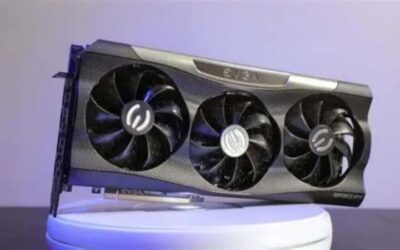
PNY GeForce RTX 5070 Ti Overclocked Triple Fan is a search with an unusual answer in 2026: if you have found one listed near its MSRP, stop reading and buy it. That is not a sales line. Board partners told the press at CES 2026 that Nvidia had stopped supplying the die for this tier and placed their 5070 Ti products into end-of-life status. Nvidia disputes it. The prices do not. This review covers what the card is, what PNY’s version gets right and wrong, and why the buying advice is different from every other card review you will read this year.
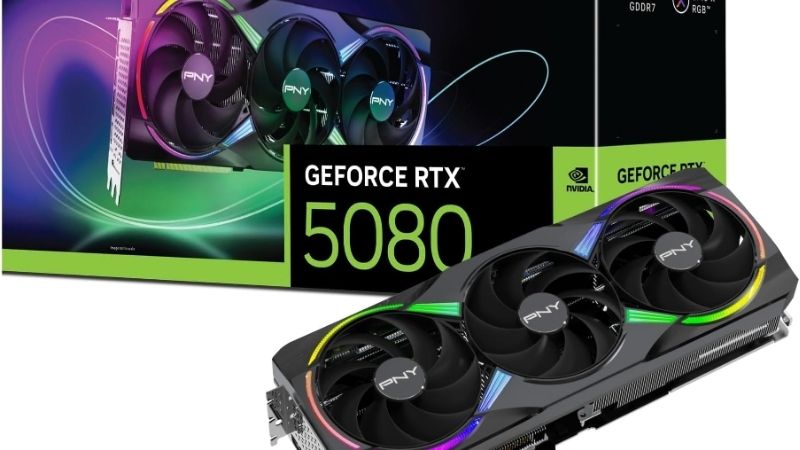
What the PNY RTX 5070 Ti Triple Fan Actually Is
PNY occupies a specific niche among board partners: less marketing, less RGB, lower price, same silicon. For a card at this tier that positioning matters more than it usually does, because the tier itself has become difficult to buy.
The Silicon Is the Same as Everyone Else’s
Underneath is the GB203-300-A1 die — the same chip family as the RTX 5080, harvested down. That gives 8,960 CUDA cores across 70 SMs, 70 fourth-generation RT cores, and 280 fifth-generation Tensor cores.
Memory is 16GB of GDDR7 at 28 Gbps on a full 256-bit bus, delivering 896 GB/s. TDP is 300W. Nvidia recommends a 750W supply; 850W is comfortable alongside a modern high-TDP CPU.
Board partners do not receive different chips. What PNY chooses is the cooler, the factory clock, the warranty, and the price. Nothing that makes frames is different from an ASUS TUF.
| Spec | RTX 5070 Ti (all partners) |
|---|---|
| GPU | GB203-300-A1, Blackwell |
| CUDA cores | 8,960 (70 SMs) |
| RT / Tensor cores | 70 / 280 |
| ROPs | 80 — verify with GPU-Z |
| Memory | 16GB GDDR7, 256-bit, 896 GB/s |
| Reference boost | ~2,452 MHz (AIB models vary) |
| TDP | 300W |
| PSU | 750W minimum, 850W comfortable |
| Founders Edition | None — AIB only |
| MSRP | $749 |
There Is No Reference Card to Compare Against
Nvidia did not produce a Founders Edition RTX 5070 Ti. Production was left entirely to board partners, which has a consequence people miss: every review number you have read came from a specific AIB model with its own cooler and clocks.
Reference boost sits around 2,452 MHz, but shipping cards vary — MSI’s Gaming Trio OC runs 2,572 MHz on a 338mm cooler, while cheaper variants sit nearer reference. A 3–4% spread between reviews of “the RTX 5070 Ti” is not measurement error. It is different cards.
PNY’s Overclocked Triple Fan sits in the modest-OC bracket: a real factory bump over reference, not a chart-topping one. Given that this card is frequently memory-bandwidth-limited rather than core-limited, that is less of a loss than it sounds.
The Defect Check to Run on Arrival
A small fraction of early RTX 50 production — reported at under 0.5% of units — shipped with a disabled ROP unit. The card posts, games, and reports normally in Device Manager while running a few percent below spec.
Open GPU-Z and read the ROPs field. An RTX 5070 Ti should show 80. Anything less is an RMA case, and the shortfall is small enough to pass for normal variance if you are not looking for it.
Do this inside your return window. Nothing in Windows will tell you.
Performance and Practical Fit
Because the silicon is identical across partners, an AIB review is really about sustained clocks, thermals, and whether the card fits. That last one causes more grief than the first two combined.
Where the RTX 5070 Ti Lands
This card sits at roughly 85–90% of an RTX 5080 at 4K rasterization, and within 10–14% at 1440p. Against a 20% core deficit, that looks like overachievement.
It is not mysterious. Both cards share a 256-bit bus and differ by only 7% in bandwidth — 896 against 960 GB/s. At high resolutions the memory subsystem constrains before the shaders do, so the 5080’s extra cores have less to do than the spec sheet implies.
Against the RTX 5070 below it, the gap is larger: roughly 20–25% at 4K. The step down is bigger than the step up, which is exactly backwards from the naming and the single most useful thing to know about this part of the lineup.
Power, Size, and What Else You Will Need
300W and a 750W supply recommendation. That is meaningfully friendlier than the RTX 5080’s 360W and 850W, and for a build with an existing 750W unit the 5070 Ti drops in where the 5080 adds a power supply to the bill.
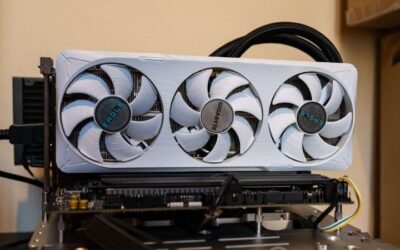
Triple-fan RTX 50 cards run large. Measure your case length, confirm clearance below the x16 slot, and check where your front radiator or drive cage sits before ordering. Owner reports for cards in this class routinely describe having to remove CPU coolers or reroute cables to create a path.
If your supply predates ATX 3.x, use the included adapter and seat the 16-pin fully. Partially seated connectors remain the most common cause of melted connector reports across the RTX 40 and 50 generations, and it is an installation issue rather than a card defect.
Thermals and Noise
The triple-fan design is why the card is physically large, and it is the trade PNY made: bulk for cooling capacity. A 300W card in a case with reasonable airflow holds its boost without drama.
Noise is the more variable report. Users moving from a lower-tier card notice the change; in a well-ventilated case it sits within normal expectations for the tier. If it bothers you, this card is an excellent undervolting candidate — a good curve typically drops 10–20°C and takes the fans with it.
Pros and Cons in a Market That Changed
The hardware verdict and the buying verdict have come apart on this card, which is unusual. Both are worth stating separately.
What PNY Gets Right
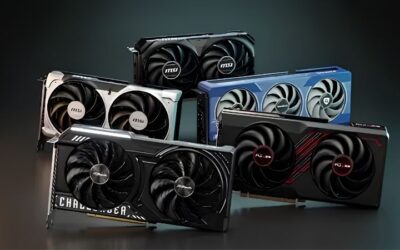
Price position. PNY consistently sits at the bottom of the street band — typically $50–$150 below ASUS TUF, MSI Gaming Trio, and Gigabyte AORUS on identical GB203 silicon. In a tier where MSRP stopped being a real price, the partner charging least is not the budget option. It is the closest thing to buying at list.
Adequate cooling. The triple-fan design holds boost on a 300W card. It is not the best cooler in the tier and it does not need to be.
And it works. For a brand buyers are nervous about, the absence of a complaint pattern — no coil whine dominating reviews, no PNY-specific driver quirks — is the review.
What You Give Up
Aesthetics and software. PNY’s design is plain against RGB-heavy competition, and PNY ships nothing with the polish of MSI Afterburner or ASUS GPU Tweak. Neither affects frame rates; both affect satisfaction if you expected otherwise. Afterburner is free and works on any card, so the software gap is easily closed.
RMA reputation. PNY’s support has a thinner reputation than the larger partners’, which matters on a card at this price. Register it, keep the receipt, and treat this as part of the discount rather than free money.
Modest factory OC. If you want the highest-clocked variant, this is not it. Given the card’s bandwidth limitation, the practical cost is low single digits.
The Honest Verdict Table
| Factor | PNY OC Triple Fan | ASUS TUF / MSI Gaming Trio |
|---|---|---|
| Silicon | GB203-300-A1, identical | GB203-300-A1, identical |
| Factory OC | Modest | Higher, worth ~3% |
| Cooling | Adequate, holds boost | Better, larger |
| Price position | Bottom of the band | $50–$150 higher |
| Aesthetics / RGB | Plain | Extensive |
| RMA reputation | Adequate, thinner | Stronger |
| Availability 2026 | Scarce | Scarcer — several EOL |
The Reason the Advice Is Different This Year
Normally a review closes on whether the card is worth its price. This one cannot, because the more urgent question is whether you can buy it at all.
What Happened at CES 2026
ASUS told Hardware Unboxed that Nvidia had stopped supplying GB203 dies for the RTX 5070 Ti, and that ASUS had placed its own PRIME and TUF Gaming 5070 Ti products into end-of-life status. Retailers across several regions reported being unable to source the SKU from any board partner.
Nvidia responded publicly that all SKUs remain in production and the 5070 Ti is not end of life. ASUS later called the reports incomplete. The dispute is unresolved.
The price movement is not disputed. The cheapest available 5070 Ti went from roughly $730 in November 2025 to $830 by January 2026, and one major US retailer moved from $835 to $990 overnight at the end of January. As of July 2026 the range sits at $979–$1,049 at major retailers, with marketplace sellers well above.
Why the Silicon Explains It
The 5070 Ti and the 5080 are both GB203. With GDDR7 constrained and every 16GB card consuming twice the modules of an 8GB one, Nvidia has an obvious incentive to ship each usable GB203 die as the higher-margin RTX 5080.
The allocation shift is visible across the range. Supply has moved toward 8GB parts — the RTX 5060 and 5060 Ti 8GB remain readily available. The RTX 5060 Ti 16GB was reported end of life alongside this card. The RTX 5080 is now the primary 16GB part clearly in production.
Component pricing has continued trending upward, memory foremost. The positive news is real but weak: the steep late-2025 climb has flattened, and Framework has reported a period of relative stability while still warning of volatility. New supply is opening — OEMs can source DDR5 from Chinese suppliers such as CXMT, and Micron is building two Idaho fabs — but neither produces until 2027–2028. Prices stopped climbing steeply; they have not fallen.
What This Means for You Specifically
The usual advice — watch prices, wait for a sale, compare variants patiently — is wrong this year. There is no restock coming at list price for this SKU, and the SUPER refresh that would replace it has slipped repeatedly from early 2026 toward 2027 on the same memory supply.
So: if you find a PNY 5070 Ti Triple Fan near $850 or below, the analysis is finished. That is a card at a price that has been disappearing rather than returning, and PNY’s models sit at the bottom of the band, which is exactly why they clear first.
If you cannot find one, the RTX 5080 is the 16GB card still in normal production and the comparison worth running instead. And if ray tracing is not central to how you play, AMD’s RX 9070 XT trades with this card in rasterization and runs GDDR6 — memory nobody is fighting over, which is why it has stayed available. It is worth checking what is actually in stock across all three before deciding on a tier at all.
See More:
- Nvidia beta
- Nvidia CUDA 11.8
- Check CUDA version
- Nvidia GPU for gaming
- PNY GeForce RTX 5080 16GB OC review
Final Verdict on the PNY RTX 5070 Ti Overclocked Triple Fan
The PNY GeForce RTX 5070 Ti Overclocked Triple Fan is the same GB203-300-A1 silicon, the same 8,960 CUDA cores, and the same 16GB of GDDR7 at 896 GB/s as any other 5070 Ti, in a competent triple-fan cooler at the lowest price in the tier. The discount comes from PNY spending less on marketing, not from cutting anything that makes frames. Check your case clearance and confirm a 750W supply, and it is the sensible way to buy this performance level.
The unusual part is the timing. Board partners have declared this tier end of life while Nvidia disputes it, retailers have gone weeks without stock, and prices have climbed regardless of who is right. Every other card review tells you to be patient. This one does not: run GPU-Z on arrival to confirm 80 ROPs, and if you find one near list before then, buy it. There is no better price coming.
Frequently Asked Questions
Does the triple-fan cooler actually matter on a 5070 Ti?
Yes, more than the factory overclock does. At around 300W of board power, a triple-fan heatsink lets the card hold higher sustained clocks at lower fan speeds than a compact dual-fan design. The practical result is a quieter card that does not lose boost clock during a long session, which is worth more than a printed clock figure.
What are the exact clearance requirements?
Triple-fan 5070 Ti cards are typically 320mm to 340mm long, around 130mm tall, and two and a half to three slots thick. Check your case specification for maximum GPU length, confirm the slot below is free, and allow vertical space for the power cable, since a 12V-2×6 adapter needs a generous bend radius above the connector.
What power supply do I need?
Nvidia recommends 750W for a typical system with this card. A quality ATX 3.1 unit with a native 12V-2×6 cable is the cleanest option and avoids the adapter entirely. If you use the bundled adapter, plug all of its 8-pin inputs into separate PSU cables rather than daisy chaining through a single split.
Is 16GB of GDDR7 enough at 4K?
For current games, comfortably so. The 256-bit GDDR7 configuration provides roughly 896GB per second, which sustains 4K with DLSS quality upscaling in essentially every modern title. Only extreme path traced settings combined with high resolution texture packs start to press against the buffer, and those are compute limited first.
Can I overclock it further myself?
A little. Most 5070 Ti cards accept a modest core offset and a memory offset in MSI Afterburner, but Blackwell boosts aggressively out of the box so gains are typically small single digit percentages. Undervolting via the curve editor is usually the more rewarding exercise, cutting power and noise with little or no performance loss.
As an Amazon Associate we earn from qualifying purchases at no extra cost to you.


Ready to decide? Our #1 pick for 2026 is the GPU.
Live price & availability on Amazon.

Write Your Review
No reviews yet. Be the first to share your experience!