
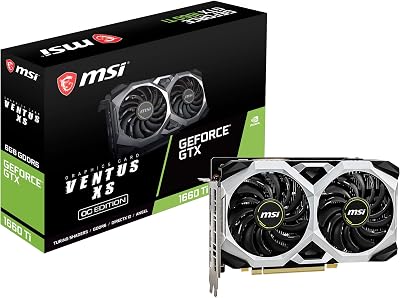
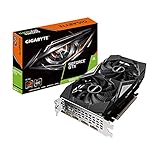
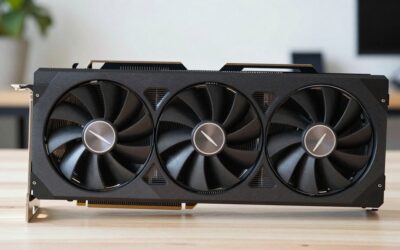
- Top Pick: MSI Gaming GeForce GTX 1660 Ti 6GB GDRR6 – 192-bit HDMI/DP, Dual Fan, VR Ready, OC Graphics Card for Gaming PC, NVIDIA Video Card GPU (GTX 1660 TI Ventus XS 6G OC) Computer Graphics Cards (Renewed)
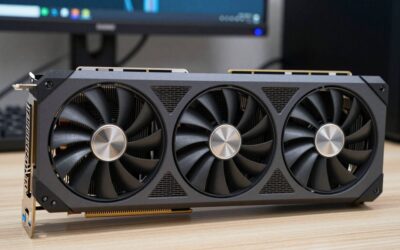
- Best Value: 51RISC GeForce GTX 1660 Ti Graphics Card, 6GB GDDR6 192bit Video Card for Gaming GPU PCIe 3.0 x16 DP HDMI DVI 1080P 2K Game PC Card 1660ti 4K 8K Display (GTX 1660 Ti – Red)
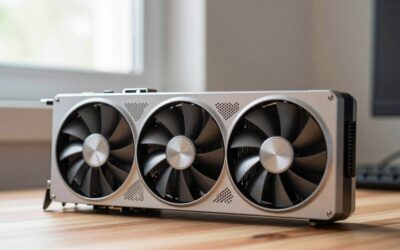
- Premium Choice: MSI Gaming GeForce GTX 1660 Ti 192-bit HDMI/DP 6GB GDRR6 HDCP Support DirectX 12 Dual Fan VR Ready OC Graphics Card (GTX 1660 TI Gaming X 6G) (Renewed)



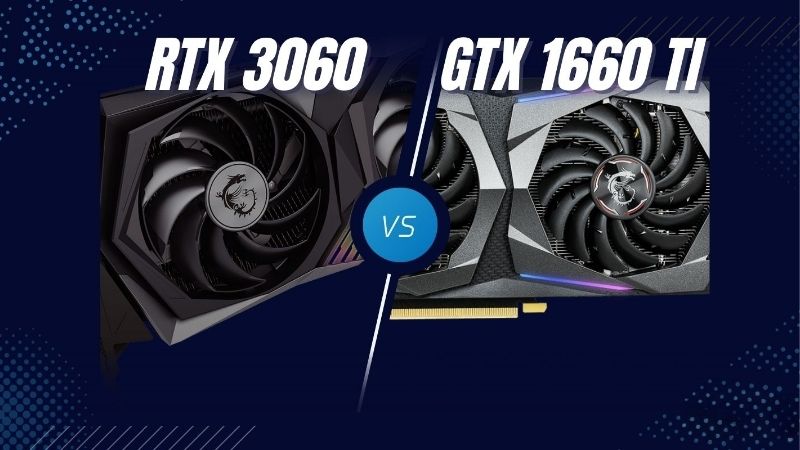
1660 Ti vs 3060 is a question with two completely different answers depending on the number on the listing in front of you. Both are used cards now, both are being sold by strangers, and the specification comparison — which every video covers — is the easy part. The hard part is knowing what each is worth, what a suspicious listing looks like, and at what price the slower card becomes the smarter buy. This page is built for someone scrolling marketplace listings right now with neither card in their machine.
The Quick Verdict: What to Pay for Each in 2026
The RTX 3060 is the better card and the 12GB is why — not the 40-50% raster lead, which only shows up in modern titles anyway. But “better card” and “better buy” are different claims, and the gap between them is entirely price. Above roughly a $70 premium for the 3060, the 1660 Ti starts making sense for esports players. Below $50, the 3060 is the only sensible choice and the 1660 Ti is a trap. The awkward middle — $50 to $70 — is where you have to actually think about what you play. Everything below is structured to get you to that decision quickly.
As an Amazon Associate we earn from qualifying purchases at no extra cost to you.


The Fair Price Bands Right Now
Use these as a sanity check against whatever you are looking at. Regional variation is large, so treat them as ratios rather than absolutes.
| Condition | GTX 1660 Ti | RTX 3060 12GB |
|---|---|---|
| Suspiciously cheap — walk away | Below $50 | Below $110 |
| Good deal, verify condition | $60-75 | $130-155 |
| Fair market | $75-95 | $155-185 |
| Overpriced | Above $100 | Above $200 |
The top row deserves attention. A listing well under market is not a bargain — it is a signal. Either it is mined-out, the fans are dying, the seller knows something you do not, or it is a scam. Cards do not sell for half market value out of generosity.
Notice how narrow the good-deal band is on the 3060. That is the local AI crowd bidding it up: 12GB is the entry standard for Stable Diffusion and small model work, and those buyers compete with you for the same listings. It is why a slower card sometimes outprices a faster one.
When the 1660 Ti Is the Better Deal
One scenario, and it is a real one. If your library is CS2, Valorant, Rocket League, League of Legends and older single-player titles, and the gap is $70+, take the 1660 Ti. It clears 120+ FPS in all of those, 6GB never binds at those settings, and the money is genuinely saved rather than a false economy.
A second consideration: PSU. The 1660 Ti draws 120W and runs on a quality 450W supply. If your build has an old or unknown power supply, that is one less thing to replace. The 3060’s 170W wants 550W.
What kills this argument: buying any modern single-player game. One purchase and the 6GB becomes the thing you regret.
When the 3060 Is Worth the Premium
Whenever you play anything from the last three years, and whenever you want the card usable past 2028. The 12GB buffer is the entire argument and it stands alone.
It is also the only sensible pick if you might touch AI work — Stable Diffusion, local models, CUDA coursework. 12GB against 6GB is the difference between a model loading and not. And the 3060 has 112 tensor cores where the 1660 Ti has zero, which is a capability gap rather than a speed gap.
And if you stream or record, Ampere’s newer NVENC block is a visible quality improvement at the same bitrate over Turing’s older encoder.
Specs and Frame Rates for the Money
The specification table explains why these two benchmark so closely in some titles and so far apart in others. Read the VRAM row first — it is the one that decides.
Core Specifications Side by Side
| Specification | GTX 1660 Ti | RTX 3060 12GB |
|---|---|---|
| Architecture | Turing (TU116) | Ampere (GA106) |
| Launch year / MSRP | 2019 / $279 | 2021 / $329 |
| CUDA cores | 1,536 | 3,584 |
| VRAM | 6GB GDDR6 | 12GB GDDR6 |
| Memory bus | 192-bit | 192-bit |
| Bandwidth | 288 GB/s | 360 GB/s |
| Tensor cores | None | 112 |
| TDP | 120W | 170W |
| PSU recommended | 450W | 550W |
Same bus width, so this is a clean comparison — the 3060’s bandwidth advantage comes from faster memory rather than a wider path. And the tensor core row reads “None” rather than a low number, which is worth pausing on: the 1660 Ti is not bad at DLSS, it is architecturally incapable of it.
1080p Frame Rates and Cost Per Frame
1080p High, no upscaling. Asterisks mark where 6GB is the constraint rather than shader count.
| Game (1080p High) | GTX 1660 Ti | RTX 3060 | Gap |
|---|---|---|---|
| Counter-Strike 2 | ~198 FPS | ~205 FPS | +4% |
| Valorant | ~245 FPS | ~240 FPS | -2% |
| GTA V Enhanced | ~104 FPS | ~98 FPS | -6% |
| Elden Ring | ~50 FPS | ~57 FPS | +14% |
| Cyberpunk 2077 | ~40 FPS* | ~55 FPS | +38% |
| Hogwarts Legacy | ~34 FPS* | ~54 FPS | +59% |
| Black Myth: Wukong | ~26 FPS* | ~42 FPS | +62% |
Now the number this page exists for. Take the fair-market midpoints — $85 and $170 — and the modern-title average of roughly 33 FPS and 51 FPS. The 1660 Ti costs about $2.58 per frame; the 3060 about $3.33 per frame, or 29% more.
But run the same sum on esports, where both average around 180 FPS: the 1660 Ti is $0.47 per frame and the 3060 is $0.94 — exactly double. That is the whole comparison in one calculation. Whichever set of games you actually play determines which of those two numbers is the real one for you.
Power, PSU and What Fits
120W against 170W is a bigger practical difference than it sounds if you are reusing an old build. The 1660 Ti will run on almost anything with a spare 8-pin. The 3060 wants a genuine 550W from a brand you recognise — and if your supply is a no-name unit that shipped with the case, treat it as 400W and budget $60-80 for a replacement. That cost belongs in the comparison and nobody puts it there.
Physically both are unremarkable — mostly 200-250mm dual-fan cards that fit anywhere. Neither presents a clearance problem, which is a pleasant change from the rest of this market.
Deep Dive: Reading a Used Listing Properly
The specification comparison above is the easy part. This section is where you actually save or lose money, and it is the part no benchmark video covers.
The Mining Question and How to Ask It
Both were mining-era cards and a meaningful share of both were run continuously through 2020-2021. Do not ask “was this mined on?” — everyone says no. Ask better questions.
Ask for a photo of the card installed and running, with a temperature readout on screen. Ask how long they owned it and what they used it for; vague answers to a specific question are the answer. Ask for a video with audio so you can hear the fans — grinding or clicking means the bearings are gone. And look at the photos: scraped PCIe fingers and a bent bracket mean the card has been in and out of many machines, which is a farm signature rather than a home-user one.
A mined card is not automatically bad. Silicon does not wear the way people imagine. Fans and thermal paste do, and both are cheap to fix — but you should be paying a mined price for a mined card, not a pristine one.
What Neither Card Will Ever Do
Worth knowing before you buy either, because both get oversold on features that do not exist.
Neither has Frame Generation. It requires Ada’s optical flow accelerator — hardware neither Turing nor Ampere contains. No driver update will add it, in any game, ever. If Frame Generation is what you want, you need a 4060 or newer and this comparison is the wrong page.
And the 3060’s DLSS comes with a caveat that catches people. DLSS 4.5’s newer second-generation models — M and L — rely on native FP8, which Ampere lacks. Nvidia’s own guidance is that RTX 30 series owners should generally remain on Model K, the DLSS 4.0 model. So the 3060 gets DLSS, and gets a version from two generations back at full benefit. Still real — roughly 30% recovered at 1080p Quality — but not what the marketing implies.
Pros and Cons of Each Card
| GTX 1660 Ti | RTX 3060 12GB | |
|---|---|---|
| Pros | Half the cost per frame in esports; ties or wins in older titles; 120W on a 450W PSU; cheap enough to be disposable; runs cool | 12GB survives 2026 titles and 1440p; 112 tensor cores for DLSS and AI; better NVENC; 40-60% faster in modern AAA; holds resale value well |
| Cons | 6GB is the hard wall; zero tensor cores means no DLSS ever; collapses in new AAA; near-zero resale; heavy mining history | Costs roughly double; 170W may force a PSU upgrade; no Frame Generation ever; no FP8 for DLSS 4.5’s best models; AI buyers inflate its used price |
Note the last entry in the 3060’s cons column — it is a genuine downside for you as a buyer, and it is why this card does not represent the value its performance suggests on the used market.
What the Used Market Is Doing in 2026
Used prices do not float free. They are set from above, and understanding that mechanism explains every strange number in the price band table.
Why Used Prices Are Anchored From Above
Component and laptop prices have kept trending upward rather than settling back, and entry-level new cards have absorbed the sharpest share of that because memory is a large fraction of what they cost to build. When the cheapest acceptable new card refuses to drop below its launch price, every used card beneath it is held up by it.
That is why a 2019 GTX 1660 Ti — two architectures retired, zero tensor cores — still commands $75-95. Its price is not determined by what it can do. It is determined by what the cheapest new alternative costs, and that number has not moved down in two years.
The practical consequence for you: the price bands above are not going to shift in your favour. Waiting for a 3060 to hit $110 is waiting for a mechanism that is not operating.
Prices Flattened, But Not Fallen
There is genuine good news and it should be reported precisely rather than hopefully. The steep climb through late 2025 has eased. Framework, which publishes unusually candid component pricing updates, has described a stretch of relative stability while still warning that volatility has not ended. Stabilisation is not a decline.
Real capacity is coming. OEMs can now source DDR5 from Chinese manufacturers such as CXMT, and Micron is building two fabs in Idaho. Both add genuine supply. Neither begins production before 2027-2028, which is well past the point where either of these cards is worth owning.
Flat, not falling. If a clean 3060 sits at $155 in front of you, that is roughly what it will cost in six months too — minus six months of use you did not get.
The Alternative Worth Checking First
Before committing to either, run one comparison. A new RTX 4060 costs more than a used 3060 — but it is faster, it has Frame Generation neither of these will ever have, it draws 115W so no PSU upgrade, and it comes with a warranty. Against a five-year-old card from a stranger with no recourse if it dies in a month, that gap is smaller than it looks.
On the AMD side, a used RX 6600 typically lands near 1660 Ti money with 8GB and stronger raster, and an Intel Arc B580 is new with 12GB and a warranty. Compare current used listings for the 1660 Ti and 3060 against new 4060 and B580 pricing before you commit — the four numbers move independently, and the used cards are frequently not the value they appear to be.
See More:
- GTX 1650 vs RTX 3050
- Nvidia DIGITS
- Nvidia cuDNN
- Radeon RX 9070 XT vs RTX 5090
- PNY GeForce RTX 5080 review
Final Verdict: 1660 Ti vs 3060
The 1660 ti vs 3060 decision on the used market is a price question wearing a performance costume. At a $70+ gap with an esports library, the 1660 Ti is the smarter buy and its cost per frame is genuinely half the 3060’s. At a gap under $50, the 3060 is the only reasonable choice — 12GB, tensor cores, real resale value, and a card that still works in 2028.
In between, the deciding question is whether you buy modern single-player games. If yes, the 6GB will become the thing you regret within two purchases. Whichever you choose, spend your attention on the listing rather than the spec sheet: ask for a photo of it running, a video with fan audio, and a straight answer about how long they owned it. And check a new 4060’s price first — with used prices anchored by a new market that is not falling, the gap to a warrantied card is smaller than most people assume.
Frequently Asked Questions
What should each card cost used in 2026?
A GTX 1660 Ti typically sells for roughly 70 to 100 dollars, and an RTX 3060 12GB for roughly 150 to 200 depending on condition, brand and whether it was a mining card. Anything above those bands is overpriced given that new Arc B580 and RTX 5060 cards sit not far above them.
How do I check a used card before paying?
Ask for a photo of GPU-Z showing the model and BIOS, plus a Furmark or 3DMark run with temperatures visible. Look for dust caked fins, missing screws, a bent bracket or replaced thermal pads. Mining cards are not automatically bad, but they should be discounted and inspected for sagging and fan wear.
Is the price gap justified by performance?
Yes. The RTX 3060 is around 35 to 45 percent faster, has double the VRAM at 12GB versus 6GB, and adds DLSS, ray tracing and better encoders. Per dollar the 1660 Ti is decent, but the 6GB buffer is the limiting factor in modern releases and it will age out faster.
Which is the safer buy on the used market?
The 1660 Ti is lower risk financially because you lose less if it fails, and its 120W power draw is gentle on old PSUs. The 3060 carries more value at stake but is the better long term hold. Always buy with a payment method that offers buyer protection rather than cash in hand.
Should I just buy new instead?
If your budget reaches around 250 dollars, a new card with warranty, current driver support and modern upscaling is the better decision than a used 3060. Below 150 dollars there is no new option worth having, so a well tested used 1660 Ti or 3060 remains the sensible route.
Ready to decide? Our #1 pick for 2026 is the Suspiciously cheap — walk away.
Live price & availability on Amazon.

Write Your Review
No reviews yet. Be the first to share your experience!